The canning process has three main variations: water bath, pasteurize, and pressure. The USDA’s Complete Guide to Home Canning, 2015 revision, is the ultimate source for government-approved canning guidelines, and the steps given here are condensed versions of those processes. As you try your hand at the recipes on this site, you’ll frequently be referred back to this page for the best way to process a particular fruit or vegetable for long-term canning storage.
In all cases, read the entire recipe before you start. Use with fresh, cleaned produce, ideally from your garden or local farmer. Clean your workspace and hands. Gather your equipment and ensure it’s in good condition.
Water-Bath Processing
Water-bath processing is the easiest way to can high-acid foods. Low-acid foods, including most vegetables, must be pickled or otherwise acidified if you want to run them through a water bath; otherwise, they must be processed in a pressure canner.
- Set the canning rack in the bottom of the canning kettle, fill it halfway with water, and bring it to nearly a boil. Add 1/2 teaspoon of distilled vinegar to the water bath if you have hard water so jar exteriors don’t cloud, and keep a tea kettle of boiling water at hand to easily top off the canner.
- Wash and rinse the jars, rings, and lids. Keep the jars hot until you are ready to fill them. Check the manufacturer’s directions for the lids; some brands need to be warmed before use.
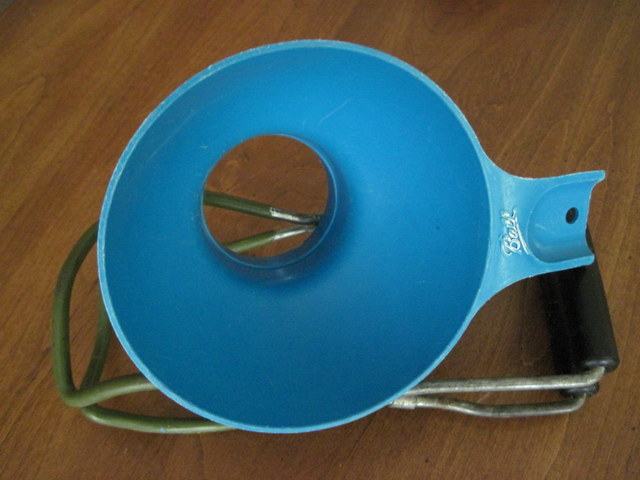
- Prepare food as specified in the recipe. Pack or ladle into each jar, using a wide-mouth funnel to reduce the mess and leaving the headspace indicated in the recipe.
- Insert a chopstick down the inner edge of the jar, pressing it up and down as you turn the jar to remove air bubbles, and then use a cloth or paper towel dampened with water or distilled vinegar to wipe the rim clean.
- Set the lid on the jar, and screw on the ring so that it is just finger tight; overtightening prevents air from escaping as the jar seals and can cause the lids to buckle.
- Place each jar upright in the kettle using a jar lifter. Repeat the process with each jar until the canner is full, adding more hot water if needed until there is at least 1 inch of water over the jars.
- Cover the kettle, turn the heat to high, and wait for the water to reach a full boil. Once boiling, set the timer as specified in the recipe, adding your altitude adjustment. Keep the canner covered and at a full boil until the timer goes off, and then turn off the heat, remove the canner lid, and wait 5 minutes.
- Remove the jars from the canner, again using a jar lifter to transfer them from the kettle to a towel spread on a flat surface, leaving space between jars. Let the jars to cool for at least 12 hours, without pressing on the lids or retightening the rings unless the manufacturer’s instructions say otherwise. Most single-use lids ping as they seal.
- After 12 hours, remove and wash the rings and wipe down the jars with a damp cloth. Label each jar, listing at least the contents and date.
- Test the seal on each jar as indicated by the lid manufacturer. For most single-use lids, press the center; if it flexes, replace the ring and put the unsealed jar in the refrigerator for immediate use. If the jar is sealed, store it in a cool, dark, dry place; store the rings separately.
Pasteurizing
Pasteurizing is similar to water-bath processing; the primary differences are temperature and time. For a traditional water bath, the water must be brought to a full, rolling boil. When pasteurizing, the water is kept between 180°F and 185°F. Water-bath processing times vary, depending on what you are processing and where you live. When pasteurizing, 30 minutes creates a safe seal.
Pasteurizing is strictly for certain types of pickles. Pickled foods that are meant to be crisp and firm often suffer when dropped into boiling water. By lowering the temperature for a longer period, pickles stay firm yet unspoiled. The USDA suggests it for a variety of pickled cucumbers and zucchini. On this blog, the recipe will mention pasteurization when it is an option.
- Prepare to can as you would for a boiling water bath: Gather and check your equipment, heat the kettle of water, and then clean, heat, fill, and cap the jars.
- Check the water’s temperature with a thermometer, ensuring that it is holding steady between 180°F and 185°F.
- Cover the canner and set the timer for 30 minutes, checking regularly to ensure the temperature does not drop. For every minute it spends below 180°F, add a minute to your timer.
- Remove the jars from the canner and let them cool as you would with a boiling water bath before cleaning, labeling, testing, and storing.
Pressure Canning
You won’t find any recipes on this blog that require a pressure canner for a simple reason: I rarely use one. The full explanation is much longer, but the essence is that I prefer the flavor and texture that results from another processing technique to that of almost any food run through a pressure canner.
That said, a pressure canner does have its uses, as I found when testing numerous brands and models for The Spruce Eats. During testing, I processed foods I would use: shell beans, stocks, soup bases, potatoes, and squash. Many pressure canners can double as a water-bath canner, so I used them to processed rhubarb sauce, strawberry jam, and whole cherries too. You can learn more about the pressure canners I tested in this product roundup, which links to my full reviews of each canner.
If you are interested in learning about pressure canning, I highly recommend starting with the USDA’s Complete Guide to Home Canning, 2015 revision; Guide 1 outlines the basics, and later guides give further details. You can also find my favorite cookbook for pressure canning recipes in this list.
