

We often put a meaty protein on pasta—fish and shellfish, chicken breast, all sorts of meat ground and shaped into meatballs. Yet we tend to overlook the pairing of pasta and beans, a prime vegetable source of protein. Whereas Mexican restaurants have made rice and refried beans an American staple and the Southern population has long served up red beans and rice, the Italian tradition of pairing pasta with beans hasn’t caught on.
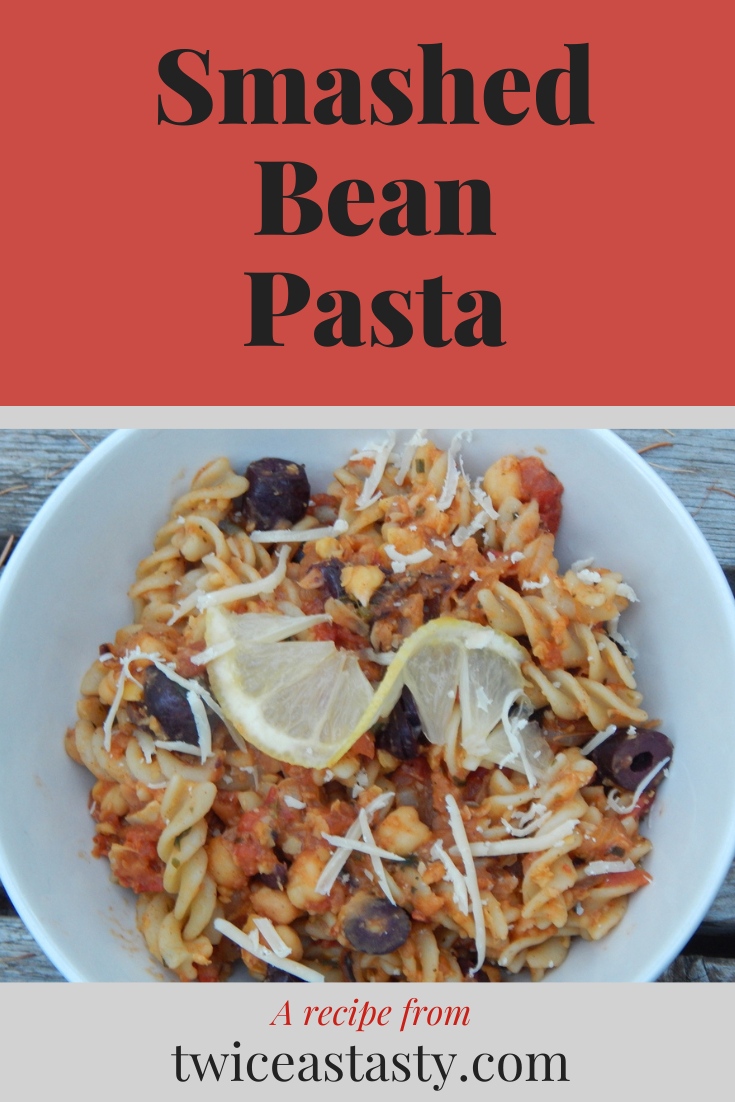
That will hopefully change in your household with this week’s recipe in my Twice as Tasty column for the Flathead Beacon. It’s an easy, filling meal that can be made at the last minute from ingredients in the pantry. Leave off the cheese for a vegan version, and pile in olives for a little zing. By smashing some of the beans, they find their way, along with the tomato juices, into the pasta’s holes and pockets.
Learn more about weeknight pantry meals and get the complete recipe for Smashed Bean Pasta in my column.
 Make it, share it.
Tag @twiceastastyblog and #twiceastastyblog
Twice as Tasty
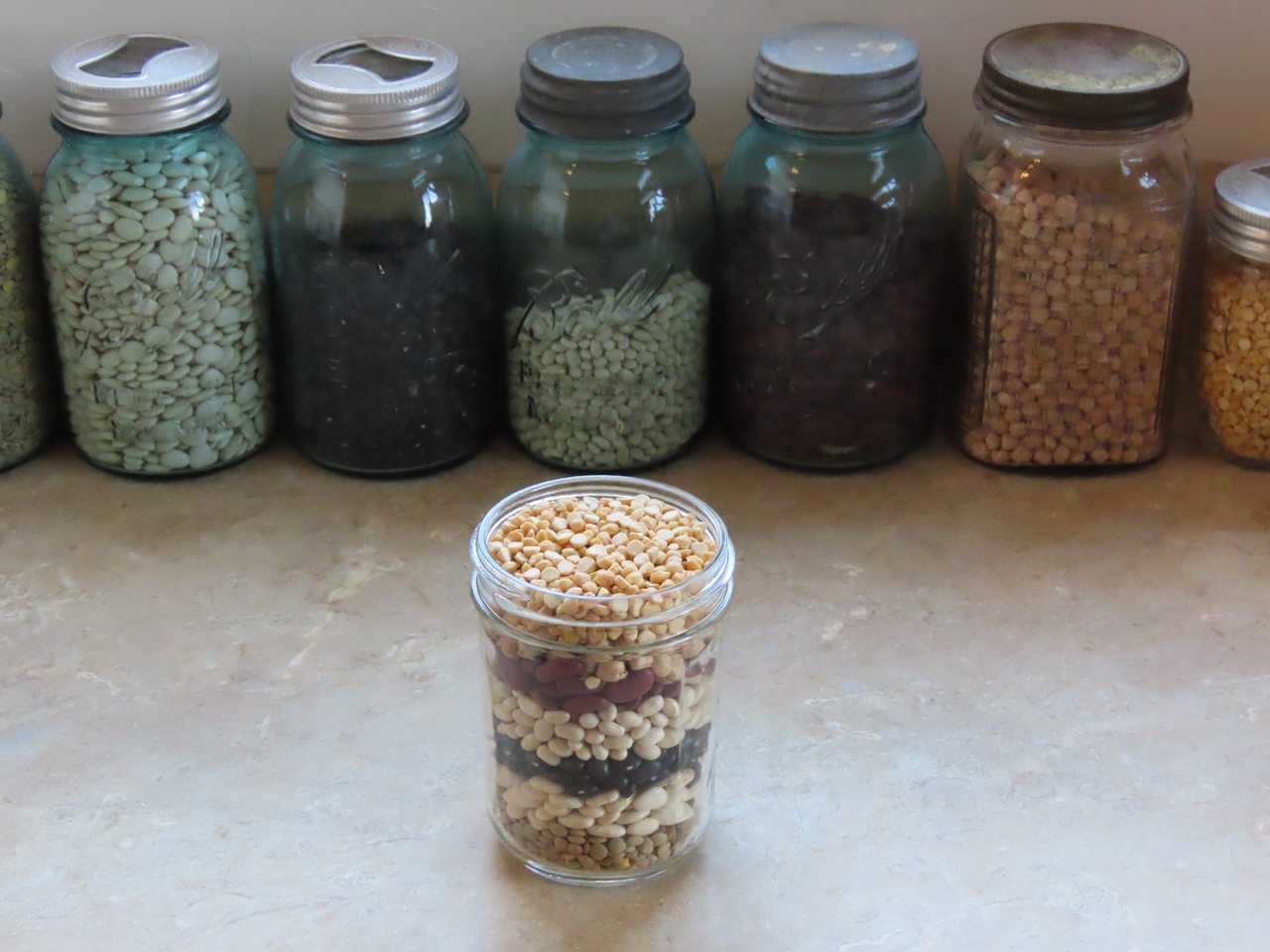
 My pantry shelves usually hold four types of store-bought cans of beans, because they’re so easy to pop open for a quick meal. The main downside of these is that many canned beans are heavily salted, so I always check the labels and buy the brand with no to minimal salt.
Next to them are more than 15 glass jars of dried legumes—a collection I just expanded this week as I sorted and packed this year’s harvest of homegrown dried beans. They have a long shelf-life, cost less, and use less packaging than canned beans. Mostly they’ve earned more shelf space in my kitchen because the variety increases dramatically when you start buying and saving dried beans.
When I taught a lentil workshop last March for Free the Seeds, we compared five types of just lentils. My most recent additions to my legume collection include cranberry beans, which I find dried at some stores but never canned, and Black Cherokee Trail of Tears and Turkey Craw beans, heirloom varieties I originally sourced from Finney Farm and now grow and save each year.
The obvious downside of dried beans is that you need to plan ahead, especially if you soak the seeds overnight and then cook them on the stovetop until tender. Yet even that has some shortcuts, including quick soaking and pressure cooking. Some beans, like the tender red lentils I use to make Spiced Red Lentil Dip, cook in less time than it takes to make a pot of white rice.
My biggest shortcut for cooking with dried beans is to prepare a large batch and divide it into several meals. They’ll keep for several days in the refrigerator and can even be frozen if your meal plans change and you don’t finish them in time. I often cook the beans with basic seasonings and core flavors to save time later. By cooking a large batch and working it into multiple recipes, I eat far more of these healthy legumes than if I only relied on canned beans.
Ready to start eating more beans? Here are just a few other legume-focused recipes on the blog. You can find more in the recipe index.
- Three-Bean Salad with Fresh Herbs
- Chickpea and Vegetable Couscous Salad
- Mason Jar Gifts: Mixed-Bean Soup
- Harira (Moroccan Tomato Lentil Soup)
- Baked Chickpea Snacks
- Roasted Garlic Hummus
You can also learn more about choosing and cooking dried beans in this blog post.
Want more Twice as Tasty recipes? Get my books! Click here to order a personally signed, packaged, and shipped copy of The Complete Guide to Pickling directly from me. I also share tasty ways to use pickles in The Pickled Picnic; it’s only available here.
Discover more from Twice as Tasty
Subscribe to get the latest posts sent to your email.
