The first harvests of the season may not be as colorful as summer’s tomatoes and peppers and fall’s beets and carrots, but I always smile and sigh with pleasure as I dig my fork into a mound of spring greens. Salads suddenly become a daily presence. I pile the tender leaves deeply on sandwiches, sourdough pizza and fried eggs. My bean burritos and fish tacos become so stuffed that I can’t fold them closed.
The latest recipes in my Twice as Tasty column for the Flathead Beacon gently cook spring greens. Unlike the soggy, slimy effect that often comes from overcooking spinach and arugula, the greens barely wilt into egg and pasta dishes, remaining light and fresh.
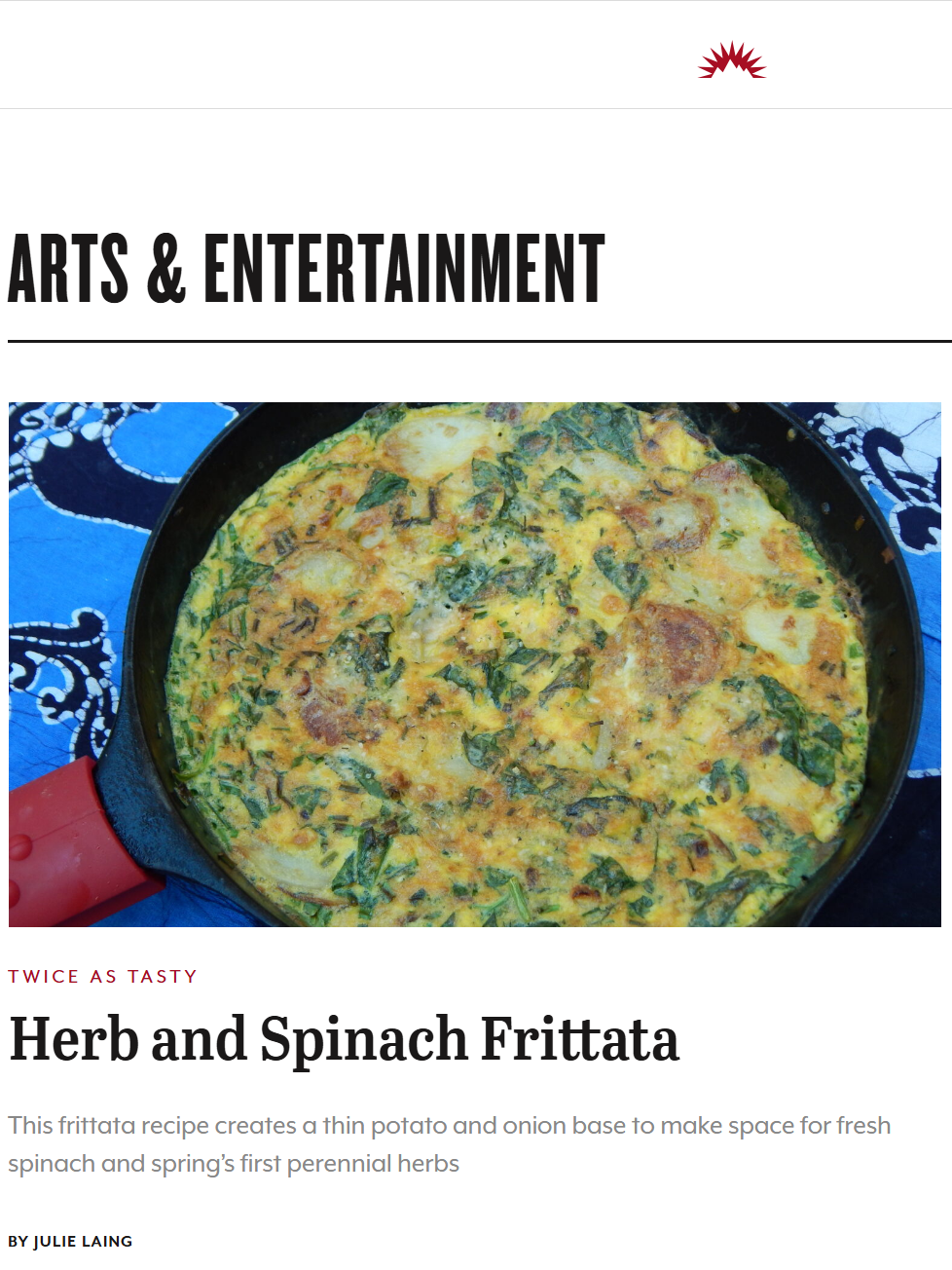
This week’s frittata recipe expands my year-round Golden Onion and Potato Frittata to include fresh spinach and herbs. It could be called a crustless quiche or a big, open-faced omelet and tastes equally delicious for breakfast, lunch and dinner.
Learn more about making frittata and get the complete recipe for Herb and Spinach Frittata in my column.
 Make it, share it.
Tag @twiceastastyblog and #twiceastastyblog
The Power of Residual Heat
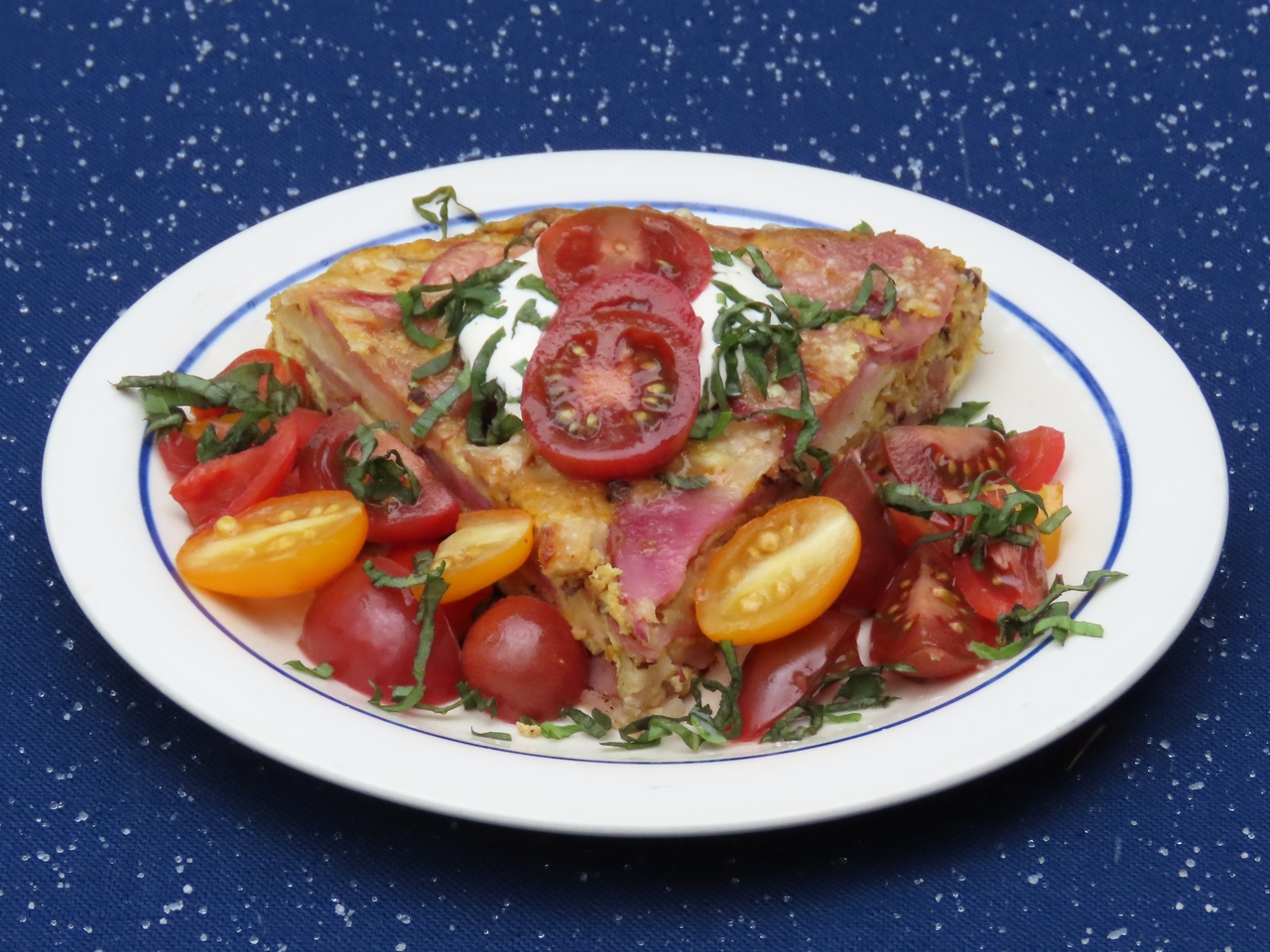
Like quiche, frittata quickly transitions from underdone to overcooked. I share a couple of ways to counteract that in my column, but it also helps to remember the power of residual heat. A 5-minute rest before slicing ensures the eggs cook completely to the center without turning rubbery.
The same applies to everything from sourdough bread to fish: These continue to cook off the heat, so remove them earlier than you might think and let them rest. Otherwise, hot, just-baked bread loaves might still be gummy in center, perfectly tender panfish might be overcooked when sauced and plated, and frittata might ooze or fall apart when sliced.
Even when rested, I find it easier to slice frittata in the pan, and make sure the knife doesn’t scrape the bottom, than to lift out the entire circle. If you do want to serve frittata from a platter, slide the thin spatula not just around the edges but underneath the frittata until it slides gently when you shake the pan. Carefully slide it onto the serving plate so that it doesn’t split and any excess oil stays in the pan.
Twice as Tasty
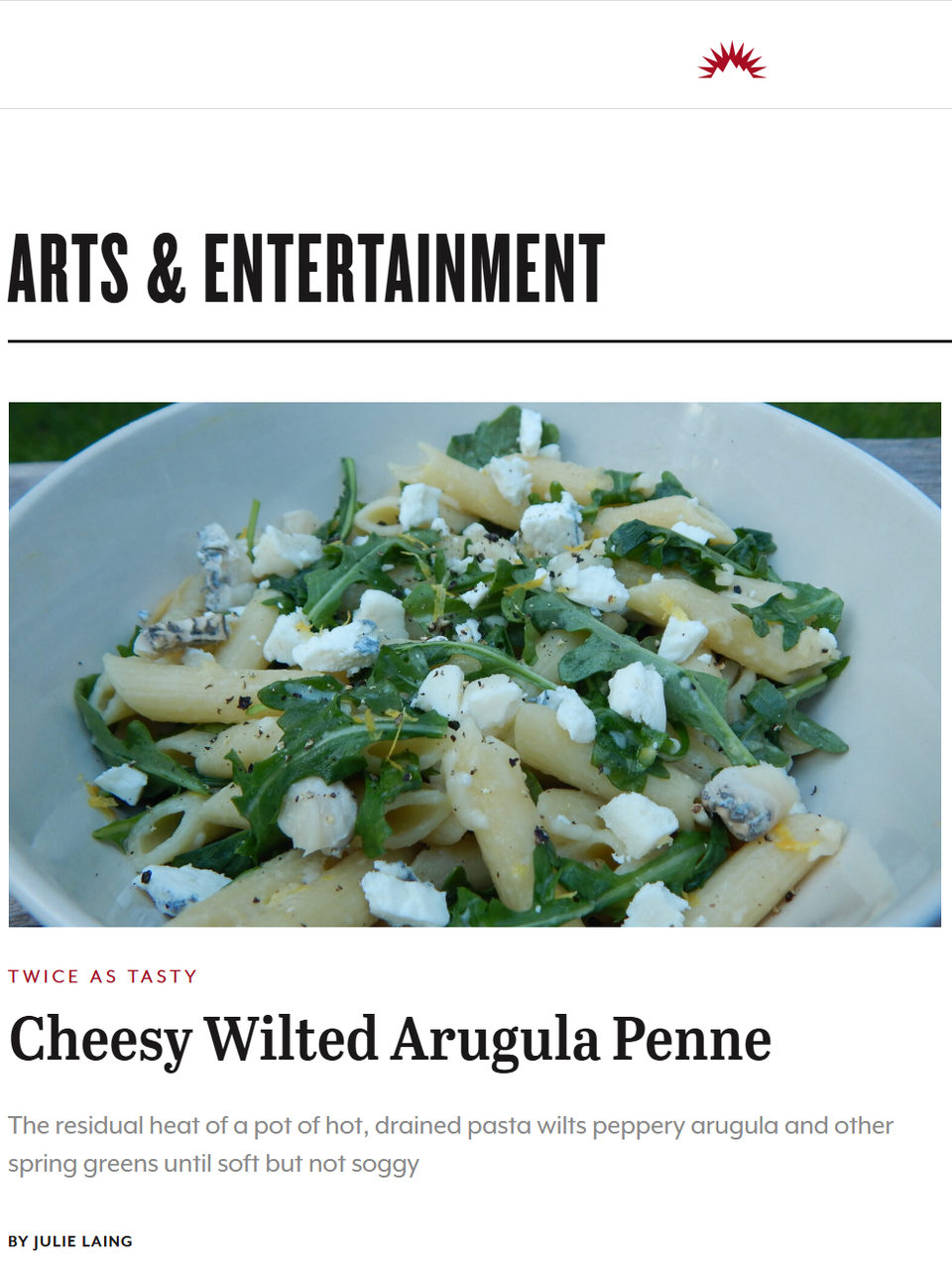
 Earlier this month, my Twice as Tasty column featured another recipe that works beautifully with spring greens: pasta with wilted arugula. I’ve always preferred raw spinach, chard, and other greens to ones cooked until completely soft. Then I realized that a little heat and steam let them wilt just enough to fold into hot pasta.
As with my examples of frittata, bread, and fish, residual heat does the work when wilting greens. A still-hot saucepan with drained, but not rinsed and cooled, pasta gives off enough heat to lightly steam arugula or other greens. It also melts cheese enough to stir it with starchy pasta water for a quick sauce.
Sometimes I replace the oil with butter for an extra creamy sauce, swap raw minced garlic soaked in lemon juice for sharper bites of flavor, or bolster a one-bowl meal with halved cherry tomatoes, chopped sweet peppers, young snap beans, or smoked salmon. Regardless, everything happens in the single saucepan for easy cleanup.
Learn more about using arugula and get the complete recipe for Cheesy Wilted Arugula Penne in my column.
Want more Twice as Tasty recipes? Get my books! Click here to order a personally signed, packaged, and shipped copy of The Complete Guide to Pickling directly from me. I also share tasty ways to use pickles in The Pickled Picnic; it’s only available here.
Discover more from Twice as Tasty
Subscribe to get the latest posts sent to your email.
