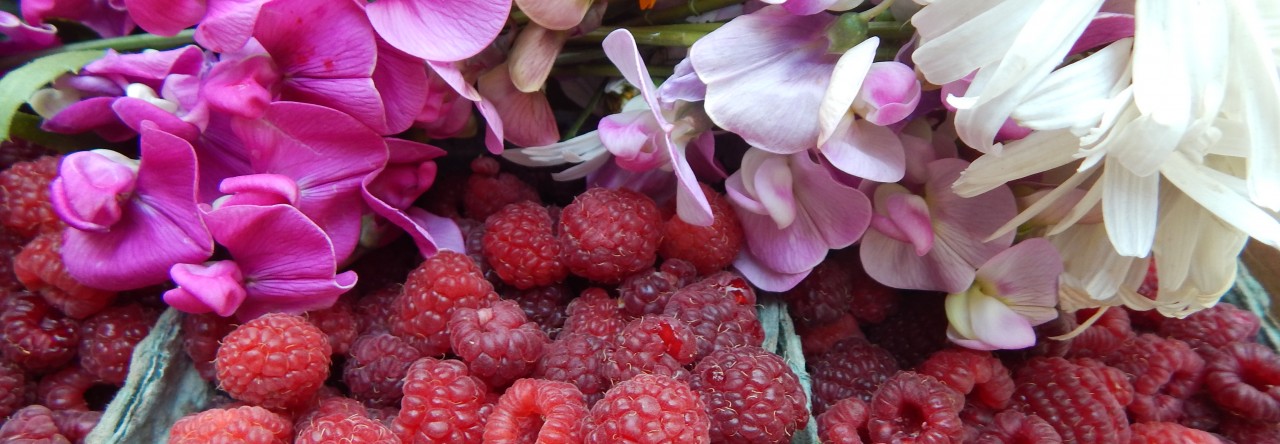

We’ve had such warm weather lately that it was a joy to mix up a batch of berry sorbet in celebration of family birthdays—and 9 years of writing this blog. If you’ve been following along from the beginning, you’ve witnessed how my little personal food project expanded to include a pickling cookbook, the Twice as Tasty column for the Flathead Beacon, and articles and recipes for many other websites. I’m still having such fun playing with all sorts of food, especially slipping botanicals into unexpected recipes like sorbet.
Blackberries aren’t yet in season in the mountain and northwest regions, so I made this sorbet recipe from frozen fruit foraged last year and it tasted just as delicious as if the berries were fresh. Basil is just starting to produce enough leaves to sneak a few from the hoop house plants, although I also considered mint or thyme. The berries give this sorbet such an intense flavor that the herbal notes remain subtle, so experiment with whatever is at hand.
Learn more about making sorbet and get the complete recipe for Blackberry-Orange-Basil Sorbet in my column.
 Make it, share it.
Tag @twiceastastyblog and #twiceastastyblog
Twice as Tasty
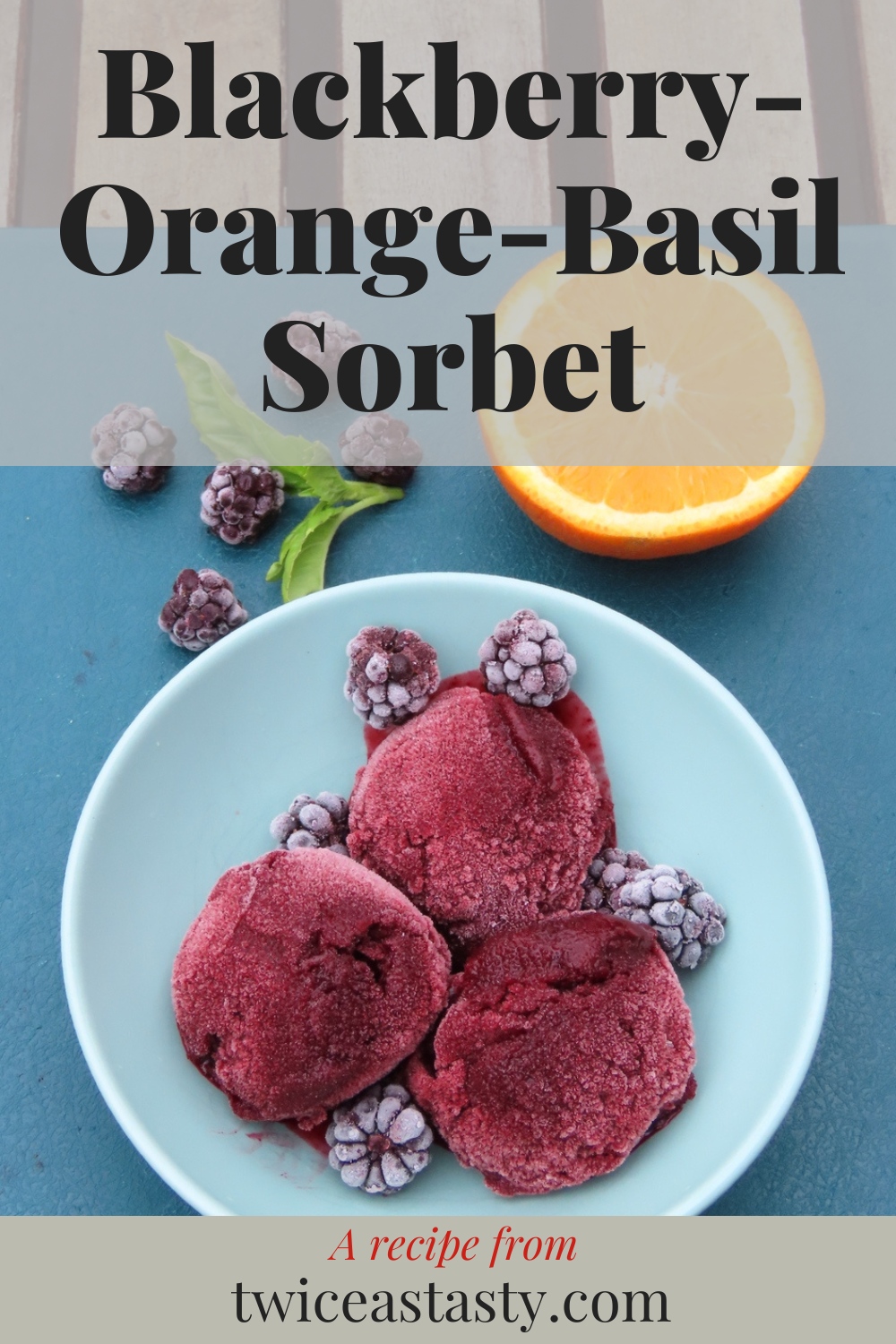 I worked up the blackberry sorbet recipe in this week’s column so that I could share specific flavors, but it’s based on my master recipe for Raw Fruit Sorbet. The technique works for all sorts of fruit, so I encourage you to try various fruit and herb pairings throughout the summer and into fall. The master recipe gives ranges because some fruits need different ratios to set up properly and show off their flavor.
Some extremely juicy fruits may turn into a smooth puree with little to no water. I sometimes even pour some liquid off before freezing Watermelon–Mint Sorbet. That’s because the thicker the puree, the better it sets up. The first time I try a new fruit in sorbet, I sprinkle in just enough water to smooth out the solids. Overly runny puree might produce a slushie rather than sorbet—although still a delicious one. I’ve topped one beautifully set sorbet with a softer one for an attractive two-flavor pairing. Slushy sorbet also blends into delicious daiquiris and frozen mocktails.
Different fruits also may need more or less sugar to reach your desired sweetness. Sugar has a technical effect too: It lowers the freezing point of the fruit, helping to shrink ice crystals and create sorbet’s smooth texture. If your chosen fruit creates an overly icy sorbet, add a little more sugar next time. If it started as a thick puree but never really freezes, cut back the sugar.
I prefer minimally sweetened sorbets, so I blend a little alcohol into the puree to help tamp down ice crystal formation. If you substitute non-high-fructose corn syrup to achieve a similar effect, you may be able to cut back the sugar.
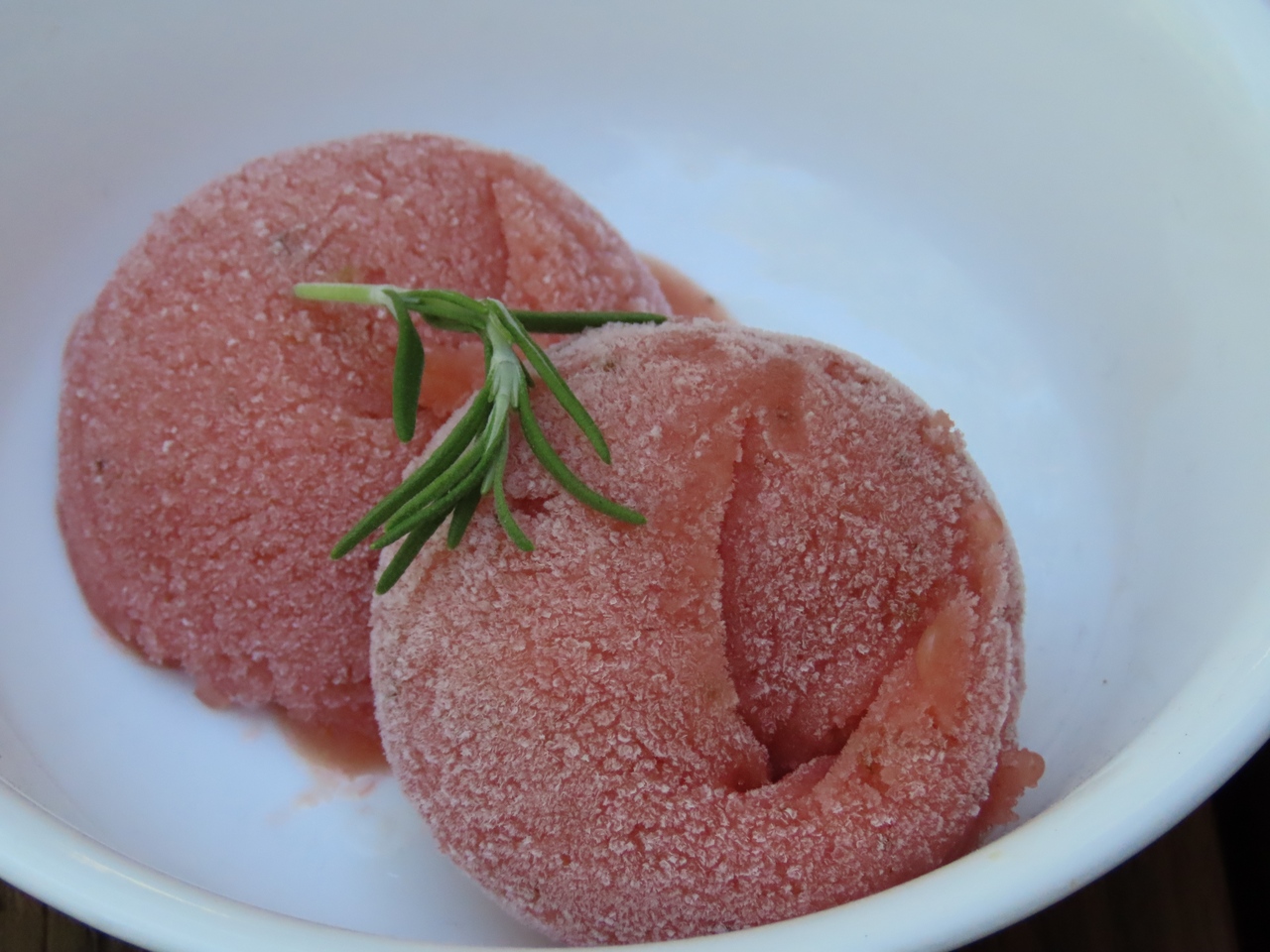
Whether you choose seedy berries that need to be strained, a naturally watery one like watermelon, or a full-bodied one like peaches, most sorbets taste freshest when you puree raw fruit. But there are some exceptions. Pears, apples, and cranberries release more juice when cooked, as does the flavor combination that inspired me to start making this frozen dessert at home: Rhubarb–Rosemary Sorbet.
Want more Twice as Tasty recipes? Get my books! Click here to order a personally signed, packaged, and shipped copy of The Complete Guide to Pickling directly from me. I also share tasty ways to use pickles in The Pickled Picnic; it’s only available here.
Discover more from Twice as Tasty
Subscribe to get the latest posts sent to your email.
