
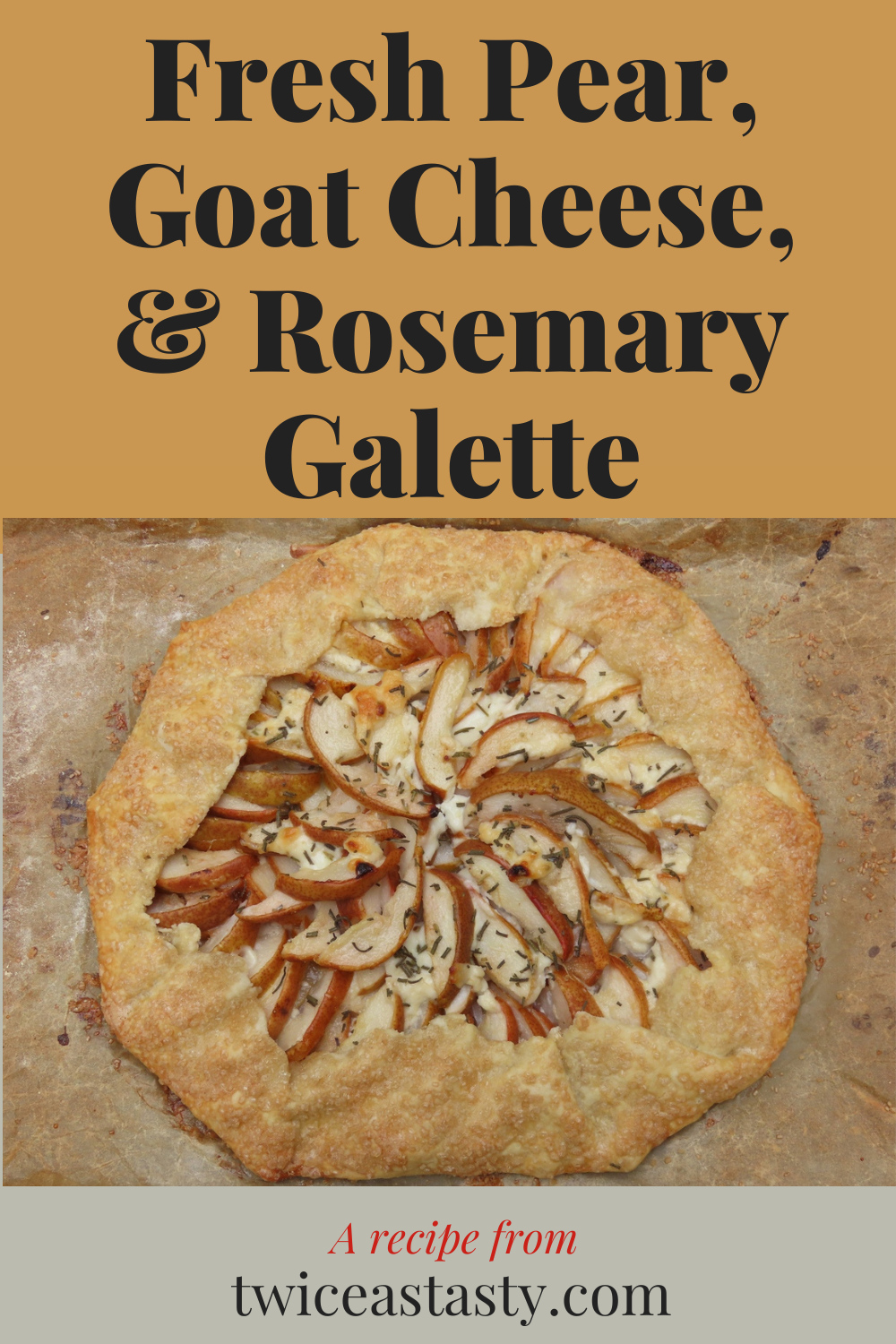
I’ve baked more galettes than usual in the last few months, and not because I harvested more fruit or went to more parties. What inspired me to create more of these freeform tarts was a new-to-me technique that kept their filling from becoming a runny mess that oozed out the sides of the folded pastry. It even improved the galette made with sturdy pears that I share this week my Twice as Tasty column for the Flathead Beacon.
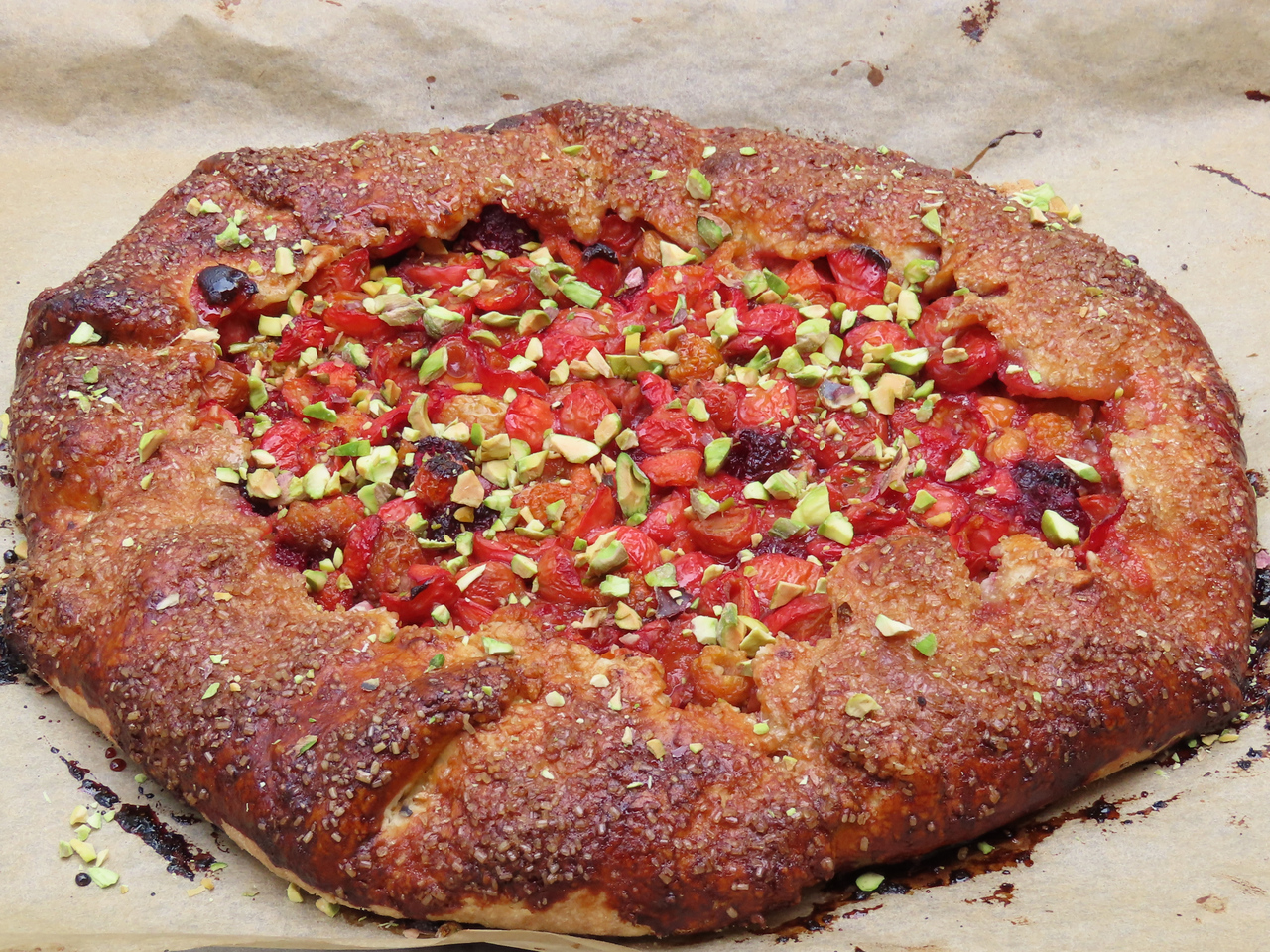
The technique is simple: sprinkle absorptive cornmeal or breadcrumbs over the pastry before you spread out the fruit. The result is marvelous. I first used a cornmeal layer in one of my juiciest galettes, filled with fresh tart cherries and raspberries. In the past, I would pull a pan holding a berry-heavy galette from the oven to find the pasty sitting soggily in a pool of juice, leaving a sunken filling—and quite the mess to clean up. This time, the pan and parchment it rested on were bone dry, and the tart looked beautiful.
Credit goes to Clair Saffitz for this fabulous technique, which I learned from her Plum Galette with Polenta and Pistachios recipe in her Dessert Person cookbook and saw put to good use in recipes for apple and for apricot and strawberry galettes in her latest book, What’s For Dessert. Even her simplest recipes have highly detailed instructions and loads of tricks to improve your dessert making.
Learn more about making rustic freeform tarts and get the complete recipe for Fresh Pear, Goat Cheese, and Rosemary Galette in my column.
 Make it, share it.
Tag @twiceastastyblog and #twiceastastyblog
Twice as Tasty
 Galettes fill flaky pie crust with fruit but bake on a flat pan instead of in a pie plate. This creates a rustic-looking tart that tends to taste lighter and fresher than a deeply filled pie. It’s just as adaptable as a pie to any fruit.
I essentially use the same dough for all of my galettes, sometimes altering the citrus zest, and you’ll find it in this week’s column. My Deep-Dish Pie Crust, with its blend of butter and coconut oil, also works well as galette pastry. Saffitz uses her ultra-buttery all-purpose flaky pastry dough.
Galettes can be as simple as rolling out the pastry, spreading fruit in the center, folding the edges partway over it, and baking. This is how I originally wrote my simplest galette recipes. But a few tips and tricks create even better flavor, texture and photo-worthy slices when you’re making this week’s recipe and other galettes:
- For the flakiest crust, keep everything as cold as possible. In a metal mixing bowl, chill the dry ingredients for at least 30 minutes before you work in the butter and ice water. Keep your hands cool, and return the bowl to the fridge if they start to warm up the ingredients. Chill the dough again after you’ve formed it into a disc.
- Another trick from Saffitz is to remove the chilled disc from the fridge, let it rest for 5 minutes, and then “beat the dough across the surface to make it more pliable.” My dough held together a little better after this unexpected treatment.
- Spread a layer of parchment on the rimmed baking sheet. This helps both with transfer for slicing and serving and with cleanup, especially if you brush the edges with an egg wash.
- Sprinkle 2 tablespoons of panko, polenta or other breadcrumbs or coarse cornmeal across the center of the pastry. You can add sugar, salt, finely chopped toasted nuts and even a little cornstarch to this layer if you like, but the absorptive mealy ingredient produces the key effect.
- By using panko or polenta, I’ve found I can pile in more fruit. I doubled the weight of the pears from my original galette recipe, and I increased my runny cherries and raspberries to 3 full cups. When I next fill a galette with huckleberries and rhubarb, I’ll increase the total fruit to 3-1/2 cups.
- Give it an egg wash and sparkle. I prefer an egg white thinned with a little water, brushed over all exposed pastry edges before and after you fold the dough, and turbinado sugar, sprinkled over the pastry and fruit. Other wash options include a whole beaten egg, heavy cream, or a combination of egg white or yolk and milk or cream. Other sugar options include Demerara, vanilla or cinnamon sugar.
I’ve incorporated brief instructions for most of these tips in this week’s pear galette recipe, and I’ll be using them the next time I make Huckleberry-Rhubarb Galette. Give them a try, and let me know how your creations turn out.
Want more Twice as Tasty recipes? Get my books! Click here to order a personally signed, packaged, and shipped copy of The Complete Guide to Pickling directly from me. I also share tasty ways to use pickles in The Pickled Picnic; it’s only available here.
Discover more from Twice as Tasty
Subscribe to get the latest posts sent to your email.
