
I’ve been experimenting in the kitchen the last few weeks. An assignment for The Kitchn had me testing and reviewing 10 nonstick skillets. Musicians in town for The Swing Resistance show tonight prompted me to try gluten- and dairy-free versions of some of my favorite baked goods for their enjoyment. I’m also gearing up for tomorrow’s workshop at Free the Seeds, compiling recipes that pair seasonal produce throughout the year.
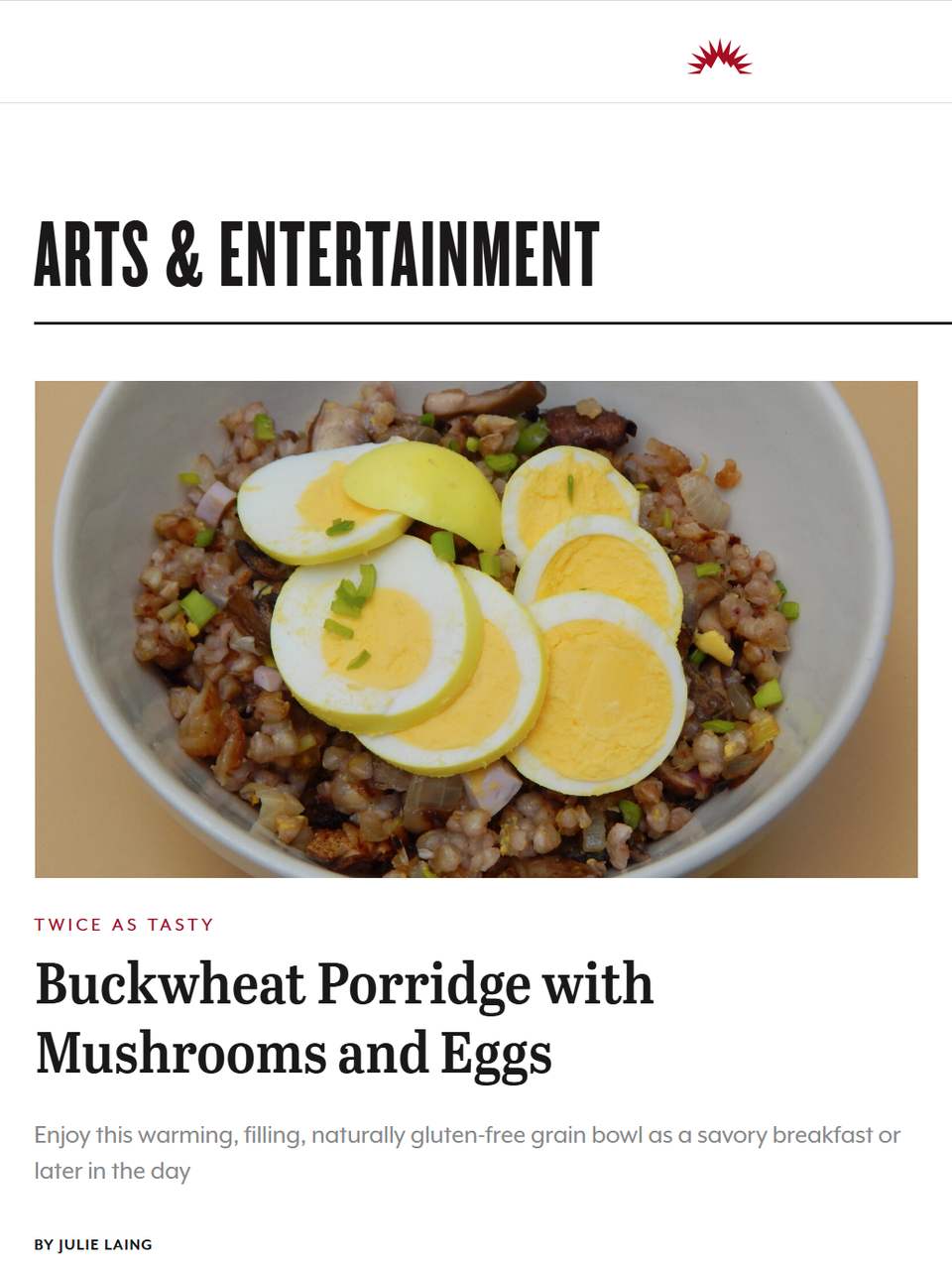
This week in my Twice as Tasty column for the Flathead Beacon, I share a recipe that fit well with all of these projects. I sautéed its onions and mushrooms in my favorite skillets. The recipe uses buckwheat, which despite its name is not wheat at all but naturally gluten-free seeds that can be substituted in many whole-grain dishes. The version in my column features vegetables I eat often during the garden’s dormant months, but I adapt it seasonally to use my fresh harvests.
Learn more about buckwheat and get the complete recipe for Buckwheat Porridge with Mushrooms and Eggs in my column.
 Make it, share it.
Tag @twiceastastyblog and #twiceastastyblog
Twice as Tasty
 Some gluten- and dairy-free substitutions are more challenging than others. Compared with my usual baking, pastry dough made purely with coconut oil was finicky and tore easily. Plant-based butter produced smoother results but had a slightly greasy feel until fully baked. It and gluten-free flour needed a blast of heat from the broiler to brown a fruit crisp topping.
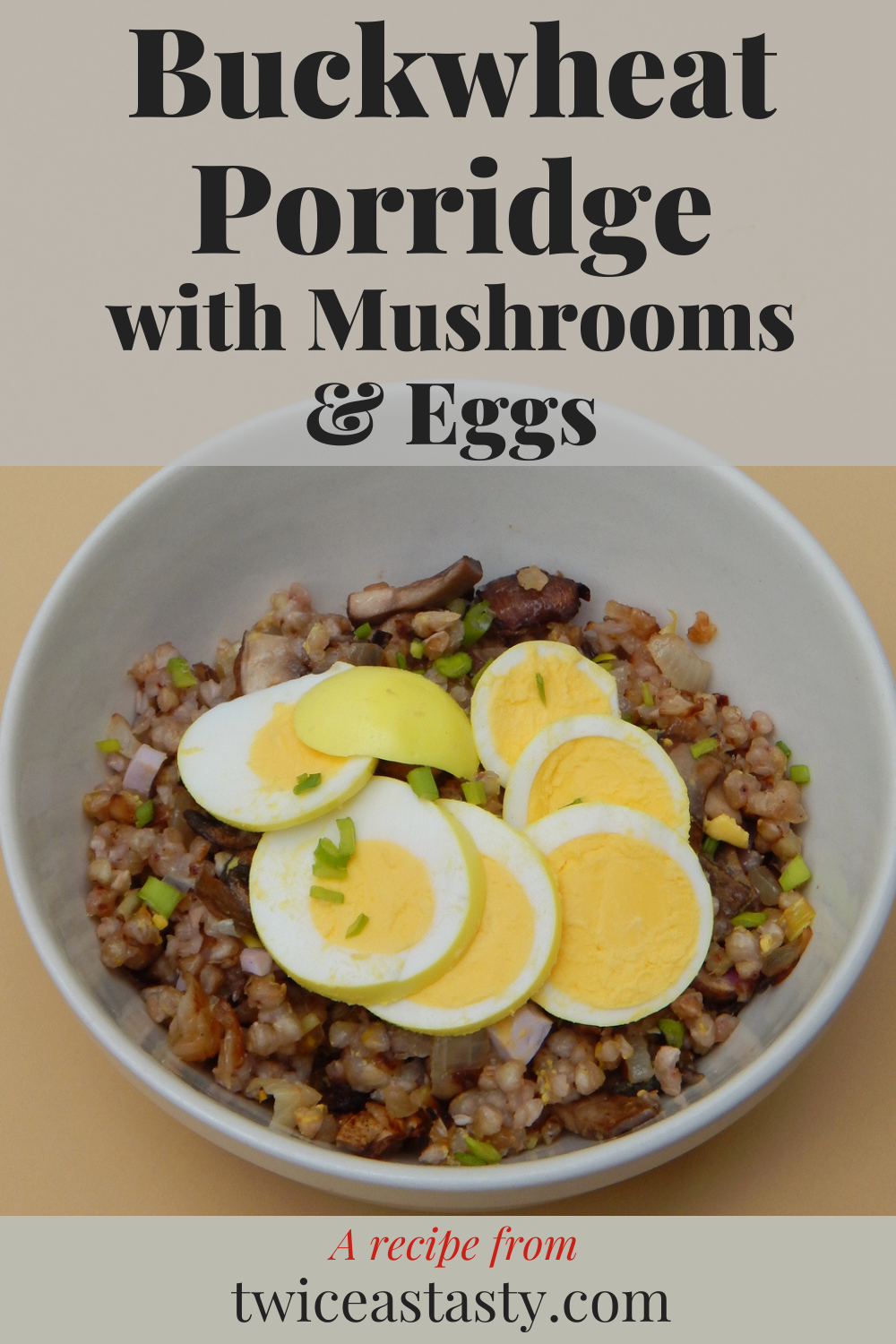
But when it comes to whole grains, cooking gluten-free is more about choice than technique. Naturally gluten-free whole grains are often contaminated during processing, so you simply need to buy ones labeled “certified gluten-free.” I had no problem finding certified buckwheat, oats, and quinoa in local supermarkets and natural-food stores for the recipes I’ll be sharing this month.
Buckwheat grouts easily substitute cup for cup into many recipes that call for bulgur, couscous, farro, and barley. Choose raw buckwheat if you want a soft cereal, and toast whole grouts in a little oil or butter or buy them pretoasted (often sold as kasha) for separate, textured grains. Buckwheat flour has a long history in crepes and blini, and Juwari soba or 100% buckwheat soba noodles can be found in Asian markets.
Excited about cooking with buckwheat? Here are just a few recipes on the blog that can use buckwheat grouts, flour, or noodles. You can find more in the recipe index.
- Hot Pearl Barley with Honeyed Nuts
- Bulgur Taco “Meat”
- Chickpea Vegetable Skillet with Couscous and Feta
- Chickpea and Vegetable Couscous Salad
- Mushroom-Filled Blini
- Zucchini–Basil Pancakes
- Hot and Sour Shrimp and Noodle Soup
- Weeknight Pasta with Roasted Pumpkin and Parmesan
If you fall for this week’s buckwheat porridge recipe, it adapts readily to seasonal produce. As I’ll explain in my Free the Seeds workshop, I’ll be making it soon with asparagus and sugar snap peas and this summer with sweet peppers and zucchini. You can learn to make those vibrantly colored pickled eggs in my pickling cookbook.
Want more Twice as Tasty recipes? Get my books! Click here to order a personally signed, packaged, and shipped copy of The Complete Guide to Pickling directly from me. I also share tasty ways to use pickles in The Pickled Picnic; it’s only available here.
Discover more from Twice as Tasty
Subscribe to get the latest posts sent to your email.
