Pea Shoot Pesto

I intentionally plant peas too thickly and then thin and snip shoots to make fresh pesto—and help the plants grow bushier and produce more peapods. Learn more at TwiceasTasty.com.
I started making a springtime pesto with pea shoots in my first years of growing peas, when I heavily overplanted the beds and needed to thin them. It turned out to be so delicious that, as I explain this week in my Twice as Tasty column for the Flathead Beacon, I now intentionally plant peas too thickly and pinch off extras; I also snip upper shoots as the plants grow. This not only lets me make fresh pesto long before I can harvest basil but also helps the plants grow bushier and produce more peapods.

I think tender pea shoots are the sweetest and harvest them from both edible pod and shelling peas. Some people consider sugar snap shoots to be the sweetest. Whichever you’re growing, give them a taste while they’re young and delicate.

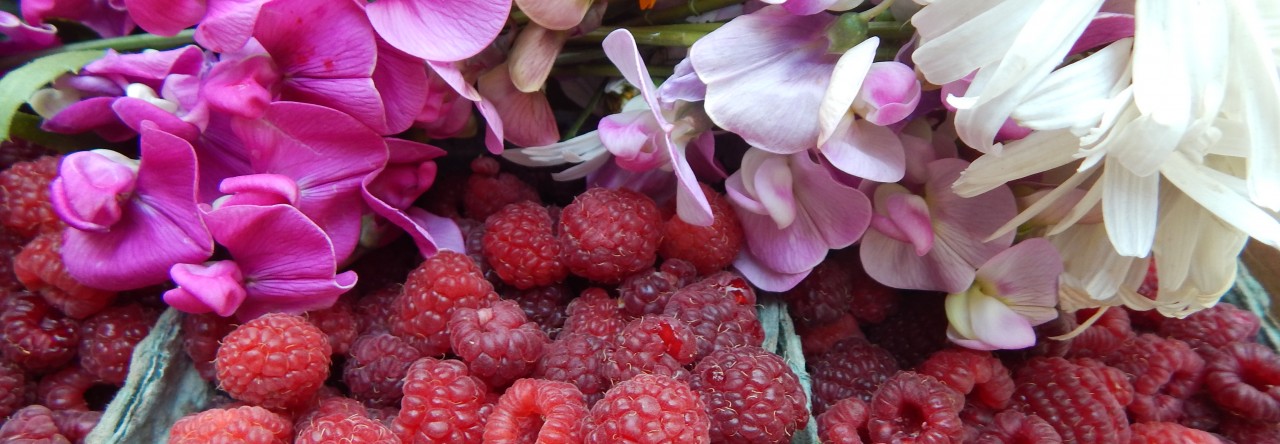
If you’re not growing peas, look for edible shoots at a farmers’ market. I found the ones in the photo that accompanies this week’s column while visiting the Bellingham Farmers Market. The large bundle of shoots and flowers were more developed than I usually harvest them, so I blended just the leaves and top tendrils from the thickest stalks into pesto.
Learn to make Pea Shoot Pesto

Herb and Spinach Frittata

The latest recipes in my column gently cook spring greens into egg and pasta dishes, keeping spinach, arugula and herbs light and fresh. Learn more at TwiceasTasty.com.
The first harvests of the season may not be as colorful as summer’s tomatoes and peppers and fall’s beets and carrots, but I always smile and sigh with pleasure as I dig my fork into a mound of spring greens. Salads suddenly become a daily presence. I pile the tender leaves deeply on sandwiches, sourdough pizza and fried eggs. My bean burritos and fish tacos become so stuffed that I can’t fold them closed.

The latest recipes in my Twice as Tasty column for the Flathead Beacon gently cook spring greens. Unlike the soggy, slimy effect that often comes from overcooking spinach and arugula, the greens barely wilt into egg and pasta dishes, remaining light and fresh.

This week’s frittata recipe expands my year-round Golden Onion and Potato Frittata to include fresh spinach and herbs. It could be called a crustless quiche or a big, open-faced omelet and tastes equally delicious for breakfast, lunch and dinner.
Learn to make Herb and Spinach Frittata

Moroccan-Inspired Mint Tea

I grew up with unsweetened iced tea in the fridge, but I needed a month in Morocco to discover that hot tea could be as refreshing. Learn more at TwiceasTasty.com.
My mom drinks lots of unsweetened iced tea in the summer, and there was always a jug of it in the refrigerator as I was growing up. But as I explain this week in my Twice as Tasty column for the Flathead Beacon, it took a piping-hot month in Morocco for me to discover that hot tea could be as refreshing.

A blend of green tea leaves and mint creates this effect. An amino acid in green tea and the menthol in mint cause relaxing, cooling sensations, regardless of the brew’s temperature. Morocco’s indigenous mint is a spearmint variety known as nana, but the tea plant doesn’t grow in its arid climate. So it’s less of a stretch than you might think to prepare Moroccan-Inspired Mint Tea from fresh Montana-grown mint leaves on a hot summer day.
Learn to make Moroccan-Inspired Mint Tea

Gingerbread Pancakes

Some foods stick with you not only because they’re delicious but because of the fond memories they evoke. Gingerbread pancakes fall in that category for me. Learn more at TwiceasTasty.com.
Some foods stick with you not only because they’re delicious but because of the fond memories they evoke. Gingerbread pancakes fall in that category for me, as I explain this week in my Twice as Tasty column for the Flathead Beacon. I was thrilled when I checked up on Zazie, where I first tasted these pancakes, to find that not only was it still open but thriving. Brunch at this French-style bistro was always a calm, relaxed affair amid San Francisco’s bustle, and I recommend a visit if you’re in the city.

Now that I’m more than 1,100 miles away, I’ve replaced that experience with this week’s pancake recipe and a quiet morning on my cabin’s deck. The spices and molasses give these pancakes their distinctive flavor, and Cultured Buttermilk and egg whites make them ultra-fluffy. The buttermilk gives them just a hint of the tang that dominates Overnight Sourdough Pancakes and Sourdough–Yogurt Pancakes.
Learn to make Gingerbread Pancakes

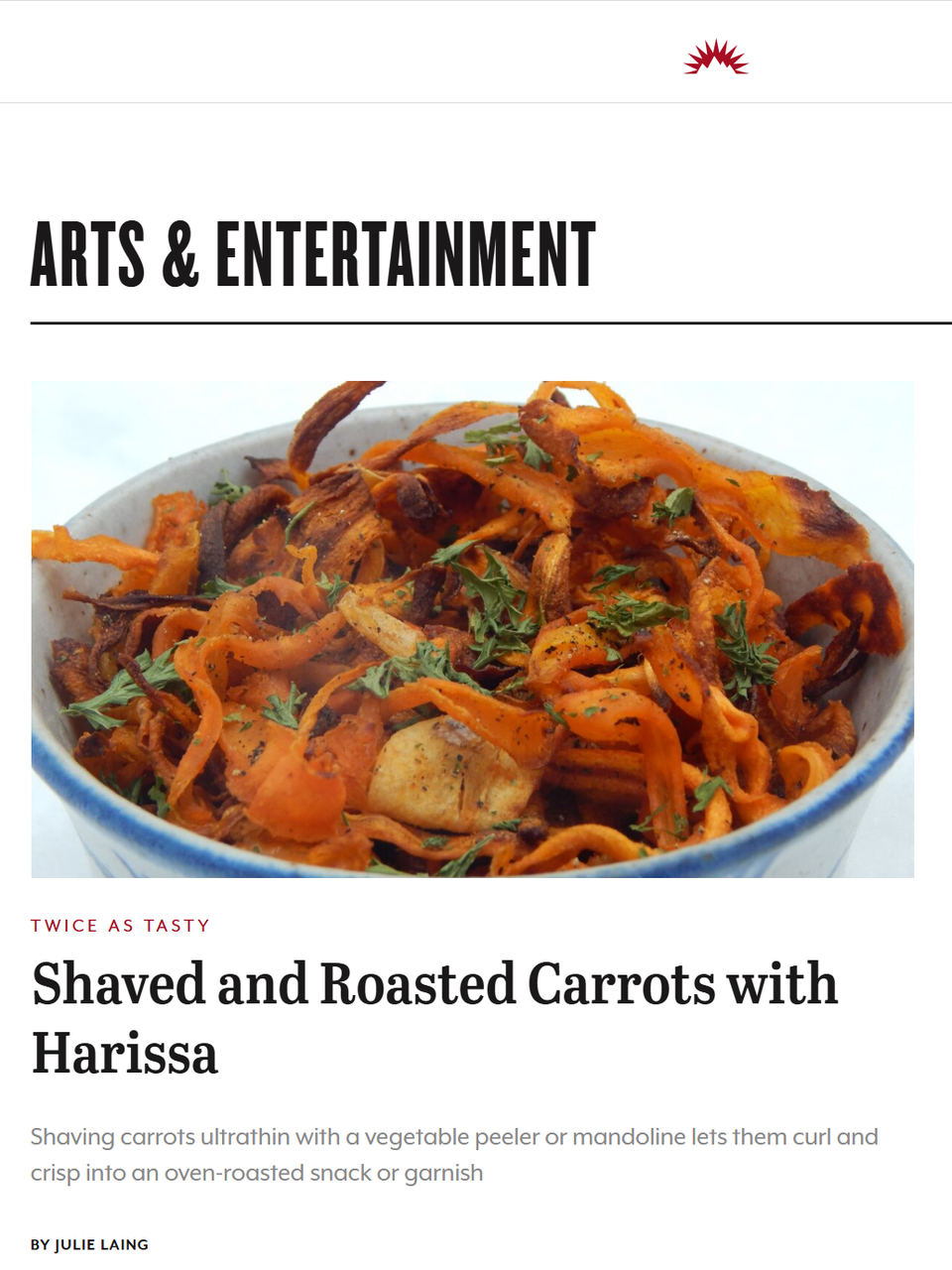
Shaved and Roasted Carrots with Harissa

Thinly shaved carrots won’t fall apart even when you toss them with olive oil, maple syrup, and North African chile paste. Learn more at TwiceasTasty.com.
Most of the snack recipes I’ve been sharing recently in my Twice as Tasty column for the Flathead Beacon benefit hugely from seasonings, but only with a light hand. Sheets of roasted seaweed and kale baked until crisp easily turn soggy, enough to make them chewy or fall apart, if you introduce too much oil or liquid.

This week’s recipe turns carrots shaved thin with a peeler or mandoline into slightly crisp strips that handle moist seasonings better than fragile leaves. The sturdy root vegetable won’t fall apart even when you toss it with olive oil, maple syrup, and harissa, a North African chile paste.

I included a recipe for my version of this traditional chile paste in my cookbook, The Complete Guide to Pickling. It takes just 10 minutes of hands-on time to make and lasts several months in the refrigerator. It’s worth keeping on hand because its so versatile, giving a little heat to everything from brined olives to grilled shrimp. It’s also a classic flavor in Harira (Moroccan Tomato Lentil Soup).
Learn to make Shaved and Roasted Carrots with Harissa

Oven-Roasted Kale Chips

Roasting kale makes it crisp and easy to chew, whether the leaves are young and soft, larger and fibrous, or starting to wilt in the fridge. Learn more at TwiceasTasty.com.
It took me some time to become a fan of kale. When I was a kid, it hadn’t yet been popularized by the clean-eating crowd, so my dad never grew it. As an adult, every time I bought a bundle at the grocery store, it seemed overly chewy and fibrous—one of those vegetables you’re supposed to eat because they’re good for you but you don’t really enjoy. It wasn’t until I started growing kale in my own garden and harvesting young, tender leaves that I became hooked on its many varieties.

As I explain this week in my Twice as Tasty column for the Flathead Beacon, an easy way to make kale crisp and chewable—whether the leaves are young and soft, larger and fibrous, or starting to wilt in the fridge—is to roast it. Even the toughest leaves take on a delicate, crispy texture once you remove them from their ribs and bake them as chips. They’re so fragile that when the chip container is empty, tiny flakes remain behind, along with some of the sesame seeds I used as seasoning. I sprinkle these on popcorn to savor every last bite.
Learn to make Oven-Roasted Kale Chips

Broccoli, Tomato, and Pasta Soup

Instead of going to the store, “shop” in your freezer and cupboards for easy end-of-year meals. Learn more at TwiceasTasty.com.
I’m all about easy meals as the year winds down. It’s one of many reasons to freeze, can, dehydrate, and dry-store homegrown or locally sourced vegetables when the garden produces more than you can eat fresh. Instead of needing to go to the store, you can “shop” in your freezer and cupboards, as I explain this week in my Twice as Tasty column for the Flathead Beacon.

The soup recipe I share uses frozen vegetables that you can put directly in the pot, without thawing them first. I do thaw the Homemade Vegetable Stock that provides a flavor base, because then the soup is ready faster and has a more consistent texture. Some of my favorite flavor upgrades include dehydrated Home-Smoked Chili Peppers in place of the paprika and Cold-Smoked Cheese for the finishing touch. If you’re just learning how to store in-season produce, make this soup with fresh ingredients now and you’ll have plenty of inspiration to preserve in-season produce when the garden and farmers’ markets are in full swing.
Learn to make Broccoli, Tomato, and Pasta Soup

Spinach Salad with Cranberry Sauce Dressing

Make this salad and dressing with leftover cranberry sauce or whip up this dressing straightaway for palate-cleansing greens at your holiday feast. Learn more at TwiceasTasty.com.
Cranberry sauce goes on so many dishes on the holiday table that it’s always worth making extra. If you have more left over than you anticipated, the recipe I share this week in my Twice as Tasty column for the Flathead Beacon converts the sauce into a salad dressing.

I love the tartness of cranberries so much that as a teenager, I would thin cranberry sauce with oil and vinegar to make a personalized salad dressing right at the Thanksgiving table. The dressing and salad recipe in my column simply formalizes the process. So you don’t have to wait for leftovers to enjoy it. If you made Orange-Infused Cranberry Sauce to serve with your feast and have a palate-cleansing salad to accompany the meal, whip up this dressing straightaway.
Learn to make Spinach Salad with Cranberry Sauce Dressing

Orange-Infused Cranberry Sauce

Homemade cranberry sauce is an easy Thanksgiving upgrade, and you can prepare it in advance so that it doesn’t take up stovetop space on feast day. Learn more at TwiceasTasty.com.
As you shop for your Thanksgiving feast, pick up a bag of fresh cranberries and an orange to make the sauce that I share this week in my Twice as Tasty column for the Flathead Beacon. It’s about one of the easiest upgrades you can put on the Thanksgiving table, and you can prepare it far enough in advance that it doesn’t take up stovetop space on the big day.

Homemade cranberry sauce goes with all of your holiday leftovers, but I also use it as the base for a salad dressing that can be served with the holiday meal or for weeks afterward for a fresh-greens fix. I’ll share that dressing recipe and a salad to put it on in next week’s column, so if you want to serve these on Thanksgiving Day, add a second orange, shallot, red onion, spinach, almonds, and blue cheese or feta to your shopping list.
Learn to make Orange-Infused Cranberry Sauce

Mixed Vegetable Stir-Fry

This stir-fry recipe runs through the essential dos and don’ts and includes a quick, flavor-packed homemade sauce. Learn more at TwiceasTasty.com.
Stir-fry, the technique and the dish, seems so straightforward and adaptable to so many ingredients that you don’t need a recipe. But a quick Web search pulls up endless recipes and varied methods for making them. Some geek out with tools like a wok burner, blow torch, or outdoor grill to mimic the ultrafast, high-heat smokiness achieved by a commercial range. Others vie for the title of easiest stir-fry by tossing sautéed vegetables with store-bought teriyaki sauce.
Whether you trend toward geeky or easy on the stir-fry scale, the recipe I share this week in my Twice as Tasty column for the Flathead Beacon fits into your regular meal rotation. It runs through the essential dos and don’ts and includes a quick, flavor-packed homemade sauce. The fresh vegetables you use make each one-dish meal unique.
Learn to make Mixed Vegetable Stir-Fry