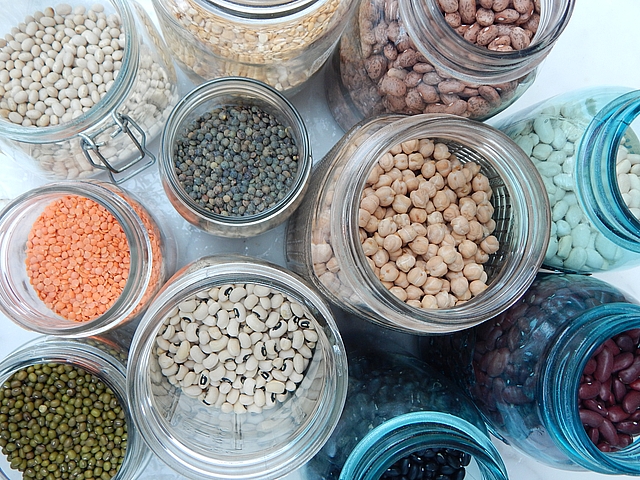
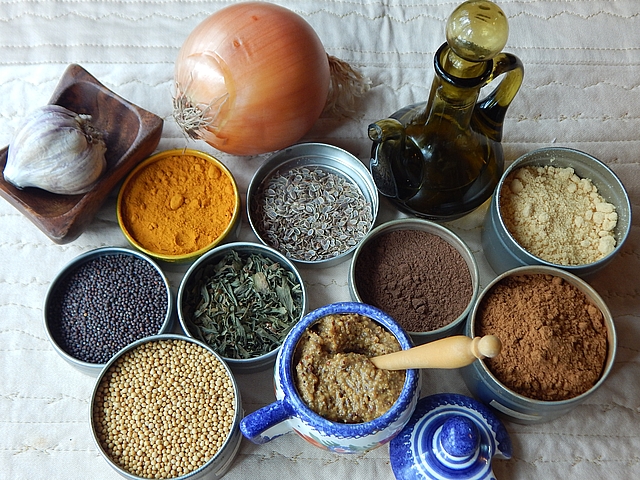
Finding Flavor

My wintertime food cravings can be summed up in one word: flavor. Learn more at TwiceasTasty.com.
It’s been a mild winter in northwest Montana—until now. Temperatures dropped more than 40°F over the weekend into negative digits. Our annual cold snap always makes me cozy up by the fire and crave the heat and taste of summer.

This craving ties directly to the effort I put into freezing, canning, and otherwise preserving the vegetables and fruits of summer: I know my coldest winter days will feel warmer if I don’t have to rely on mealy out-of-season tomatoes and tasteless lettuce. My wintertime food cravings can be summed up in one word: flavor. Here’s how I ensure I can satisfy my cravings on the coldest days.
Read more about finding flavor

Sourdough Rye Bread

I craved tangy rye bread long before I started working with sourdough—or discovered a meatless Reuben. Get sourdough and vegetarian recipes at TwiceasTasty.com.
I was on a mission to make a tangy rye bread long before I started working with sourdough. It all began when I arrived in St. Petersburg, Russia, on one of the coldest days on record. I’d just come from Norway, where I’d fallen in love with gjetost, a whey-based goat cheese that’s the color of caramel, has the richness of fudge, and melts on your tongue. Before leaving the country, I splurged on a log so large you can’t find it in the States. It was usually served with dry crispbread in Norway. Once I was settled in Russia, I discovered my favorite pairing for the cheese: Russian black bread.

The rye bread I ate in Russian bore little resemblance to what’s typically labeled “Russian rye” in America: no instant coffee, no cocoa powder, no caraway, no corn syrup. It was simply flour, water, and salt, all leavened with a sponge or starter. In other words, a sourdough bread. The problem was getting a recipe. Bread was subsidized when I was in Russia; a rye loaf cost 33p (about $1), and no one I met in the city was making it at home. The bakers where I bought my bread clearly thought I was a crazy American when I asked for the recipe: they started spouting ratios I could barely understand that seemed to start with about 50 pounds of flour.
Learn to make Sourdough Rye Bread and Gorgeous Grilled Cheese

Sourdough Naan

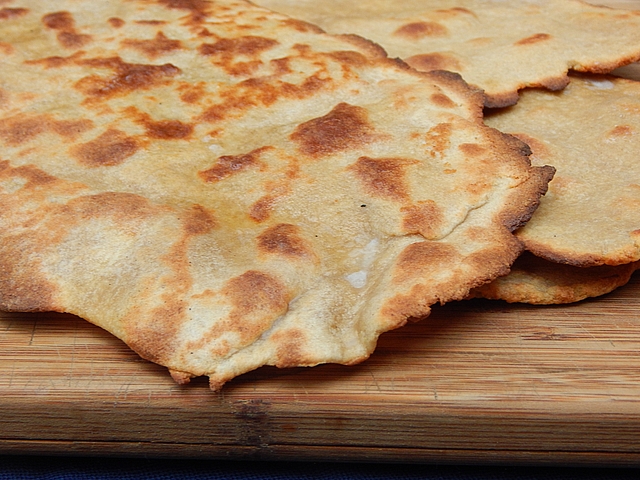
I bake sourdough because it’s delicious. But many people find its tangy flavor because they have problems digesting other breads. Get sourdough recipes at TwiceasTasty.com.
I bake sourdough because it’s delicious. But many people discover its tangy flavor because they have problems digesting other breads. Studies have found that sourdough—particularly homemade, long-ferment sourdough—is not only easier to digest but may have bonus health benefits. It makes sense if you think about it: You feed your sourdough starter flour. It eats it, turning it into more wild yeast and healthy bacteria. When you use it to make a bread, the longer the dough sits, the more it predigests the flour for you. As it does this, the sourdough bacteria release micronutrients, neutralize phytic acid, and stabilize blood sugar levels. And this all makes the bread twice as tasty.

The upshot is that if you have a gluten sensitivity but have not been diagnosed with full-blown celiac disease, you may be able to eat homemade sourdough breads. I’m not a doctor or nutritionist, so you should discuss this with yours, but there’s disagreement on whether gluten-free products, particularly commercially processed ones, are better than their homemade, wheat-based counterparts if you don’t have immune reactions to gluten.
Learn to make Low-Gluten Sourdough Naan and Spiced Red Lentil Dip

Winter Warmers

I’ve adapted family recipes for spiced rum and wine to suit my tastes: less sugar and more spice. Get winter warmer recipes at TwiceasTasty.com.
It may sound odd to have childhood memories of hot cocktails, but the scents of warm spiced rum and wine mingle with those of a freshly cut tree in my mind. My dad in particular is a fan of hot buttered rum, and for years my mom’s homemade mix was a holiday staple. Mulled wine was another family tradition, but I associate it with New Year’s Day, when my sister and I would go with my mom to a puzzle party. Several tables of complicated jigsaw puzzles would fill the living room, but the boxes showing the finished picture were always hidden away. We would spend hours linking together pieces, often the only kids amid a roomful of adults. The scent of warm spices hit you the moment the hostess opened the front door.

Now that I’m old enough to enjoy not just the smell but also the taste of winter warmers, I’ve adapted the family recipes to suit my tastes: less sugar and more spice. Don’t hesitate to adapt these recipes yet again until you decide they’re filled with everything nice. Learn to make Hot Buttered Rum and Gløgg

Reusable Produce and Gift Bags

Homemade reusable cloth bags can transport and store produce, bulk food, and gifts. Learn more at TwiceasTasty.com.
No matter how you celebrate, the year’s end brings a giving mood. In my family, handmade gifts have always dominated. The Christmas tree nearly topples over from the weight of handmade ornaments. Someone is always sporting a handknitted sweater or mittens after presents are unwrapped. Pantries fill with home-canned jars as quickly as trays empty of homemade cookies.

My Twice as Tasty gift to you this year is not only handmade but useful and reusable: cloth produce and bulk food bags. They’re so easy to make you’ll quickly have a stash, so you can even use them as gift bags for your homemade treats and other presents. For each one you give away, you dispense with gift paper, ribbons, and tape and instead wrap your gift in a fabric bag that can be reused or regifted.
Read more about making reusable cloth bags

Pantry Dinners

I love to play in the kitchen, but I also love easy meals. Get pantry-based recipes at TwiceasTasty.com.
As much as I love to play in the kitchen, even I have days when I want an easy meal. But most people who eat my easy meals can’t believe food this good can be so easy. The secret is in what I’m emphasizing all month: a well-stocked basic pantry.

Some of my favorite easy meals developed from flavors I fell in love with while exploring other countries and cultures. My freezer always holds a bag of frozen shrimp, often destined for the grill. But on rainy, freezing, or just plain lazy nights, a cast-iron skillet and oven broiler fill in beautifully. Add some oil, a couple of spices, and a lot of garlic, and the meal brings back memories of Spanish tapas bars and gambas al ajillo. If I cooked up a pot of beans earlier in the week, or have a can stashed on the shelf, I can sip wine, think fondly of Italy, and have a surprisingly filling vegetarian or vegan pasta on the table in less than 30 minutes.
Learn to make Spanish Shrimp in Garlic Oil and Smashed Bean Pasta

In the Pantry

The secret to a well-stocked pantry is to keep small quantities of a large number of basic ingredients. Discover pantry essentials at TwiceasTasty.com.At 500 square feet, my house has a smaller kitchen and less food-storage space than most. Yet at any given moment, I can conjure a dozen of meals for a dozen people—I just need to find places for them to sit.

The secret to a well-stocked pantry is to keep small quantities of a large number of basic ingredients. Instead of buying prepackaged meals, sauces, and mixes, you can store fruits, vegetables, grains, dairy, proteins, and flavorings individually and mix them in endless variations. I dedicate at least half my pantry and most of my freezer and fridge space to such items. I fill the rest with homemade items that let me shortcut regularly used recipes, from stocks to pestos to condiments.

The advantages go beyond versatility. Stocking your pantry in this manner means your ingredients stay fresh, you can spend your money on quality items instead of large quantities that go stale before you finish them, and you’ll always open the fridge or cupboard and find something you want to eat.
Read more about improving your pantry

Quick Ferments

When vegetables are sliced or pureed before fermentation, it’s easy to use them straight from the jar. Get veggie ferment recipes at TwiceasTasty.com.
If you’re new to vegetable fermentation, you likely look at recipes and think, “Can it be that easy?” This instantly leads to the terrifying thought, “It can’t; surely I’ll get it wrong.” So to kick off this month’s recipes for vegetable ferments, I offer my most foolproof recipe for your first foray into fermentation. Here, the carrots actually aren’t fully fermented; they sit barely long enough to kick off the process. Still, they use a lot of the techniques that apply to full fermentation of other vegetables: salting, weighting to encourage the carrots to release even liquid, and a rest period to pull even more water and sugars from the produce. Because these carrots are prepared as thin ribbons, it’s easy to open the jar and slide a few onto a sandwich, into a sourdough pita, or straight into your mouth. The recipe is so simple that while you’re at it, you might as well prepare your own horseradish to go in the jar—especially if you’re growing it.
Learn to make Barely Fermented Carrots and Horseradish Paste

Carrots

Carrots caramelized in an open pan taste nothing like mushy boiled carrots. Get carrot recipes at TwiceasTasty.com.
If you grew up eating mushy cooked carrots from a school cafeteria or overworked mom, you’ll probably be tempted to skip over this recipe. I urge you to give it a chance. Carrots cooked in an open pan and glazed by a little butter and sugar remain bright and crisp-tender, like properly cooked pasta or Grilled Asparagus, with just a hint of bonus sweetness. Try it once, and you’ll never boil carrots again.

Although the recipe works with any carrots—store bought or homegrown, baby carrots in May or storage carrots in January—it shines in August. The carrots I pull in late summer are finger thick, crunchy, and naturally sweet. Best of all, they come with gorgeous green, feathery tops that can be mixed into a tasty, herb-heavy salsa. If you aren’t growing your own carrots, ask your farmer to leave the tops intact and use them the day you pick them up at the market or receive your CSA share.
Learn to make Glazed Carrots and Carrot-Top and Herb Salsa

Watermelon

The nose-to-tail approach to cooking meats could be called tip to top for vegetables and fruits. Get whole watermelon recipes at TwiceasTasty.com.
Amid summer’s bounty, as I haul bags and boxes of produce from garden to kitchen, I always want more. I clean and trim and slice and wonder whether each root tip and leafy top that lands in my compost bucket could find its way into a dish or jar instead. The nose-to-tail approach to cooking meats could be called tip to top for vegetables and fruits, and that remains my goal throughout the growing season. It’s a goal that aligns nicely with this week’s challenge for the Montana Local Food Challenge.

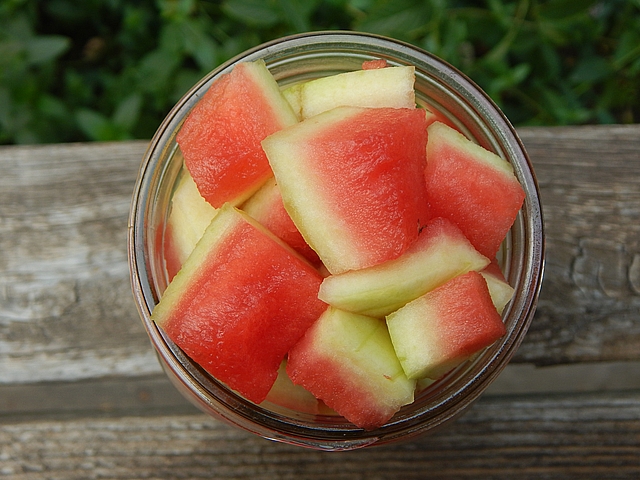
Some of your harvest lends itself easily to the idea: people eat beet greens as readily as beet roots. Others seem obvious when you think about it. Like peas? The shoots carry a similar flavor and can be turned into pesto or simply mixed into salads. Grow storage onions? The green tops can be used like scallions and even lightly trimmed while the bulbs are still growing. And the classic processed watermelon rind pickle can be ready to eat alongside the juicy pink melon.
Learn to make Quick-Pickled Watermelon Rind and Watermelon–Feta Salad