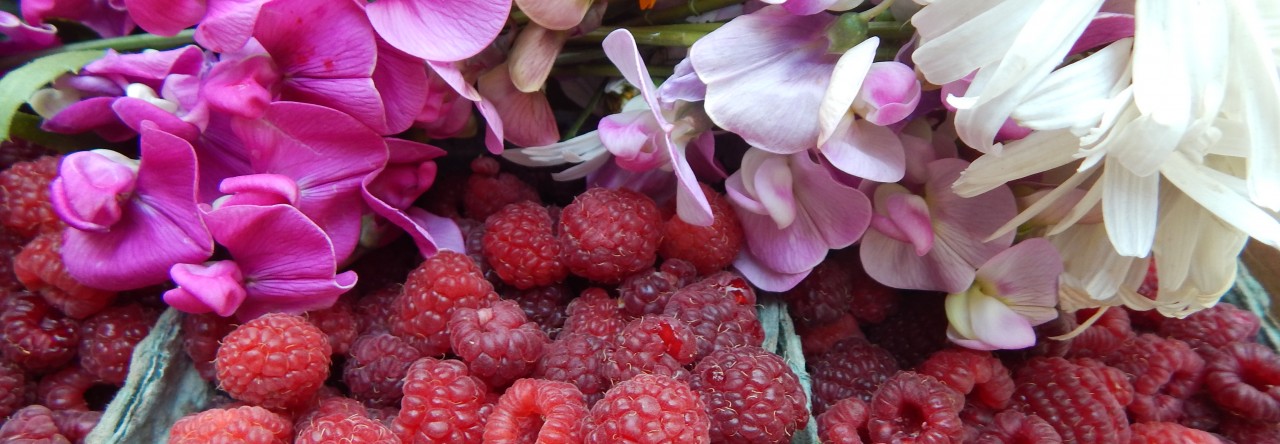

Herb-Infused Sugar

An infused version can replace sugar in any recipe but has the most impact as sweetener for whipped cream or frosting, on baked goods, or in beverages. Learn more at TwiceasTasty.com.
I preserve more herbs and other foods in salt than in sugar, but if you have a sweet tooth, you might do the reverse. As I explain this week in my Twice as Tasty column for the Flathead Beacon, sugar, like salt, absorbs moisture and oils and inhibits spoilage. In high concentrations, such as in jams made without pectin, sugar traps enough water that microorganisms can’t grow. Once unsealed and refrigerated, such jams last longer than low-sugar jams, and mold usually forms only on the surface and only after weeks of air exposure.

As sugar absorbs natural oils from herbs and spices, it also picks up their flavor. Vanilla sugar is a simple example—and a fantastic way to repurpose a vanilla bean pod once you’ve scraped out the seeds for jam, buttercream, or a sweet sauce. You get the same effect when you infuse sugar with herbs, edible flowers, and other botanicals. You can use these in any recipe that calls for sugar, but they have the most impact when used to sweeten whipped cream or frosting, sprinkled on baked goods, baked into simple ones like shortbread, or stirred into a beverage.
Learn to make Herb-Infused Sugar
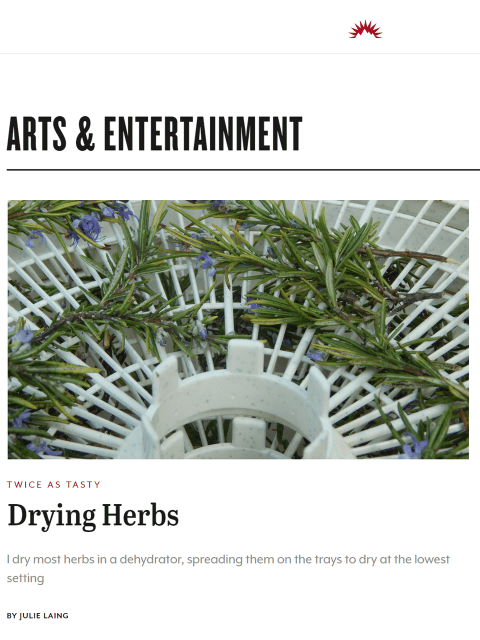
Drying Fresh Herbs

Drying fresh herbs yourself is easy, saves money, and gives the best flavor. Learn more at TwiceasTasty.com.
Almost everything I cook has a fresh or dried herb in it—and even if you barely cook, I’d bet you have at least a couple of jars of dried herbs in your kitchen. But as I explain this week in my Twice as Tasty column for the Flathead Beacon, drying fresh herbs yourself, whether homegrown or store-bought, is an easy DIY project that will result in far better flavor and cost far less than commercially packed jars of dried leaves.

The column focuses on tips that will help you successfully dry a range of fresh herbs, but the first step may be to grow your own. Many herbs grow well in pots on a windowsill or deck. If you have more space, you can plant many types of perennial herbs now and see them pop up on their own year after year. Some can even grow until they produce seeds that you can save to cook with or to replant, such as fresh cilantro and its seed, coriander. And like sourdough starter, herbs love to be used: the more you cut them to use fresh or to dry, the more they grow and produce.
Learn about drying and using herbs