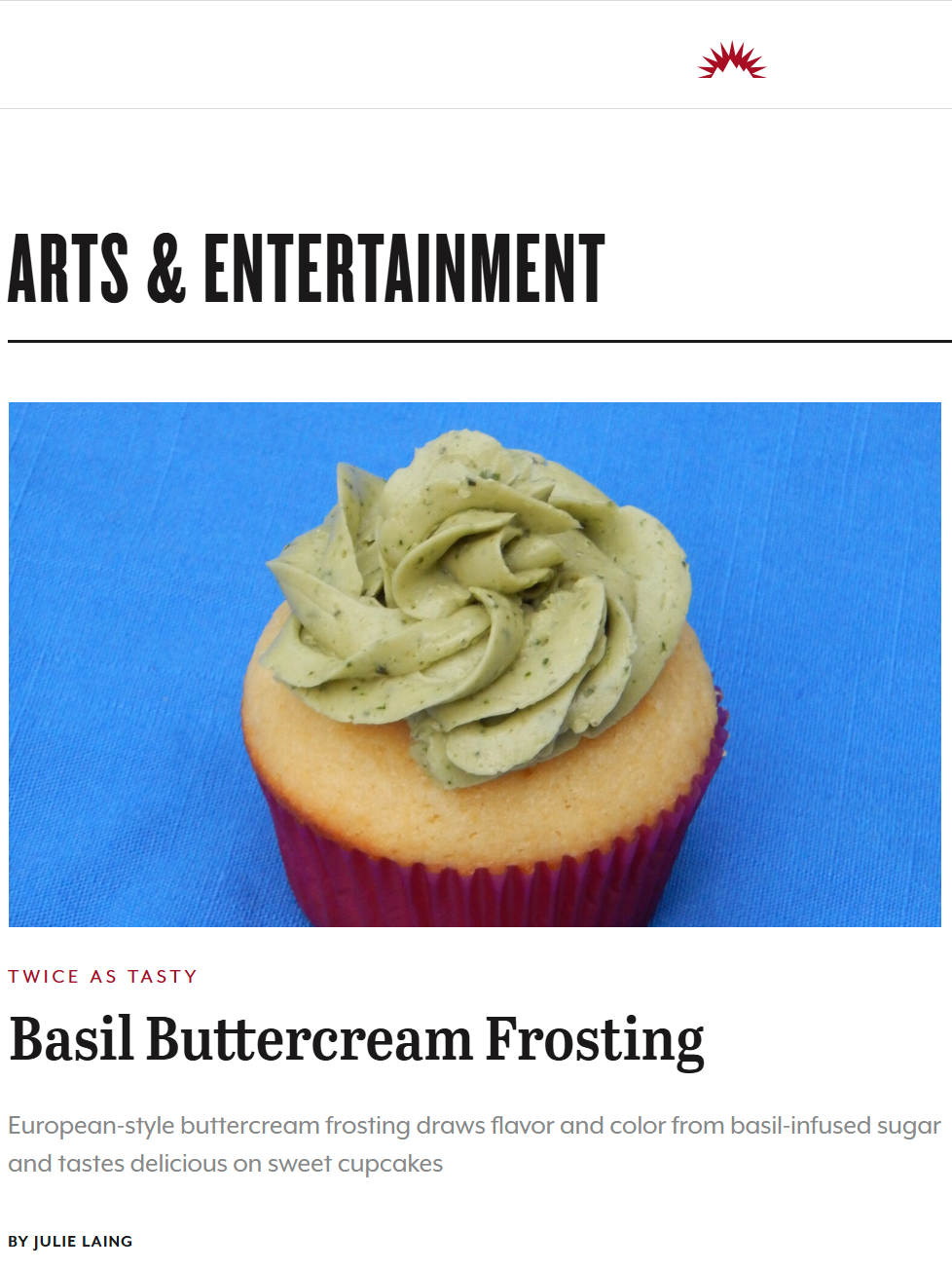
Basil Buttercream Frosting

Buttercream accepts almost any flavor, from classic chocolate or vanilla bean to the unexpected in both color and taste. Learn more at TwiceasTasty.com.
My favorite childhood birthday cake was angel food, partly because it was always so light and airy and partly because it didn’t call for frosting. I was never a fan of the frostings that topped typical children’s cakes, which tasted supersweet and set up almost as stiff as pavlova. It wasn’t until I learned to make buttercream that I truly embraced frosted desserts.

As I explain this week in my Twice as Tasty column for the Flathead Beacon, a good buttercream frosting is both rich and airy. It practically melts on your tongue, without leaving it feeling coated in sugar crystals. It accepts almost any flavor, from classic chocolate or vanilla bean to the unexpected in both color and taste, like the leafy green hue and hints of spiciness and anise imparted by basil.
Learn to make Basil Buttercream Frosting
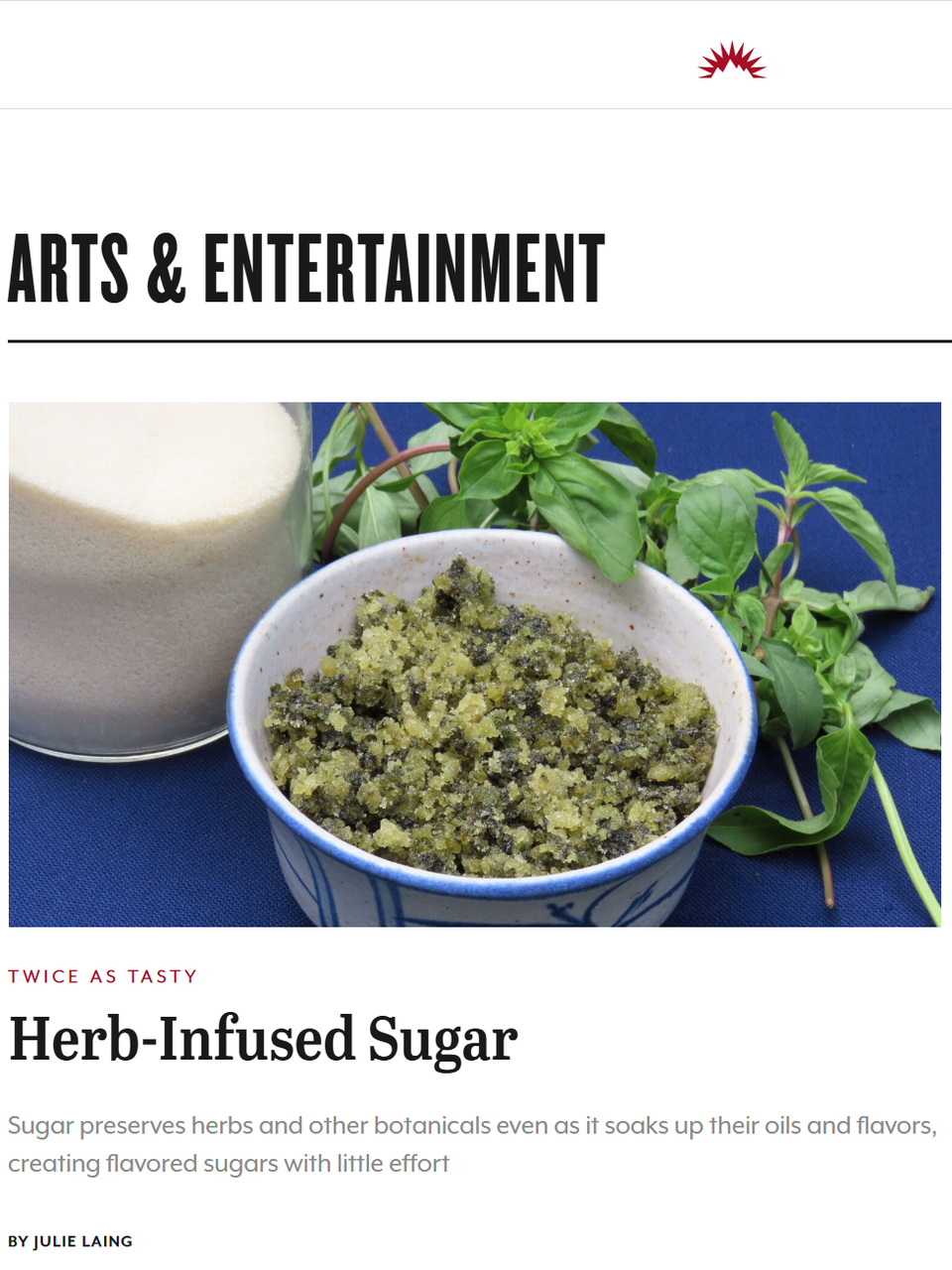
Herb-Infused Sugar

An infused version can replace sugar in any recipe but has the most impact as sweetener for whipped cream or frosting, on baked goods, or in beverages. Learn more at TwiceasTasty.com.
I preserve more herbs and other foods in salt than in sugar, but if you have a sweet tooth, you might do the reverse. As I explain this week in my Twice as Tasty column for the Flathead Beacon, sugar, like salt, absorbs moisture and oils and inhibits spoilage. In high concentrations, such as in jams made without pectin, sugar traps enough water that microorganisms can’t grow. Once unsealed and refrigerated, such jams last longer than low-sugar jams, and mold usually forms only on the surface and only after weeks of air exposure.

As sugar absorbs natural oils from herbs and spices, it also picks up their flavor. Vanilla sugar is a simple example—and a fantastic way to repurpose a vanilla bean pod once you’ve scraped out the seeds for jam, buttercream, or a sweet sauce. You get the same effect when you infuse sugar with herbs, edible flowers, and other botanicals. You can use these in any recipe that calls for sugar, but they have the most impact when used to sweeten whipped cream or frosting, sprinkled on baked goods, baked into simple ones like shortbread, or stirred into a beverage.
Learn to make Herb-Infused Sugar