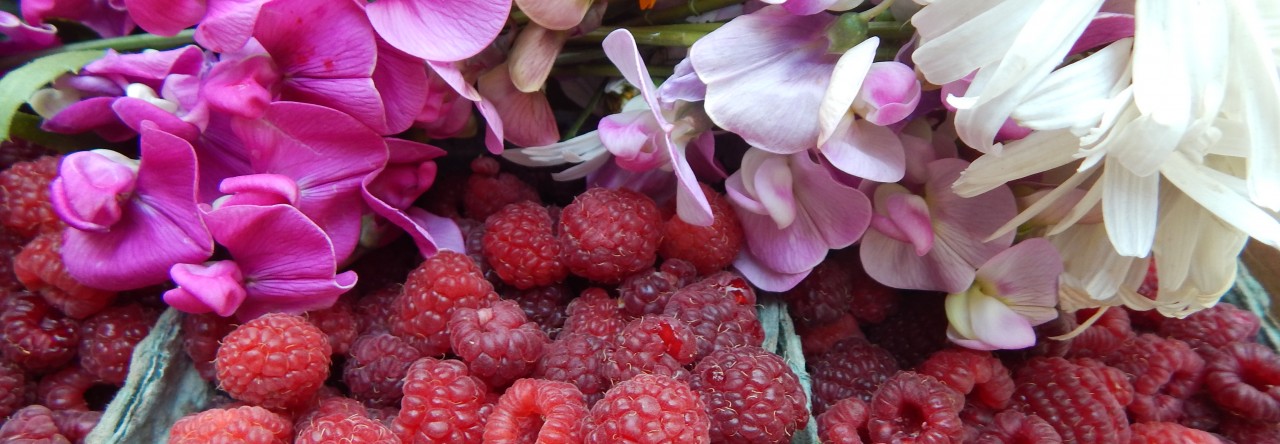
When I mention this blog, it rarely takes noncanners long to reveal they are afraid of making their family sick and to ask for the secret to canning safely. Their fear is of the big, scary B word: botulism. But what strikes me is their belief that they need to be let in on a secret to avoid it.
Honestly, there is no secret to safe canning. Everything you need to know is in every decent book and on every decent website that covers the topic. Canning is a process, but it’s not a mysterious one: If you can follow directions, you can get it right. Or, in the words of Kevin West, author of the fabulously informative Saving the Season, “If you can safely prepare chicken, a potential vector for food-borne pathogens such as salmonella, then you can handle home canning.”
Unfortunately, botulism has become a boogeyman, the arch villain of a cautionary tale who peers over the rim of a boiling water bath at many home canners. It doesn’t have to be that way.
What Is Botulism?
The first step to overcoming a fear is to understand it. So let’s get somewhat scientific for a moment. According to the U.S. Department of Agriculture, Clostridium botulinum is a bacterium that is “found everywhere” and “generally harmless.” But when its spores grow and reproduce, they release a toxin that causes botulism. This illness can be deadly if not treated immediately. And the ideal environment for the bacteria’s growth is a jar of improperly processed food.
It sounds scary, right? The thing is, botulism is easy to avoid and extremely rare. The Centers for Disease Control and Prevention estimates that 1 in 5 people can food at home, yet its latest, 2014 report confirms only 15 cases of foodborne botulism. In comparison, the U.S. Food and Drug Administration reports an annual estimate of 48 million cases of foodborne illness in the country—or 1 in 6 people—from E. coli, Salmonella, and other cooties, few of which come from homegrown, home-canned foods. So botulism shouldn’t keep you from canning; it should simply remind you to do so safely.
How Do I Can Safely?
The opening paragraph of the USDA’s Complete Guide to Home Canning, 2015 revision, begins, “Caution: All home-canned foods should be canned according to the procedures in this Guide. Low-acid and tomato foods not canned according to the recommendations in this publication or according to other USDA-endorsed recommendations present a risk of botulism.” With all due respect to government public health officials, this sounds to me like the opening lines of 196 pages of fine-print legalese rather than encouragement and support to people about to process their first jars of homegrown raspberries. But read those sentences more closely, and the dementor becomes a boggart. All you need to finish it off is acid or heat. Here’s why.

- Bacteria do not grow well in high-acid foods. The acid prevents them from growing, including the bacteria that cause botulism. High-acid foods have a pH of no more than 4.6. And guess what? Almost all fruits are naturally below that pH level. So you can’t get botulism by canning at home, in a boiling water bath, a jar of Apricot–Raspberry–Mint Jam, applesauce, or plum preserves. The U.S. Food and Drug Administration backs this up with a list of the pH for almost anything you may want to can at home. (Update: The link to the FDA’s list was broken when I last checked, so I’ve provided the version I downloaded when writing this post.) Simply scroll down to find the item you want to process. If it has a 4.6 pH or lower, you’re good to go.
- Again, acidity kills bacteria. So adding the right amount of acid erases the fear of botulism for any food naturally low in acid. Low-acid foods are mostly vegetables, fish, and meat. The trick to canning these in a simple water bath is to find out how much acid to add to lower the pH to the safe zone. Some foods, like tomatoes, are on the cusp, so it takes just a tablespoon or two of lemon juice or vinegar to ensure you’ve killed the nasties. Others, such as snap beans, need to be pickled in a large amount of vinegar before they go into the water-bath canner. This is why tested recipes are useful, but the math isn’t that hard: Canning guru Linda Ziedrich points out that a 1:1 ratio of 5% acidity vinegar to water ensures you can pickle just about anything. So savor that sharp bite of Dilly Beans—you’ll never get botulism from them.
- Extreme heat kills bacteria. Even hardy C. botulinum spores can’t survive temperatures above 240°F. In other words, they are destroyed by pressure canning. So if pickled vegetables and meats aren’t appealing, it may be worth forking out for a pressure canner. Get one that is certified by Underwriters Laboratories, which tests and approves this tool; look for one that has the UL safety symbol. Small pressure cookers that may be handy for a fresh meal with dried beans or a thick cut of meat won’t hold a full round of jars or hit the temperature required for long-term storage.
- When in doubt, throw it out. Just as with a car, your canning process won’t start, move forward, and stop safely if you just wing it or become distracted and miss a key step. If you lose count while measuring vinegar, forget to set your timer, or fear you’ve made any other mistake along the way, it’s okay to chalk it up to experience, toss that batch, and begin again. Letting a finished jar that you’re afraid to open sit on your shelf for years won’t make you more confident in that particular jar or the next one you want to can. Canning safely isn’t just about avoiding botulism; it’s about preserving good food you’ve taken time to grow or acquire and gaining the confidence to continue to do so.
But what about those items on the FDA’s list above a 4.6 pH? You can still can them and never risk botulism, and you have two options for doing so.
But what if you don’t like the zing of pickled beans, or if you are rich in salmon, potatoes, or anything else you can’t imagine as a pickle? This leads to your other option for low-acid foods.
Once you’ve decided to kill off bacteria with acid or heat, it’s simply a matter of following the steps that seal your jars. Think of it like learning to drive a car: The process may be a little jerky at first, but the more you do it, the smoother it gets. Which brings us to one final rule of safe canning.
If you’re still worried that you could make your family sick, consider this (again from Saving the Season’s Kevin West): “Often more than one preserving agent is at play…. When we make marmalade at home, we start with citrus (which has natural acidity), then add sugar and concentrate it by boiling (lowering water activity). Next we ladle the hot product into a Mason jar (hermetically sealed container) and process it in a boiling-water bath (thermal processing).” In that description alone, I count four ways in which not just C. botulinum but any other food spoilers are defeated. You can’t get much safer than that.
Discover more from Twice as Tasty
Subscribe to get the latest posts sent to your email.

Last night I water bathed 5 pint jars of banana jam! Then I read that bananas have no acid n that’s why they aren’t usually jarred. But the recipe called for 4 tbs. of lemon juice. They all sealed in the waterbath. i opened one jar this morning n it was delish. I put half a cinnamon stick in each jar b4 I sealed it. My own idea. I want to give a few away but now I’m worried if maybe the half cinnamon stick wasn’t a good idea. I’m new at this. For the last 3 yrs I’ve just been making jams. Thanks in advance for you thoughts on this.
Angelina Daries
LikeLike
How exciting that you’re enjoying canning! Unfortunately, you’re right about the low acidity of bananas; they’re also a dense fruit, and I don’t know of any tested recipes for safely canning them on their own. But there are some safe recipes that include bananas. This link has some great info: https://www.healthycanning.com/canning-bananas. As for the cinnamon stick its usually added while cooking the jam to infuse it with flavor but then removed before canning. I’m not sure if there are food safety concerns, but the cinnamon flavor will get stronger the longer the jars sit–perhaps overpoweringly so.
LikeLike
I just canned candied jalapenos, to give away for Christmas and the ‘B’ word has me stressed out, so much so I want to throw them all out and never can again. I used a recipe from a blog on You Tube and compared it to the Ball recipe. They are very similar as far as amounts of sugar, vinegar and jalapeños. I cooked the jalapenos in apple cider vinegar and sugar with a little salt. Put the cooked peppers in the jar and filled with the brine. Does this sugar and vinegar brine kill the nasties and I don’t have to worry about the “b” word.
LikeLike
The Candied Jalapeños recipe and instructions on the Ball website are safe for canning without stress about the “b” word, so any concern would come in differences between it and the recipe you followed. You’re worry-free if the vinegar you used was 5% acidity and had the same ratio of vinegar to jalapenos as the Ball recipe, if you didn’t increase the garlic (another low-acid ingredient), and if you processed like Ball in pint or smaller jars for 15 minutes plus your altitude adjustment, following safe water bath processing practices. Changes to any of those points would be cause for concern. Changes just to the spices used, or leaving them out, won’t affect the safety of your jars, and you can gift them without worry!
LikeLike
I may have used 1/2 cup to little vinegar but it was 5%. I also believe I processed 5 minutes to less, and one batch for 15. I didn’t know I was supposed to adjust for the altitude. I am in Mesa Arizona and the altitude is 1440. I have read a couple of things where it’s one minute per 1000. Is that correct? Would refrigerating these batches make it safe? Or should I throw out. I have given several jars out but everybody I spoke to has already opened them and has them refrigerated.
I did think it was fun canning but I will be way more aware next time.
Deena
Sent from my iPhone
LikeLike
Correction to previous reply:
I may have used “1/4 cup” too little vinegar but it was 5%. Also, I processed one batch for 11 minutes, but I processed the other one for 15. I didn’t know I was supposed to adjust for the altitude. I am in Mesa Arizona and the altitude is 1440. I have read a couple of things where it’s one minute per more per 1000 altitude. Is that correct? Would refrigerating these batches make it stable? Or should I throw out. I have given several jars out but everybody to put in the fridge. Others have already opened them and has them refrigerated.
I did think it was fun canning but I will be way more aware next time.
Deena
Sent from my iPhone
LikeLike
I’m happy you’re excited to continue canning! I have quite a bit of info here on the blog’s Basics pages to help you out. If you haven’t done so already, I highly recommend checking out the National Center for Home Food Preservation website: https://nchfp.uga.edu/. It answers loads of questions on the general canning info page. And if you scroll to the bottom of the home page and click “Publications,” you can download The USDA Complete Guide to Home Canning for free.
Water boils at a lower temperate as altitude increases, so the altitude adjustment in processing times is designed to compensate for that. The guideline has changed in recent years to add 5-minute increments within an elevation range. Your altitude is in the 1001-3000 feet range, so you need to add 5 minutes to any published processing time.
As for your current project, since peppers are low in acid naturally, the vinegar’s job is to kill Clostridium botulinum spores. The boiling water bath time’s job is to heat the jars’ contents through to the center, killing other undesirable microorganisms while sealing the jars against the formation of new ones. Coming up short on the vinegar and time could mean that they were less effective at their jobs. So you are running a risk with this batch. When ingredients or processing times fell short, the USDA’s recommendation is to refrigerate them within 24 hours of processing or throw them out.
Sorry to be the bearer of bad news! You’re on the right track and asking all the right questions. With a little more awareness, I’m sure your next batch will be fabulous.
LikeLike
Thank you so much… I just used potatoes I’d pressure canned & have been battling the “b” word boogeyman. The potatoes were as beautiful as the day I canned then last year. No odd smell, no odd taste, the lid was so tight, an opener had to be used. Thank you for calming my fear.
LikeLike
I’m so happy I could do so! You worked hard to pressure can those potatoes and should enjoy them.
LikeLike