
It can be easy to write off certain recipes as too much work, but sometimes the effort really is worth it. That’s how I feel about the detailed recipe for gnocchi that I share this week in my Twice as Tasty column for the Flathead Beacon. When I crave gnocchi, only the scratch-made version satisfies me.
Gnocchi take both hands-on and rest time, and even with a large batch, the results only last a couple of meals—although they do freeze well. Once I start the project and get my hands right in the dough, I find it soothing to feel how it comes together and to repeat the roll, cut, and imprint process until I have dozens of neat rows of dumplings lined up on baking sheets.
Potato gnocchi also became more fun to make when I found just the right balance of ingredients and techniques to use my homegrown potatoes yet keep them light and fluffy. When testing showed that a local chef’s recommendation to pan-fry the dumplings produced less gummy gnocchi than boiling, along with a lightly crisped surface, making gnocchi became one of my favorite rainy day kitchen projects.
Learn more about scratch-made gnocchi and get the complete recipe for Homemade Pan-Fried Potato Gnocchi in my column.
 Make it, share it.
Tag @twiceastastyblog and #twiceastastyblog

Twice as Tasty
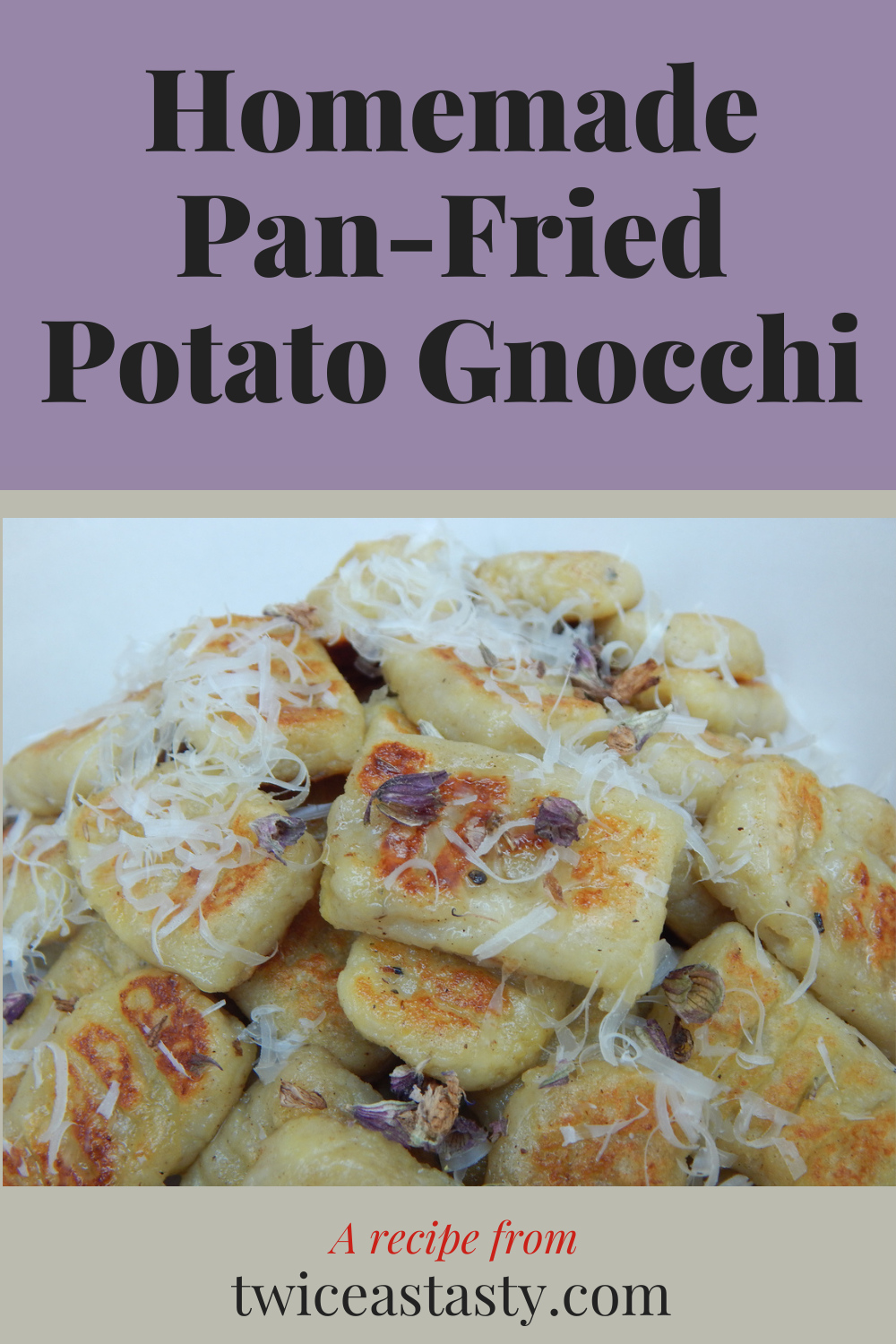 When I was perfecting my potato gnocchi recipe, my first priority was to be able to use my homegrown potatoes. Most gnocchi recipes specify starchy potatoes, like Burbank russets or big Idaho bakers with thick skins and dry flesh. But I mainly grow more waxy potatoes: red, white, and yellow varieties with names like Norland, Yukon Gold, and Yukon Gem, plus specialties like Terra Rosa, Purple Majesty and Huckleberry Gold. Their softer, creamier flesh holds more moisture inside thin skins, which makes them more challenging to mix into gnocchi.
My first thought when using these potatoes was to add more flour, but that just makes the dumplings taste pasty. I get better results when I let extended time in the oven, at room temperature and then in the refrigerator’s cold air dry out the flesh. Minimally working in the flour and fatty egg yolks, without the whites, also creates the lightest gnocchi.
A few tools are particularly helpful when making gnocchi:
- Kitchen scale: A scale ensures you get just the right amount of potato in the dumplings, without compacting the crumbled flesh into a measuring cup. I use my compact digital scale almost daily, from mixing dough for Sourdough Cabin Bread to weighing out vegetables for Grilled Tomato Pizza Sauce. I’ve written about my favorite digital scale for The Spruce Eats.
- Dough or bench scraper: This handy tool lets you combine the gnocchi ingredients into a soft dough without kneading and pressing it into a dense ball. This is another multipurpose tool that I continually find new ways to use, as I explain in this article for Allrecipes.com.
- Ricer: A potato ricer does a similar job on potatoes to a sifter on flour or powdered sugar, evenly breaking apart the clumps. I don’t use it as frequently as the other kitchen tools I recommend for gnocchi, but it’s so much easier to use and more effective than a fine-mesh sieve that I don’t mind storing it. Other handy uses include ricing cauliflower, smoothing out purees like guacamole and roasted winter squash, and pressing liquid from cooked greens.
- Baking stone: My large baking stone lives full time in my oven. If I’m not setting food directly on it, I slide it onto a rack below whatever I’m cooking, where it helps to evenly distribute heat. For whole potatoes, it improves heat penetration so that the flesh cooks consistently to the center. I also bake almost all of my sourdough creations directly on the stone, from loaves to pizza.
My baking stone holds about 6 pounds of potatoes, so I typically set aside enough time to make a double batch of gnocchi and then freeze the extra trays of dumplings. Freeze them directly on the baking tray for a couple of hours, until firm, and then transfer the gnocchi to freezer-safe zip-close or vacuum-sealed bags for long-term storage. Pan-fry the gnocchi while still frozen, adding a couple of extra minutes to the cooking time.
I often serve gnocchi simply, with a drizzle of browned butter, sprinkling of grated Parmesan, and fresh sage flowers and leaves. Other tasty saucing options include Grilled Sweet Pepper Sauce and Vegetarian Mushroom Gravy. You can find more sauce ideas in the recipe index. If you want to pair those sauces with other homemade pasta, check out this blog post.
Want more Twice as Tasty recipes? Get my books! Click here to order a personally signed, packaged, and shipped copy of The Complete Guide to Pickling directly from me. I also share tasty ways to use pickles in The Pickled Picnic; it’s only available here.
Discover more from Twice as Tasty
Subscribe to get the latest posts sent to your email.
