Roasted Raspberry Syrup

I use four techniques to separate fruit juice from pulp for fruit syrups and shrubs. Oven-roasting adds rich, caramelized notes. Learn more at TwiceasTasty.com.
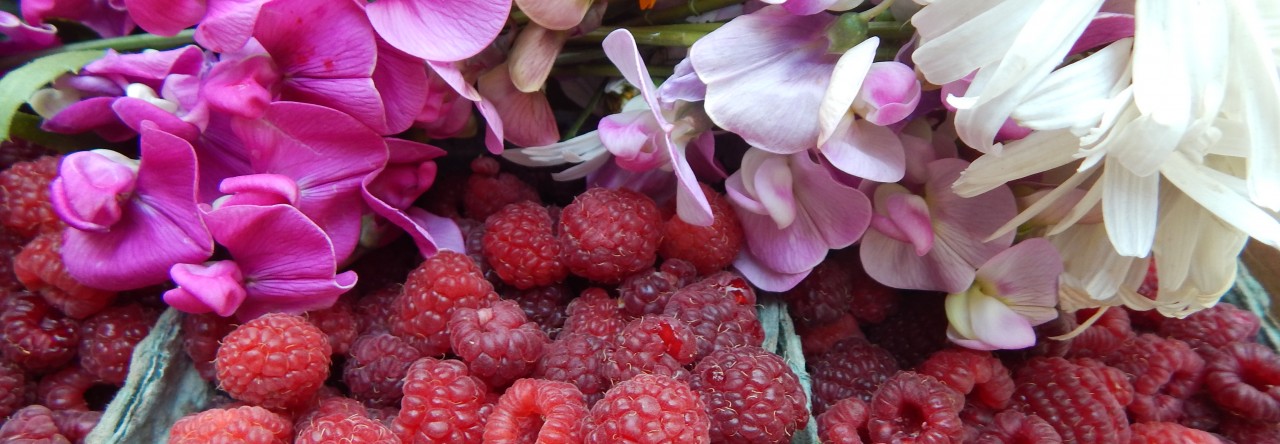
Fruit syrups are easy to make—if you create a jar at a time or have a bumper crop of fruit and a plan to use the remaining solids. As I explain this week in my Twice as Tasty column for the Flathead Beacon, it takes about 3 pounds of berries to create about 2 cups of syrup. When you use raspberries for syrups or their tangy cousins, drinking shrubs, roasting the berries and straining off the juice leaves a couple of pounds of sweetened seedy pulp. I hate to dump such a large mound straight into the compost. I primarily freeze the pulp in cubes to blend into smoothies instead of whole raspberries and notice little difference in the overall seediness.

Other easy uses that make berry pulp versus whole fruit less noticeable include granola: Dry the pulp in sheets and crumble it into the mixture of grains, seeds, and nuts. Some baked goods, like quick bread, can handle a certain volume of seedy pulp. The berry pulp still has enough flavor to infuse vodka or vinegar.
Learn to make Roasted Raspberry Syrup

Lemon Tahini Sauce or Dressing

Brightening tahini with lemon makes it surprisingly versatile. Use it as a drizzle-worthy sauce, a pourable salad dressing, or a yogurt or herb-laden dip. Learn more at TwiceasTasty.com.
The first thing I thought when snapping and choosing photos for this week’s Twice as Tasty column for the Flathead Beacon was that everyone would think I’d squirted yellow American mustard on falafel. The impression couldn’t be further from the truth. The bright yellow sauce that I share in this week’s column does get its color from turmeric, but the flavor is entirely the bright citrus tang of lemon, the pungent bite of garlic, and the earthy, slightly bitter taste of tahini.

Given its layers of flavor, Lemon Tahini Sauce is surprisingly versatile. In my recipe, I give options for making it into a thicker drizzle-worthy sauce or a thinner pourable salad dressing. Leave the minced garlic chunky or puree the mixture until smooth. Add yogurt or fresh herbs to make it a dip, and swap in lime juice as a flavor variation.

Learn to make Lemon Tahini Sauce or Dressing

Chickpea Vegetable Skillet with Couscous and Feta

Veggie couscous works as garden-to-table meal or one that fits neatly in a cooler and kitchen box on the water or in a campground. Learn more at TwiceasTasty.com.
My garden is bountiful so far this year, and many of my home-cooked meals begin with me spreading out my harvest on the counter and chopping up a little of everything for an impromptu, no-recipe vegetable sauté, salad, or pasta meal. But when I’m not making dinner at home these days, I’m usually making it aboard our sailboat, the Blue Mule, where my range of options becomes more limited. One of the beauties of the recipe I share this week in my Twice as Tasty column for the Flathead Beacon is that you can approach it as garden-to-table meal or as a pantry-focused one that fits neatly in a cooler and kitchen box on the water or in a campground.

As I teach in my Fine Dining: Front Country workshop, the key to making such a veggie-heavy meal in the galley or at the campsite is to choose vegetables that travel well. Whole carrots, onions, and garlic can tumble around as the boat surfs waves or the car bounces down gravel roads, and they’ll still look and taste great at dinnertime. I pack small zucchini, so I don’t have a partial one left with an exposed cut edge that’s more susceptible to damage. I also tuck zukes and other tender vegetables into a plastic storage box that fits inside my ice chest and minimizes their bumping and bruising—and their direct exposure to melting ice.
Learn to make Chickpea Vegetable Skillet with Couscous and Feta

Marinated and Grilled Fish Skewers

Finfish works well on skewers as long as you choose a cut of a firm, meaty species that’s thick enough to cube and thread. Learn more at TwiceasTasty.com.
When I make kababs for the grill, I usually slide shrimp and vegetables onto skewers. But as I share this week in my Twice as Tasty column for the Flathead Beacon, finfish works equally well on skewers as long as you choose a cut of a firm, meaty species that’s thick enough to cube and thread.

My favorite grilled fish skewers start with offcuts of halibut, which my local fishmonger sells at a lower per-pound price than full fillets. Monkfish is another delicious fish kebabs option. The flesh of this rather ugly fish has a texture closer to lobster than to flaky white fish and stays intact on skewers. Striped bass, mahi-mahi, and Pacific cod loin, the thickest part of a cod fillet, also skewer well and soak up a lemon and herb marinade.
Learn to make Marinated and Grilled Fish Skewers

Raspberry Shrub Mocktail or Cocktail

Drinking shrubs are essentially homemade replacements for today’s highly popular flavored sparkling waters and hard seltzers—in even more delicious flavors. Learn more at TwiceasTasty.com.
Iced tea and fresh-squeezed juice are nice, but I like a little tang in my cooling, refreshing summer beverages—probably no surprise given that I’m the author of a pickling cookbook. When you open my fridge this time of year, you’re more likely to find several bottles of drinking shrubs and kombucha than jugs of iced tea. As I explain this week in my Twice as Tasty column for the Flathead Beacon, I enjoy drinking shrubs as nonalcoholic daytime drinks and use them as cocktail mixers.

Think of drinking shrubs as homemade replacements for today’s highly popular flavored sparkling waters and hard seltzers. Shrubs combine fruit, sugar, and vinegar into a concentrate that you dilute to taste with soda water. This lets you make homemade sparkling water as strongly flavored, tangy, or sweet as you like. But the concentrate has many more uses. Pour a splash into iced tea or lemonade for bonus flavor, or mix it with alcohol for a craft cocktail.
Learn to make Raspberry Shrub Mocktail or Cocktail

Strawberry Clafouti (Pudding Cake)

Claflouti, a fruit-topped pudding cake, isn’t as fancy as celebratory ganache-glazed cakes, spiral-topped tarts and neatly scooped sorbets. But boy, does it taste good. Learn more at TwiceasTasty.com.
When the name of a recipe tempts you to try it, a delicious result feels like a bonus. That was the case for me and clafouti, as I explain this week in my Twice as Tasty column for the Flathead Beacon. The pudding cake, with its uneven edges and layer of fruit that it arranges itself naturally as it rises to the top, isn’t as fancy as ganache-glazed cakes, precisely arranged tarts and neatly rounded scoops of sorbet that you might make for a special occasion (like, say, Twice as Tasty’s 9th anniversary). But boy, does clafouti taste good.

Claflouti (pronounced “claw-foo-tee”) reminds me of other sweet treats that are fun to say. Snickerdoodles have been a favorite since childhood. I’ve written about several others for Taste of Home, including Melomakarona and Apple Pandowdy.
Learn to make Strawberry Clafouti

Blackberry-Orange-Basil Sorbet

Nine years into writing this blog. I’m still having such fun playing with all sorts of food, including slipping botanicals into unexpected recipes. Learn more at TwiceasTasty.com.
We’ve had such warm weather lately that it was a joy to mix up a batch of berry sorbet in celebration of family birthdays—and 9 years of writing this blog. If you’ve been following along from the beginning, you’ve witnessed how my little personal food project expanded to include a pickling cookbook, the Twice as Tasty column for the Flathead Beacon, and articles and recipes for many other websites. I’m still having such fun playing with all sorts of food, especially slipping botanicals into unexpected recipes like sorbet.

Blackberries aren’t yet in season in the mountain and northwest regions, so I made this sorbet recipe from frozen fruit foraged last year and it tasted just as delicious as if the berries were fresh. Basil is just starting to produce enough leaves to sneak a few from the hoop house plants, although I also considered mint or thyme. The berries give this sorbet such an intense flavor that the herbal notes remain subtle, so experiment with whatever is at hand.
Learn to make Blackberry-Orange-Basil Sorbet

Pea Shoot Pesto

I intentionally plant peas too thickly and then thin and snip shoots to make fresh pesto—and help the plants grow bushier and produce more peapods. Learn more at TwiceasTasty.com.
I started making a springtime pesto with pea shoots in my first years of growing peas, when I heavily overplanted the beds and needed to thin them. It turned out to be so delicious that, as I explain this week in my Twice as Tasty column for the Flathead Beacon, I now intentionally plant peas too thickly and pinch off extras; I also snip upper shoots as the plants grow. This not only lets me make fresh pesto long before I can harvest basil but also helps the plants grow bushier and produce more peapods.

I think tender pea shoots are the sweetest and harvest them from both edible pod and shelling peas. Some people consider sugar snap shoots to be the sweetest. Whichever you’re growing, give them a taste while they’re young and delicate.

If you’re not growing peas, look for edible shoots at a farmers’ market. I found the ones in the photo that accompanies this week’s column while visiting the Bellingham Farmers Market. The large bundle of shoots and flowers were more developed than I usually harvest them, so I blended just the leaves and top tendrils from the thickest stalks into pesto.
Learn to make Pea Shoot Pesto

Herb and Spinach Frittata

The latest recipes in my column gently cook spring greens into egg and pasta dishes, keeping spinach, arugula and herbs light and fresh. Learn more at TwiceasTasty.com.
The first harvests of the season may not be as colorful as summer’s tomatoes and peppers and fall’s beets and carrots, but I always smile and sigh with pleasure as I dig my fork into a mound of spring greens. Salads suddenly become a daily presence. I pile the tender leaves deeply on sandwiches, sourdough pizza and fried eggs. My bean burritos and fish tacos become so stuffed that I can’t fold them closed.

The latest recipes in my Twice as Tasty column for the Flathead Beacon gently cook spring greens. Unlike the soggy, slimy effect that often comes from overcooking spinach and arugula, the greens barely wilt into egg and pasta dishes, remaining light and fresh.

This week’s frittata recipe expands my year-round Golden Onion and Potato Frittata to include fresh spinach and herbs. It could be called a crustless quiche or a big, open-faced omelet and tastes equally delicious for breakfast, lunch and dinner.
Learn to make Herb and Spinach Frittata

Moroccan-Inspired Mint Tea

I grew up with unsweetened iced tea in the fridge, but I needed a month in Morocco to discover that hot tea could be as refreshing. Learn more at TwiceasTasty.com.
My mom drinks lots of unsweetened iced tea in the summer, and there was always a jug of it in the refrigerator as I was growing up. But as I explain this week in my Twice as Tasty column for the Flathead Beacon, it took a piping-hot month in Morocco for me to discover that hot tea could be as refreshing.

A blend of green tea leaves and mint creates this effect. An amino acid in green tea and the menthol in mint cause relaxing, cooling sensations, regardless of the brew’s temperature. Morocco’s indigenous mint is a spearmint variety known as nana, but the tea plant doesn’t grow in its arid climate. So it’s less of a stretch than you might think to prepare Moroccan-Inspired Mint Tea from fresh Montana-grown mint leaves on a hot summer day.
Learn to make Moroccan-Inspired Mint Tea