Fall Beverages

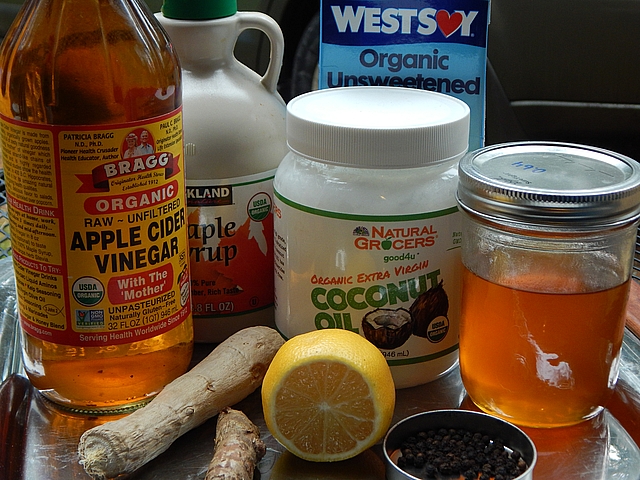
Need cold and hot nonalcoholic beverages for your next gathering? Look no further than Golden Milk and Switchel. Get beverage recipes at TwiceasTasty.com.
I first tasted golden milk at a yoga retreat in Costa Rica. Who knew that a warm beverage would be so delicious in that hot, tropical climate? But it was the perfect drink to follow an intense day of working our bodies.

When I moved from just writing about good food on the Twice as Tasty blog to making it for live events, I needed cold and hot beverages, alcoholic and nonalcoholic, to fit every season and occasion. Golden milk immediately came to mind as a warm, alcohol-free brew. I enjoyed it under the hot sun, but it’s just as delicious for fall holiday family gatherings and parties when snow is coming down. For home use, I make just the paste and keep it on hand so that I can make a mug or two at a time. For a gathering, you can prepare a full batch; place it on the table next to a chilled switchel, and you’ll find people happily swapping between the two.
Learn to make Golden Milk and Switchel

Pumpkin Pasta

Pasta–pumpkin combinations are overlooked but fabulous weeknight or special meals. Get pumpkin pasta recipes at TwiceasTasty.com.
When I told George I was planning to share pumpkin pasta recipes this week, his reaction was, “Nice, I always forget about pairing pasta and pumpkin.” It’s a combination even I tend to overlook. Growing up, pumpkin was reserved for jack-o’-lanterns and pie, and other winter squash was served “on the half shell,” drowning in butter and brown sugar. But these winter staples store so well you should have a collection to use in many sweet and savory dishes all winter: cookies, quick bread, soup, risotto—and pasta.

I offer two variations on pumpkin pasta here, one suited to a weeknight meal and a fancier plate that takes a bit more time to put together. I encourage you to look more at the techniques and think outside the ingredients listed in the recipes. Any firm-fleshed winter squash can be used in either recipe, and aromatics, alliums, herbs, cheeses, and pasta shapes can all be changed to suit your tastes. Whatever you use, orange winter squash creates a delicious pasta meal.
Learn to make Pasta with Roasted Pumpkin and Parmesan and Pumpkin–Goat Cheese Ravioli with Butter–Nut Sauce

Multibatch Canning

Call it impressive or call it procrastination: We sealed up 85 jars of goodness on Sunday. Learn more at TwiceasTasty.com.
Winter came early to Montana this year. The first flakes started coming down at home September 28, while we were sailing in Canada’s Gulf Islands. By the time I got home a month later, more snow and single-digit mornings were just days away.

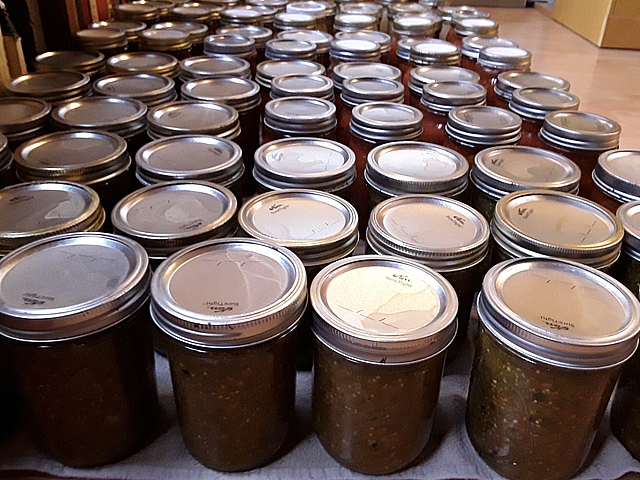
It made for some interesting fall garden cleanup and canning. We managed to dig the last of this year’s carrots and beets and stuff next year’s garlic before the pre-Halloween storm, but we had to wait until last weekend to do the final round of canning with apples, tomatoes, and tomatillos. Call it impressive or call it procrastination: We sealed up 85 jars of goodness on Sunday. Read on for more about multibatch canning and boxing vegetables on the cusp of winter.
Read more for canning tricks and storage tips

Quick Saves

This primer brings together ways I quickly save the last rounds of in-season veg. Read more about quick-save vegetables. Learn more at TwiceasTasty.com.
As the growing season winds down, I get plenty of questions about what to do with the last weeks of homegrown harvests and the last crops from farmer’s markets. By now, you’ve likely eaten your fill of your favorite fresh dishes and processed your favorite canned and frozen goods. If you’re like me, you’re torn between wanting to be done with the labor of weeding and harvesting and wanting to capture those last few tomatoes, those last few broccoli stalks, to enjoy after snowfall.

I’ve already shared many of my favorite ways to save excess and end-of-season produce. This month, I’ll continue to share some of my favorite fall canning recipes. But this week, I wanted to bring together in one post some of the ways I quickly save the last rounds of in-season veg.
Read more about quickly saving vegetables

Alcohol Infusions

Start with vanilla extract, and then expand your repertoire to drinkable liqueurs. Get alcohol infusion recipes at TwiceasTasty.com.
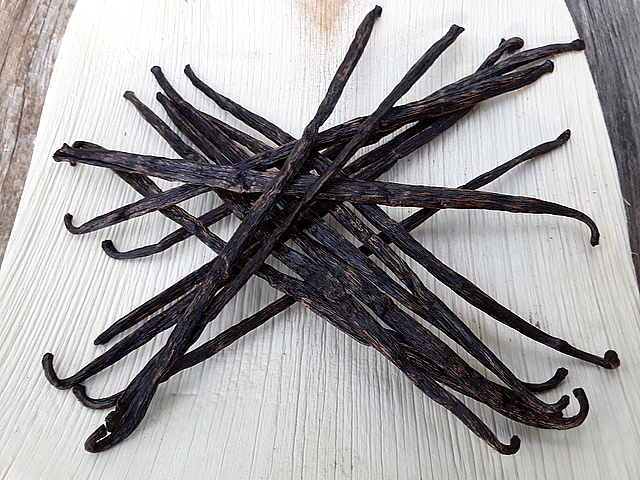
It seems that almost every baking recipe, and many other sweet treats, call for vanilla extract. Although the price of full beans and their extract may tempt you to substitute imitation vanilla, the cooks in my family were firm believers of using the real deal long before Jamie Oliver told the world that the fake version comes from the beaver anal gland. He didn’t have that quite right, but other sources of synthetic vanillin include coal tar, paper waste, and cow poop, which don’t sound any more appealing. Since companies are only required to use the label “artificial vanilla” or “imitation vanilla,” you’ll never really know what you’re eating.

When a 2017 cyclone wiped out a large chunk of Madagascar’s vanilla crop, prices for beans skyrocketed. So in splurging for the real stuff, you can get the most bang for your buck by making your own extract from vanilla beans: Scrape out the seeds needed for your recipe, and then use the pods for your extract, like you would for vanilla-infused sugar. Once you realize how easy it is to infuse this vanilla flavor, you’ll be on your way to making alcoholic infusions you intend to drink—liqueurs like triple sec.
Learn to make Homemade Vanilla Extract and Homemade Orange Liqueur

Gnocchi

Gnocchi is easier to make than you might think: you just need some basic ingredients, a few tricks, and time. Get gnocchi recipes at TwiceasTasty.com.
Italy ruined gnocchi for me, much in the way Morocco ruined couscous: After tasting the real thing, I’m no longer impressed with the convenience-food versions that dominate in America. Although potato dumplings and steamed semolina seem vastly different, they have a surprising number of things in common. Both have reputations as difficult yet delicious delicacies. This has led companies to manufacture replacements you can grab off a shelf in a box. Neither vacuum-packed gnocchi nor instant couscous comes close to its freshly made counterpart.

Fortunately, both are easier to make from scratch than you might think. They take time, and some special tools help give the best results, but you really only need some basic ingredients and a few tricks to create the real deal.
Learn to make Homemade Potato Gnocchi and Homemade Pumpkin Gnocchi

Bean Snacks

Homemade bean snacks shine as both party treats and everyday munchies. Get healthy snack recipes at TwiceasTasty.com.
We often think of beans in two stages: rock-hard dried beans and soft cooked or canned legumes. But there’s a third stage that will have you reaching for beans instead of potato chips or cheese puffs: the crunchy stage. If you’re a fan of healthy snack substitutes, you’ve probably bought bags of chips, crisps, crackers, or other snacks made from legumes. But there are plenty of advantages to making your own.

Commercial brands likely have more salt, sugar, and other additives than you expect, and some versions rely on deep-frying for crispness. By making your own, you control all of those factors; and let’s face it—if you’re eating a snack because you think it’s healthier, it really should be healthier. Even the healthiest commercial bean snacks tend to come in single-use packaging that’s unhealthy for our planet. You’ll pay a pretty penny for them too.

I started experimenting with homemade bean snacks for Twice as Tasty Live events, and they’ve become favorite everyday munchies. Larger beans, like chickpeas, we eat out of hand, but smaller ones, like lentils, are best spooned onto other dishes.
Learn to make Baked Chickpea Snacks and Crunchy Baked Lentils

Bean Soups

Soups fill our winter evenings, and the most filling ones start with beans. Get bean soup recipes at TwiceasTasty.com.
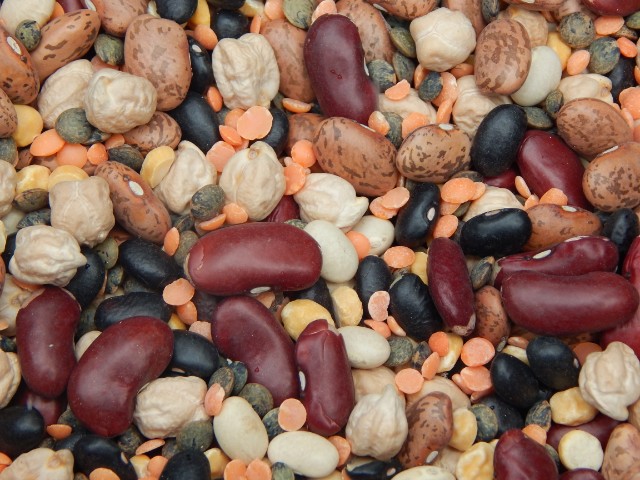
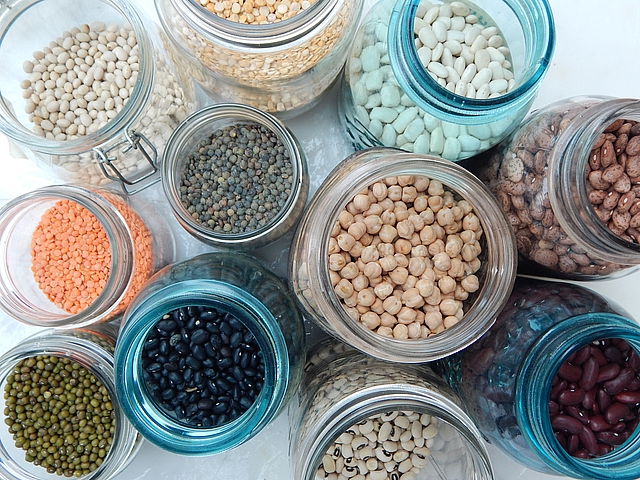
Soups fill our winter evenings, and the most filling ones start with beans. I love cooking with dried beans and tend to store many types in quart jars—which means I often have jars with just a scoop of beans left that I want to use up before I restock. Fresh Mixed-Bean Soup is the perfect option. You can use just about any bean in it, including lentils and split peas; the more variety, the more color and texture in the final soup. I often start by emptying as many jars as I can and then adding whatever beans I have in larger quantities, 1/2 cup at a time. Sometimes I even toss in leftover pearl barley.

In many ways, a soup with many types of beans resembles the bean soup mixes you can buy prebagged and tied with a pretty ribbon. But you’ll spend a lot less money if you buy the beans separately in bulk. You’ll also save money and have more control over the salt content and other additives if you started with dried instead of canned beans. And once you start cooking with dried beans, you’ll discover plenty of other uses for them, including—on this blog—pinto or kidney beans in Red Beans and Rice, black beans in veggie burgers, and chickpeas in falafel and this week’s other recipe, a Moroccan bean soup.

Learn to make Fresh Mixed-Bean Soup and Harira

Digging into Dried Beans

People seem to have a love it or leave it relationship with beans. If you love them, you’ve probably had them cooked right. Read more about cooking beans.People seem to have a love it or leave it relationship with beans. If you love them, you likely have an underlying reason: they’re cheap yet filling, you’ve cut other proteins from your diet, or you grew up in a household, community, or culture that saw beans as a staple. Madhur Jaffrey starts her 750-page World Vegetarian cookbook with a section on dried beans. Louis Armstrong loved his beans so much he closed letters with “Red Beans & Ricely Yours.”

But the primary reason people love beans is that they’ve had them cooked right. Well-cooked legumes don’t just pack a nutritional punch; they have delicious flavors and textures and can be adapted to any meal, from breakfast to dessert. Unfortunately, people who rarely eat beans often only do so by cracking open a can and being immediately disappointed by the texture and taste—and the aftereffects. “The more legumes you eat the more you can eat them,” Jaffrey writes in her chapter on dried beans. And the more you know about how to cook beans, the more likely you are to eat them.
Read more about cooking beans

Season Wrap-up

After a scorching-hot summer in Montana—literally, with more than 1 million acres burned—fall has come on fast and furious, with a chance of snow at my house this morning. The quick downshift from summer to practically winter instantly affected the garden. Overnight, cucumbers and snap beans stopped growing, apples began falling, and large leaves of self-seeded spinach reappeared in my overgrown and ignored spring cold frame.

Within the hoop house, plants are weathering the weather better, but it won’t be long before I’m forced to admit the final round of peppers and tomatillos won’t grow larger and the remaining tomatoes won’t turn red on the vine. Fortunately, unripened produce can still land in the kitchen instead of the compost. With the right timing, you can enjoy every last late-season vegetable.
Read more about wrapping up the garden