Fermenting Grains and Beans

Lessons learned in my dosa-making adventures led to a recipe for beginners living in cold climates. Learn more at TwiceasTasty.com.
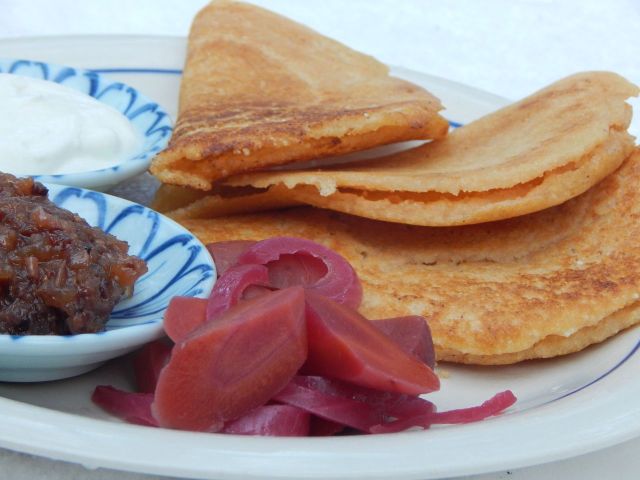
When it’s midwinter and the fermentation bug hits you, where do you turn? The logical choice to expand beyond sourdough and cheese, and the perfect pairing with this month’s Indian-Inspired Sweet-and-Sour Potatoes and Indian-Inspired Shrimp in Yogurt, seemed to be dosas. But these thin, crisp rice-and-bean pancakes offered as many challenges as advantages in my Northern Rocky Mountain kitchen.

So what I offer this week are the lessons I learned as I began my dosa-making adventures, with big nods to fermentation expert Sandor Katz and writer and cook Chandra Padmanabhan. These lessons led to an Indian-inspired dosa recipe ideal for beginners living in cold climates, with plenty of ways to creep closer to the traditional texture and flavor as you become more confident in your dosa-making skills.
Learn to ferment grains and beans and make Red Lentil and Basmati Dosas

Sticking with Sourdough

Sourdough baking should fit into your lifestyle and let you build a habit of using it. Learn more at TwiceasTasty.com.
Another Twice as Tasty sourdough giveaway is winding down; there are just a few days left to get your starter. This month, I delivered jars of bubbly starter to local bakers and shipped dehydrated starter as far away as Slovenia. People have been sharing their creations of longtime and new Twice as Tasty recipes, including this month’s cracker, cookie, and ciabatta recipes and variations. I’m excited to see what everyone makes in the coming months.

For some of you, just remembering your starter may be the biggest challenge as the year takes off. Sourdough baking should fit into your lifestyle and let you build a habit of using your starter often enough to keep it lively. It may take a few attempts, and I’m always happy to resend starter if you need a fresh try. But a sourdough culture is more resilient than you think. So as life distracts you from baking, you have several options to bring your starter back to life.
Read more about sticking with sourdough

Sourdough Ciabatta & Bread Variations

With a handful of easily mastered recipes, including Sourdough Ciabatta, you can make every batch of sourdough look and taste unique. Learn more at TwiceasTasty.com.
Long before I got hooked on sourdough, I made yeast-based Italian slipper bread using Patricia Wells’s Trattoria. I used the recipe from the 1993 edition of her book without changes because it is so good.

Once I started into sourdough, I fell for the flavor and texture of long-ferment loaves, and Sourdough Cabin Bread, aka Auntie Julie’s Special Bread, became my go-to recipe. But one day I flipped passed the slipper bread recipe and was inspired to create a version that could use sourdough starter.

Wells describes Italian slipper bread, or ciabatta, as “ideal for those who want great flavor in a hurry.” This sourdough version takes a little more time to build than a yeast loaf but far less than long-ferment doughs that spend hours to days in the fridge. It’s definitely a high-hydration dough: expect it to be wet, sticky, and hard to shape. Your final loaf will look different every time, with lots of holes inside, and will cool and be ready to eat more quickly than denser loaves.
Learn to make Sourdough Ciabatta and bread variations

Sourdough Cookies

Putting sourdough starter in cookies bumps up against some problems, but you can solve them. Learn more at TwiceasTasty.com.
Sourdough cookies, like last week’s sourdough cracker recipe, have two goals: capture some sour flavor and use your starter. Sourdough’s leavening power doesn’t take charge: you’re still relying on baking soda, baking powder, or both to create the cookies’ shape. That puts them in the same category as Sourdough Pancakes, Sourdough Waffles, and quick breads.

But unlike those baked goods, putting sourdough starter in cookies bumps up against some problems. Most cookies have a low hydration level—they have little or no added liquid. The “wet” ingredients they do have usually contain fats, proteins, and other elements that balance the cookie recipe. This week, I focus on things I’ve learned about baking cookies with sourdough and the best recipes to use with your starter.
Learn to make sourdough cookies

Sourdough Crackers

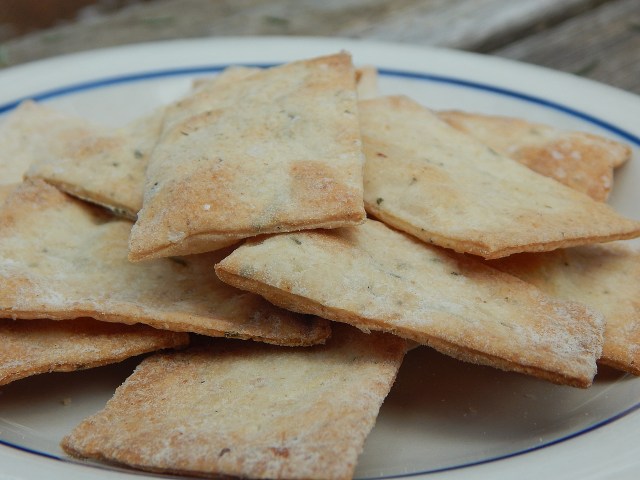
My master recipe lets you make cheese, wheat, herb, rye, and more. Get sourdough crackers recipes at TwiceasTasty.com.
If you jumped on the sourdough bandwagon last spring by making your own starter from scratch, chances are you’ve already experimented with “discard” recipes like crackers. When you take weeks to build a starter from just flour and water, you end up with a lot weak starter that many instructions advise you to throw out—and in my opinion, it’s the only time you should. Since my sourdough adventures started with a dormant gifted starter, I don’t toss starter, never clamored for discard recipes, and began baking bread long before I fell for sourdough crackers.

I started baking sourdough crackers for one reason: George loves Goldfish crackers. He’ll plow through a box of the cheesy bites in a sitting, so of course my thought was, “How can I make these—and make them better?” This led me to develop a master recipe whose techniques I now use for a variety of crackers: cheese, wheat, herb, rye, and more.
Learn to make cheesy and other sourdough crackers

4th Annual Sourdough Giveaway

Get free sourdough starter—or wake up your dormant one. Learn more at TwiceasTasty.com.
Happy end of 2020 from Twice as Tasty! Celebrating the end of this year seems more important than reveling in the start of a new one—the revels in many ways are still on hold. But January is still Sourdough Month here on the blog, and for the 4th year I’m giving away Twice as Tasty sourdough starter through January 31.

Over the last 4 years, I’ve had a 100% success rate with people receiving, waking up, and baking with their Twice As Tasty sourdough starter. When baking with sourdough became all the rage last spring, I reopened the 2020 giveaway and shared more starter than in all prior years. I hope to do the same again over the next month. Read on to get Twice as Tasty sourdough starter—or wake up your dormant one.
Read more about starting with sourdough

Storing Pickles

Several tricks and tools will help you store pickled foods so that they stay fresh and crisp. Learn more at TwiceasTasty.com.
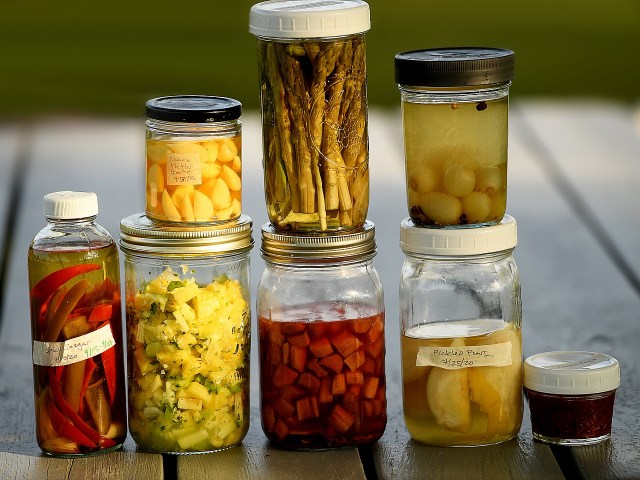
Now that you’re eager to or have successfully made pickles from the recipes in my new cookbook, The Complete Guide to Pickling, where and how should you store them? I talk briefly about pickle storage in the book, but several more tricks and tools will help you keep your pickled foods fresh and crisp.

As I mentioned in my post about pickling hacks earlier this month, you need two basic tools to make and store pickles: a container and a way to cover it. To ensure your pickles and their container stay clean and fresh, inside and out, choose nonreactive containers and lids—in other words, ones made of glass, stainless steel, food-grade plastic, or silicone.

Sure, you can cap your pickles with old metal mayonnaise lids or reuse tin-plated canning lids and rings; I did this, and recommended this repurposing, for years. But both will rust and break down over time as the acid in the pickle brine eats away at them, leaving an unattractive sticky mess around the jar threads, on your refrigerator shelves, and even potentially on the underside of the lid, where it can flake down into the food. Instead, I now save those old lids for dry storage and have switched to nonreactive options for high-acid foods.
Read more about storing pickles

Fermenting Tools

If you catch the fermentation bug, it’s worth investing in some tools. Learn more at TwiceasTasty.com.
When I was testing tools for The Complete Guide to Pickling, I had the most fun with tools for fermentation. Until I started writing the book, I had mostly fermented using tools and equipment already in my kitchen, relying on zip-close bags, small glass jars, and airlocks cobbled together with old canning lids. But when I realized I would be including more than 30 fermented recipes in the book, it was time to research and test some fermenting tools.

The surge of interested in fermented foods has opened opportunities for companies and entrepreneurs to present tools designed to make fermentation easy, manageable, and trouble free. Some of those companies were willing to send me their products to test as I created the recipes in the book.

My main takeaway was this: If you catch the fermentation bug, it’s worth investing in some tools. To create a healthy fermentation, you must keep the food submerged in the brine. You’ll get the best results if you can also limit airflow. Here are some of my favorite tools to help with both.
Read more about fermenting tools

Pickling Tools & Hacks

Use tools already in your kitchen to make pickles. Read more about pickling tools and hacks. Learn more at TwiceasTasty.com.
I’ve been hearing all week from people receiving their copies of The Complete Guide to Pickling. Now that it’s in your hands, I hope you’re excited to start making some tasty pickles. But where to begin, and what do you need?

In writing this book, I not only expanded my pickling repertoire but also tested a range of tools designed to make pickling easy and foolproof. I only had space to briefly describe some of those tools in the book, so this month I want to share some of my favorites and why you may want to add them to your pickling toolbox.

But let me be clear: you can make most of the pickles in The Complete Guide to Pickling using tools that are already in your kitchen or that you can pick up easily and cheaply. That’s how I first started pickling on my own, and I still reach for many of these tool hacks today. I recommend starting this way—you’ll quickly learn what should be at the top of your list for a tool upgrade.
Read more about pickling tools and hacks

Fermented Pickles

Fermented Pickles. Get the recipes in The Complete Guide to Pickling by Julie Laing.
Fermented Pickles: Fermented Red Onions and Half-Sour Dill Pickles. Photograph by Andrew Purcell.

My love of pickles jumped several levels the moment I tasted my first batch of fermented pickles. I grew up with some delicious pickles: homegrown veg stuffed into jars, covered in vinegar brine, and sealed to enjoy all year. And I share many of those classic family recipes, some with modern twists for safety or flavor, in my new cookbook, The Complete Guide to Pickling. But I must admit: If you want to make truly amazing pickles, ferment them.

I talk a lot about fermentation in my new book. Whether you’re new to fermenting or have already fallen for salt brine, be sure to check out Chapter 1, where I explain the differences between vinegar-preserved and fermented pickles and walk you through my fermentation process, step by step; I also describe some of my favorite fermenting ingredients and tools in that chapter and offer many shortcuts for simply using what you already have in your kitchen. Then flip to Chapter 4 and drool over the recipes for fermented pickles. But don’t stop there. As you become more familiar with the book, you’ll realize that I’ve sprinkled fermented recipes throughout the remaining chapters of the book: Scratch-Made Sriracha, Fermented Rhubarb Pickles, Tepache, and more.

Many people feel nervous about fermenting because of its wild nature. But really, it’s one of the simplest ways to pickle food. Once you know what to expect in terms of time, appearance, and smell, you too will likely become hooked on the texture and flavor of fermented pickles.
Read more about fermented pickles and learn to make Chinese-Inspired Brined Beans