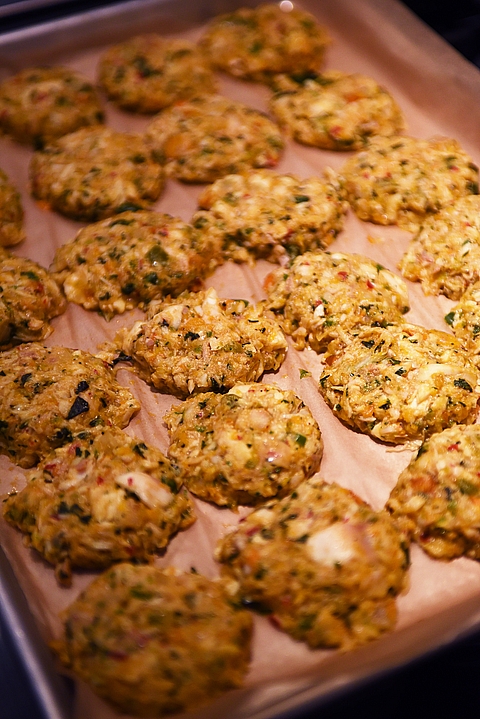
One Prep, Two Meals: Fish

 A bit of extra prep one night means you can have a second meal ready to grab and go. Get fish recipes at TwiceasTasty.com.
Photograph by Brenda Ahearn Photography

If we’re lucky, Monday nights are free nights in summer: we are home and can prepare and enjoy a meal without other obligations or projects. It’s the one night of the week that I might make a more labor-intensive meal, like fish cakes. But I always know Tuesday will be a picnic before racing sailboats, and a bit of extra prep Monday night means I have a second meal ready to grab and go.

These fish cakes call for some chopping and mincing and two stages of cooking, but they’re worth the effort. The first time I served batches at a house concert, the host said I could have made three times the amount and the platter would be emptied. They’re less greasy than fried fish cakes and more flavorful than potato-based ones. The recipe here easily serves 4, which means I can reheat the leftovers later in the week. To avoid eating the same meal two nights in a row, I set some fish aside and prep a marinade and the extra vegetables while the fish cakes are cooking. On Tuesday, grilled skewers require minimal effort.
Learn to make Mediterranean Fish Cakes and Grilled Fish Skewers

More Rhubarb

Paired syrup and jam recipes highlight the essence of Twice as Tasty food. Get rhubarb recipes at TwiceasTasty.com.
I always think that I have plenty of ways to enjoy rhubarb, and then I come across another idea or recipe. It’s a good thing, because in my shaded, woodland garden, rhubarb grows all summer without bolting, and my two plants can easily yield what I need for this week’s recipes in one harvest.

These recipes highlight the essence of Twice as Tasty food: You start with one basic ingredient. You use it to its fullest extent. And you ideally come out of one prep session with multiple products—in this case, jars of syrup and jam. As you’ll see when you read the recipes, they’re heavily linked to each other. But they also build on two previously posted recipes that use gingerroot and vanilla bean. So really, all this multitasking in the kitchen uses three ingredients to their fullest extent and ties into four products. This is the kind of stuff I geek out on, but hopefully I’ve made it easy for you to enjoy the results.
Learn to make Rhubarb–Ginger Syrup and Rhubarb–Earl Grey Jam

Scallions and Radishes

These scallion pancakes are gluten-free, dairy-free, vegan, easy, and tasty. Get savory pancake recipes at TwiceasTasty.com.
When the summer harvest hits its peak, one of my favorite meals is a batch of Zucchini Pancakes with Fresh Asian Salad. I enjoy these so much that a freeze grated zucchini so that I can make them all year. But the salad, with its freshy harvested tomatoes, cucumbers, and basil, is really a summer thing. So I’ve been craving a combination I could enjoy earlier in the season, while my tomato plants are still seedlings.

For a quick spring variation, I hit upon the pairing of scallions and radishes. You can easily find scallions, or green onions, at the grocery store year-round, but if you grow a garden you can harvest scallions or young perennial walking onions in spring, the tops portions of full bulb onions in summer, leeks in fall, and chives from pots all year. Each can be used in this pancake recipe. To make this recipe even more accessible, I decided to keep the pancakes gluten free, dairy free, and vegan.
Learn to make Scallion Pancakes with Chickpea Flour and Lemony Radish Salad

Chive Blossoms

Chive Blossom Vinegar taught me to love infusions beautifully dress salads. Get vinegar and salad recipes at TwiceasTasty.com.
We recently had a friend over for dinner and somehow ended up talking about vinegar. Well, not just talking—I was soon pulling an array of vinegars from a shelf in my tiny kitchen and explaining why I have so many, how this is just the daily stash, where I store gallon jugs for pickling and canning, and how we had unexpectedly found a mother in one jug that I was using to start my own vinegar. I may have been a little excited.

You could say that the tang of vinegar is my jam. My pantry collection typically numbers 7 bottles, which I put into everything from drinks to mac and cheese to pie crust. But because I like to mix and match flavors and keep many herbs and spices on hand, I only saw the point of infusing vinegars after I discovered a chive blossom infusion in Harry Rosenblum’s Vinegar Revival. It’s so easy to make that my recipe varies little from his instructions, but my first attempt, and probably favorite flavor, used garlic chives. The resulting flavored vinegar beautifully dresses a salad featuring fresh spring herbs.
Learn to make Chive Blossom Vinegar and Herbed Bean Salad with Fresh Mozzarella

Pickled Asparagus

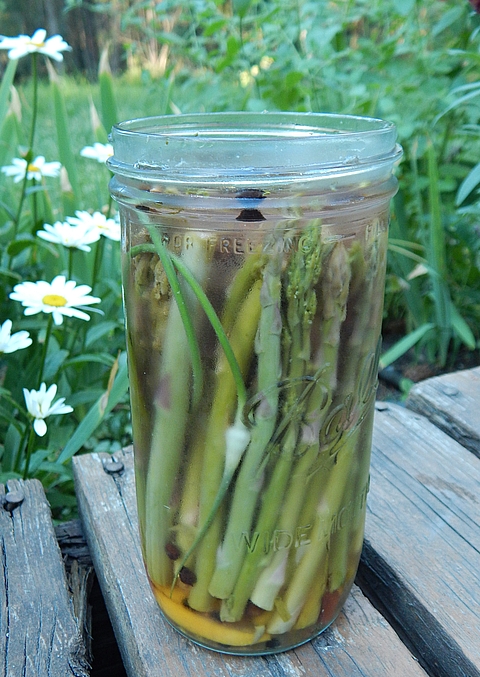
At some point, even I run out of ways to eat fresh asparagus. That’s when I turn to brine. Get pickling recipes at TwiceasTasty.com.
Whether you grow it or buy it, asparagus will be among your first spring vegetables. These green, purple, and even white spears can star on your table meal after meal until other produce ripens. I start with Grilled Asparagus as a standalone side dish with some lemon and herbs. I also serve it over arugula or with pasta in a salad. It’s delicious served under hollandaise or on pizza, stirred into risotto, baked into a frittata, or tossed in a stir-fry.

At some point, even I run out of ways to eat fresh asparagus. Whether you grow your own patch or buy bundles in season, you too probably end up with more asparagus in your kitchen than you can eat in one meal. But you don’t want to ignore it: the asparagus season ends as quickly as it arrives. That’s when I fill a jar or two with a brine. Although you can process pickled asparagus in a boiling water bath, it keeps its flavor and texture better when it heads straight to the table or rests in the fridge.
Learn to make Asparagus Refrigerator Pickles and Quick-Pickled Asparagus

Mozzarella

Mozzarella was the first cheese I learned to make and use. Get cheese-making recipes at TwiceasTasty.com.
Mozzarella may seem like the epitome of soft cheeses, but as I’ve mentioned previously, it was the first cheese I learned to make. I have to thank the Cheese Queen, Ricki Carroll, for this: her books, kits, and company are the reason most people, including me and my young niece, started making cheese at home. Most of the recipes you’ll find today for quick mozzarella are nearly identical to her original kit instructions, including mine. But after years of making mozzarella at home, I’ve learned enough techniques and tips that I’m posting my own version, along with a recipe that will use the first harvest from your garden.
Learn to make Quick Homemade Mozzarella and Spring Pasta and Fresh Mozzarella Salad

Paneer

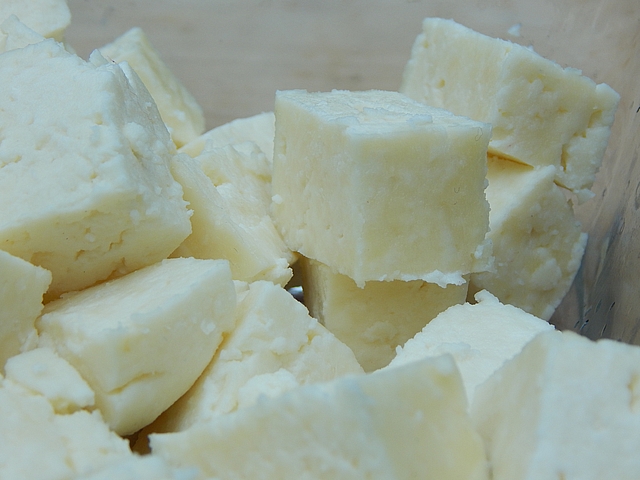
My freezer holds all sorts of vegetables ready to mix with homemade paneer for Paneer Tikka Masala. Learn to make cheese at TwiceasTasty.com.
Every April, I’m focused on two things: what I’m going to grow in my garden this year, and how I’m going to eat up everything I saved from last year’s harvest. Last week’s post used up not just the whey leftover from making yogurt but also the potatoes starting to sprout in my storage bins. This week, I dug deeply into my freezer and found all sorts of vegetables for an Indian dinner: cherry tomatoes, onions, peppers, garlic, and cilantro pesto. Flavor them with my dwindling supply of home-smoked chilies and homemade curry powder, toss in some freshly made paneer, and the flavors explode.

There are several other fabulous things about this week’s recipes. If you already make Lemon Cheese, you don’t need to learn to make paneer: you just need to learn how to press your cheese. If you don’t yet make this cheese, which also goes by queso blanco, whole-milk ricotta, and farm cheese, you have another reason to learn how.
Learn to make Fresh Paneer and Paneer Tikka Masala

Yogurt Whey

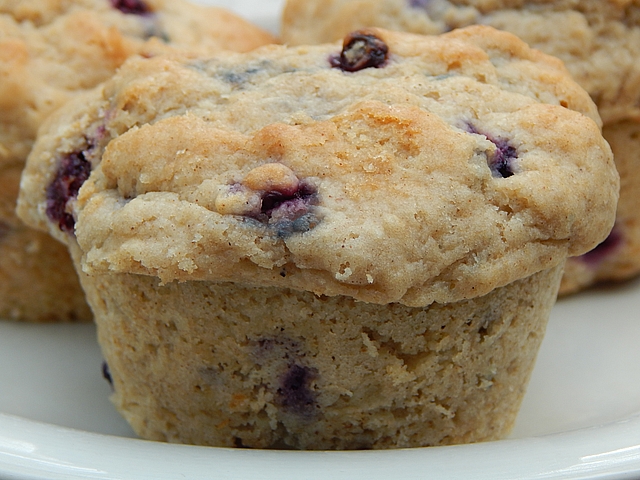
Baked goods and potatoes easily absorb yogurt whey. Learn how to use whey at TwiceasTasty.com.
Let’s be honest: you’re going to have the most fun with this week’s recipes if you’re making your own yogurt at home. You generate a fair amount of whey every time you make yogurt. The simple step of pouring yogurt, homemade or store bought, into a strainer and letting it sit creates thick, creamy Greek-style yogurt by separating out the watery whey. As you read last week’s post, you waste that whey by pouring it down the drain. Instead, use the whey left after draining yogurt as a replacement for buttermilk or even regular milk, like I do in this week’s recipes.

If you’re not yet making yogurt at home, you can still get in on the fun. My recipe for Fresh Yogurt and my tips for making better yogurt will set you on the right path. For a hands-on experience, bring me into your kitchen for a workshop. Once you discover how easy and affordable it is to make good yogurt at home, you’ll be all set to stir your leftover whey into amazing mashed potatoes or bake it into flavorful muffins.
Learn to make Yogurt Whey–Berry Muffins and Mashed Potatoes with Yogurt Whey

Gnocchi

Gnocchi is easier to make than you might think: you just need some basic ingredients, a few tricks, and time. Get gnocchi recipes at TwiceasTasty.com.
Italy ruined gnocchi for me, much in the way Morocco ruined couscous: After tasting the real thing, I’m no longer impressed with the convenience-food versions that dominate in America. Although potato dumplings and steamed semolina seem vastly different, they have a surprising number of things in common. Both have reputations as difficult yet delicious delicacies. This has led companies to manufacture replacements you can grab off a shelf in a box. Neither vacuum-packed gnocchi nor instant couscous comes close to its freshly made counterpart.

Fortunately, both are easier to make from scratch than you might think. They take time, and some special tools help give the best results, but you really only need some basic ingredients and a few tricks to create the real deal.
Learn to make Homemade Potato Gnocchi and Homemade Pumpkin Gnocchi

Garlic and Chives

Make the official transition from winter to spring with Roasted Garlic Soup and Savory Herb Scones. Get spring recipes at TwiceasTasty.com.
The official transition from winter to spring has arrived. At my house, that means both waiting for snow to melt and reveal my garden’s buried herbs and digging deeper into the freezer and dry-storage boxes to use up what’s left from last year’s harvest. So this week’s recipe pairing seemed apt: a light soup using the last stored garlic to offset still chilly evenings and savory scones using frozen herbs—or if you’re in a warmer zone than mine, the first spring cutting of herbs.

I start making garlic soup as soon as crisp fall nights arrive and continue throughout winter to the end of my stored stash in spring. It’s joined my arsenal of comforting soups, along with Hot and Sour Soup and 30-Minute Cherry Tomato Soup. I make these when I have a cold bug, because they help bring me back to health. I make these soups when I’m busy, because they’re easy and use ingredients I keep on hand. But mostly I make them because they taste so good.
Learn to make Roasted Garlic Soup and Savory Herb Scones