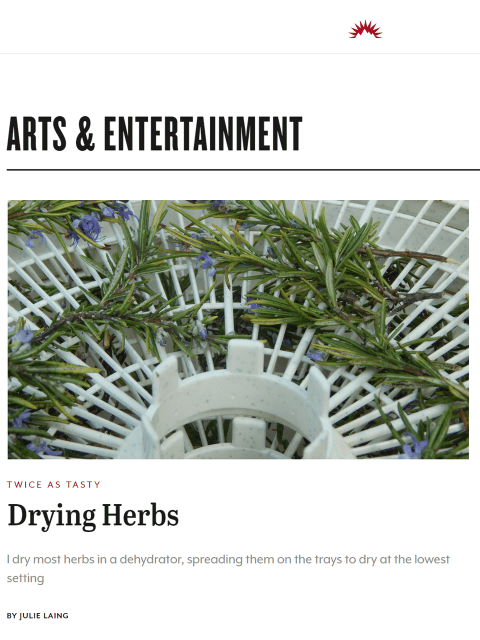
Drying Fresh Herbs

Drying fresh herbs yourself is easy, saves money, and gives the best flavor. Learn more at TwiceasTasty.com.
Almost everything I cook has a fresh or dried herb in it—and even if you barely cook, I’d bet you have at least a couple of jars of dried herbs in your kitchen. But as I explain this week in my Twice as Tasty column for the Flathead Beacon, drying fresh herbs yourself, whether homegrown or store-bought, is an easy DIY project that will result in far better flavor and cost far less than commercially packed jars of dried leaves.

The column focuses on tips that will help you successfully dry a range of fresh herbs, but the first step may be to grow your own. Many herbs grow well in pots on a windowsill or deck. If you have more space, you can plant many types of perennial herbs now and see them pop up on their own year after year. Some can even grow until they produce seeds that you can save to cook with or to replant, such as fresh cilantro and its seed, coriander. And like sourdough starter, herbs love to be used: the more you cut them to use fresh or to dry, the more they grow and produce.
Learn about drying and using herbs
Choosing and Storing Herbs

Food has always dominated my travels, and home re-creations almost always start with herbs. Read more about choosing and storing herbs.
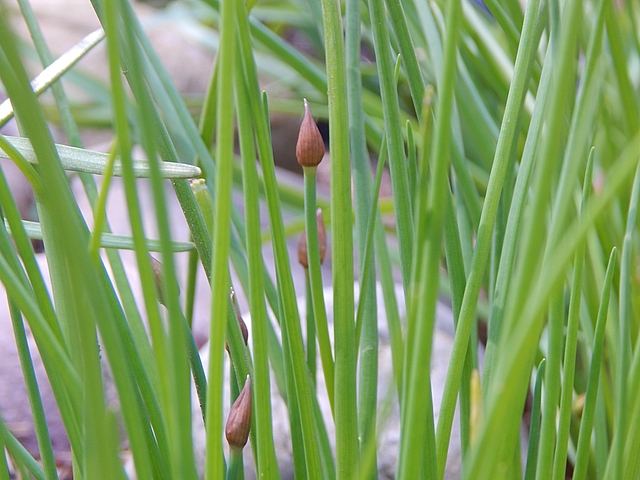
Spring is finally in the air, and I am on the road. In recent weeks, I’ve cleaned up the garden beds; watched crocus, ipheion, scilla, and daffodil blooms open wider by the hour; and found the first perennial herbs like mint, oregano, sorrel, and chives poking through the ground. But it’s also one of my favorite seasons to travel—with Twice as Tasty workshops, to visit family and friends, and to explore new places.

Food has always dominated my travels, first as a vegetarian struggling to find things to eat in a newly reunified Germany and later when discovering new flavors and spices in Africa and Asia and even unknown fruits and vegetables in the South Pacific. Although I still dream of the more exotic tastes, the dishes I bring home put that international spin on food I can grow or easily find in my climate. It almost always starts with herbs.
Read more about choosing and storing herbs

Potatoes

Potato salads are a summer staple, whether I’m making them from jawbreaker-size potatoes stolen from row edges while checking the potato plants’ progress or full-grown spuds cut down to size. They go beautifully with summer’s green beans, cherry tomatoes, and sugar snaps. But we grow so many storage potatoes that it seems a shame to give up the salads just because the other fresh produce is long gone. This version uses stored veggies, making it a late-season or even midwinter go-to. The salad itself is quite basic, and a few unconventional techniques make it a snap. Inspired by traditional salads I ate regularly as I traveled in Russia and France—salad Olivier and salade niçoise, respectively—I’ve created two dressings that bring distinctly different flavors to the forefront; I sometimes alternate between the two salad dressings for several weeknight meals.
Learn to make Potato Salad with Russian and French Dressings