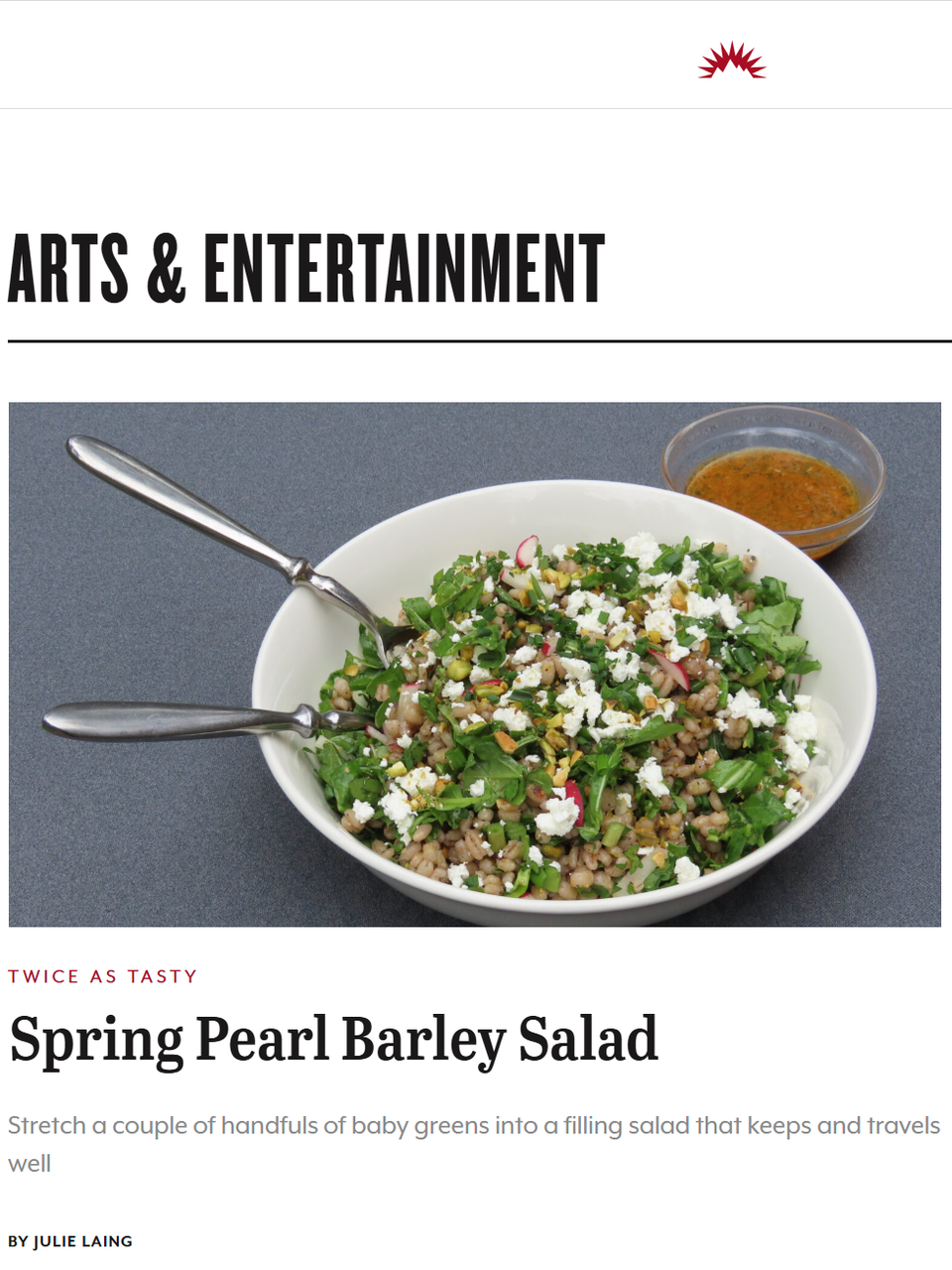
Spring Pearl Barley Salad

Cook a double batch of pearl barley, bulgur, potatoes, or beans to use in a hot meal and then fold the rest into fresh lunch salads throughout the week. Learn more at TwiceasTasty.com.
It’s easy to think of spring salads as light and delicate, because many of the first vegetables available to mix into them are tender greens and herbs, rather than the meaty tomatoes and sweet peppers that ripen in the summer garden. By mixing spring crops into a hearty, filling base, a salad like the one I share this week my Twice as Tasty column for the Flathead Beacon can carry a meal.

Grains like pearl barley and farro, beans and other legumes, starchy vegetables like potatoes and sweet potatoes, and breads like a sourdough loaf for panzanella and Twice-Baked Sourdough Pita Chips for fattoush all turn a couple of handfuls of raw vegetables into a full meal. On the weekends, I often cook a double batch of Bulgur Taco “Meat” or beans to turn into Vegetarian Red Beans and Rice and then fold the rest of the batch into fresh lunch salads throughout the week.
Learn to make Spring Pearl Barley Salad
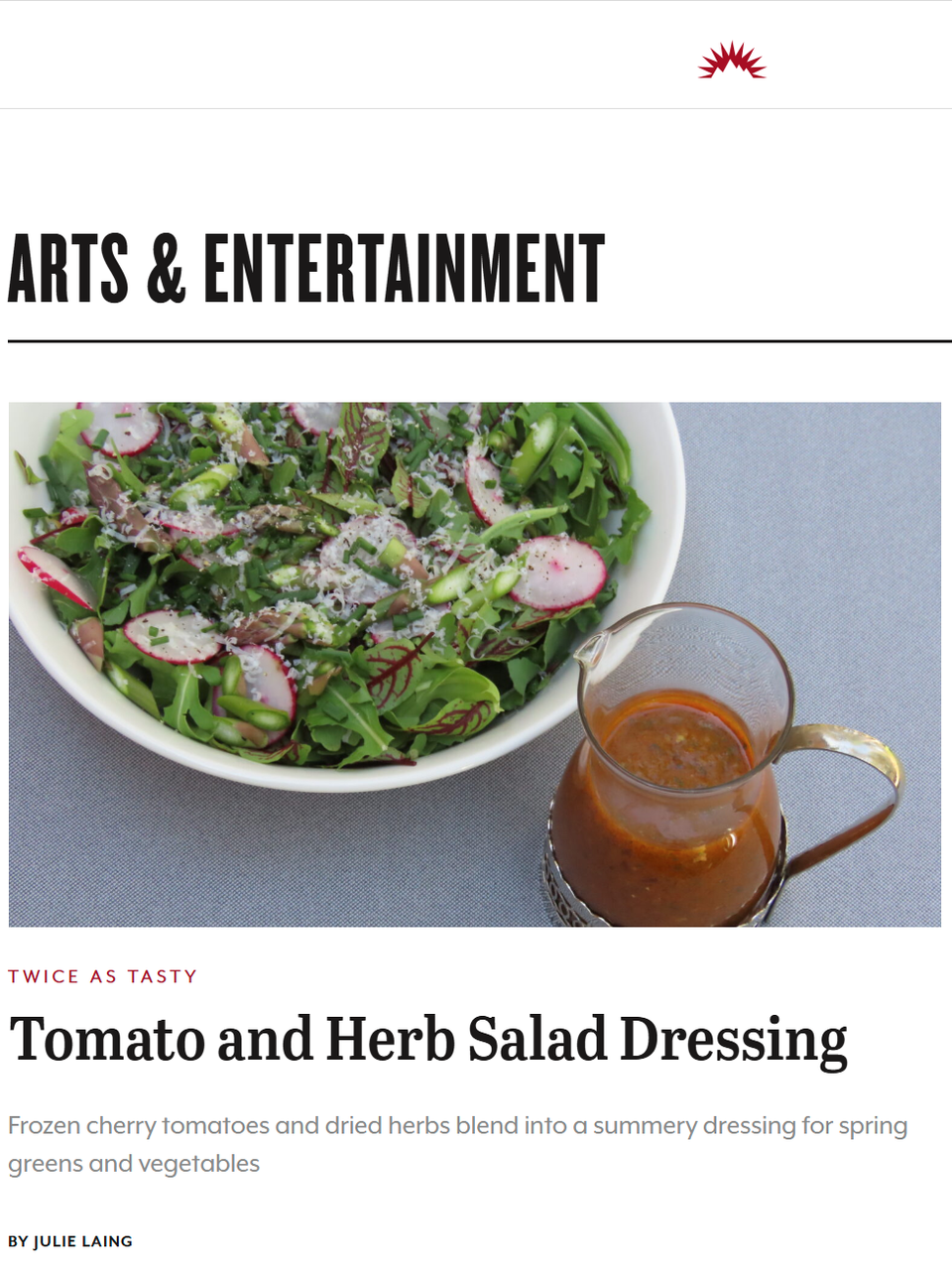
Tomato and Herb Salad Dressing

Homegrown frozen cherry tomatoes and dried basil have more flavor than the fresh options I could buy at the store right now for a salad. Learn more at TwiceasTasty.com.
In winter months, when the ground is frozen and blanketed in snow, I rarely buy and eat fresh greens. But as the soil warms and spring greens sprout in my garden, I start eating salads—daily. The first ones feature mounds of greens and herbs sparsely dotted with other vegetables. When my lettuces bolt and turn bitter, tomatoes, cucumbers, and snap beans take over. Beets, carrots, and kale, plus a small flush of spinach, bump up against the first snowfall.

This type of seasonal salad building means you rarely find a mix of lettuce, tomato, and cucumber in my bowl. But as I share this week in my Twice as Tasty column for the Flathead Beacon, you can still enjoy flavor pairings produced in different seasons. The secret is simple: make your own salad dressing. Homegrown frozen cherry tomatoes and dried basil have far more flavor than the fresh options you could buy at the store right now. In an easy dressing, they give summery flair to spring greens.
Learn to make Tomato and Herb Salad Dressing

Green Goddess Salad Dressing

This creamy avocado-based dressing appeals to many dietary needs: vegan, gluten free, keto friendly, and more. Learn more at TwiceasTasty.com.
I’m such a lover of all things pickled and fermented that most of my salad dressings start with vinegar and oil. So when I was asked to create some condiments for a large dinner a few years back, I knew I needed to branch out not just with a creamy choice but also one that would appeal to as many dietary needs as possible: vegan, gluten free, keto friendly, and more. That’s why the salad dressing I share this week in my Twice as Tasty column for the Flathead Beacon eschews the original mayonnaise and other dairy-heavy renditions in favor of a dairy-free, avocado-based blend.

Avocados have grown in popularity as a nondairy fat replacement in baked goods—the same way I often replace oil and butter in quick breads with applesauce. I occasionally use avocados in this way, especially when making desserts for vegan friends. But I typically eat avocados sliced fresh, such as on corn tortillas with Crispy Sprouted Lentils, or turn them into Grilled Onion Guacamole. I even have a recipe for pickling them in my pickling cookbook. If you like tangy salads, try the pickled avocado slices in the green goddess dressing.
Learn to make Green Goddess Salad Dressing

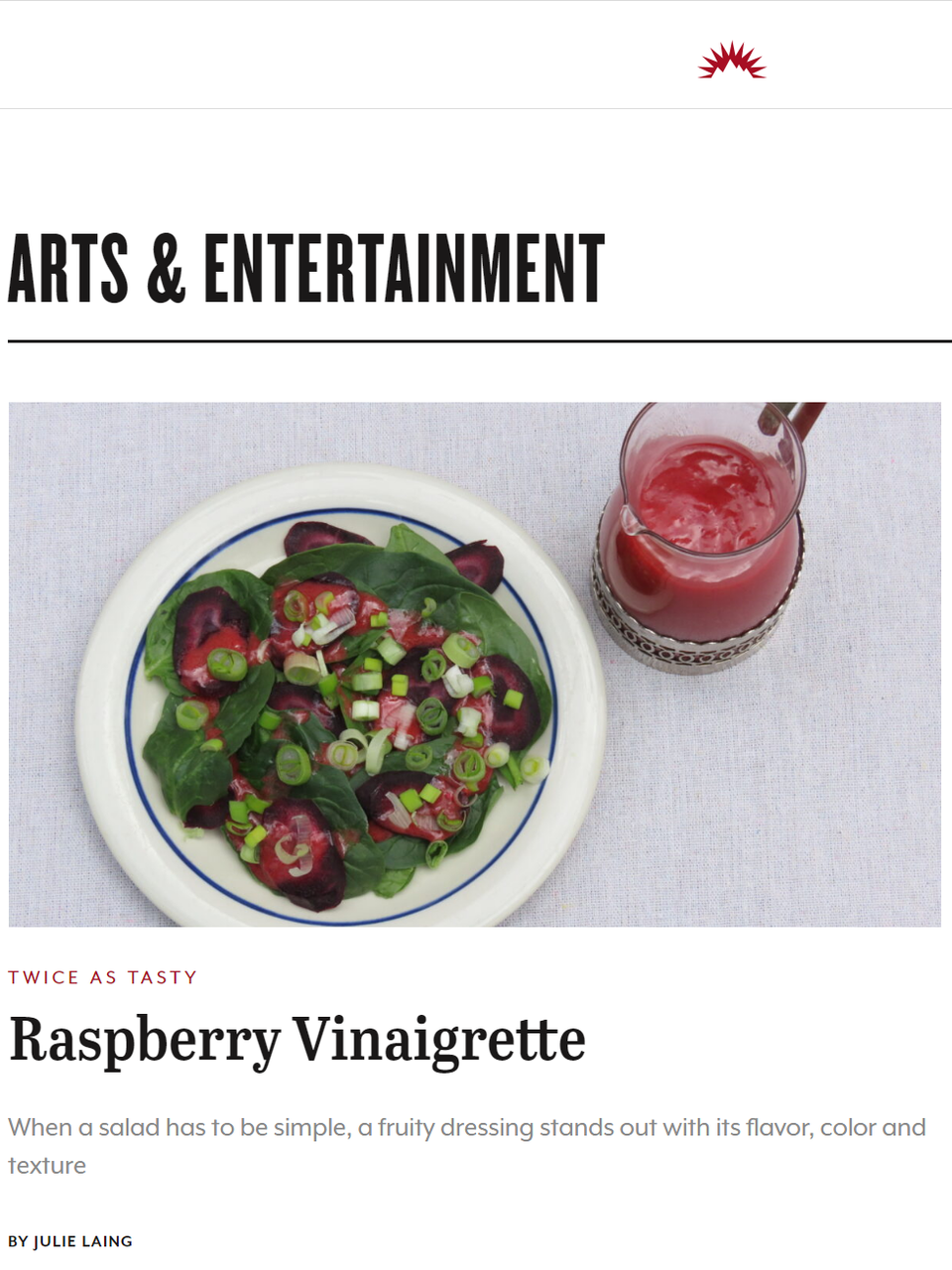
Raspberry Vinaigrette

You can blend fresh raspberries into this vinaigrette, but it’s also ideal for using up roasted raspberry pulp. Learn more at TwiceasTasty.com.
My favorite salads might start with a bed of greens, but then I pile on the vegetables and other toppings. Because the layers give the salad so much flavor and texture, I rarely bother with more than a simple dressing of vinegar or citrus juice, oil, and an emulsifier like mustard or garlic.

But a three- or four-ingredient salad can handle an intensely flavored dressing, like the one I share this week in my Twice as Tasty column for the Flathead Beacon. This berry dressing can turn the bed of greens, early onions, and the last of my storage carrots into a delicious lunch or side salad.

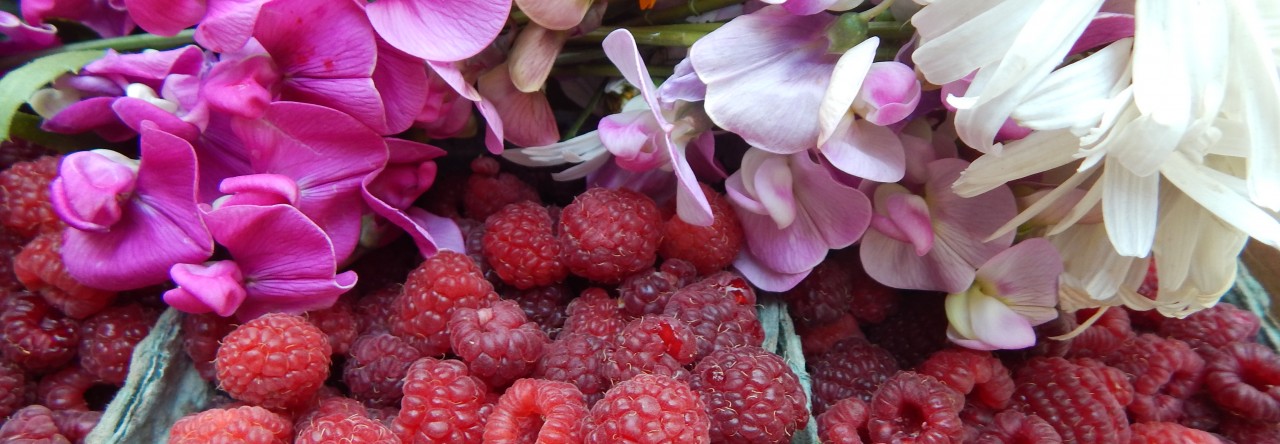
You can blend fresh raspberries into this vinaigrette, but it’s also ideal for using up the pulp left after making Roasted Raspberry Syrup or the Roasted Raspberry-Thyme Shrub in my cookbook, The Complete Guide to Pickling.
Learn to make Raspberry Vinaigrette

Herbed Bean Salad

 After several evolutions, this salad has become a spring favorite, tossing warm beans with the first lettuces and herbs to appear in my garden. Learn more at TwiceasTasty.com.
The other day, I was asked how I come up with my recipes. The inspiration varies, but they’re like jazz tunes: once published, I continue to play and let them evolve. The recipe in my latest Twice as Tasty column for the Flathead Beacon is among those that I’ve been riffing on for years.

The salad began as a way to use some of my favorite homemade condiments, which I later included in my cookbook, The Complete Guide to Pickling: the bright pink vinegar and softened flowers of Pickled Chive Blossoms, the complementary flavor of German-Inspired Spicy Mustard, and Pickled Nasturtium Seeds as the homegrown stand-in for capers. To feature Quick Homemade Mozzarella, I plated the salad in layers with slices of fresh cheese and encouraged my cheese-making workshop students to do the same. Then I revised the recipe to share with buyers of vertically farmed fresh greens, using it to showcase the brand’s baby spinach, arugula, and chard. When the company shut down, I altered the recipe again, tossing the warm beans with the first lettuces and herbs to appear in my garden each spring: spinach, arugula, butter lettuce, chives, and sorrel.
Learn to make Herbed Bean Salad