Chickpea Vegetable Skillet with Couscous and Feta

Veggie couscous works as garden-to-table meal or one that fits neatly in a cooler and kitchen box on the water or in a campground. Learn more at TwiceasTasty.com.
My garden is bountiful so far this year, and many of my home-cooked meals begin with me spreading out my harvest on the counter and chopping up a little of everything for an impromptu, no-recipe vegetable sauté, salad, or pasta meal. But when I’m not making dinner at home these days, I’m usually making it aboard our sailboat, the Blue Mule, where my range of options becomes more limited. One of the beauties of the recipe I share this week in my Twice as Tasty column for the Flathead Beacon is that you can approach it as garden-to-table meal or as a pantry-focused one that fits neatly in a cooler and kitchen box on the water or in a campground.

As I teach in my Fine Dining: Front Country workshop, the key to making such a veggie-heavy meal in the galley or at the campsite is to choose vegetables that travel well. Whole carrots, onions, and garlic can tumble around as the boat surfs waves or the car bounces down gravel roads, and they’ll still look and taste great at dinnertime. I pack small zucchini, so I don’t have a partial one left with an exposed cut edge that’s more susceptible to damage. I also tuck zukes and other tender vegetables into a plastic storage box that fits inside my ice chest and minimizes their bumping and bruising—and their direct exposure to melting ice.
Learn to make Chickpea Vegetable Skillet with Couscous and Feta

DIY Herb Blends

If you start using a simple homemade herb blend in place of the dried or fresh herbs listed in a recipe, you have an immediate mealtime shortcut. Learn more at TwiceasTasty.com.
When I moved into my 500-square-foot cabin, building custom, open shelves for the tiny kitchen was a top priority. I designed them for exactly how I planned to use the limited space, sketching out what would live on each shelf. That included two 3- by 24-inch shelves where I could stack a set of little canisters holding 50 different spices.

I adhere to Madhur Jaffrey’s view on spices: “If you can put one spice into a pan, you can easily put in ten or even fifteen.” So I happily stored individual canisters of each spice and herb I use regularly and had little interest in premixed blends. But I slowly started to see their value: pickling spices for canning, a version of a favorite restaurant’s Cajun mix, za’atar to sprinkle on just-boiled bagels and popcorn, a friend’s sweet spice blend to replace cinnamon in almost anything.

When my parents asked for easy ways to keep their meals flavorful yet simple, my first thoughts turned to spice blends. Mom knows the value and versatility of individual spices, but aging dulls taste and smell and makes small kitchen tasks more challenging. Topping my list to prepare for her was a simple blend of homegrown, home-dried herbs she could sprinkle on anything. I share it this week in my Twice as Tasty column for the Flathead Beacon.
Learn to make DIY Herb Blend

Drying Fresh Herbs

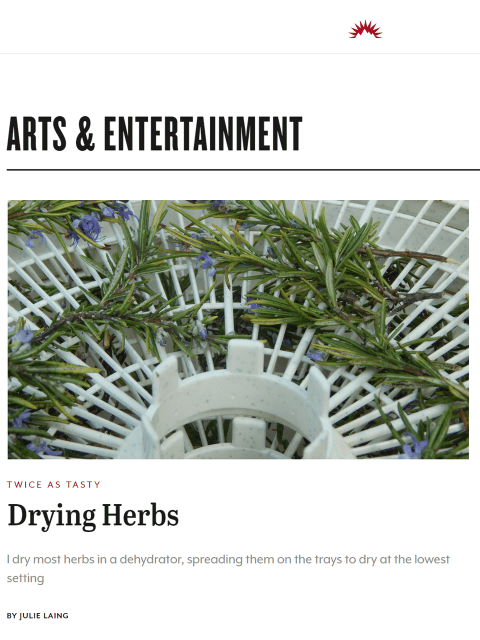
Drying fresh herbs yourself is easy, saves money, and gives the best flavor. Learn more at TwiceasTasty.com.
Almost everything I cook has a fresh or dried herb in it—and even if you barely cook, I’d bet you have at least a couple of jars of dried herbs in your kitchen. But as I explain this week in my Twice as Tasty column for the Flathead Beacon, drying fresh herbs yourself, whether homegrown or store-bought, is an easy DIY project that will result in far better flavor and cost far less than commercially packed jars of dried leaves.

The column focuses on tips that will help you successfully dry a range of fresh herbs, but the first step may be to grow your own. Many herbs grow well in pots on a windowsill or deck. If you have more space, you can plant many types of perennial herbs now and see them pop up on their own year after year. Some can even grow until they produce seeds that you can save to cook with or to replant, such as fresh cilantro and its seed, coriander. And like sourdough starter, herbs love to be used: the more you cut them to use fresh or to dry, the more they grow and produce.
Learn about drying and using herbs

Choosing and Storing Herbs

Food has always dominated my travels, and home re-creations almost always start with herbs. Read more about choosing and storing herbs.
Spring is finally in the air, and I am on the road. In recent weeks, I’ve cleaned up the garden beds; watched crocus, ipheion, scilla, and daffodil blooms open wider by the hour; and found the first perennial herbs like mint, oregano, sorrel, and chives poking through the ground. But it’s also one of my favorite seasons to travel—with Twice as Tasty workshops, to visit family and friends, and to explore new places.

Food has always dominated my travels, first as a vegetarian struggling to find things to eat in a newly reunified Germany and later when discovering new flavors and spices in Africa and Asia and even unknown fruits and vegetables in the South Pacific. Although I still dream of the more exotic tastes, the dishes I bring home put that international spin on food I can grow or easily find in my climate. It almost always starts with herbs.
Read more about choosing and storing herbs