Paneer

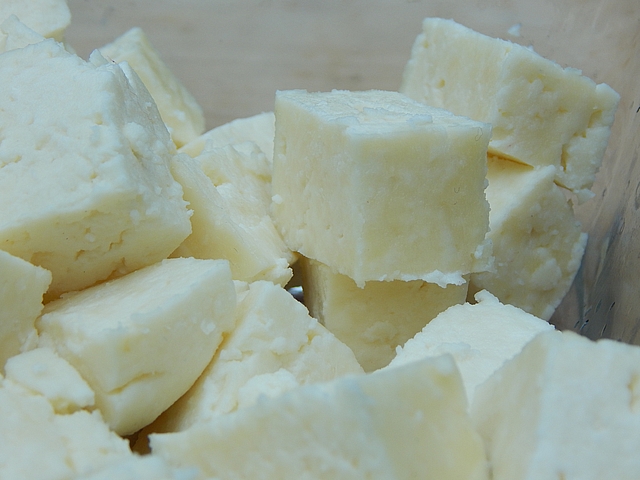
My freezer holds all sorts of vegetables ready to mix with homemade paneer for Paneer Tikka Masala. Learn to make cheese at TwiceasTasty.com.
Every April, I’m focused on two things: what I’m going to grow in my garden this year, and how I’m going to eat up everything I saved from last year’s harvest. Last week’s post used up not just the whey leftover from making yogurt but also the potatoes starting to sprout in my storage bins. This week, I dug deeply into my freezer and found all sorts of vegetables for an Indian dinner: cherry tomatoes, onions, peppers, garlic, and cilantro pesto. Flavor them with my dwindling supply of home-smoked chilies and homemade curry powder, toss in some freshly made paneer, and the flavors explode.

There are several other fabulous things about this week’s recipes. If you already make Lemon Cheese, you don’t need to learn to make paneer: you just need to learn how to press your cheese. If you don’t yet make this cheese, which also goes by queso blanco, whole-milk ricotta, and farm cheese, you have another reason to learn how.
Learn to make Fresh Paneer and Paneer Tikka Masala
Stir-Fry

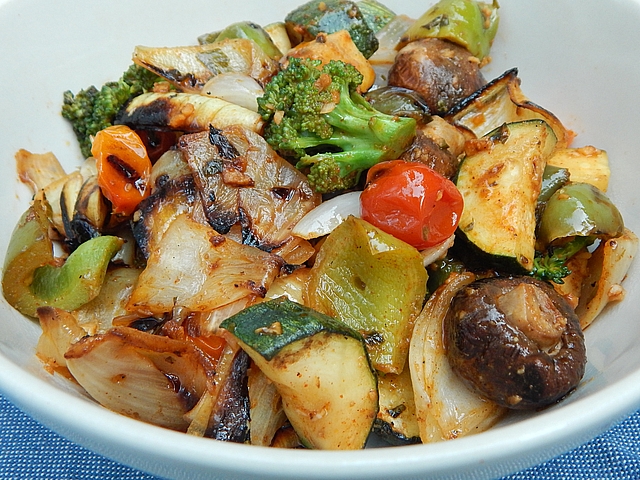
 Stir-fries are quick, go-to meals that show off well-cooked tofu. Get stir-fry and tofu recipes at TwiceasTasty.com.
When the garden is in full swing and sailing season is on, one of my go-to meals is a stir-fry. In the time it takes to cook a pot of rice, the rest of the meal can be chopped, cooked, and ready to serve from one pan as a single-dish meal. In spring, asparagus, early onions, young garlic, snap peas, spinach, and herbs dominate the stir-fry; at the height of summer, freshly harvested onions, peppers, carrots, zucchini, and cherry tomatoes take over. By late summer, corn, eggplant, and fall broccoli and peas are ready to mix in.

When you’re rich in a particular vegetable, you can let it solo in a stir-fry, backed by aromatics such as garlic, ginger, and chilies. But my favorite stir-fries are created with dibs and dabs of many vegetables and a protein such as tofu. To guarantee success, fry quickly, at high heat, in an order that lets the ingredients brown evenly, with plenty of movement. It’s in the name: stir and fry.
Learn to make Fresh Improv Stir-Fry and Pan-Fried Tofu

Fresh Feta

I have a long list of reasons for making feta, starting with delicious and easy. Get homemade feta and salad recipes at TwiceasTasty.com.
I can give you a long list of reasons for making feta. It’s delicious. It’s relatively easy. It lets you become comfortable with many ingredients, tools, and techniques that are important in more finicky cheeses, including slow heating, powdered starter, held temperatures, curd cutting and stirring, hang draining, molding, and salting. It will impress all of your friends, if you decide to share. And did I mention how tasty it is?

In Greece and other Mediterranean countries, feta is as common as cheddar is in the United States. During my travels, I ate feta made from backyard goats and sheep, feta flavored with herbs just snipped in the garden, and feta in lots of salads. Feta is traditionally made from sheep or goat milk; if you can get your hands on either, you’ll get the best flavor. But even homemade cow’s milk feta tastes better than many of the most readily available commercial types.
Learn to make Dry-Salted Feta and Warm Quinoa and Feta Salad