Soft Cheeses

Learn to make soft cheeses, and you have so many choices. Get soft cheese recipes at TwiceasTasty.com.
I’ve always loved the tang of goat cheese, or chèvre. Unfortunately, goat milk is hard to find in my area. Local stores tend to carry one ultrapasteurized brand or a powdered version—neither of which works for cheese. Regulations for selling milk directly to individuals are so strict, convoluted, and enforced that it feels like a black market. I occasionally trade with friends who are milking goats (and have momma and babies willing to share), but mostly I gave up on making soft cheese.

That changed when I took a chance on fromage blanc. I’d written off this cow’s milk cheese as too mild for my tastes. But it has a surprising amount of tang and flavor. Best of all, the technique for soft cheeses really does work across milk types—cow or goat, reduced fat or whole milk or cream. It can be soft and spreadable or drained until it crumbles. It can be shaped or molded, and it absorbs flavors like herbs, zests, and spices. Learn to make soft cheeses, and you have so many choices. You can do it!
Learn to make Homemade Fromage Blanc and other soft cheeses

Steamed Buns

Homemade steamed buns make you wait, but your first bite is worth it. Get dumpling recipes at TwiceasTasty.com.
In the realm of stuffed foods, Chinese steamed buns seem like the crown jewels. They’re made with a yeast dough, rather than the comparatively simpler flour-and-water wraps for Scratch-Made Pot Stickers, which means more waiting time. The steaming may require tools you don’t yet have in your kitchen—or some improvisation. And you’ll have the nicest buns if you master yet another rolling and pleating technique.

But the first time you bite into a homemade steamed bun, you’ll know it was worth it. The magic that happens with some basic ingredients, time, and care will keep you practicing until you’ve perfected your technique. As with all homemade dumplings, there are some shortcuts. But most of these stretch out the work rather than shortening the timeframe. It’s best to approach steamed yeast buns with a relaxed schedule and mindset.
Learn to make Scratch-Made Steamed Buns with homemade fillings

Pierogi

You say pot sticker, I say pierogi: It can be all one dough. Get dumpling recipes at TwiceasTasty.com.
When I traveled in Eastern Europe and lived in Russia, I ate a lot of pierogi but never learned to make them. Some were homemade—my favorites came from Russian women who carried pots of them from their kitchen to meet the train as we rode the Trans-Siberian Railway from Moscow to Vladivostok. Plus, commercially packaged frozen pierogi were as widespread in Eastern Europe as frozen pizza is in the United States, and they could be dropped in boiling water for a quick meal.

Once I returned to the States, I tried many variations on pierogi dough, attempting to recreate those mild yet somehow tasty dumplings. Available dough recipes varied widely on both ingredients (egg, milk, butter, sour cream, even cream cheese) and ratios. But once I mastered homemade pot stickers, I realized I’d strayed too far from the frugal kitchens that prepared my favorite pierogi. So now I use the same dough for both types of dumplings; how I prep that dough, fill it, and cook the dumplings determines whether they’re labeled pot stickers or pierogi.
Learn to make Scratch-Made Pierogi with homemade fillings

Pot Stickers

Tasty pot stickers can be hard to find but make a fun project at home. Get dumpling recipes at TwiceasTasty.com.
I fell for pot stickers as a kid. For special occasions, we’d meet my Uncle Sunny and Aunt Ginny in Portland, Oregon, at their favorite Chinese restaurant. My uncle was one of those people who made friends at his frequented haunts; he and the restaurant’s owners probably swapped their favorite spicy mustard recipes. As a kid, it amazed me that the staff knew to bring my sister a Shirley Temple, my mom fiery eggplant, and me vegetable pot stickers.

Vegetarian pot stickers can be hard to come by even in cities; the standard fillings lean toward pork. In northwest Montana, they’re nonexistent. Luckily, a local friend with Chinese roots loves to cook and share her creations, and I treasure invites to her kitchen. For a pot sticker gathering, we mix up batch after batch of dough and filling, just eyeballing the ratios, and many hands form it all into neat—or not so neat—edible packets. It’s a bit like making pie crust with Grandma Tiny: this recipe, which I make at home, is my best version of those recipe-free evenings with a practiced guide.
Learn to make Scratch-Made Pot Stickers with homemade fillings

Fermenting Grains and Beans

Lessons learned in my dosa-making adventures led to a recipe for beginners living in cold climates. Learn more at TwiceasTasty.com.
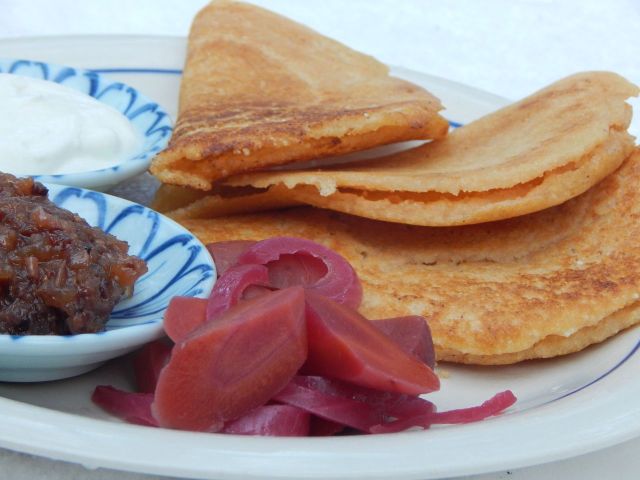
When it’s midwinter and the fermentation bug hits you, where do you turn? The logical choice to expand beyond sourdough and cheese, and the perfect pairing with this month’s Indian-Inspired Sweet-and-Sour Potatoes and Indian-Inspired Shrimp in Yogurt, seemed to be dosas. But these thin, crisp rice-and-bean pancakes offered as many challenges as advantages in my Northern Rocky Mountain kitchen.

So what I offer this week are the lessons I learned as I began my dosa-making adventures, with big nods to fermentation expert Sandor Katz and writer and cook Chandra Padmanabhan. These lessons led to an Indian-inspired dosa recipe ideal for beginners living in cold climates, with plenty of ways to creep closer to the traditional texture and flavor as you become more confident in your dosa-making skills.
Learn to ferment grains and beans and make Red Lentil and Basmati Dosas

Spiced Shrimp

 By changing the tang, two similarly spiced dishes taste completely different yet complement each other beautifully. Get spiced shrimp recipes at TwiceasTasty.com.
Like last week’s spiced potatoes, shrimp play well with so many flavors—including Indian spices. You could simply turn that potato recipe into a shrimp dish, cooking the sauce first and adding the shrimp at the end. But if you want to serve shrimp and potatoes together, it’s more fun to vary the flavors.

I like to do that by changing the tang. Last week’s potato dish picks up tang from pickle brine, tomatoes, and as an optional bonus, tamarind. This week’s shrimp dish grabs it from yogurt. I get more flavor from homemade yogurt, but store-bought also works. With that flavor shift, you can rely on the same spice base. A little onion, garlic, and ginger just enhances the base.

In the end, two similarly spiced dishes taste completely different yet complement each other beautifully. The same concepts can be applied to many other spiced shrimp dishes, letting you use your pantry power to put sunshine on your table even when you’re snowed in.
Learn to make Indian-Inspired Shrimp in Yogurt and other variations

Spiced Potatoes

Potatoes readily absorb anything you add to them, making them perfect vehicles for all sorts of spices. Get potato recipes at TwiceasTasty.com.
We grow and eat lots of potatoes, especially ones we’ve stored for winter: waxy reds and bright purples ideal for salads, starchier white varieties I use in gnocchi, and yellow potatoes that go into soups, curries, mashers—really, almost anything. Each variety tastes subtly different, but all readily absorb any flavor you add to them, making them perfect vehicles for all sorts of spices.

I often bring potatoes when teaching Twice as Tasty Indian Spices workshops, but we keep the workshop recipes simple so that the participants’ newly created spice blends can shine. At home, I sometimes reach for a homemade masala but just as often grab separate ground or whole spices. Because I’m generally rich in pickle brine, that often lands in my potato dishes for a sweet-and-sour effect. Keep reading after the recipe for more flavoring ideas.
Learn to make Indian-Inspired Sweet-and-Sour Potatoes and other variations

Sourdough Ciabatta & Bread Variations

With a handful of easily mastered recipes, including Sourdough Ciabatta, you can make every batch of sourdough look and taste unique. Learn more at TwiceasTasty.com.
Long before I got hooked on sourdough, I made yeast-based Italian slipper bread using Patricia Wells’s Trattoria. I used the recipe from the 1993 edition of her book without changes because it is so good.

Once I started into sourdough, I fell for the flavor and texture of long-ferment loaves, and Sourdough Cabin Bread, aka Auntie Julie’s Special Bread, became my go-to recipe. But one day I flipped passed the slipper bread recipe and was inspired to create a version that could use sourdough starter.

Wells describes Italian slipper bread, or ciabatta, as “ideal for those who want great flavor in a hurry.” This sourdough version takes a little more time to build than a yeast loaf but far less than long-ferment doughs that spend hours to days in the fridge. It’s definitely a high-hydration dough: expect it to be wet, sticky, and hard to shape. Your final loaf will look different every time, with lots of holes inside, and will cool and be ready to eat more quickly than denser loaves.
Learn to make Sourdough Ciabatta and bread variations

Sourdough Crackers

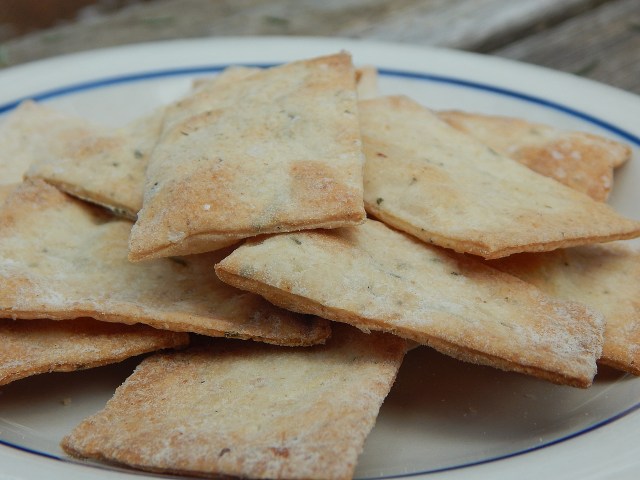
My master recipe lets you make cheese, wheat, herb, rye, and more. Get sourdough crackers recipes at TwiceasTasty.com.
If you jumped on the sourdough bandwagon last spring by making your own starter from scratch, chances are you’ve already experimented with “discard” recipes like crackers. When you take weeks to build a starter from just flour and water, you end up with a lot weak starter that many instructions advise you to throw out—and in my opinion, it’s the only time you should. Since my sourdough adventures started with a dormant gifted starter, I don’t toss starter, never clamored for discard recipes, and began baking bread long before I fell for sourdough crackers.

I started baking sourdough crackers for one reason: George loves Goldfish crackers. He’ll plow through a box of the cheesy bites in a sitting, so of course my thought was, “How can I make these—and make them better?” This led me to develop a master recipe whose techniques I now use for a variety of crackers: cheese, wheat, herb, rye, and more.
Learn to make cheesy and other sourdough crackers

Biscotti

Biscotti pair well with tea, coffee, or even an evening alcoholic sipper. Get biscotti recipes at TwiceasTasty.com.
At some point in my childhood, my mom started making biscotti at Christmas. As a kid, it was low on my priority list—there were so many other, sweeter cookies in the house. But even though my mom was the household’s master baker, my dad, sister, and I ate most of her creations before she had a chance to enjoy them with a cup of tea and a good book. She probably made biscotti because we tended to leave it for her.

Now that I’m older, I’ve come to appreciate these twice-baked cookies. They pair well with tea, coffee, or even an evening alcoholic sipper. When I traveled in Italy, I ate them with straight espresso and once with a dry Italian dessert wine I assumed was a type of sherry but later discovered was called vin santo (holy wine). The Italians are biscotti masters, traditionally flavoring them with almonds. But the technique works with many flavors, from nuts and dried fruit to my mom’s favorite gingerbread biscotti. And because they’re so dry, they can be stored a long time, making them ideal for sending to others.
Learn to make my Biscotti Master Recipe and several flavors