Raw Shrubs

When you offer to pour a shrub, clearly you’re not referring to the leafy bush. But what is a shrub? Get shrub and cocktail recipes at TwiceasTasty.com.
Offering to pour someone a shrub usually requires an explanation. Clearly the noun is not referring to the leafy bush. But just what is a shrub? Why would you want to drink one?

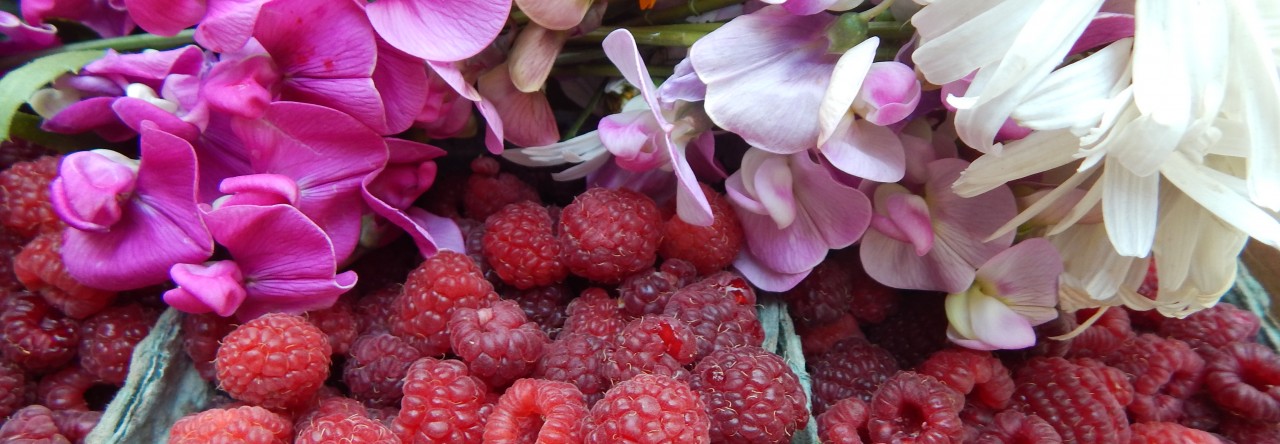
The answer to the first question has a surprisingly long history. Mixologist Warren Bobrow calls drinking shrubs “the original energy drinks” and dates them back to the 1800s. The combination of vinegar, water, and sweetener gave farmworkers a refreshing boost while in the field. Then farmers discovered they could expand the range of flavors using their harvest and the preserving properties of vinegar and sugar. Add carbonated water, and the first soft drinks were born. But these aren’t our contemporary, corn syrupy sodas: shrubs, aka drinking vinegars, capture the bright flavors of fresh fruits and vegetables at the peak of their season.

Raw shrubs take little time to prepare but need a bit of foresight. The wait for cold processing means you don’t need to heat the shrub and lose some of its flavorful pop, a particular advantage with delicately flavored fruits like citrus and kiwi. They usually need 1–3 days to get to their final form but often taste best when left for at least a week. But shrubs last a long time too—I’m told up to a year, but I’ve never been able to keep one around that long.

This shrub recipe is a concentrate; you’ll want to dilute it to enjoy it. The simplest method is to pour 1/2 ounce of shrub into an 8-ounce or larger glass, top it with sparkling water or seltzer, and then add more shrub until you get a balance you like. Or upgrade your bar by using the shrub as the base for a cocktail.
Learn to make Raw-Fruit Shrub and Basic Shrub Cocktail

Mint

It’s Twice as Tasty’s birthday month, and what better way to celebrate than with cocktails? Get simple syrup and mojito recipes at TwiceasTasty.com.
I tend to be on seasonal quests for unbeatable mixed drinks, looking for, say, the bar that makes its own tonic for G&Ts or the bartender who concocts the perfect old-fashioned. Several years ago, it was mojitos, and a local bartender mixed my hands-down favorite: heavy on the mint, light on the sweet, with the perfect touch of lime. Mint grows like a weed in my garden, but my homemade mojitos didn’t show it. So I had to ask: What was her secret? She gave a simple answer: simple syrup.

I didn’t know it, but I’d been making simple syrup for years—to feed hummingbirds. The first time I dropped some mint leaves into the batch, I found a new kitchen staple. Simple syrups are as easy as they sound, and they can sweeten everything from beverages, with or without alcohol, to desserts. And since it’s Twice as Tasty’s birthday month, and what better way to celebrate than with cocktails?
Learn to make Mint Simple Syrup and Mega-Mint Mojitos

Herb Marinades

Some of my favorite food memories linger from travels, with dishes I repeat at home. Get Moroccan recipes at TwiceasTasty.com.
Some of my favorite travel memories linger from my time in Morocco. I had the good fortune to have Peace Corps connections that introduced me to volunteers in both tiny towns and large cities. I stayed in their houses, visited their host families and haunts, and ate dinner in the homes of their Moroccan friends. I could never repeat or improve on the experience.

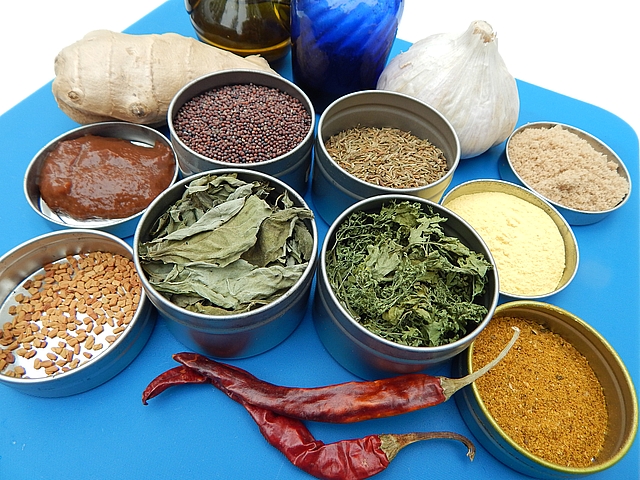
But the food: some of that I can and do repeat, even though it’s never quite the same. For example, every time I ate chermoula in Morocco, the flavor was unique. The basic version is essentially a pesto featuring cilantro and parsley, but my favorite versions included a little fresh ginger and extra spices, and I replicate it as well as I can. I mostly ate it in a tagine while in Morocco, but I’ve since learn to love it as a grilling marinade, accompanied, of course, by couscous.
Learn to make Grilled Shrimp with Chermoula and Cinnamon Couscous

Fresh Salads

A salad is just a bunch of greens tossed in a bowl, right? Maybe, maybe not. Get salad recipes at TwiceasTasty.com.
Using a recipe for a salad always seems silly: it’s just tossing a bunch of greens in a bowl, right? To be honest, my answer is yes—in terms of ingredient choices and their proportions. But the quality of those ingredients, how you toss them, and especially how you toss them in dressing can result in a soggy mess or a crisp, fresh delight.

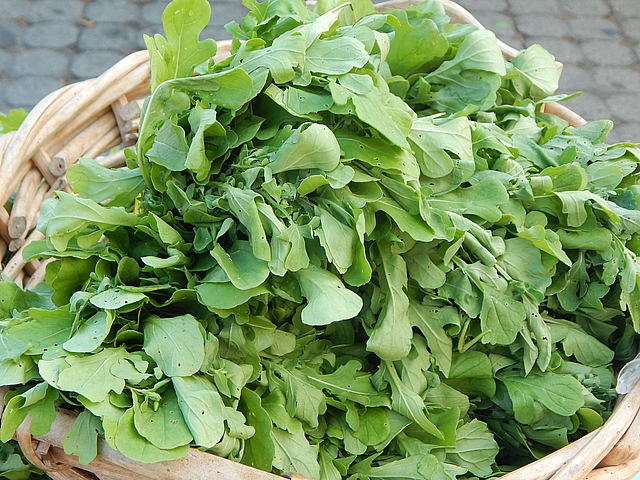
My favorite salads have always been more stuff than greens. Even buried under a dozen freshly harvested vegetables, I can’t get excited about iceberg, Romine, or most leaf lettuces. I didn’t discover the appeal of salad greens until I lived in London and had my first taste of arugula or, as the Brits call it, rocket. Only recently sold in the United States as a loose salad green instead of in tiny, overpriced portions as an herb, arugula’s spicy, slightly bitter bite becomes the star on the salad plate. But you’ll still be disappointed in a light arugula salad—and heavier tuber-based ones—unless you dress it right.
Learn to make Arugula–Asparagus Salad and Mushroom–Sweet Potato Salad

Three Cups of Tea

For me, traveling revived the family tradition of daily cups of tea. Learn to make Moroccan-Inspired Mint Tea and British and Russian Black Tea. Get tea recipes at TwiceasTasty.com.
I grew up in a family of tea drinkers: hot tea for breakfast, iced tea in summer, even decaf tea in evenings. Although my mom might hesitate over a choice of English Breakfast or Earl Grey, both she and my grandmother gravitated toward black teas, unsweetened and unadorned.

As soon as I was deemed old enough to drink hot, caffeinated beverages, I saw it as my duty, as a mildly rebellious teenager, to develop a coffee addiction. But once my independence was established, I added tea to the mix. Traveling only expanded my repertoire. In Great Britain and Russia, I continued the family tradition of daily mugs of black tea, learning to love a bit of sweet, creaminess in some cups. Morocco brought another twist: hot green tea to fight the ambient heat and seal a business deal or friendship, with so much mint and sugar it resembles a breath mint.
Learn to make Moroccan-Inspired Mint Tea and British and Russian Black Tea

Fresh Feta

I have a long list of reasons for making feta, starting with delicious and easy. Get homemade feta and salad recipes at TwiceasTasty.com.
I can give you a long list of reasons for making feta. It’s delicious. It’s relatively easy. It lets you become comfortable with many ingredients, tools, and techniques that are important in more finicky cheeses, including slow heating, powdered starter, held temperatures, curd cutting and stirring, hang draining, molding, and salting. It will impress all of your friends, if you decide to share. And did I mention how tasty it is?

In Greece and other Mediterranean countries, feta is as common as cheddar is in the United States. During my travels, I ate feta made from backyard goats and sheep, feta flavored with herbs just snipped in the garden, and feta in lots of salads. Feta is traditionally made from sheep or goat milk; if you can get your hands on either, you’ll get the best flavor. But even homemade cow’s milk feta tastes better than many of the most readily available commercial types.
Learn to make Dry-Salted Feta and Warm Quinoa and Feta Salad

Sour Cream

You easily get the best flavor from the fewest ingredients by making sour cream at home. Get homemade sour cream and cookie recipes at TwiceasTasty.com.Sour cream is one of my guilty food pleasures. I eat it regularly, sometimes daily. I eat it at breakfast with crepes and baked into Sour Cream Scones with Tart Cherries. It goes in creamy dressings for potato and other salads. It’s the base for dips and midday snacks. I put sour cream on baked potatoes, tacos, and empanadas. And I use it in desserts, including cookies.

I call sour cream a “guilty pleasure” because it can be high in calories and fat. Most commercial reduced-fat and nonfat versions are primarily whey, modified food/corn starch, salts, stabilizers, and artificial gums—not a good alternative. So if I’m buying sour cream, I read the labels closely and buy full-fat versions that only list “cultured cream” or something similar as the ingredient. But you can easily get the best flavor from the fewest ingredients by making sour cream at home.
Learn to make Fresh Sour Cream and Salted Chocolate Chip Cookies

Buttermilk

Cultured dairy is an easy, no-fuss first step to cheesemaking. Get buttermilk recipes at TwiceasTasty.com.
When I started sharing cheese and homemade dairy recipes and teaching workshops on making cheese last year, you learned how to use a simple starter to make yogurt and an acidic kitchen staple to make cheese. But to expand the range of dairy products and cheeses you make in your kitchen, you’ll need to become familiar with powdered starter.

These magical little packets of bacterial cultures do the same thing as yogurt and lemon juice: they acidify, or ripen, warm milk, letting the good bacteria grow. But the beauty of them is in their specificity. Each starter culture has particular strains of bacteria that create different flavors and textures from the same milk. The range of available cultures is impressive, and I recommend reading about them in Mary Karlin’s and Gianaclis Caldwell’s books to really understand how they work. Here, I’ll give a quick intro that will let you make and use cultured buttermilk.
Learn to make Cultured Buttermilk and Honey–Chili Buttermilk Biscuits

Cheesy Baked Pasta

I’m a sucker for homemade mac and cheese. But my mom’s original version is a perfect intro but just the beginning. Get mac and cheese recipes at TwiceasTasty.com.
Although my comfort food list includes a lot of nontraditional dishes, like crepes and Hot and Sour Soup, I’m a sucker for homemade mac and cheese. It was a household standard when I was growing up. As little girls, my sister and I sometimes begged for forbidden junk foods, but we were always willing to go homemade when it came to Mom’s baked macaroni. I’d take leftovers to school to eat cold for lunch, not caring what my friends thought. It was that good.

Over the years, I’ve come to love other flavors in my baked noodles: the bite of garlic and dry mustard, a burst of flavor from cherry tomatoes and basil, and always extra-sharp Cheddar. Since I started making cheese, it’s been my preferred way to use whey. But my mom’s original version is perfect for introducing kids—and adults—who’ve only had boxed macaroni & cheese to the real deal.
Learn to make Childhood and Tomato–Basil Mac and Cheese

Feel-Good Soup

Soup is the ultimate comfort food. By planning ahead, you can have it in a flash—even when you’re sick. Get Hot and Sour Broth Base and Soup recipes at TwiceasTasty.com.
Soup is the ultimate comfort food. It warms you from head to toe, even reaching fingertips wrapped around a warm bowl or mug. It can be pleasantly light or satisfyingly filling. You can load it with your favorite ingredients and flavors, and it makes brilliant leftovers. What’s not to love about homemade soup?

Some days, the answer is, “That I have to make it.” When you’re sick, soup can make you feel better, but not if you have to get out of bed, gather and chop the ingredients, and monitor the pot. When I’ve got a bug, I crave hot and sour soup. But one of my favorite recipes, Padma Lakshmi’s Hot and Sour Tomato Broth with Shrimp from Tangy Tart Hot & Sweet, requires specialty ingredients and effort. So I’ve developed a version can be frozen as a broth base. The essential work can happen long before you want the soup. When you’re under the weather, you can simply defrost and mix it into homemade stock. On healthy days, you can fill it out to create a full meal for everyone at the table.
Learn to make Hot and Sour Broth Base and Soup