Sunshine Risotto

When you freeze and dry the ingredients for a favorite summertime meal, it becomes a sunny midweek, midwinter one. Learn more at TwiceasTasty.com.
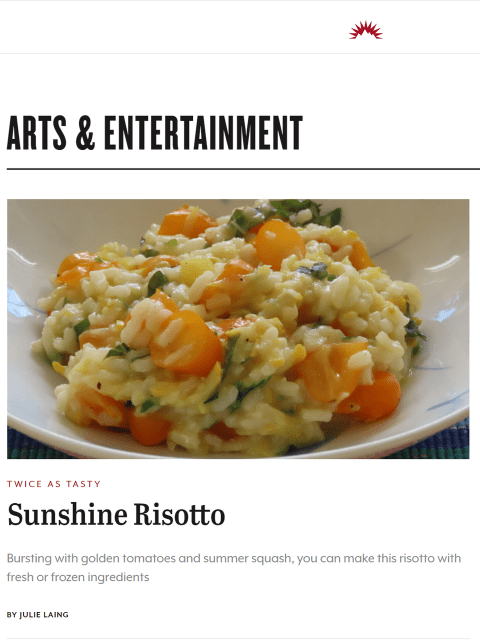
The risotto recipe I share this week in my Twice as Tasty column for the Flathead Beacon started out as a from-the-freezer meal. It tastes of summer, but the grated and frozen summer squash, burst yellow tomatoes, and dried basil and parsley aren’t nearly as photogenic as fresh, barely cooked tomatoes and thin slivers of fresh squash and herbs. I altered my original recipe just so I could photograph the fresh dish, and it’s become a summertime favorite, especially when I’m cooking for family or friends.

My column includes both the fresh and the frozen versions, with the steps for adding fresh ingredients in the recipe and notes in the header for making this risotto in winter. Sungold, yellow pear, and other cherry-size tomatoes are so easy to freeze: just give them a rinse and pop them in a freezer bag. For summer squash, you’re getting the prep out of the way by grating and freezing. Drying herbs is simple, especially if you follow these tips. With these ingredients in your freezer and spice rack, along with homemade vegetable stock, this risotto becomes a sunny midweek, midwinter meal.
Learn to make Sunshine Risotto from fresh or frozen vegetables

Winter Squash and Mushroom Risotto

You can use all sorts of winter squash and mushrooms in risotto, making it a showcase for homegrown or locally farmed or foraged varieties. Learn more at TwiceasTasty.com.
I feel lucky that my homegrown winter squash has held up so well in storage this year. First deer that found their way into the garden attempted to gnaw through their thick skins. Then we had several huge temperature swings throughout winter, including an extended power outage during subzero temperatures. Yet the squash kept in storage until now, ready for the delicious risotto I share this week in my Twice as Tasty column for the Flathead Beacon.

You can use all sorts of winter squash in risotto, from the pictured kabocha to delicata, butternut, or pumpkin. The same goes for mushrooms; cremini are readily available, but as local mushroom farming becomes more popular, it’s becoming easier to mix in oyster mushrooms, chestnut boletes, or other varieties. I recommend making your own vegetable stock too; it likely won’t be as thick or salty as store-bought broths. If you make a large batch and then freeze it in 1-cup portions, it will be ready to defrost for a range of risottos.
Learn to make Winter Squash and Mushroom Risotto

Shrimp and Green Vegetable Risotto

Risotto often appears daunting but is actually just a 30-minute, one-pot meal. Learn more at TwiceasTasty.com.
Cool weather always puts me in the mood for risotto. The dish can be as warming as soup but is also hearty and filling. It’s a fabulous way to use up the last vegetables pulled from the garden before frost hits, but risotto can be made year-round: in winter with frozen and dry-stored ingredients, in spring with the first vegetables and herbs of the season, and throughout summer with the freshest treats from the garden.

As I explain this week in my Twice as Tasty column for the Flathead Beacon, risotto often appears daunting but is actually just a 30-minute, one-pot meal. Starting with the right rice and adjusting your cooking technique are key: Instead of covering a pot of short-grain rice and water with a lid, buy medium-grain Arborio rice and cook it in an open pot. Add a little hot liquid at a time, stirring often and letting the rice absorb it before pouring in more. I also create the best risotto when I use homemade stock.
Learn to make Shrimp and Green Vegetable Risotto