
Stir-fry, the technique and the dish, seems so straightforward and adaptable to so many ingredients that you don’t need a recipe. But a quick Web search pulls up endless recipes and varied methods for making them. Some geek out with tools like a wok burner, blow torch, or outdoor grill to mimic the ultrafast, high-heat smokiness achieved by a commercial range. Others vie for the title of easiest stir-fry by tossing sautéed vegetables with store-bought teriyaki sauce.
Whether you trend toward geeky or easy on the stir-fry scale, the recipe I share this week in my Twice as Tasty column for the Flathead Beacon fits into your regular meal rotation. It runs through the essential dos and don’ts and includes a quick, flavor-packed homemade sauce. The fresh vegetables you use make each one-dish meal unique.
Learn to make Mixed Vegetable Stir-Fry
Tag: stirfry
Stir-Fry
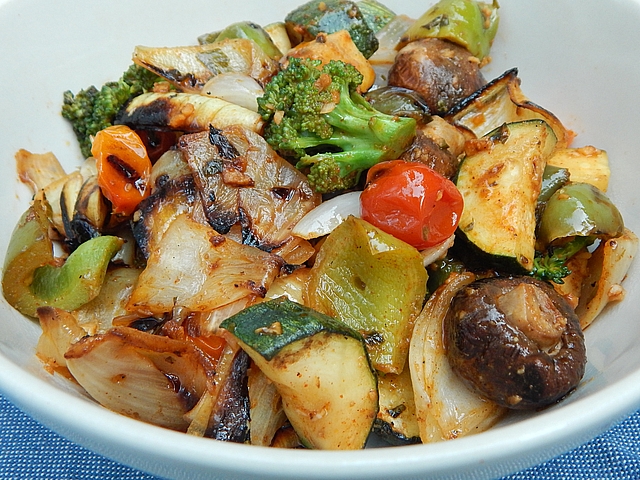
When the garden is in full swing and sailing season is on, one of my go-to meals is a stir-fry. In the time it takes to cook a pot of rice, the rest of the meal can be chopped, cooked, and ready to serve from one pan as a single-dish meal. In spring, asparagus, early onions, young garlic, snap peas, spinach, and herbs dominate the stir-fry; at the height of summer, freshly harvested onions, peppers, carrots, zucchini, and cherry tomatoes take over. By late summer, corn, eggplant, and fall broccoli and peas are ready to mix in.
When you’re rich in a particular vegetable, you can let it solo in a stir-fry, backed by aromatics such as garlic, ginger, and chilies. But my favorite stir-fries are created with dibs and dabs of many vegetables and a protein such as tofu. To guarantee success, fry quickly, at high heat, in an order that lets the ingredients brown evenly, with plenty of movement. It’s in the name: stir and fry.
Learn to make Fresh Improv Stir-Fry and Pan-Fried Tofu
