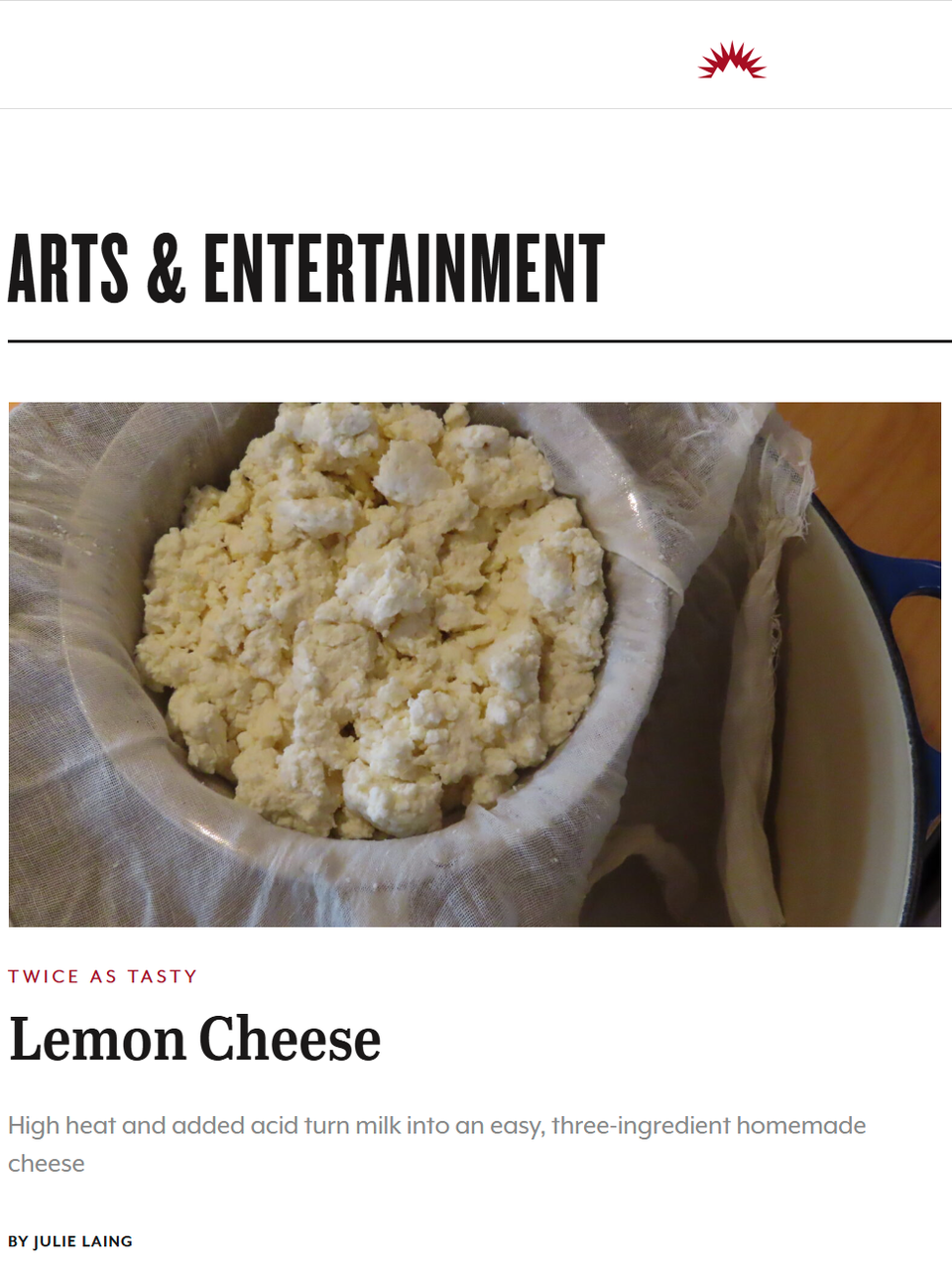
For the first time, I’m sharing my homemade cheese recipes in my Twice as Tasty column for the Flathead Beacon. I’ve been making these recipes at home and teaching them in cheese-making workshops for years, and they’re tasty enough that they should be on your table too.
Cheeses run the gamut from easy and quick to complex and well aged, but the one in this week’s column is about the easiest to create. I call it lemon cheese because I use lemon juice to set the cheese curd, but it’s also known as farmer’s cheese, queso blanco, and paneer. You only need three ingredients and 20 minutes of hands-on time to make this cheese, and just a few specific tools and ingredients: a large kettle, finely woven cheesecloth, an instant-read thermometer, and ideally nonhomogenized milk.
Learn more about making cheese at home and get the complete recipe for Lemon Cheese in my column.
 Make it, share it.
Tag @twiceastastyblog and #twiceastastyblog

Twice as Tasty
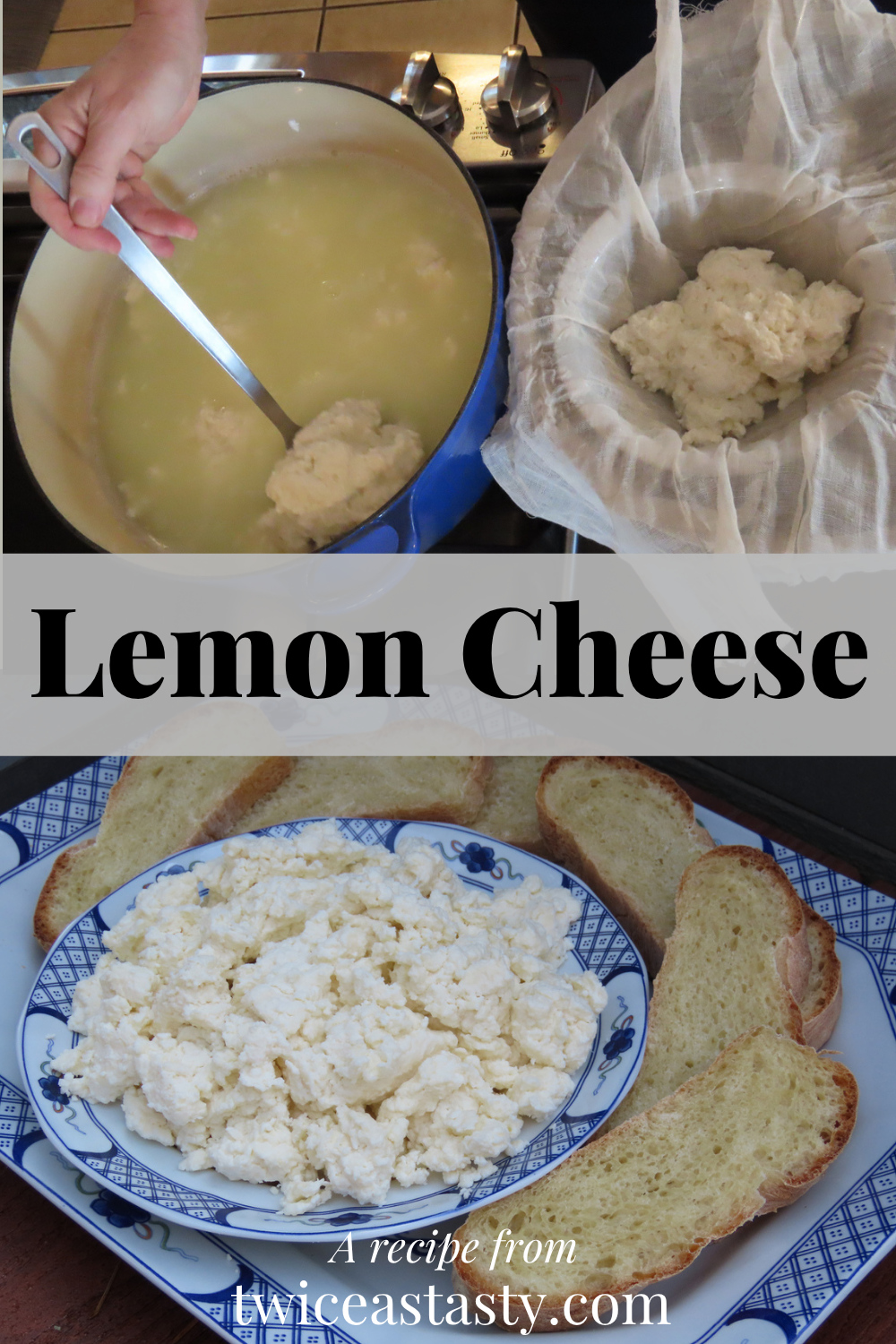 If you’re new to fermenting milk to make cheese and other dairy products, The first time you heat a gallon of milk and hold it at temperature can be a bit daunting. I spend plenty of time in my cheese-making workshops answering questions and building confidence. At home, it helps to start with smaller batches of other homemade dairy products. These three are my go-to beginner dairy fermentations, and they’re so delicious that I’ve stopped buying store-bought versions and instead make them regularly at home.
I explain in my column why I prefer certain tools and ingredients when making this week’s recipe, but I had to be a bit creative when I started making cheese. If you don’t have a thermometer, watch for changes in the milk. Around 185°F, it starts to bubble around the edges of the pot; pull it off the heat before it hits a rolling boil. Any cloth that lets whey drain away but holds back those precious cheese curds can be used instead of fine cheesecloth or butter muslin.
If your largest kettle has a thin or grooved bottom, heat the milk in a water bath. Place a rack or layer of canning rings in the bottom of the pot. Fill the pot by 1/3 with water, and then pour the milk into another heatproof container that fits within the pot. Insert the container into the larger pot, making sure the water in the outer pot is close to the milk level in the inner container but does not overflow.
I’ve written, for the Old Farmer’s Almanac website, more about the tools and ingredients I use when making cheese. You’ll also find step-by-step photos of how I make farmer’s cheese on that website. Learn more here.
Want more Twice as Tasty recipes? Get my books! Click here to order a personally signed, packaged, and shipped copy of The Complete Guide to Pickling directly from me. I also share tasty ways to use pickles in The Pickled Picnic; it’s only available here.
Discover more from Twice as Tasty
Subscribe to get the latest posts sent to your email.
