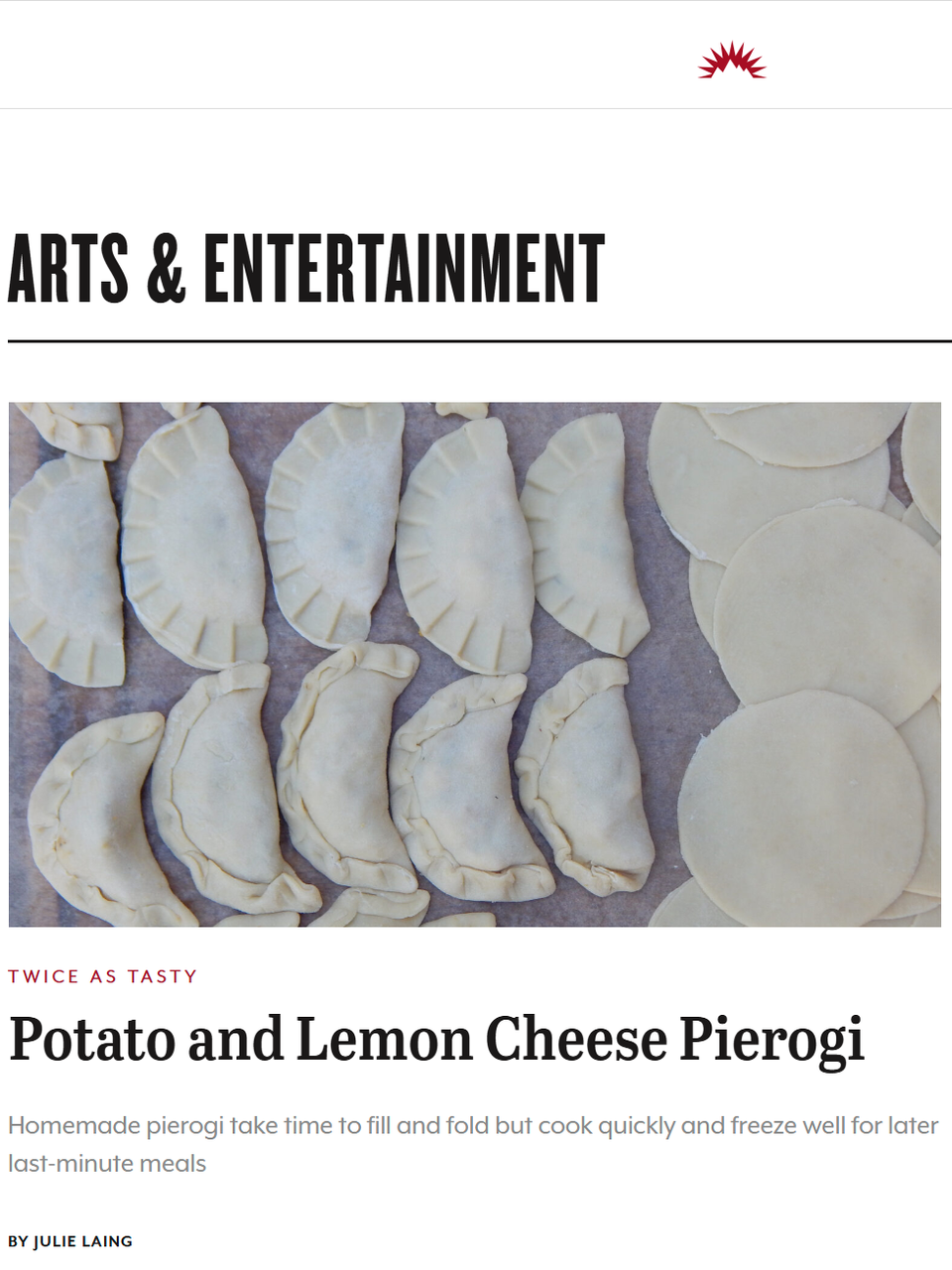
I ate pierogi often as I traveled and lived in Eastern Europe and Russia, and I love having homemade batches in my Montana freezer that I can pull out and throw straight into a frying pan for a quick meal. The dumpling dough recipe I share this week in my Twice as Tasty column for the Flathead Beacon uses just a few kitchen staples. The hot water and oil help to slow gluten development, and the ice water helps to keep the dough light and not too soft to roll out.
Although the dough is simple, pierogi assembly takes time, so I typically make a double batch and freeze most of the dumplings. I either set aside a few hours to prepare multiple fillings and the dough from start to finish or spread out the project over a couple of days. Pierogi dough keeps well for 2 to 3 days in the fridge; just let it come to room temperature before you roll it out. Most fillings can be refrigerated for up to 3 days before they should be used, and cold ones are often easier to work with than those that are still warm and saucy. Crimping or rolling the edges gives them a hand-shaped look, but a dumpling press speeds up this stage.
I usually parboil pierogi for freezing, but if you fully cooked more than you can eat, they can still be frozen or will be fine in the fridge for 3 to 4 days. I throw still-frozen pierogi straight into a hot pan with a little melted butter and reheat them for several minutes until browned.
Learn more about pierogi fillings and get the complete recipe for Potato and Lemon Cheese Pierogi in my column.
 Make it, share it.
Tag @twiceastastyblog and #twiceastastyblog

Twice as Tasty
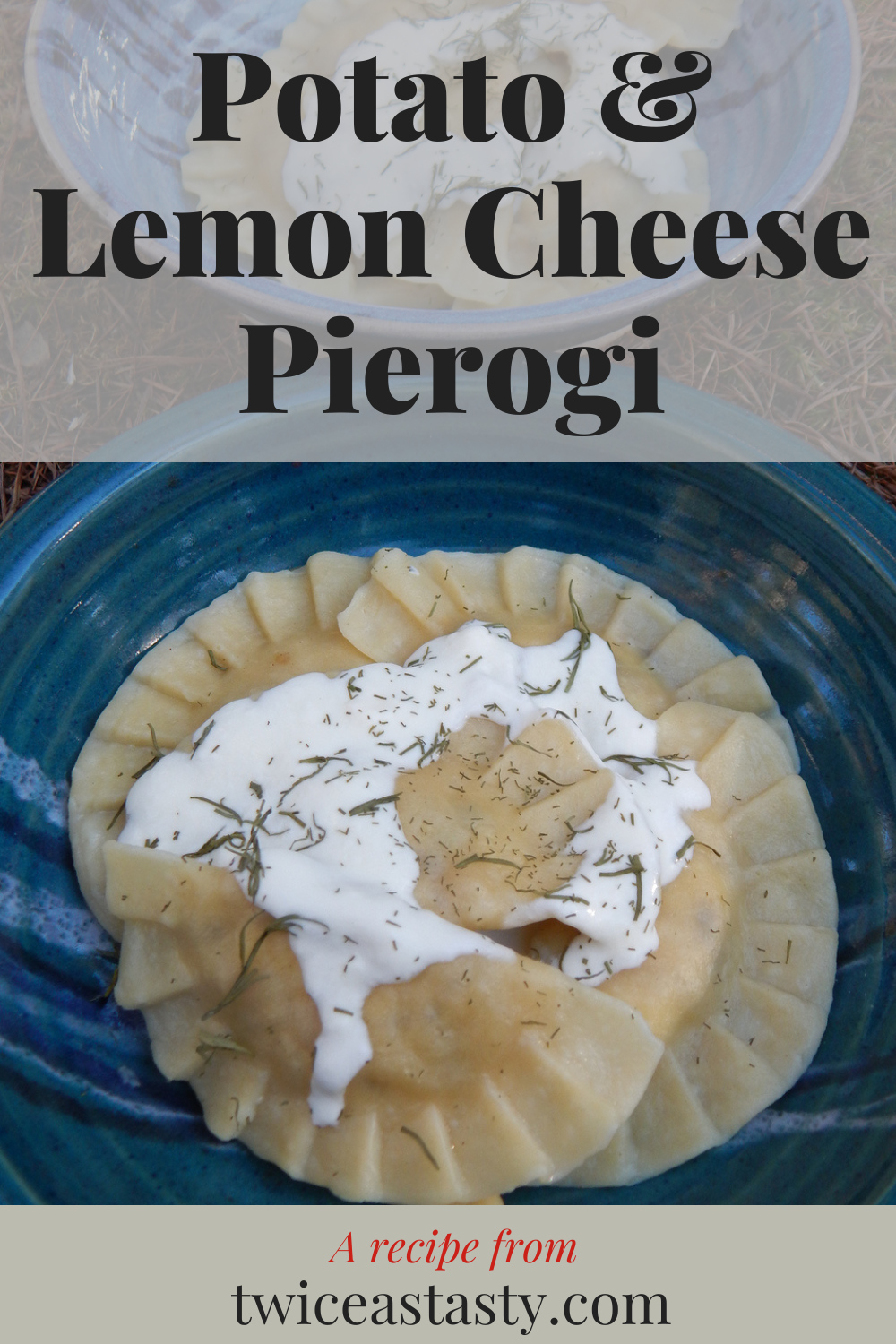 Rustic Lemon Cheese Mashed Potatoes is my favorite pierogi filling, but the options vary widely. Most of the dumplings I ate in Eastern Europe had simple fillings that relied on mild, plentiful vegetables like cabbage, onion, potato, and carrot, perhaps flavored with parsley or dill. Meat-based versions were available but were typically only made with scraps and leftovers.
I often jazz up my fillings with garlic, mustard, lemon juice, and various herbs. The sautéed mushrooms and onions I use for Mushroom-Filled Blini make a delicious pierogi filling; use just a splash of stock to avoid too much gravy, and reserve the sour cream for serving. Sauté cabbage, onion, and carrot in a similar manner, or chop up leftovers from Meera Sodha’s Vegan Potato and Cabbage Curry, which I’ve raved about over at Simply Recipes, for a fusion of flavors.
I recently made a delicious, mild, low-carb filling with cauliflower, which I broke down into couscous-like grains like I do for Gluten-Free Cauliflower-Crust Pizza. I mixed it with homemade Lemon Cheese, minced fresh rosemary and chives, roasted garlic, and just enough sour cream that the cauliflower crumbs clung to the cheese.
I love fermented pierogi fillings too. The Kvashenaya Kapusta (Russian-Inspired Soured Cabbage), Apple and Cabbage Kraut, and classic Sauerkraut recipes in The Complete Guide to Pickling make tasty, slightly tangy fillings. I’ve also emptied the last of other jars that hold recipes from my pickling cookbook for inventive pierogi fillings, from Classic Dilly Beans and Savory Refrigerator Beets to Cultured Curtido (Cabbage Slaw) and fermented Asparagus with Ginger. Finely chop these pickled foods and mix them with mashed potatoes or other cooked and mashed root vegetables if they’re too juicy to stand on their own.
You can find more pierogi filling inspiration in the recipe index. You can also learn more about homemade dumpling shortcuts, both in effort and in time, in this blog post.
Want more Twice as Tasty recipes? Get my books! Click here to order a personally signed, packaged, and shipped copy of The Complete Guide to Pickling directly from me. I also share tasty ways to use pickles in The Pickled Picnic; it’s only available here.
Discover more from Twice as Tasty
Subscribe to get the latest posts sent to your email.
