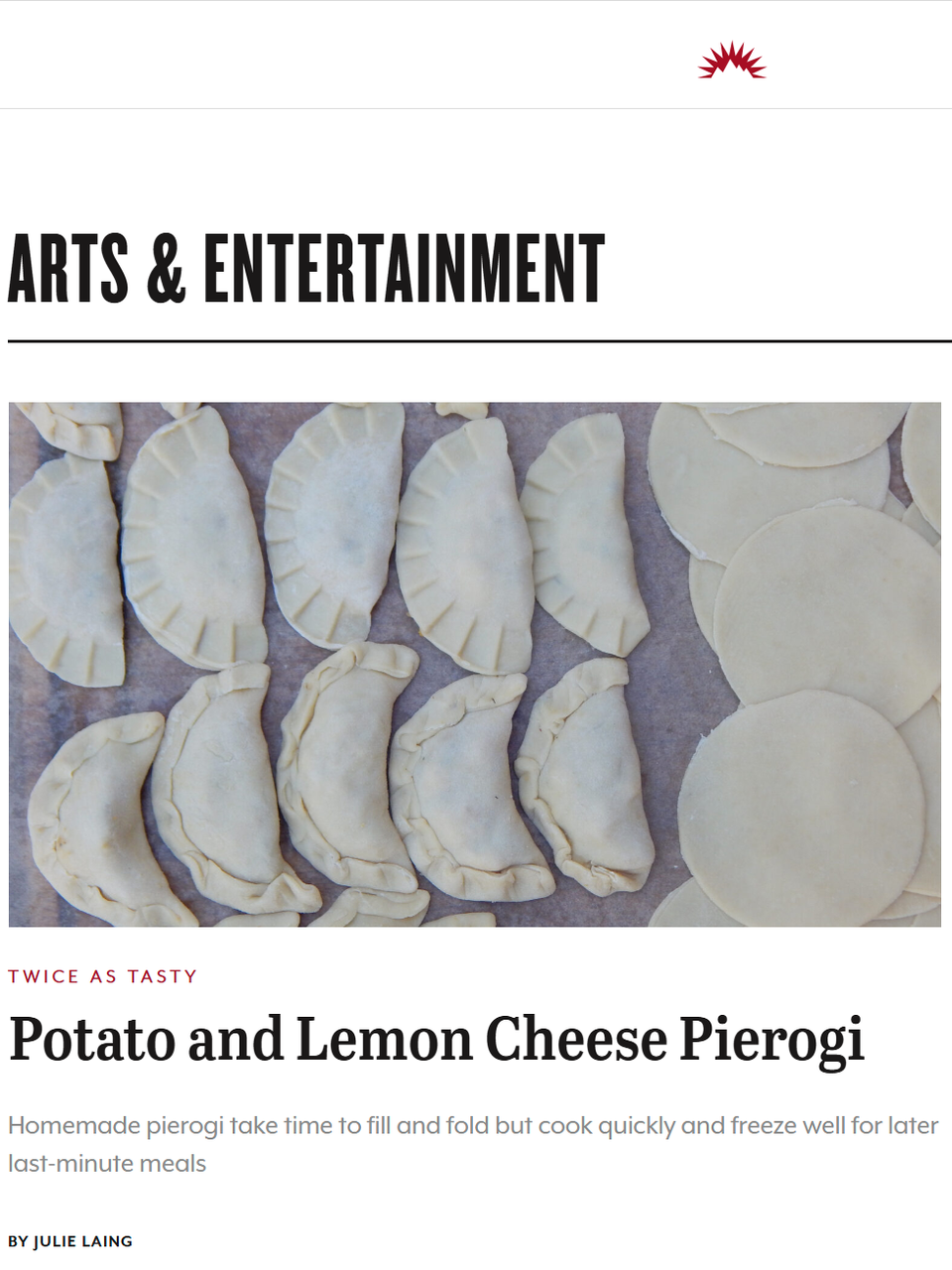
Potato and Lemon Cheese Pierogi

Pierogi dough is simple, but assembly takes time. Set aside enough to go from start to finish or spread it out over a couple of days. Learn more at TwiceasTasty.com.
I ate pierogi often as I traveled and lived in Eastern Europe and Russia, and I love having homemade batches in my Montana freezer that I can pull out and throw straight into a frying pan for a quick meal. The dumpling dough recipe I share this week in my Twice as Tasty column for the Flathead Beacon uses just a few kitchen staples. The hot water and oil help to slow gluten development, and the ice water helps to keep the dough light and not too soft to roll out.

Although the dough is simple, pierogi assembly takes time, so I typically make a double batch and freeze most of the dumplings. I either set aside a few hours to prepare multiple fillings and the dough from start to finish or spread out the project over a couple of days. Pierogi dough keeps well for 2 to 3 days in the fridge; just let it come to room temperature before you roll it out. Most fillings can be refrigerated for up to 3 days before they should be used, and cold ones are often easier to work with than those that are still warm and saucy. Crimping or rolling the edges gives them a hand-shaped look, but a dumpling press speeds up this stage.
Learn to make Potato and Lemon Cheese Pierogi
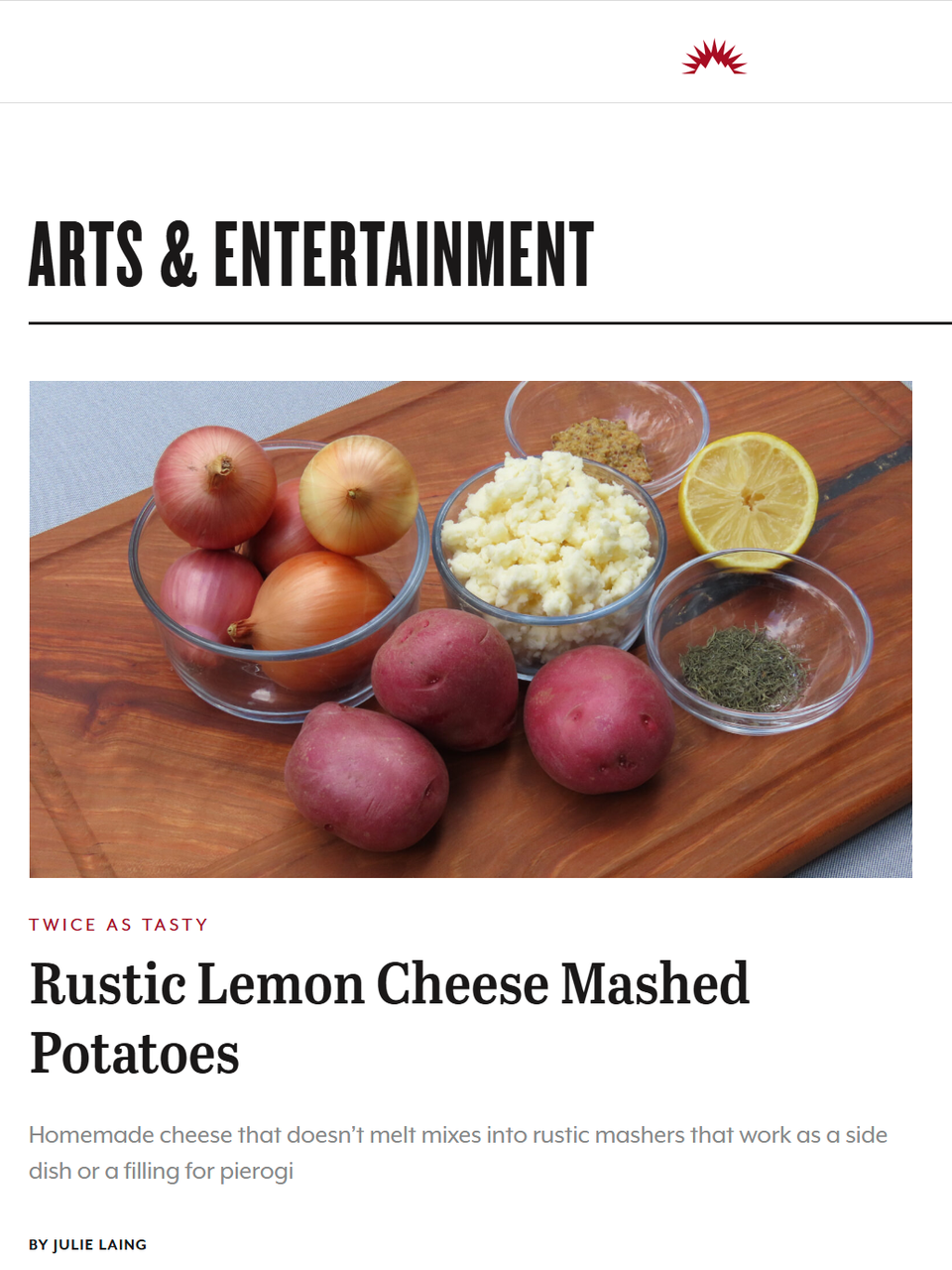
Rustic Lemon Cheese Mashed Potatoes

The ability of a homemade high-heat, acid-set cheese to retain its shape, hot or cold, makes it my favorite addition on and in many dishes. Learn more at TwiceasTasty.com.
After I started this month by explaining how to make an easy cheese at home, I wanted to offer plenty of ideas for using it. The recipe I share this week in my Twice as Tasty column for the Flathead Beacon is both straightforward and versatile. It mixes fresh, homemade Lemon Cheese into basic mashed potatoes for a simple and flavorful side dish.

As I explain in my column, I intentionally leave these mashed potatoes relatively dry so that they work well as a filling for pierogi, a recipe I’ll share in next week’s column. Even though you could mix other cheeses, store-bought or homemade, into a side dish of mashers, my lemony version of farmer’s cheese doesn’t completely melt when heated and won’t become oily and ooze from a pierogi wrapper. This ability to retain its shape, hot or cold, makes this cheese my favorite addition on and in many other dishes.
Learn to make Rustic Lemon Cheese Mashed Potatoes

Tangy, Garlicky Mashed Potatoes

Although still a starchy side dish, potatoes taste lighter when mashed with vinegar instead of cream and can be easily altered for vegans. Learn more at TwiceasTasty.com.
The garden has been tucked away, with one final visit this week to pluck spinach blanketed by our first real snow. We’re finishing off the last of the box-ripened tomatoes too, and my meals have started to feature dry-stored fruit and vegetables: apples, cabbage, carrots, beets, squash, and potatoes.

The mashed potatoes recipe that I share this week in my Twice as Tasty column for the Flathead Beacon lands nicely on a Thanksgiving or other holiday table. Although still a starchy side dish, potatoes taste lighter when mashed with vinegar instead of cream. The vinegar, roasted garlic, and chives pack flavor into these potatoes, so vegetarians can skip the turkey or beef gravy or contrast the tang with rich mushroom gravy or tart homemade cranberry sauce. To make these mashed potatoes vegan—and extra fluffy—use extra-virgin olive oil instead of butter.
Learn to make Tangy, Garlicky Mashed Potatoes

Homemade Pan-Fried Potato Gnocchi

It can be easy to write off certain recipes as too much work, but sometimes the effort really is worth it. That’s how I feel about gnocchi. Learn to make Homemade Pan-Fried Potato Gnocchi. Learn more at TwiceasTasty.com.
It can be easy to write off certain recipes as too much work, but sometimes the effort really is worth it. That’s how I feel about the detailed recipe for gnocchi that I share this week in my Twice as Tasty column for the Flathead Beacon. When I crave gnocchi, only the scratch-made version satisfies me.

Gnocchi take both hands-on and rest time, and even with a large batch, the results only last a couple of meals—although they do freeze well. Once I start the project and get my hands right in the dough, I find it soothing to feel how it comes together and to repeat the roll, cut, and imprint process until I have dozens of neat rows of dumplings lined up on baking sheets.

Potato gnocchi also became more fun to make when I found just the right balance of ingredients and techniques to use my homegrown potatoes yet keep them light and fluffy. When testing showed that a local chef’s recommendation to pan-fry the dumplings produced less gummy gnocchi than boiling, along with a lightly crisped surface, making gnocchi became one of my favorite rainy day kitchen projects.
Learn to make Homemade Pan-Fried Potato Gnocchi

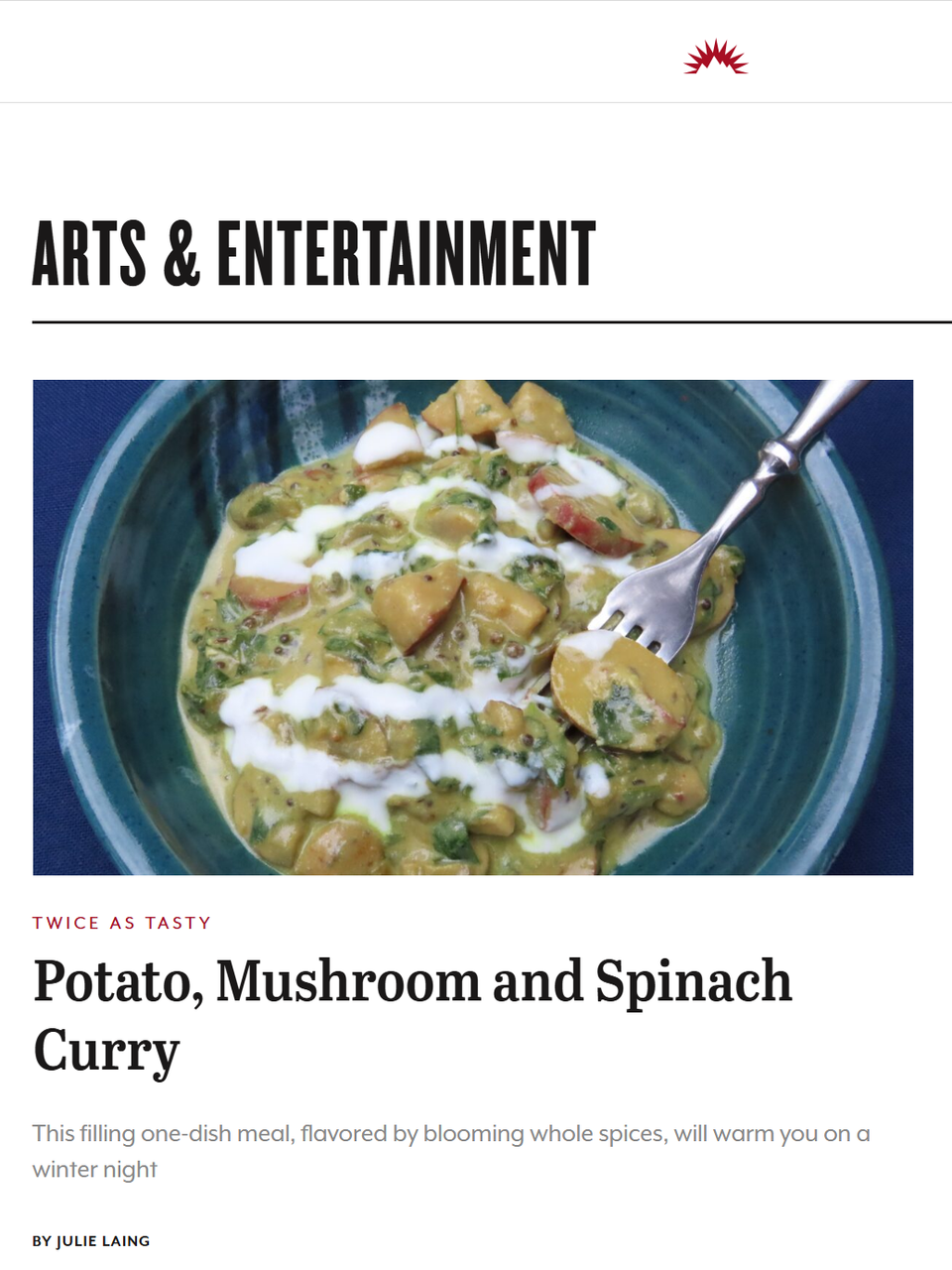
Potato, Mushroom, and Spinach Curry

Keep whole spices in your kitchen to grind at home in small, fragrant batches and have a ready unground supply for curries, pickles, and more. Learn more at TwiceasTasty.com.
Many of my most popular workshops began as requests from readers, including one of my favorites: Indian Spices: Marvelous Masalas. The techniques I share apply to all sorts of spices, whether you’re making a spice mix for pumpkin pie or one for a curry. You can get a taste of these techniques in the recipe I share this week in my Twice as Tasty column for the Flathead Beacon.

The blend of spices that go into this curry recipe often feature in preground masalas, but here the whole spices are mixed directly into the dish for bright bursts of flavor. Whole spices hold onto their flavor far longer than ground ones, so transitioning to keeping whole ones in your kitchen not only lets to grind them at home in small batches that stay fresh and fragrant but also gives you a ready unground supply for curries, pickles, your own spice blends, and more.
Learn to make Potato, Mushroom, and Spinach Curry

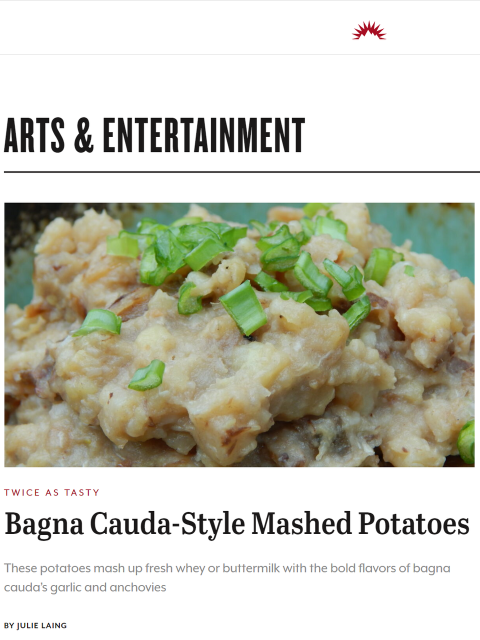
Bagna Cauda-Style Mashed Potatoes

As the first perennial edibles show off their bright green tops, I snip handfuls onto whatever I’m using up from last season’s harvest. Learn more at TwiceasTasty.com.
This time of year, I’m always pairing what remains of last season’s harvest with the first of spring’s perennial edibles. As they push through the ground and show off their bright green tops, I can’t help but snip a handful at a time onto whatever I’m trying to use up from dry storage or the freezer.

That approach to homegrown produce applies to this week’s Twice as Tasty column for the Flathead Beacon. In my unheated mudroom, the last of the potatoes that we dug and cured in October have begun to sprout in their storage box, an old, lidless cooler with a few shims in the bottom to allow air circulation and a towel thrown over the top to keep the light out and the potatoes from turning green. They’re still firm and ideal for mashed potatoes. The final garlic heads and onion bulbs are also trying to sprout but haven’t softened. All it takes is a sprinkling of the emerging onion tops cut from perennial walking onions to make the storage vegetables worthy of a spring meal.
Learn to make Bagna Cauda-Style Mashed Potatoes

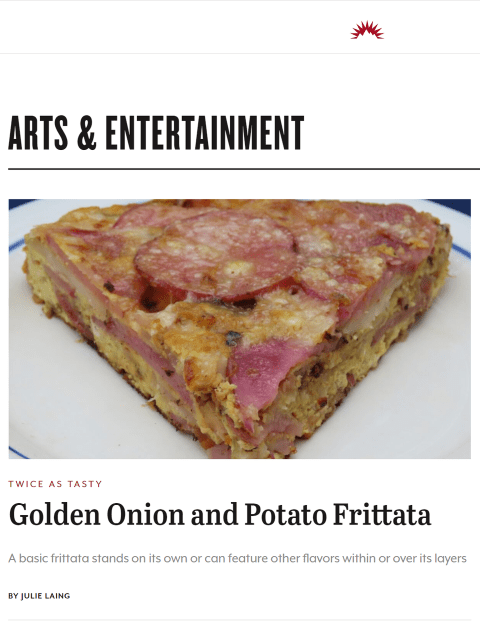
Golden Onion and Potato Frittata

Visualize frittata as a crustless quiche or open-face omelet that relies on a few core ingredients but can be filled with an array of flavors. Learn more at TwiceasTasty.com.
I was served my first frittata, an Italian dish, by a Spanish woman while I was visiting a Greek island. I loved the meal so much—and it’s affordable price on a backpacker’s budget—that I ate frittata daily during my stay.

Visualize this baked egg dish as a crustless quiche or open-face omelet. When I make it today, the core ingredients remain the same each time I enjoy it. I share that basic recipe this week in my Twice as Tasty column for the Flathead Beacon, but it’s just the start to what you can put into a frittata. During my initial weeklong frittata fest, the chef layered tomatoes and basil, peppers and greens, or eggplant and summer squash over this base, always with feta mixed in. At home, I might use mushrooms, arugula, asparagus, spinach, carrots, and chard, swapping in whatever cheese seems to fit best.
Learn to make Golden Onion and Potato Frittata

Brine-Braised Breakfast Potatoes

A just-emptied pickle jar still holds a fabulous ingredient for sautés, salad dressings and more. Learn more at TwiceasTasty.com.
Two questions come up often when someone lets me ramble on about pickling and fermenting: What do you do with all of those pickles, and what do you do with the leftover brine and whey? In my Twice as Tasty column this week for the Flathead Beacon, I give the basic answer for both questions: Use it.

Pickles can be more than snacks and condiments. I have so many uses for pickles that I created a special recipe collection, The Pickled Picnic, to accompany my pickling cookbook. Once I empty a pickle jar, it still holds brine, a fabulous ingredient for sautés, salad dressings, and more. When I make yogurt and cheese, the leftover whey has multiple uses, giving a two-for-one punch to every gallon of milk I buy.
Learn to make Brine-Braised Breakfast Potatoes