Making and Using Sourdough Starter

My beginner’s sourdough guide for the Old Farmer’s Almanac website includes how to make sourdough starter and historical recipes. Learn more at TwiceasTasty.com.
I’ve been baking with my sourdough starter for more than 9 years and teaching others to do so for nearly as long, but there’s always so much more to learn. So I was excited for the opportunity to research, write, and now share a sourdough guide on The Old Farmer’s Almanac website based on historical sourdough recipes from their archive.

This guide includes instructions for making a sourdough starter from scratch, which was a new project for me. I was gifted my existing sourdough starter in May 2014, and I’ve been baking with it, and sharing it with hundreds of people, ever since. The Beginner Sourdough Starter in the guide, which I based on archival recipes, is also fed and maintained a little differently from how I manage my established starter, which may appeal to sourdough bakers who don’t want to buy a kitchen scale or weigh out ingredients in grams. The four recipes in the guide use this scratch-made sourdough starter in quick breads and even a crusty white loaf.
Learn more about making and using sourdough starter

Golden Onion and Potato Frittata

Visualize frittata as a crustless quiche or open-face omelet that relies on a few core ingredients but can be filled with an array of flavors. Learn more at TwiceasTasty.com.
I was served my first frittata, an Italian dish, by a Spanish woman while I was visiting a Greek island. I loved the meal so much—and it’s affordable price on a backpacker’s budget—that I ate frittata daily during my stay.

Visualize this baked egg dish as a crustless quiche or open-face omelet. When I make it today, the core ingredients remain the same each time I enjoy it. I share that basic recipe this week in my Twice as Tasty column for the Flathead Beacon, but it’s just the start to what you can put into a frittata. During my initial weeklong frittata fest, the chef layered tomatoes and basil, peppers and greens, or eggplant and summer squash over this base, always with feta mixed in. At home, I might use mushrooms, arugula, asparagus, spinach, carrots, and chard, swapping in whatever cheese seems to fit best.
Learn to make Golden Onion and Potato Frittata

Pumpkin–Chocolate Cookies

Drop these cookies onto trays by the spoonful, or shape them into smoother balls and drizzle them with melted chocolate. Learn more at TwiceasTasty.com.
When I shared my technique for Roasted Winter Squash Puree last November in my Twice as Tasty column for the Flathead Beacon, I made it part of a series leading up to a classic Creamy Roasted Pumpkin Pie, just in time for Thanksgiving. It’s one of the many delicious reasons I grow, roast, puree, and freeze pumpkins and winter squash. The cookie recipe I share this week (in my 100th column) is another.

With dense pumpkin puree at the heart of these cookies, they’re almost cake-like in their consistency. They come out of the oven domed with soft centers, especially if you take the time to chill the dough before baking so that they hold their shape. I drop them onto cookie trays by the spoonful when I’m baking them for daily enjoyment. For a fancier presentation, you can use dampened fingertips to shape them into smoother balls and drizzle them with melted chocolate.
Learn to make Pumpkin–Chocolate Cookies

Roasted Golden Beet and Garlic Salad

I often wait until fall to make beet salad, but it really can be made with the season’s first beets. Learn more at TwiceasTasty.com.
I plucked my first beets in August, but somehow I always think of them as a fall crop. Earlier in the summer, I toss them into all sorts of mixed-vegetable recipes and no-recipe-required meals. They then become pickles when a large batch is ready; they keep so well in vinegar that I included four beet recipes, from quick to canned, in The Complete Guide to Pickling. Yet I often wait until fall to make the salad I share this week in my Twice as Tasty column for the Flathead Beacon.

The wait is primarily for our apples to fully ripen. Even though I like slightly tart ones in this salad, the ones on our trees typically have a starchy, chalky texture when picked too early. If you’re buying apples or grow ones that ripen early, this salad really can be made with the season’s first beets.
Learn to make Roasted Golden Beet and Garlic Salad

Beer-Infused Potato Chowder

Colorful potatoes look pretty when chopped, but expect their bright tones to alter mashed and blended dishes. Learn more at TwiceasTasty.com.
When I made a batch of potato, beer, and cheese soup so that I could take photos for my Twice as Tasty column for the Flathead Beacon, I immediately knew I’d have to write about my favorite potato varieties: The photos showed the rosy tone imparted by throwing a couple of my favorite red-fleshed potatoes into the pot.

Ever since we started growing them, we’ve been fans of Terra Rosa potatoes for their prolific plants, creamy flesh, and long storage life, with their pure red coloring inside and out a fun bonus to growing and eating them. They look so pretty alongside white-, yellow-, and purple-fleshed varieties when chopped into a potato salad or breakfast hash. But expect their bright color to also shine through in homemade gnocchi, mashers, and this week’s beer and cheese chowder recipe.
Learn to make Beer-Infused Potato Chowder

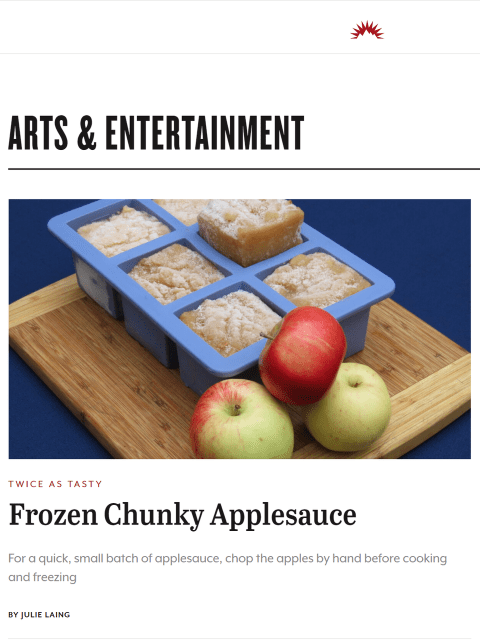
Frozen Chunky Applesauce

This version of homemade applesauce requires no special tools and can be made from just a few pounds of apples. Learn more at TwiceasTasty.com.
When I first moved to Montana and inherited my mom’s canning kettle, the first thing I canned was applesauce. I’ve never liked the flavor or texture of commercially made applesauce, and I’d missed the ready access to barely sweetened homemade versions every since I graduated high school and went off to university, a career, and traveling the world.

I share one of my favorite homemade versions this week in my Twice as Tasty column for the Flathead Beacon: Grandma Tiny’s Frozen Chunky Applesauce. This version requires no special tools (although I do like to freeze it in oversized silicone ice trays), and it can be made from just a few pounds of apples. My grandmother was probably in her mid-90s when she made her last batch, an indicator of how easy it is to make this recipe. If you have a lot of apples, you may want to scale this up to a canning project using the recipe I share later in this blog post.
Learn to make Frozen Chunky Applesauce and a smooth home-canned variation

Home-Smoked Chili Peppers

Smoke vegetables in a charcoal grill using briquettes and wood chips or in a charcoal or gas grill using a smoke tube and hardwood pellets. Learn more at TwiceasTasty.com.
When I first explored the idea of smoking food at home, I thought I was going to need to spend several hundred dollars on a large pellet smoker. I quickly learned that the typical smoker, while ideal for smoking meats, runs too hot for the food I was interested in smoking: vegetables, nuts, and especially cheese. So George and I started playing with the idea of smoking vegetables, like homegrown chili peppers, in a charcoal kettle grill.

As I explain this week in my Twice as Tasty column for the Flathead Beacon, our first smoking setup was affordable and low-tech but finicky. It was challenging to light just a handful of briquettes in a charcoal chimney, and we had to replenish the wood chips regularly. With charcoal heat, it could also be a challenge to keep the temperature low enough to smoke cheese, especially in summer. We loved the results but kept searching for a more straightforward process.

Then I stumbled onto smoke tubes, inexpensive perforated cylinders that hold hardwood pellets and burn slow and low for hours. We’ve been using one for the last year of home-smoked food projects, and this summer I tested several additional brands and sizes for The Spruce Eats. Keep an eye on my work for that website to read my reviews when the product roundup goes live.
Learn to make Home-Smoked Chili Peppers

Choosing Aprons

I’m an expert at making kitchen messes but rarely remember an apron. That’s changing after a summer of apron testing for The Spruce Eats. Learn more at TwiceasTasty.com.
I’m an expert at making messes in the kitchen, but I rarely think to put on an apron unless I’m teaching a workshop or preparing food in someone else’s home. Many of the aprons I own were handmade and remain in nicer shape than the clothes I wear in the kitchen. That has been changing after I tested several functional yet stylish aprons this summer for The Spruce Eats.

In addition to writing about the Chef Works aprons I’ve been wearing and giving my students to wear during workshops for years, I tested aprons from companies that specialize in kitchen wear durable and comfortable enough to wear in a commercial or home kitchen, including Helt Studios and Hedley and Bennett. These are aprons have been protecting me in all of my kitchen projects, from kneading dough to grilling fish to canning endless batches of salsa.
Learn about choosing and using aprons

Chipotle Grilled Shrimp

Make shrimp marinade with fresh vegetables or freshly grilled ingredients, whipping up the marinade and firing the shellfish last. Learn more at TwiceasTasty.com.
When I want a quick and easy dinner during harvest season, I often fire up the grill. With an abundance of fresh vegetables at hand, the grill does double duty: lightly cooking while adding flavor to vegetables I want to save for winter and getting off the evening meal before the coals die out.

We might making an entire vegetarian meal from the homegrown produce that comes off the grill on a given night, but shrimp tends to be my go-to protein when I want some skewers on the plate. You can make the recipe I share this week in my Twice as Tasty column for the Flathead Beacon with fresh tomatoes, onion, and garlic—or grill these first, whip up the marinade while grilling the next rounds of vegetables, and fire the shrimp last.
Learn to make Chipotle Grilled Shrimp

Sunshine Risotto

When you freeze and dry the ingredients for a favorite summertime meal, it becomes a sunny midweek, midwinter one. Learn more at TwiceasTasty.com.
The risotto recipe I share this week in my Twice as Tasty column for the Flathead Beacon started out as a from-the-freezer meal. It tastes of summer, but the grated and frozen summer squash, burst yellow tomatoes, and dried basil and parsley aren’t nearly as photogenic as fresh, barely cooked tomatoes and thin slivers of fresh squash and herbs. I altered my original recipe just so I could photograph the fresh dish, and it’s become a summertime favorite, especially when I’m cooking for family or friends.

My column includes both the fresh and the frozen versions, with the steps for adding fresh ingredients in the recipe and notes in the header for making this risotto in winter. Sungold, yellow pear, and other cherry-size tomatoes are so easy to freeze: just give them a rinse and pop them in a freezer bag. For summer squash, you’re getting the prep out of the way by grating and freezing. Drying herbs is simple, especially if you follow these tips. With these ingredients in your freezer and spice rack, along with homemade vegetable stock, this risotto becomes a sunny midweek, midwinter meal.
Learn to make Sunshine Risotto from fresh or frozen vegetables