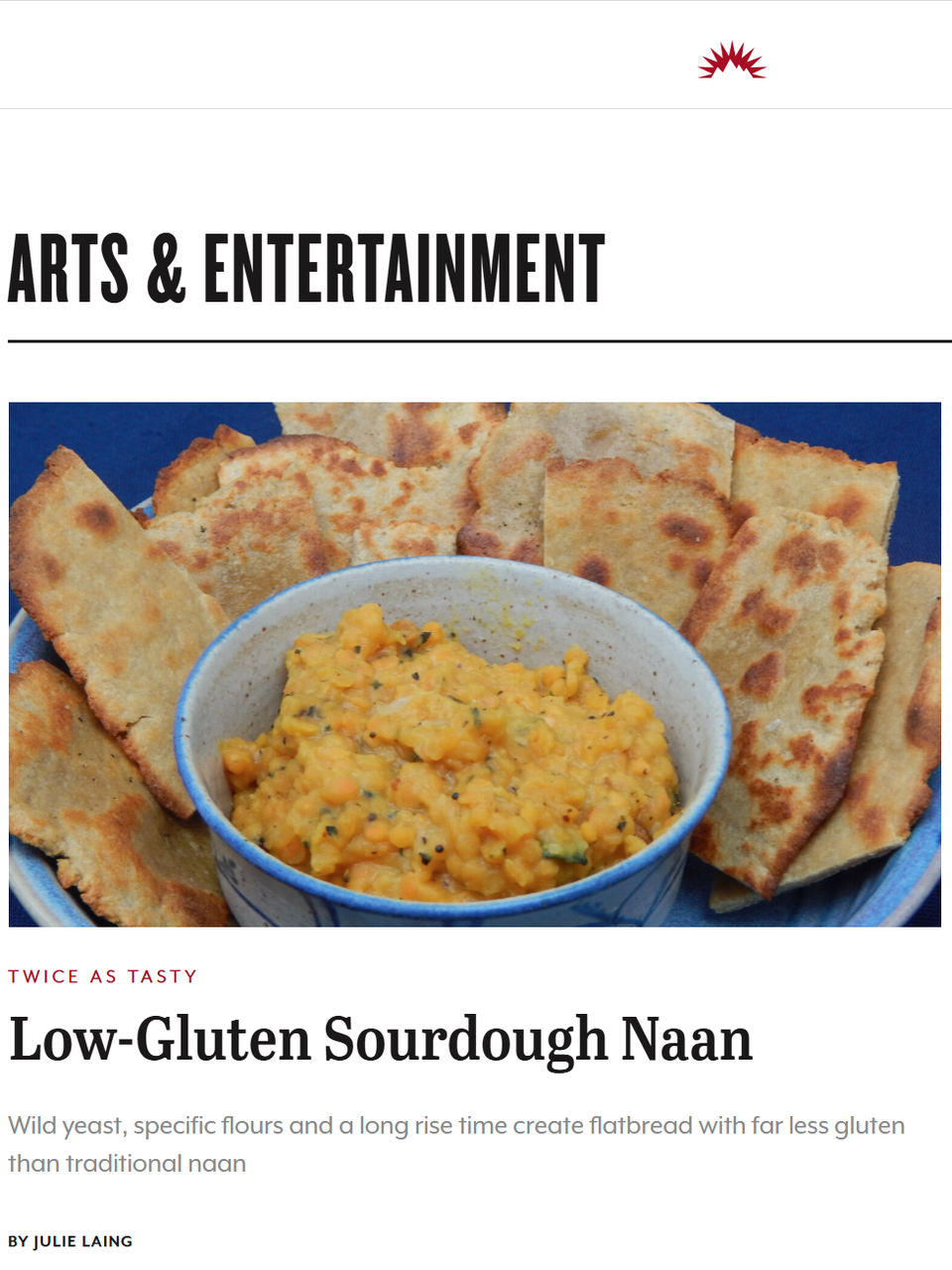
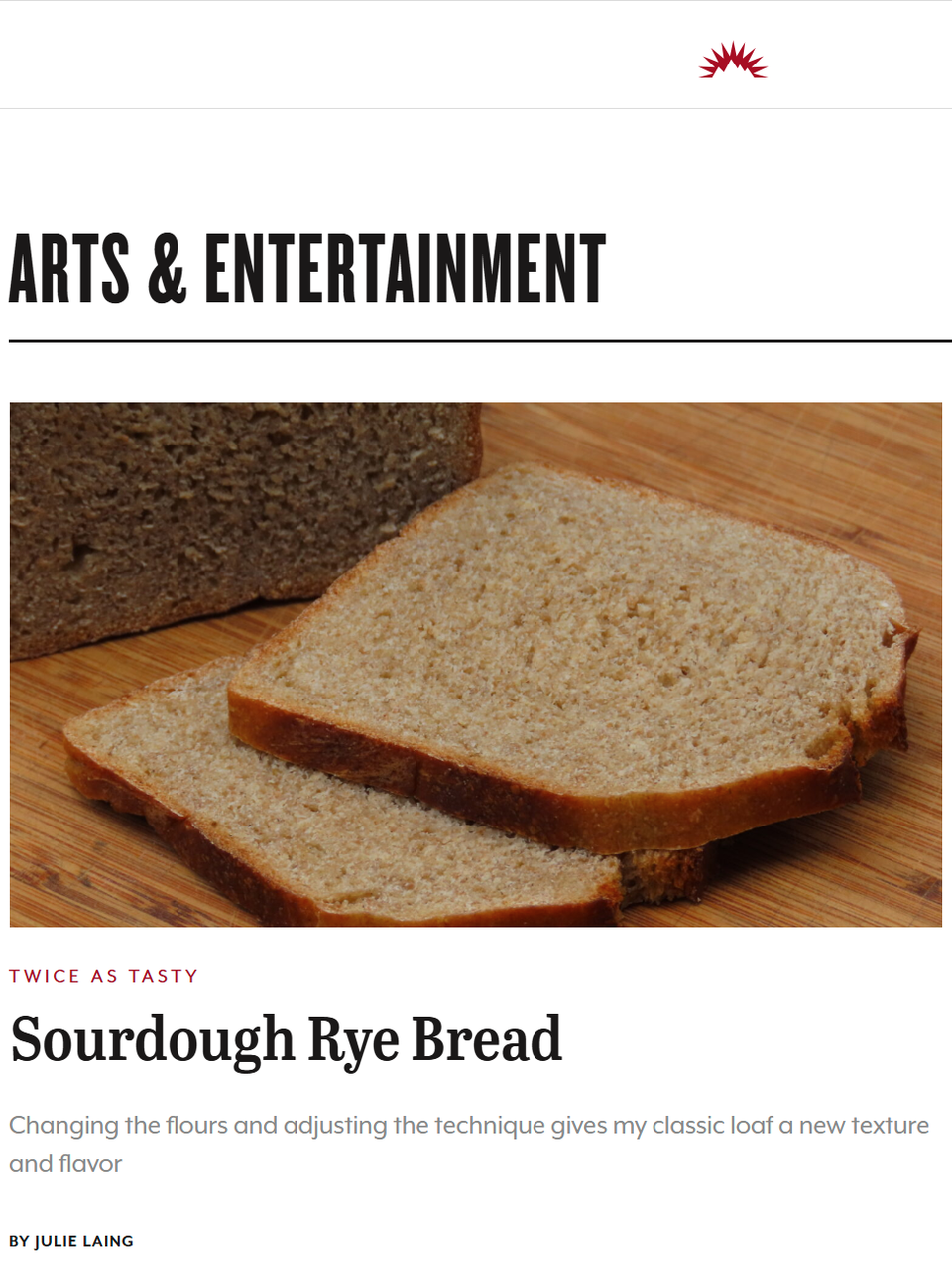
Low-Gluten Sourdough Naan

A traditional sourdough starter can be used to make bread that’s more easily digestible than mass-produced versions. Learn more at TwiceasTasty.com.
When I first started sharing my sourdough recipes and teaching sourdough workshops, I was often asked about gluten-free baking. I experimented with a gluten-free sourdough starter and discovered a completely different behavior and interactions of the wild yeast and flour. I had to make so many changes to the ratios and techniques that simply substituting a gluten-free starter for a traditional one was not possible.

Instead of becoming an expert in gluten-free sourdough, I learned more about how a traditional sourdough starter could be used to make bread that’s more easily digestible than mass-produced versions. As I explain this week in my Twice as Tasty column for the Flathead Beacon, mixing in low-gluten flours and extending the fermentation time encourages the wild yeast to break down the proteins that some people find challenging to digest.
Learn to make Low-Gluten Sourdough Naan

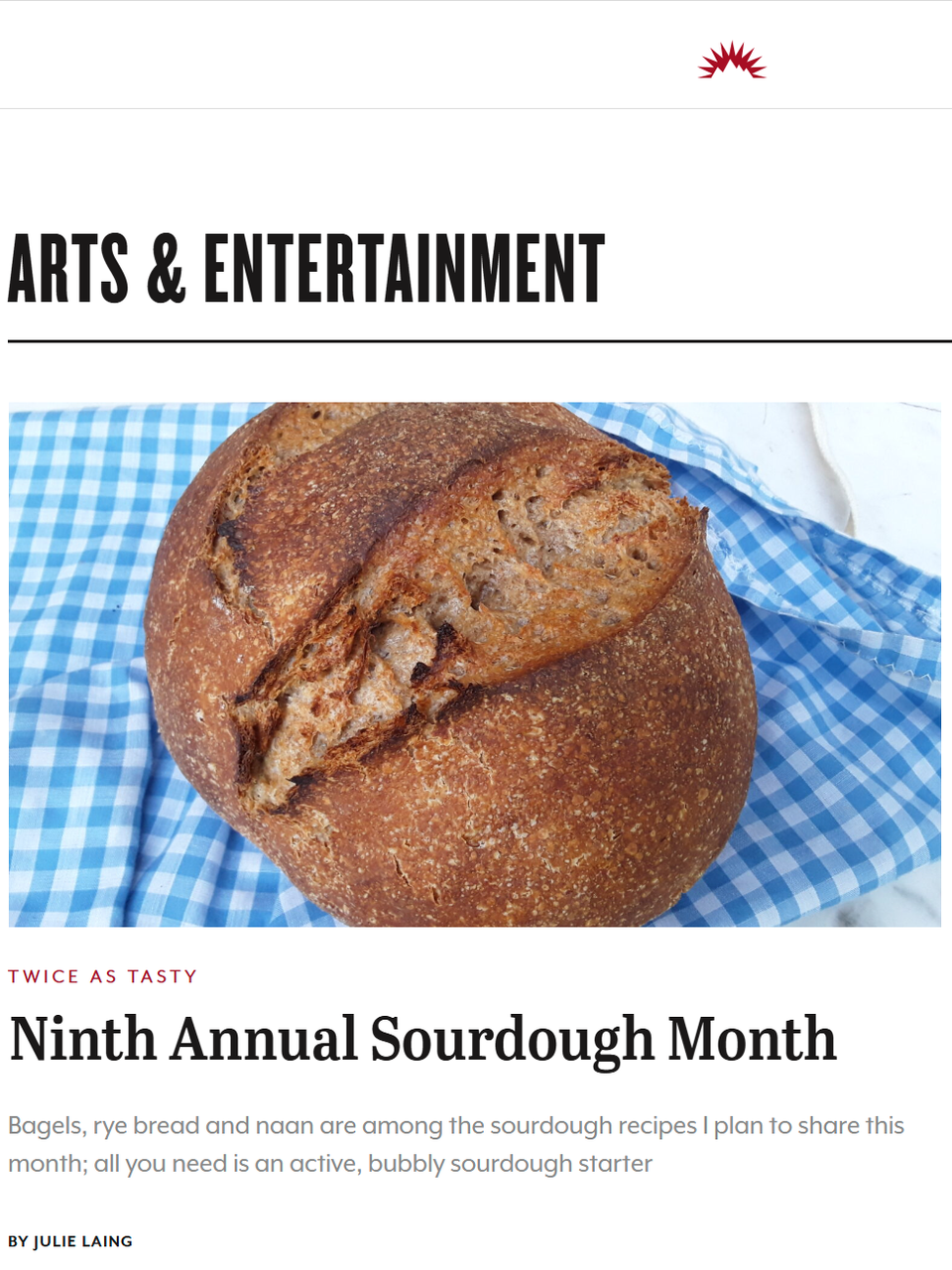
9th Annual Sourdough Month

Make sourdough baking fit your lifestyle without being overwhelmed by copious volumes of starter and endless loaves of bread. Learn more at TwiceasTasty.com.
Happy New Year! What better way to start it off than with the yeasty, tangy aroma of baking sourdough? Since 2017, I’ve dedicated January to the joys of keeping and baking with a sourdough starter. This year, in my Twice as Tasty column for the Flathead Beacon, I’ll share some of my favorite doughs that use different types of flour to make flavorful flatbread, loaves, and other baked goods.

My sourdough starter has been going strong since 2014. Through feedings after my own baking and sharing the starter with others—hundreds of new bakers around the world over the years—it has developed into a robust and lively wild culture. I explain in this week’s column how I’ve made sourdough baking fit my lifestyle without being overwhelmed by copious volumes of starter and endless loaves of bread, as well as how easily my starter wakes up when I leave it in the fridge for weeks at a time as I travel. I also share ways to get free sourdough starter so that you can make the recipes I’ll be providing this month.

Read more about requesting free sourdough starter and baking with it

Homemade Sour Cream

Spoon rich, tangy homemade sour cream over sourdough empanadas and mix it into blini filling. Give cookies loft, lighten scones, and make onion dip irresistible. Learn more at TwiceasTasty.com.
I rounded out a collection of homemade dairy products this week in my Twice as Tasty column for the Flathead Beacon with sour cream. I love the tangy richness of sour cream and spoon it over everything from nachos to baked potatoes to Sourdough Empanadas. It’s an essential flavor on and in Mushroom-Filled Blini and makes Onion Lover’s Dip irresistible.

I bake with sour cream as often as buttermilk, because it provides loft in recipes like Chocolate–Sour Cream Cookies and lightens scones, including Savory Herb and Sour Cream Scones. But homemade sour cream, cultured buttermilk, and fresh yogurt are just the starting point. Once you become comfortable with the techniques and ingredients for soft creations, your first homemade cheese is just a recipe away.
Learn to make Homemade Sour Cream

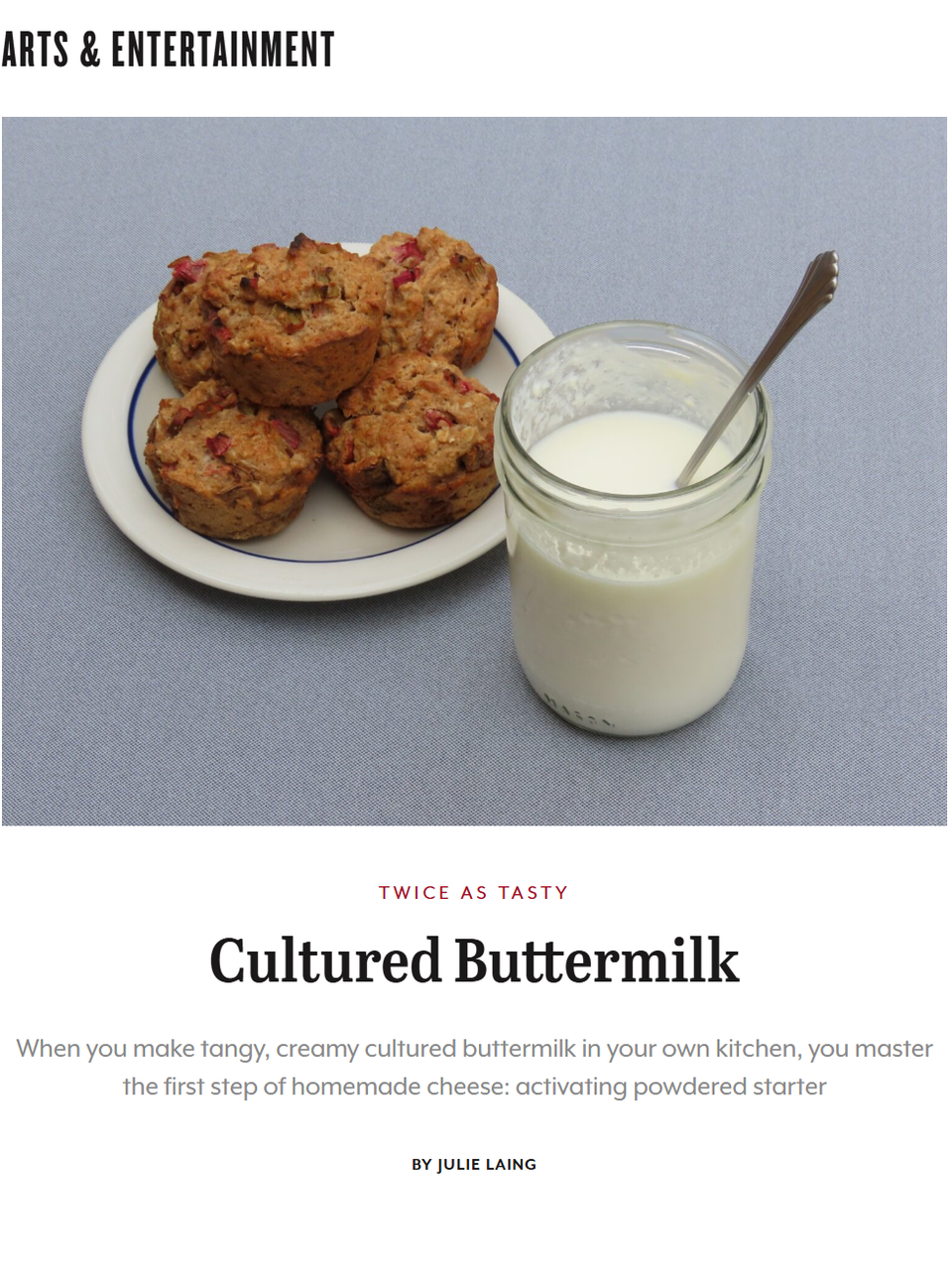
Cultured Buttermilk

In icings and salad dressings, and even baked goods and savory dishes, it’s worth splurging for cultured buttermilk—or making your own. Learn more at TwiceasTasty.com.
There’s a distinct difference between the baking shortcut of using vinegar or lemon juice to sour milk and the creamy, tang taste of cultured buttermilk. As I explain this week in my Twice as Tasty column for the Flathead Beacon, the former has its uses. For example, in Loaf-Pan Lemon Cake, the double dose of lemon boosts the citrusy flavor. But in icings and salad dressings, and even baked goods and savory dishes, it’s worth splurging for cultured buttermilk—or making your own.

Homemade buttermilk takes less effort than homemade small-batch yogurt, but it does require a powdered starter culture. That shouldn’t be a deal breaker; buttermilk is an easy way to see just how powdered starters work. Once you try it, you’ll be far more comfortable making your first batch of Dry-Salted Feta or Homemade Fromage Blanc.
Learn to make Cultured Buttermilk

Homemade Small-Batch Yogurt

Once I realized how easy it is to turn milk into fresh yogurt at home, the idea of making cheese and other dairy products became less daunting. Learn more at TwiceasTasty.com.
Dairy fermentation is a bit different from fermenting vegetables for pickles or sourdough for bread, but all of these techniques have a gateway recipe that opens a whole new food world. As I explain this week in my Twice as Tasty column for the Flathead Beacon, yogurt was my fermented dairy gateway. Once I realized how easy it is to turn milk into fresh yogurt at home, the idea of making cheese and other dairy products became far less daunting.

These days, about half of the fermented dairy products in my fridge are homemade. I make sour cream every time I reach the bottom of the jar and fresh yogurt nearly as often. Cheeses come and go as the whim hits me: sometimes I crave Dry-Salted Feta for shakshuka, and sometimes I’m pressing Homemade Farmer’s Cheese for Paneer Tikka Masala or cutting and salting squeaky cheese curds to serve over oven fries with Vegetarian Mushroom Gravy as poutine. I gained the confidence to make these and even pressed and aged cheeses after mastering homemade yogurt.
Learn to make Homemade Small-Batch Yogurt

Sourdough Cinnamon Rolls with Buttermilk Glaze

This month’s mother doughs are adaptable and interchangeable, so you can make delicious cinnamon rolls with either brioche or crescent dough. Learn to make Sourdough Cinnamon Rolls with Buttermilk Glaze. Learn more at TwiceasTasty.com.
As the 8th Annual Sourdough Month comes to a close, it seems appropriate to end on a sweet note. This week’s recipe is also the culmination of the mother doughs and recipes I’ve been sharing in my Twice as Tasty column for the Flathead Beacon all month. I’ve now shared multiple ways to shape and bake each mother dough: dinner rolls, buns, crescents, loaves, and now cinnamon rolls.

Each mother dough isn’t just adaptable on its own; they’re often interchangeable depending on whether you want a richer, buttery dough or a sweeter, softer one. To put it simply, you can make delicious cinnamon rolls with either Sourdough Brioche Dough or Sourdough Crescent Dough.

Learn to make Sourdough Cinnamon Rolls with Buttermilk Glaze

Sourdough Crescent Dough and Rolls

This homemade sourdough recipe is popular not just with sourdough lovers but also with those who grew up eating pop-can dough baked into crescent rolls. Learn more at TwiceasTasty.com.
I originally hadn’t intended to share more than one mother dough during the 8th Annual Sourdough Month in my Twice as Tasty column for the Flathead Beacon. But I’ve been playing with a second dough recipe this year that received such accolades when I shared it with friends and family that I couldn’t sit on it until next January. What started as a homemade yeast dough recipe that I then converted for sourdough was popular not just with sourdough lovers but also with those who grew up eating pop-can dough baked into crescent rolls.

I wasn’t one of those kids. When I was young, the only time we twisted open a can of poppin’ fresh dough was around a campfire, where it was a special treat to wrap it around a thick stick, hold it over the open flame until it baked and browned on the outside, and then slide it off and fill the finger-size gap left in its center with jam or cheese. So my memories of the flavor of store-bought crescent roll dough are overpowered by the smell of woodsmoke and a taste closer to wood-fired pizza. I was quite prepared to shape my Sourdough Brioche Dough into crescents and leave it at that.

Learn to make Sourdough Crescent Dough and Rolls

Sourdough Brioche Loaves

A buttery dough like brioche makes less of a mess when baked in loaf pans—and works particularly well in a covered Pullman pan. Learn more at TwiceasTasty.com.
With this week’s Twice as Tasty column for the Flathead Beacon, you now have several ways to shape the brioche mother dough I’ve been focused on so far this month. The first technique shapes the dough into round rolls or slightly flatter buns, which bake freeform on a flat pan. You could turn the dough into larger freeform loaves and bake it the way you would Sourdough Cabin Bread, but such a buttery dough can make a melted mess of a baking stone. So the recipe I share this week bakes the dough in loaf pans—and it works particularly well in a covered Pullman pan.

I own two 1.5-pound Pullman pans from different companies. Both have a corrugated bottom and sides to help improve airflow and reduce condensation, but one also has a perforated bottom. When baking sourdough brioche bread and other buttery recipes in the perforated pan, I line it with parchment paper to keep butter from dripping through onto the floor of the oven.

Learn to make Sourdough Brioche Loaves

Sourdough Brioche Dough and Rolls

Brioche dough has a rich, buttery flavor and somewhat flaky texture that I feel is beautifully enhanced by the complex flavor of wild yeast. Learn more at TwiceasTasty.com.
To kick off this month’s sourdough recipes, I share my brioche mother dough and explain how to turn it into rolls, either rounded for the dinner table or as slightly flattened buns to split for burgers. As I explain this week in my Twice as Tasty column for the Flathead Beacon, this brioche dough has many uses. Once the dough ball is fully formed, you can bake it into all sorts of shapes. I’ll be sharing some of my favorite uses for this dough all month.

Brioche dough has a rich, buttery flavor and somewhat flaky texture that I feel is beautifully enhanced by the complex taste created by wild yeast. Brioche has less butter than croissants, but recipes vary widely in their butter-to-flour ratio. My version lands in the middle of many of the recipes I’ve tried. Brioche has plenty of eggs to make it denser than croissants and a little sugar—both granulated and milk’s natural sugars—to offset the tanginess of the sourdough. It’s also easier to make, with the soften butter pressed in at the start, long fermentation times, and minimal kneading.

Learn to make Sourdough Brioche Dough and Rolls

8th Annual Sourdough Month

Wild yeast is unbelievably resilient, and an ugly starter lurking in your fridge might still be full of life. Learn more at TwiceasTasty.com.
It’s January, which means Sourdough Month here at Twice as Tasty. Since 2017, I’ve dedicated this month to encouraging you to keep a sourdough starter in your kitchen and use it to bake all sorts of tasty doughs. This year, my recipes in my Twice as Tasty column for the Flathead Beacon will focus on a couple of sweet mother doughs that can be used in countless ways. I’ll share some of my favorite loaf and roll shapes to get you excited about using sourdough starter when you bake brioche-style doughs.

I’ve been maintaining my sourdough starter since 2014, through weeks of constant feeding as I built it up to share with hundreds of new bakers—and months of neglect as I traveled. If life got in the way of your sourdough habit, you might not have had the same faith in your unused jar of starter. But as I explain in this week’s column, wild yeast is unbelievably resilient, and an ugly starter lurking at the back of your fridge might still be full of life. If you’re still skeptical after reading this week’s column, just check out this post and photos of a sourdough starter I woke up after 2 years of dormancy.

Read more about reviving dormant or requesting free sourdough starter