Preserving Chilies

Sambal Oelek (Chile Paste). Get the recipes in The Complete Guide to Pickling by Julie Laing.
Sambal Oelek (Chile Paste). Photograph by Andrew Purcell.

Just like the cabbage I wrote about last week, chilies feature heavily in my pickling cookbook, The Complete Guide to Pickling. I pickle and preserve them on their own in recipes ranging from Beer-Pickled Jalapenos to Spicy Vinegar and from quick-pickled Chile Rings to fermented hot sauces. I also drop them into many of the savory pickles in the book and even a few of the sweeter ones, like Jerk-Spiced Banana Pickles.

Do I preserve so many chilies because we grow more than 40 pepper plants every year, or do we grow that many plants so I have boxes of chilies? It’s hard to say, but at least half of our homegrown peppers carry a mild to a fiery heat. Jalapenos and poblanos take up much of the hoop house space, but I bump up the Scoville scale with serranos, bird’s eye chilies, habaneros, and cayenne peppers.

The mix varies each year—as does the quality and size of the harvest. After buying and pickling pepperoncini to test for a new recipe for the cookbook, I grew some of these mild chilies for the first time last year. They started turning red when they were smaller than my thumb, so I pickled them in pint jars. This year, a plant from Swan River Gardens has grown taller than the cherry tomato cages and produced peppers longer than my index finger. Two half-gallon jars are stuffed full in my fridge, and more peppers are ready to harvest.
Read more about preserving chilies and learn to make Sambal Oelek (Chile Paste)
Preserving Cabbage

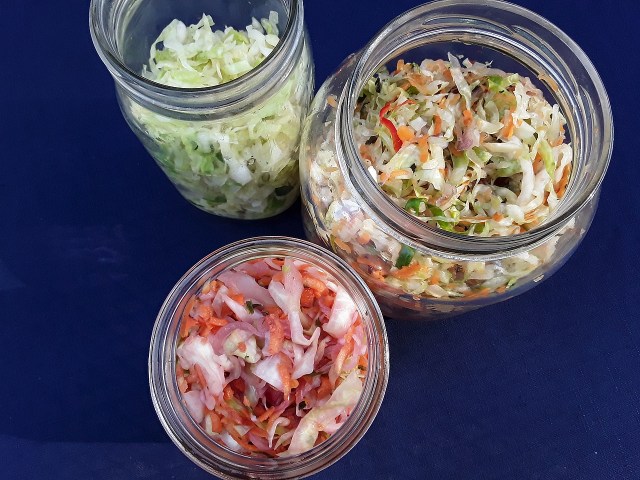
Preserving cabbage. Get the recipes in The Complete Guide to Pickling by Julie Laing.
When Americans think of pickled foods, they often start with two vegetables: cucumbers and cabbage. For both types, the options extend far beyond basic dill slices and sauerkraut. I included 11 cucumber and 7 cabbage pickles in The Complete Guide to Pickling, ranging from quick pickles to relishes to ferments.

In the cabbage category, curtido has become one of my favorites. This pickled cabbage slaw originated in El Salvador and typically combines cabbage, onion, and oregano, sometimes adding other flavors like carrot, chili, garlic, lime, and cilantro. It comes together in just 20 minutes, but letting it sit in salt for a couple of hours to draw out the vegetables’ natural liquid keeps the mixture from becoming watery. After it sits another 6 hours, the curtido is ready to eat—but it keeps in the fridge for several weeks.
Read more about preserving cabbage and learn to make Eight-Hour Curtido

A Year of Pickles

It’s hard to believe that this time last year I was gearing up for my cookbook’s release. Sample recipes from The Complete Guide to Pickling at TwiceasTasty.com.
Fermented Red Onions and Half-Sour Dill Pickles. Photograph by Andrew Purcell.

It’s hard to believe that this time last year I was gearing up for the launch of my first cookbook, The Complete Guide to Pickling. The timeline of writing and publishing a book means that I spent September 2020 sitting on my hands, resisting the urge to share my favorite recipes from the book ahead of the sales schedule and Brenda Ahearn’s stunning photos from my side project, The Pickled Picnic recipe collection, before the cookbook’s release.

As the cookbook’s official on-sale and launch party dates approached, I shared a handful of recipes from the book and offered details on some helpful tools I’d discovered while working on the project. This year, I’m able to get a jump on sharing new recipes from the book while many of us are still in the heart of harvest season.
Sample recipes from The Complete Guide to Pickling

Pickled Eggs

Pickled eggs keep and travel well, and some tricks will help you when making pickled eggs. Learn more at TwiceasTasty.com.
Harvest is in full swing, which means my canning and fermenting supplies dominate my mudroom and my refrigerator is packed with produce waiting to be preserved. But after the successful launch of my pickling cookbook, The Complete Guide to Pickling, last fall, I’ve made time for some recipes that make minimal use of my homegrown produce, including pickled eggs.

We have a rich supply of eggs on the farm where I garden. As I created pickled egg recipes for my cookbook, I fell in love with the rich colors of brine-infused egg whites against bright orange yolks. Since then, I’ve been playing with all sorts of brines—reused from other pickles and made from scratch—to produce a range of colors and flavors.

Pickled eggs keep and travel well, and we’ve been eating them regularly all summer. They have become staples for multiday cruises aboard The Blue Mule, and they make a great post-yoga snack or grab-and-go breakfast with the garden’s latest berries. I’ve learned a few tricks along the way that will help you when making pickled eggs.
Learn to reuse pickle brine and make pickled eggs

Flavorful Reductions

Cooking a quick sauce or glaze in the same pan as your main ingredient soaks up concentrated flavor. Learn more at TwiceasTasty.com.
As I wrap up my month of cookware testing, I’ve been stretching the limits of nonstick pans by using some of my favorite flavor-building techniques: browning, reducing, and glazing. Stainless steel and cast iron are the more typical materials for these techniques, because some of the point is to suck up the caramelized bits that stick to the pan—those bits that nonstick surfaces are designed to eliminate. But there’s a difference between burned-on food and fond, the caramelized particles left after browning. Even a good nonstick pan generates some of these intensely flavored bits.

It made sense to me to test these techniques in nonstick pans, since I never create them using the standard base ingredient: browned meat. By cooking a quick sauce or glaze in the same pan as your main ingredient, you can soak up that concentrated flavor—whether you started with meat, shrimp, mushrooms, or root vegetables. It really is all about the flavor.
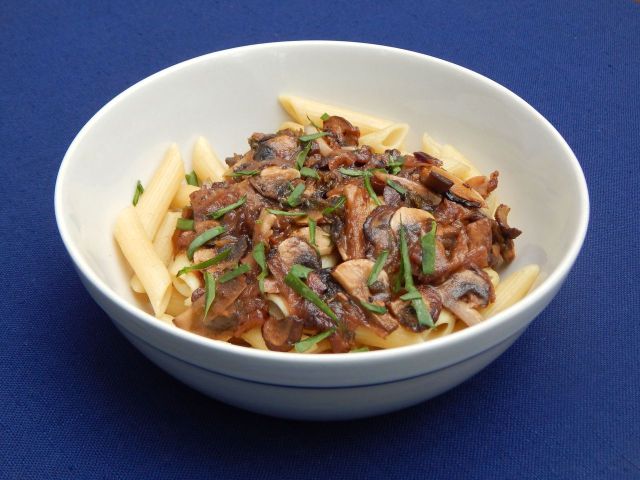
Learn to make flavorful reductions and Mushroom Pan Sauce

Cooking Grains

Most grains want a fun, flavorful addition, whether it’s stirred in or piled on top. Learn more at TwiceasTasty.com.
Eggs may be the ideal test food for skillets, but grains put saucepans through their paces. Starchy foods like rice, oats, pearly barley, and pasta always tend to get sticky, but everything from type of pot to temperature to water-to-grain ratio can also make them stick or even burn onto the cooking pot. This can leave you not just with a gummy meal but also with a gummy mess to clean up.

So as I’m testing cookware this month, I’m cooking lots of grains. All of them want a fun, flavorful addition, whether it’s stirred in or piled on top, like this week’s new recipe.
Learn about cooking grains and Curried Sweet Potato and Mango

Cooking Eggs

To put it simply: Testing cookware by cooking eggs is fun. Get cooked egg recipes at TwiceasTasty.com.
I have to admit that I’m one of those people who holds onto cookware way too long. After pots are scratched, warped, and showing their age by letting even the simplest foods adhere to their surface, I continue to use them. Replacing cookware, especially a high-quality set, is expensive. So I’ve been excited to set out on a quest for the perfect cookware.

Eggs in many forms are ideal test recipes. They can be delicate yet prone to burning or sticking. They cook quickly, so they’re speedy, easy meals. This time of year, the chickens are laying prolifically. Most egg dishes don’t require a recipe, and many styles can be created just by cracking a fresh egg into a hot pan. But some call for a bit of technique, including endless variations on omelets.
Learn to make A Three-Egg Omelet and other cooked eggs

Quest for the Perfect Cookware

Certain recipes can reveal the true nature of the pans in your cookware set. Learn more at TwiceasTasty.com.
I’m on a cookware kick with The Spruce Eats. After spending a couple of months researching and testing pressure canners and canning supplies, I’ve moved on to everyday cookware. My focus has been entirely selfish: stackable cookware that fits into the one cabinet in my kitchen or packs neatly for our sailing adventures.

The results of my research into the best stackable cookware are up on The Spruce Eats. This month, I’m personally testing and reviewing several of my favorite sets. Those reviews will focus on the features and function of each set, which gives me the perfect opportunity to share some of the meals I’ll be testing here on Twice as Tasty.
Read more about cookware-revealing recipes

Steamed Buns

Homemade steamed buns make you wait, but your first bite is worth it. Get dumpling recipes at TwiceasTasty.com.
In the realm of stuffed foods, Chinese steamed buns seem like the crown jewels. They’re made with a yeast dough, rather than the comparatively simpler flour-and-water wraps for Scratch-Made Pot Stickers, which means more waiting time. The steaming may require tools you don’t yet have in your kitchen—or some improvisation. And you’ll have the nicest buns if you master yet another rolling and pleating technique.

But the first time you bite into a homemade steamed bun, you’ll know it was worth it. The magic that happens with some basic ingredients, time, and care will keep you practicing until you’ve perfected your technique. As with all homemade dumplings, there are some shortcuts. But most of these stretch out the work rather than shortening the timeframe. It’s best to approach steamed yeast buns with a relaxed schedule and mindset.
Learn to make Scratch-Made Steamed Buns with homemade fillings

Pierogi

You say pot sticker, I say pierogi: It can be all one dough. Get dumpling recipes at TwiceasTasty.com.
When I traveled in Eastern Europe and lived in Russia, I ate a lot of pierogi but never learned to make them. Some were homemade—my favorites came from Russian women who carried pots of them from their kitchen to meet the train as we rode the Trans-Siberian Railway from Moscow to Vladivostok. Plus, commercially packaged frozen pierogi were as widespread in Eastern Europe as frozen pizza is in the United States, and they could be dropped in boiling water for a quick meal.

Once I returned to the States, I tried many variations on pierogi dough, attempting to recreate those mild yet somehow tasty dumplings. Available dough recipes varied widely on both ingredients (egg, milk, butter, sour cream, even cream cheese) and ratios. But once I mastered homemade pot stickers, I realized I’d strayed too far from the frugal kitchens that prepared my favorite pierogi. So now I use the same dough for both types of dumplings; how I prep that dough, fill it, and cook the dumplings determines whether they’re labeled pot stickers or pierogi.
Learn to make Scratch-Made Pierogi with homemade fillings