Stir-Fry

 Stir-fries are quick, go-to meals that show off well-cooked tofu. Get stir-fry and tofu recipes at TwiceasTasty.com.
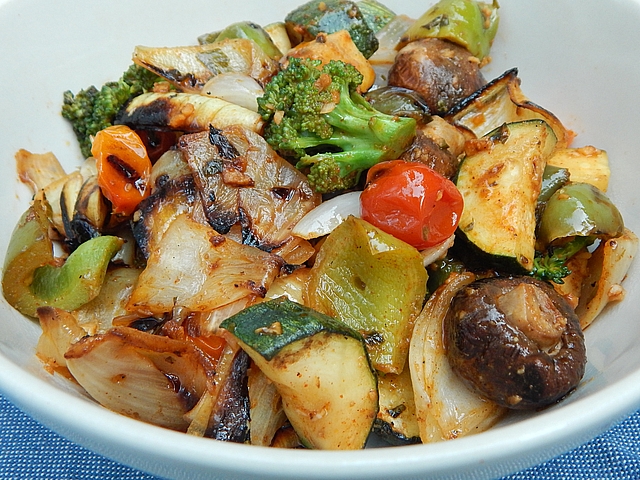
When the garden is in full swing and sailing season is on, one of my go-to meals is a stir-fry. In the time it takes to cook a pot of rice, the rest of the meal can be chopped, cooked, and ready to serve from one pan as a single-dish meal. In spring, asparagus, early onions, young garlic, snap peas, spinach, and herbs dominate the stir-fry; at the height of summer, freshly harvested onions, peppers, carrots, zucchini, and cherry tomatoes take over. By late summer, corn, eggplant, and fall broccoli and peas are ready to mix in.

When you’re rich in a particular vegetable, you can let it solo in a stir-fry, backed by aromatics such as garlic, ginger, and chilies. But my favorite stir-fries are created with dibs and dabs of many vegetables and a protein such as tofu. To guarantee success, fry quickly, at high heat, in an order that lets the ingredients brown evenly, with plenty of movement. It’s in the name: stir and fry.
Learn to make Fresh Improv Stir-Fry and Pan-Fried Tofu

Eating Local

My local food sources start with the ground I garden in and continue down the road to the closest source. Learn more at TwiceasTasty.com.
I’ve been thinking a lot about local food lately. With last week’s official launch of Twice as Tasty Live, I’ve been making the rounds of local purveyors of flour, milk, coffee, tea, fish, and more to find ingredients for the first two Twice as Tasty house concerts coming up in the next week. I’ve also been inspecting progress in the garden, keeping tabs on what will be ready to harvest and take straight to the host’s table for each event.

But how to define “local food”? Some sources define the local food circle as within 100 miles of where it’s bought or eaten, but many federal assistance programs extend that range to 400 miles. Some define it as food grown and processed within a state, whereas others define local food systems by regions rather than borders. Giant chain stores sell local food; so do farmers from roadside stands and weekly markets.

My local food sources start with the ground I garden in, extend out to local producers and locally owned businesses, and continue down the road to the closest source for any item that isn’t grown in my backyard. I love the way Barbara Kingsolver put it in Animal, Vegetable, Miracle: A Year of Food Life: “Our highest shopping goal was to get our food from so close to home, we’d know the person who grew it.” It’s a lofty challenge, but this may be the month to work toward it.
Read more about eating local

Quick-Pickled Beets

For any meal, refreshing, easy pickles take minutes to make and are gobbled up in as little time. Learn to make Get quick-pickle recipes at TwiceasTasty.com.
I spend much of my summer pickling produce; it’s my favorite way to preserve vegetables. As the harvest grows and I haul pounds of cucumbers, snap beans, summer squash, and more from the garden to the kitchen, my canning shelves fill with vinegar-preserved pickles and every other available surface holds fermenting ones. There they wait for weeks, if not months.

So for any given meal, you can also find me making pickles—refreshing, easy ones that take mere minutes to prepare and are gobbled up in as little time. Quick pickles are defined by their name. They won’t satisfy your pickle craving through winter or preserve the bulk of your garden, but they will extend shelf life a bit and give a new flavor spin when you tire of eating a particular fresh vegetable, like beets.
Learn to make Quick-Pickled Beet Snacks and Orange-Sweetened Marinated Beets

Raw Shrubs

When you offer to pour a shrub, clearly you’re not referring to the leafy bush. But what is a shrub? Get shrub and cocktail recipes at TwiceasTasty.com.
Offering to pour someone a shrub usually requires an explanation. Clearly the noun is not referring to the leafy bush. But just what is a shrub? Why would you want to drink one?

The answer to the first question has a surprisingly long history. Mixologist Warren Bobrow calls drinking shrubs “the original energy drinks” and dates them back to the 1800s. The combination of vinegar, water, and sweetener gave farmworkers a refreshing boost while in the field. Then farmers discovered they could expand the range of flavors using their harvest and the preserving properties of vinegar and sugar. Add carbonated water, and the first soft drinks were born. But these aren’t our contemporary, corn syrupy sodas: shrubs, aka drinking vinegars, capture the bright flavors of fresh fruits and vegetables at the peak of their season.

Raw shrubs take little time to prepare but need a bit of foresight. The wait for cold processing means you don’t need to heat the shrub and lose some of its flavorful pop, a particular advantage with delicately flavored fruits like citrus and kiwi. They usually need 1–3 days to get to their final form but often taste best when left for at least a week. But shrubs last a long time too—I’m told up to a year, but I’ve never been able to keep one around that long.

This shrub recipe is a concentrate; you’ll want to dilute it to enjoy it. The simplest method is to pour 1/2 ounce of shrub into an 8-ounce or larger glass, top it with sparkling water or seltzer, and then add more shrub until you get a balance you like. Or upgrade your bar by using the shrub as the base for a cocktail.
Learn to make Raw-Fruit Shrub and Basic Shrub Cocktail

Mint

It’s Twice as Tasty’s birthday month, and what better way to celebrate than with cocktails? Get simple syrup and mojito recipes at TwiceasTasty.com.
I tend to be on seasonal quests for unbeatable mixed drinks, looking for, say, the bar that makes its own tonic for G&Ts or the bartender who concocts the perfect old-fashioned. Several years ago, it was mojitos, and a local bartender mixed my hands-down favorite: heavy on the mint, light on the sweet, with the perfect touch of lime. Mint grows like a weed in my garden, but my homemade mojitos didn’t show it. So I had to ask: What was her secret? She gave a simple answer: simple syrup.

I didn’t know it, but I’d been making simple syrup for years—to feed hummingbirds. The first time I dropped some mint leaves into the batch, I found a new kitchen staple. Simple syrups are as easy as they sound, and they can sweeten everything from beverages, with or without alcohol, to desserts. And since it’s Twice as Tasty’s birthday month, and what better way to celebrate than with cocktails?
Learn to make Mint Simple Syrup and Mega-Mint Mojitos

Favorite Books: Gardening

Tasty food starts in the garden. Read more about my favorite gardening resources.
Tasty food starts in the garden. It’s rare for me to post a recipe without mentioning homegrown ingredients, freshly harvested produce, and other gardening thoughts. Sometimes I make suggestions for planning, growing, maintaining, and harvesting food from your garden, including herbs, fruits, and vegetables.

But the nitty-gritty on getting your hands dirty in garden soil would fill a separate blog. I share information I glean from other sources in every post on this blog, and I’m always happy to answer questions posed in post comments or the Twice as Tasty Facebook group. But if you want to learn even more about growing your own food, I suggest seeking out some of my favorite resources.
Read more about my favorite gardening resources

Herb Marinades

Some of my favorite food memories linger from travels, with dishes I repeat at home. Get Moroccan recipes at TwiceasTasty.com.
Some of my favorite travel memories linger from my time in Morocco. I had the good fortune to have Peace Corps connections that introduced me to volunteers in both tiny towns and large cities. I stayed in their houses, visited their host families and haunts, and ate dinner in the homes of their Moroccan friends. I could never repeat or improve on the experience.

But the food: some of that I can and do repeat, even though it’s never quite the same. For example, every time I ate chermoula in Morocco, the flavor was unique. The basic version is essentially a pesto featuring cilantro and parsley, but my favorite versions included a little fresh ginger and extra spices, and I replicate it as well as I can. I mostly ate it in a tagine while in Morocco, but I’ve since learn to love it as a grilling marinade, accompanied, of course, by couscous.
Learn to make Grilled Shrimp with Chermoula and Cinnamon Couscous

Fresh Salads

A salad is just a bunch of greens tossed in a bowl, right? Maybe, maybe not. Get salad recipes at TwiceasTasty.com.
Using a recipe for a salad always seems silly: it’s just tossing a bunch of greens in a bowl, right? To be honest, my answer is yes—in terms of ingredient choices and their proportions. But the quality of those ingredients, how you toss them, and especially how you toss them in dressing can result in a soggy mess or a crisp, fresh delight.

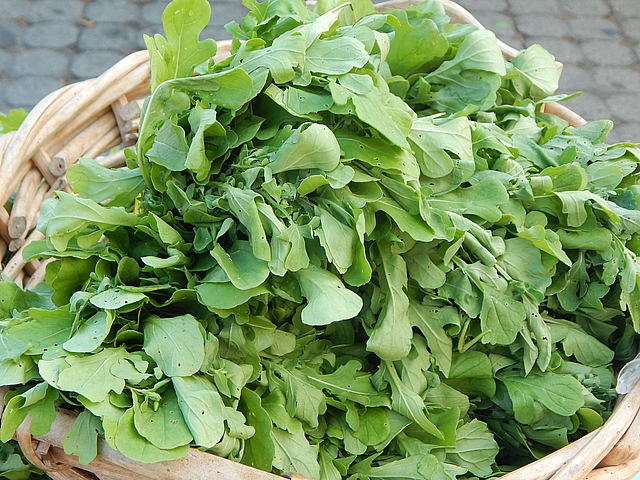
My favorite salads have always been more stuff than greens. Even buried under a dozen freshly harvested vegetables, I can’t get excited about iceberg, Romine, or most leaf lettuces. I didn’t discover the appeal of salad greens until I lived in London and had my first taste of arugula or, as the Brits call it, rocket. Only recently sold in the United States as a loose salad green instead of in tiny, overpriced portions as an herb, arugula’s spicy, slightly bitter bite becomes the star on the salad plate. But you’ll still be disappointed in a light arugula salad—and heavier tuber-based ones—unless you dress it right.
Learn to make Arugula–Asparagus Salad and Mushroom–Sweet Potato Salad

Three Cups of Tea

For me, traveling revived the family tradition of daily cups of tea. Learn to make Moroccan-Inspired Mint Tea and British and Russian Black Tea. Get tea recipes at TwiceasTasty.com.
I grew up in a family of tea drinkers: hot tea for breakfast, iced tea in summer, even decaf tea in evenings. Although my mom might hesitate over a choice of English Breakfast or Earl Grey, both she and my grandmother gravitated toward black teas, unsweetened and unadorned.

As soon as I was deemed old enough to drink hot, caffeinated beverages, I saw it as my duty, as a mildly rebellious teenager, to develop a coffee addiction. But once my independence was established, I added tea to the mix. Traveling only expanded my repertoire. In Great Britain and Russia, I continued the family tradition of daily mugs of black tea, learning to love a bit of sweet, creaminess in some cups. Morocco brought another twist: hot green tea to fight the ambient heat and seal a business deal or friendship, with so much mint and sugar it resembles a breath mint.
Learn to make Moroccan-Inspired Mint Tea and British and Russian Black Tea

Choosing and Storing Herbs

Food has always dominated my travels, and home re-creations almost always start with herbs. Read more about choosing and storing herbs.
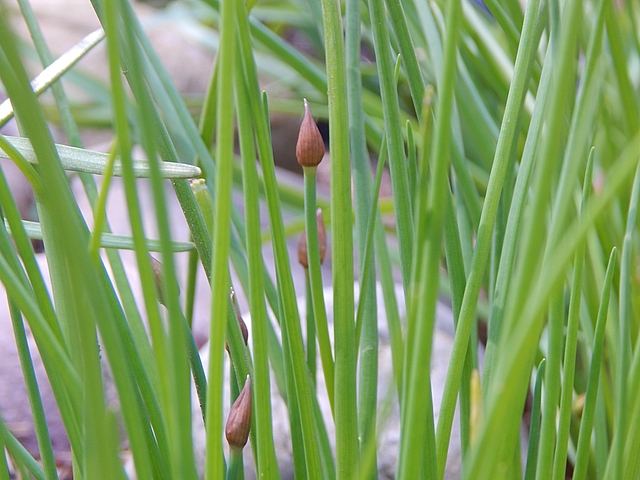
Spring is finally in the air, and I am on the road. In recent weeks, I’ve cleaned up the garden beds; watched crocus, ipheion, scilla, and daffodil blooms open wider by the hour; and found the first perennial herbs like mint, oregano, sorrel, and chives poking through the ground. But it’s also one of my favorite seasons to travel—with Twice as Tasty workshops, to visit family and friends, and to explore new places.

Food has always dominated my travels, first as a vegetarian struggling to find things to eat in a newly reunified Germany and later when discovering new flavors and spices in Africa and Asia and even unknown fruits and vegetables in the South Pacific. Although I still dream of the more exotic tastes, the dishes I bring home put that international spin on food I can grow or easily find in my climate. It almost always starts with herbs.
Read more about choosing and storing herbs