In the Pantry

The secret to a well-stocked pantry is to keep small quantities of a large number of basic ingredients. Discover pantry essentials at TwiceasTasty.com.At 500 square feet, my house has a smaller kitchen and less food-storage space than most. Yet at any given moment, I can conjure a dozen of meals for a dozen people—I just need to find places for them to sit.

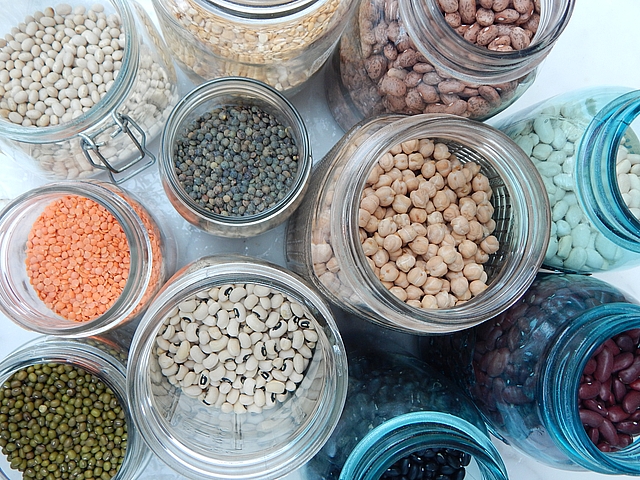
The secret to a well-stocked pantry is to keep small quantities of a large number of basic ingredients. Instead of buying prepackaged meals, sauces, and mixes, you can store fruits, vegetables, grains, dairy, proteins, and flavorings individually and mix them in endless variations. I dedicate at least half my pantry and most of my freezer and fridge space to such items. I fill the rest with homemade items that let me shortcut regularly used recipes, from stocks to pestos to condiments.

The advantages go beyond versatility. Stocking your pantry in this manner means your ingredients stay fresh, you can spend your money on quality items instead of large quantities that go stale before you finish them, and you’ll always open the fridge or cupboard and find something you want to eat.
Read more about improving your pantry

Preparing for Holidays

All last month, I was undecided about which recipes and ideas to share in November. I was traveling in several regions and climates, wearing everything from four layers of long johns and raingear to tank tops and summer dresses. And meals featured the fresh strawberries I associate with spring, the Dungeness crab of fall and winter, and everything between.

Shortly after I returned home to Montana, Mother Nature decided the blog’s November theme for me. After just a couple of days in my own kitchen, snow began to fall and winter was suddenly upon us. Instead of digging the final carrots and potatoes and cleaning up garden beds, I was curled up by the woodstove, reading food books and thinking about the coming holiday season. For me, that means planning to gather with friends and family, making lists of gifts to create, and of course, deciding what we’ll eat.
Read more about preparing for holiday gatherings and meals

Grilled Tomatoes

I grill a lot of vegetables, from asparagus to tomatillos, but I probably spend the most time grilling tomatoes. Not only are they delicious on a skewer with other vegetables for dinner, but they’re also fabulous when pulled off the canning shelf or from the freezer. And the process for grilling large tomatoes is easy: slice them in half, sear them cut side down on a hot grill for a couple of minutes, and then flip and cook a few more minutes until soft.

Those of us with large gardens quickly come up with enough grilled tomato batches for canner loads of salsa, Bloody Mary mix, and pasta sauce. But in recent years, I’ve been running a small batch to freeze in cubes—the perfect size to drop into a soup, spread on a pizza crust, or simply dip into with mozzarella-stuffed breadsticks.
Learn to make Grilled Tomato Pizza Sauce and Stuffed and Grilled Breadsticks

Grill It, Roast It, Smoke It

And just like that, September is here. Long before I’m ready for summer to be over, the month that signals the start of fall rolls in. But even though a few of August’s garden-fresh favorites are finished for the season, September’s list of harvestable fruits and vegetables is the longest of year, with the last of the summer beans, berries, and corn bumping up against the first of the fall greens, plums, and winter squash.

If August is the month for enjoying fresh fruit and veg, September is the month for adding a bit of charred, caramelized, and smoky flavor to the produce on the table. We’ll be grilling, roasting, and smoking all month at Twice as Tasty—mostly thanks to some incredible response from recent Twice as Tasty workshops.

Although my September schedule is quickly filling up, it’s not too late to get in on the current lineup or featured workshops locally. And Twice as Tasty will be on the road again in late October! For more details, click here.
Read more about grilling, roasting, and smoking

Fresh Tomatoes

Tomatoes top the list of my favorite fresh summertime, homegrown vegetables. (Yes, scientifically, they’re fruit. But to a cook, they’re vegetables.) These are fresh summertime favorites because their sweet, juicy flesh is at its peak, tasting completely different from tomatoes that have been grilled, roasted, or otherwise cooked or preserved. They’re homegrown favorites because despite the few tomato varieties available in grocery stores, hundreds of varieties are available as seed.

We planted 26 tomato starts in late May and have been harvesting 14 varieties this month. Some are tiny, bright red cherry tomatoes; some are dark purple giants. My childhood loves are sweet Yellow Pears I eat like candy from the vine, but some of my recent favorites are heirloom Black Cherry tomatoes, with large (for the “cherry” class), dusky fruit, and dense, heart-shaped Oxheart tomatoes. Each adds a distinct flavor and texture to fresh appetizers and salads.
Learn to make Herbed-Tomato Dip and Panzanella (Tomato and Bread Salad)

Fresh Fillings

If you grow a giant garden, each day’s harvest fills multiple boxes and baskets and then every spare corner of your refrigerator. But if you grow a more reasonably sized garden, your harvest likely comes in dibs and dabs: a couple of cucumbers and tomatoes, perhaps a pepper, a small mound of greens, a handful of herbs. Combining these garden-fresh favorites into a meal that showcases your effort often means coming up short for a standard recipe.

This is why I love fillings and stuffings; the ingredients are endlessly variable, a little goes a long way, and the result is a sparkling-fresh meal that highlights produce just off the vine. Whether you’re filling summer rolls, stuffing squash blossoms, or even building Grilled Fish Tacos, the key is to use less filling than you think you’ll need. A gentle hand while wrapping delicate rice paper or petals around that filling is also essential for success.
Learn to make Summer Rolls and Stuffed Squash Blossoms

Garlic and Nasturtiums

When it comes to making pickles, I often think big: pounds of produce, half-gallon jars for fermenting, multiple batches of quart and pint jars for canning, and hours spent cleaning, preparing, and processing. But when it comes to eating pickles, a few often go a long way: a couple of Definitely Dilly Beans in a Grilled Tomato Bloody Mary, a few slices of Better Bread-and-Butter Pickles to serve with or stuff in Gorgeous Grilled Cheese, a handful of Cumin-Spiced Zucchini Refrigerator Pickles to accompany Indian dishes.

As I’ve already shared this month, some pickles are best in both small batches and small doses. This makes them ideal condiments to pack quickly and easily into small jars, store in your fridge, and dip into as needed. Two I always try to have on hand are pickled garlic and nasturtium “capers.”
Learn to make Pickled Garlic and Pickled Nasturtium Seeds

Refrigerator Pickles

I don’t advocate small-batch canning, but I am a fan of quick and easy pickling that fills your refrigerator one jar at a time. If your only experience with pickling is opening a store-bought jar, then refrigerator vinegar pickles will convert you to homemade. Even if you grew up in a household that put up shelves of pickled vegetables every summer, like I did, refrigerator pickles have surprising benefits.

The disadvantage of refrigerator pickles—that they aren’t sealed in heated jars and thus shelf stable—can be an advantage in freshness and crispness. Small-space gardeners or CSA members can put up a jar at a time as produce ripens. Even expansive gardeners can use fridge pickles to test new flavor combinations. Cucumbers are ideal refrigerator pickles, because they soften so quickly when heated. You should still only use pickling cucumbers; the thick-skinned slicing cucumbers you find in grocery stores and even lemon cucumbers are really only useful as fresh pickles. After years of pasteurizing summer squash, I’ve switched from the canner to the fridge to keep the pickles’ crunch.
Learn to make Cucumber Refrigerator Pickles and Cumin-Spiced Zucchini Refrigerator Pickles

Fresh Pickles

When I think of fresh pickles, I immediately envision a platter of sushi, accompanied by pickled ginger (gari) and preceded by a quickly pickled cucumber salad (kyuri asazuke). The Japanese know a thing or two about pickling. They find a range of uses for pickled foods, including condiment, relish, garnish, palate cleanser, and digestive aid. Small portions of these foods can appear at any meal, even breakfast. Traditional Japanese pickles feature ingredients ranging from vegetables to eggs to fish to even cherry blossoms.

In America, the primary exposure to Japanese pickles comes as an appetizer before a meal and as a palate cleanser during it. A favorite local sushi restaurant serves sunomono, small portions of freshly pickled cucumber salad, before every meal—so of course I needed to come up with a version for our home-rolled, and more importantly boat-rolled, sushi nights. This salad is best made fresh when cucumbers are in season. Learn to make Quick-Pickled Cucumber Salad and Pickled Ginger

Pick a Pickle

Almost every vegetable garden explodes in July. My first July harvest included the last of the spring greens and asparagus, midcycle broccoli and garlic scapes, and the first snap peas, carrots, beets, and bulb onions. The harvest will go straight into our mouths, but as the yields grow jugs of vinegar and a box of salt will be front and center, ready for pickling.

All of my recently harvested vegetables can be pickled, along with snap beans, summer squash, tomatoes, peppers, eggplant, garlic, cabbage, and even fruit. That’s the beauty of pickling: it lets you preserve any low-acid vegetable safely. And like many of my favorite processing techniques, it’s endlessly variable. Various pickling techniques let you preserve everything from a single cucumber to a box of cukes. You can flavor them to fit any meal: American dills or bread-and-butters with burgers, Japanese kyuri asazuke with sushi, Indian kheer uragai with curry—and that’s just a few variations on cucumber pickles.
Read more about quick and easy pickling