
Watermelon-Basil Syrup or Shrub

Of all the homemade beverages I make, watermelon shrub and syrup have some of the freshest flavor because the juice is never heated. Learn more at TwiceasTasty.com.
In summer, my refrigerator is divided fairly equally into four quadrants: freshly harvested homegrown vegetables and fruit; jars of pickled foods; syrups, shrubs, and kombucha; and everything else. When I first started making drinking shrubs—concentrates made from fruit, sugar, and vinegar that are then diluted with seltzer—I usually had one or two flavors on hand at a time. Now the varieties grow with the season, and since I’ve added kombucha to the options, a dozen bottles typically line my fridge shelves after I’ve just decanted a fresh batch.

Of the collection, the watermelon shrub and syrup recipe that I share this week in my Twice as Tasty column for the Flathead Beacon has some of the freshest flavor because the juice is never heated. The herbs I add to shrubs and syrups enhance their complexity. Like watermelon, basil stays fresh and bright with the no-heat method. Other herbs also pair well with watermelon, including cilantro, lemon thyme, and the mint featured in Watermelon-Mint Sorbet and Watermelon and Feta Salad.
Learn to make Watermelon-Basil Syrup or Shrub

Roasted Raspberry Syrup

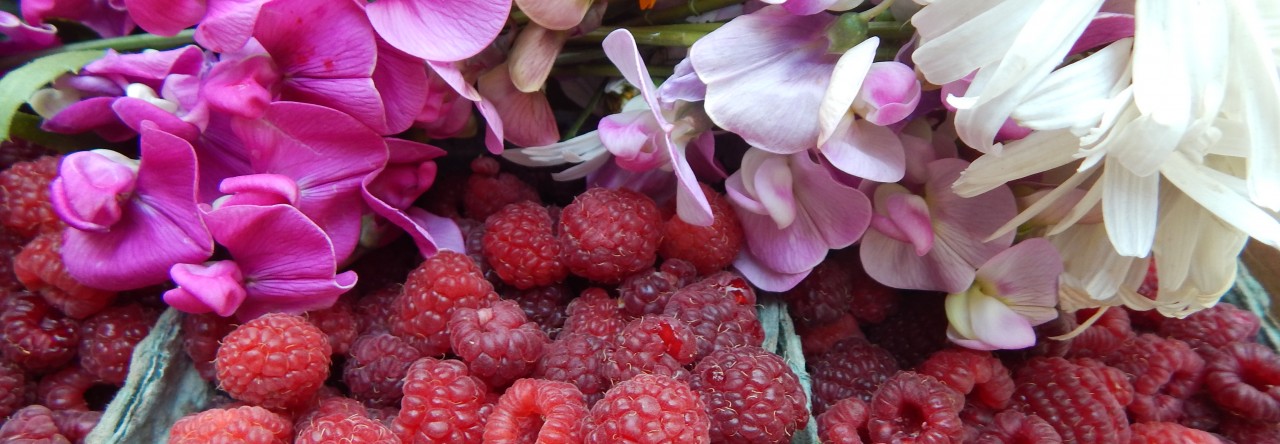
I use four techniques to separate fruit juice from pulp for fruit syrups and shrubs. Oven-roasting adds rich, caramelized notes. Learn more at TwiceasTasty.com.
Fruit syrups are easy to make—if you create a jar at a time or have a bumper crop of fruit and a plan to use the remaining solids. As I explain this week in my Twice as Tasty column for the Flathead Beacon, it takes about 3 pounds of berries to create about 2 cups of syrup. When you use raspberries for syrups or their tangy cousins, drinking shrubs, roasting the berries and straining off the juice leaves a couple of pounds of sweetened seedy pulp. I hate to dump such a large mound straight into the compost. I primarily freeze the pulp in cubes to blend into smoothies instead of whole raspberries and notice little difference in the overall seediness.

Other easy uses that make berry pulp versus whole fruit less noticeable include granola: Dry the pulp in sheets and crumble it into the mixture of grains, seeds, and nuts. Some baked goods, like quick bread, can handle a certain volume of seedy pulp. The berry pulp still has enough flavor to infuse vodka or vinegar.
Learn to make Roasted Raspberry Syrup