
My food dehydrator has been in near-constant use in recent weeks as the garden pumps out an array of herbs, vegetables, and fruit. I’ve been drying my year’s supply of homegrown thyme, rosemary, basil, and celery leaves. Dried tart cherries are now waiting to be used in place of cranberries in Smoky Oatmeal–Cranberry Cookies and Cranberry-Orange Quick Bread, and the dehydrator racks are currently full of homegrown grapes transforming into raisins.
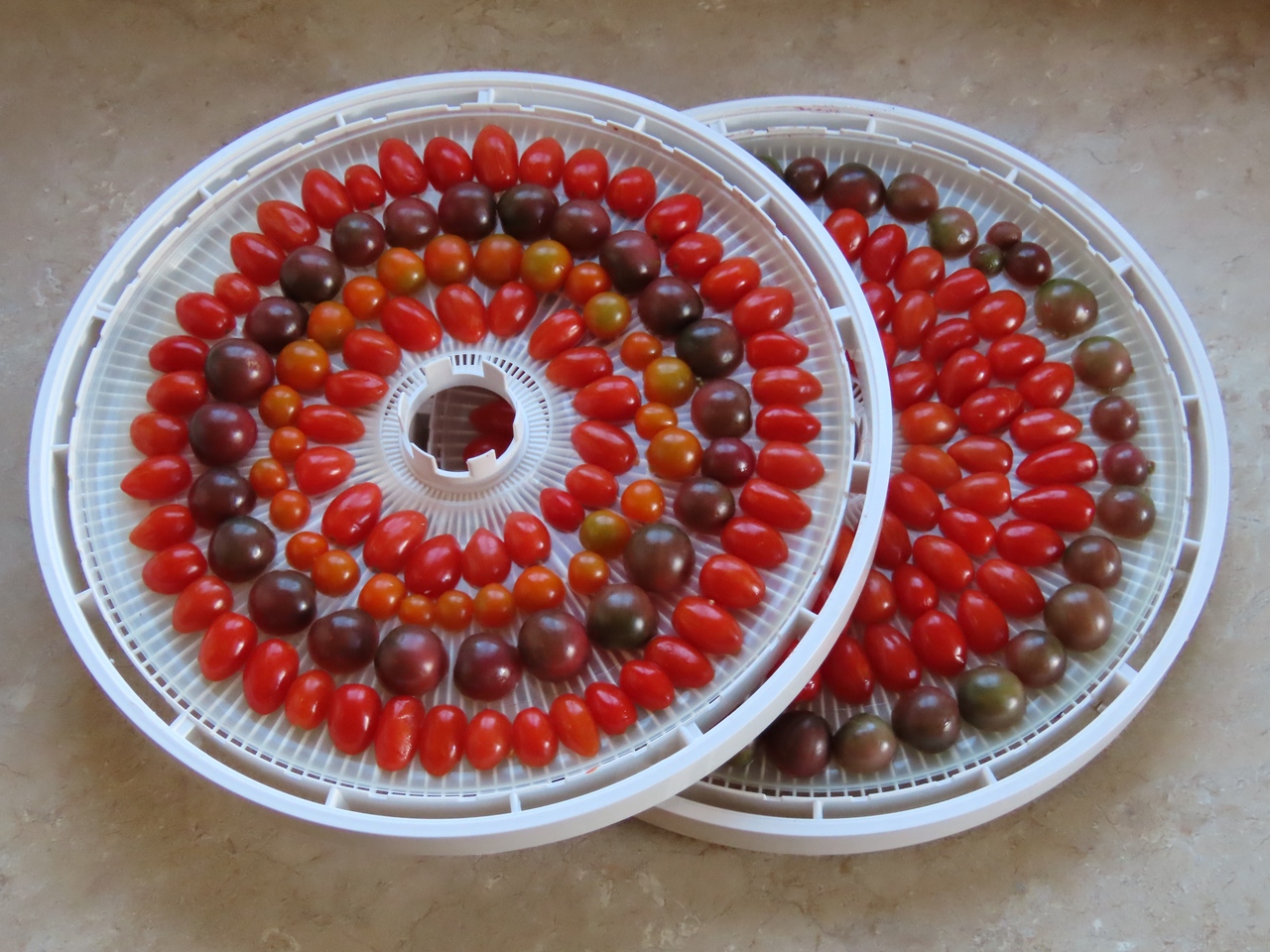
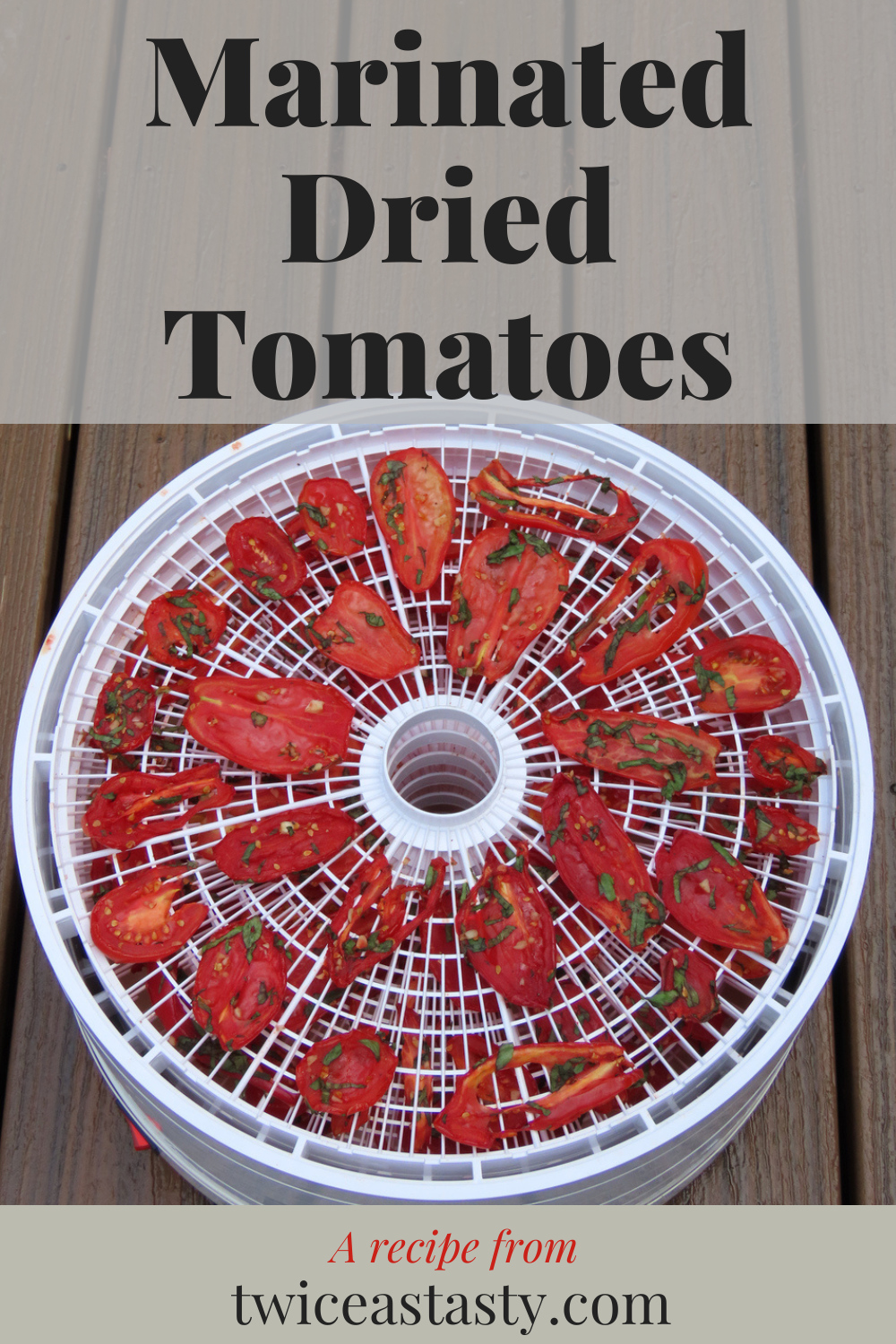
I’ve also been dehydrating batches of the marinated tomatoes I share this week in my Twice as Tasty column for the Flathead Beacon. These tomatoes feature not just in my dehydration workshops, like Preserving Your Garden and Dehydration for Everyone, but also in my upcoming Fine Dining: Front Country class through Flathead Valley Community College’s Continuing Education program. In this class, where I share my best tips for meal planning, pretrip prep, and packing tools that make front-country cooking easy, I explain just how versatile these tomatoes are for the meals I prepare while car camping or cruising aboard our sailboat. I’ve also been drying cherry tomatoes, which rehydrate beautifully in a brine for a bruschetta we’ll eat during the class.
Learn more about dehydrating vegetables and get the complete recipe for Marinated Dried Tomatoes in my column.
 Make it, share it.
Tag @twiceastastyblog and #twiceastastyblog
Twice as Tasty
 Excited about drying food, especially homegrown or locally grown herbs, vegetables, and fruit? An electric food dehydrator is an extremely handy tool for this project, but you can start dehydrating food before you invest in one. I’ve found that juicy herbs like basil and celery leaves take so long to dry in my dehydrator that it helps to release some of their moisture by first air-drying them on the dehydrator racks or mesh screens. The batches I let sit in the open air for a few days this year were almost completely dry before I finished them with the dehydrator’s forced air and low heat for a couple of hours. Thyme, rosemary, and other woody herbs often dry slowly but readily when simply bundled by their stems and hung.
But Montana’s fall weather can be unpredictable, with rain, dewy mornings, and chilly damp nights that can cause food dried in the open air to mold. In our climate, fruits and vegetables are best dried in a dehydrator or low-temperature oven.
Here are just a few other dehydration recipes on the blog. You can find more in the recipe index.
- Drying Fresh Herbs
- DIY Herb Blends
- Homemade Fruit Leather: Most Requested
- Home-Smoked Chili Peppers
- Gluten-Free, Nut-Free Granola
You can also learn more about dehydrating food on this blog page.
Want more Twice as Tasty recipes? Get my books! Click here to order a personally signed, packaged, and shipped copy of The Complete Guide to Pickling directly from me. I also share tasty ways to use pickles in The Pickled Picnic; it’s only available here.
Discover more from Twice as Tasty
Subscribe to get the latest posts sent to your email.
