Chickpea Vegetable Skillet with Couscous and Feta

Veggie couscous works as garden-to-table meal or one that fits neatly in a cooler and kitchen box on the water or in a campground. Learn more at TwiceasTasty.com.
My garden is bountiful so far this year, and many of my home-cooked meals begin with me spreading out my harvest on the counter and chopping up a little of everything for an impromptu, no-recipe vegetable sauté, salad, or pasta meal. But when I’m not making dinner at home these days, I’m usually making it aboard our sailboat, the Blue Mule, where my range of options becomes more limited. One of the beauties of the recipe I share this week in my Twice as Tasty column for the Flathead Beacon is that you can approach it as garden-to-table meal or as a pantry-focused one that fits neatly in a cooler and kitchen box on the water or in a campground.

As I teach in my Fine Dining: Front Country workshop, the key to making such a veggie-heavy meal in the galley or at the campsite is to choose vegetables that travel well. Whole carrots, onions, and garlic can tumble around as the boat surfs waves or the car bounces down gravel roads, and they’ll still look and taste great at dinnertime. I pack small zucchini, so I don’t have a partial one left with an exposed cut edge that’s more susceptible to damage. I also tuck zukes and other tender vegetables into a plastic storage box that fits inside my ice chest and minimizes their bumping and bruising—and their direct exposure to melting ice.
Learn to make Chickpea Vegetable Skillet with Couscous and Feta
Watermelon and Feta Salad

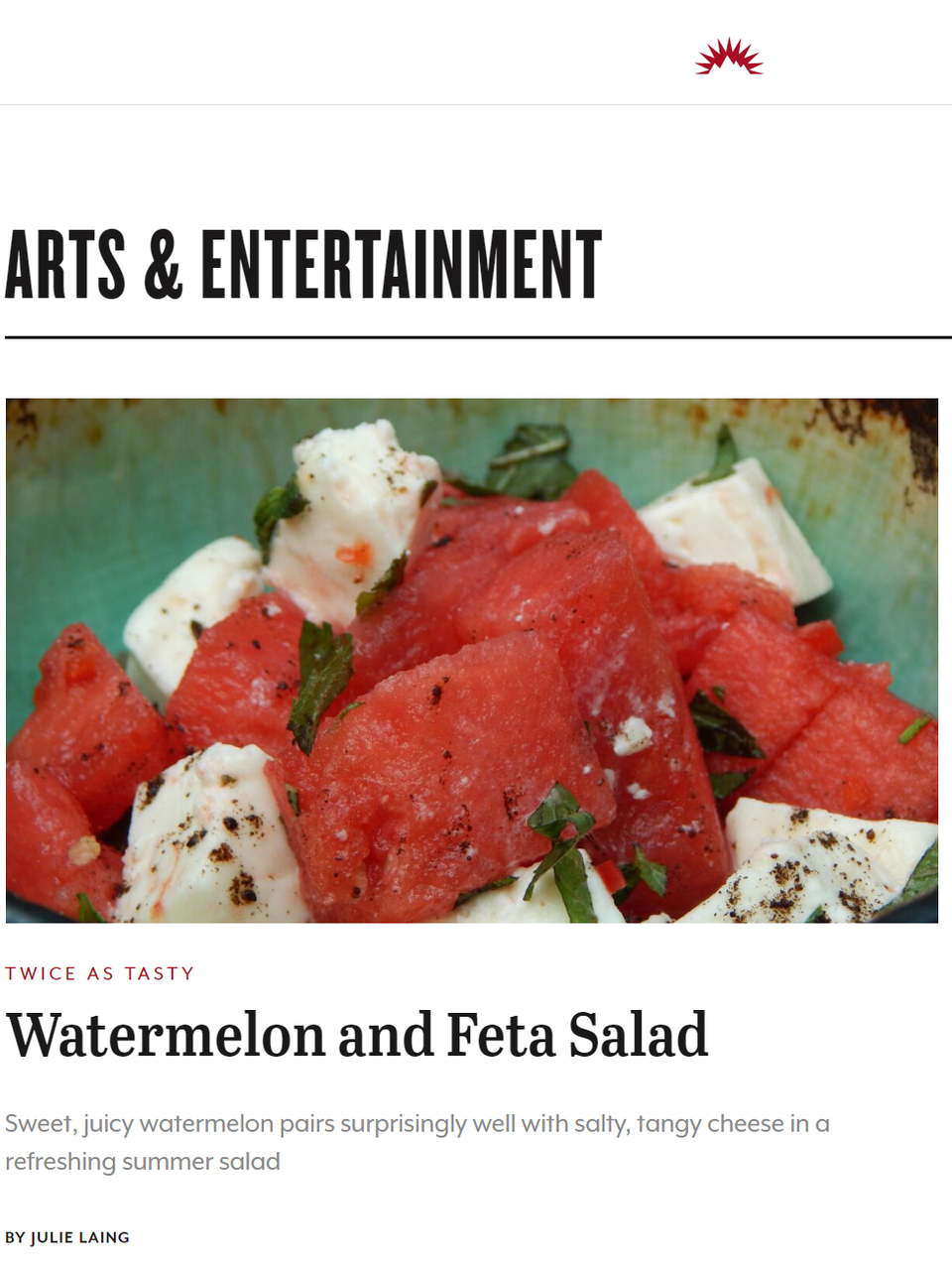
Get right to the heart of summer by pairing sweet, juicy watermelon with tangy, salty feta cheese—especially homemade dry-salted feta. Learn more at TwiceasTasty.com.
The recipe I share this week in my Twice as Tasty column for the Flathead Beacon gets right to the heart of summer, pairing sweet, juicy watermelon with tangy, salty feta cheese. Like many of my favorite recipes that use feta, you can buy a high-quality block in brine for this salad. I like a creamy Bulgarian sheep’s milk feta, which holds its shape well, or the sharp taste of Greek sheep’s milk feta alongside the sweet melon.

My favorite pairing is homemade Dry-Salted Feta. Even when I use whole cow’s milk instead of milk from goats or sheep, it has far superior flavor and texture to the crumbly, dry store-bought American feta made from skimmed cow’s milk. The hardest part about making feta is holding the milk at a steady temperature for a couple of hours—a challenge that is far easier amid summer’s heat than during freezing winter months.
Learn to make Watermelon and Feta Salad

Warm Quinoa and Feta Salad

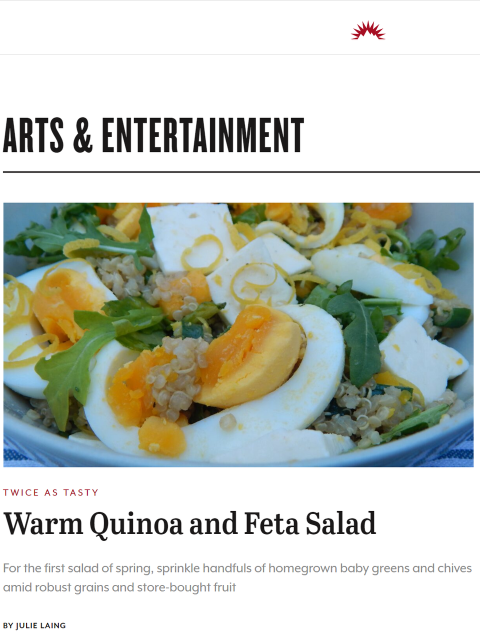
There’s something special about salads made with spring's first herbs and greens from plants that bravely withstand 50°-plus temperature swings. Learn more at TwiceasTasty.com.
We’ve had our usual cyclic spring weather in Montana, with a high of 76°F on Sunday followed by nights in the 20s. It makes me appreciate even more the first spring greens and herbs that eagerly pop through the sun-warmed soil and then tough out the crisp nights and frosty mornings. As I share this week in my Twice as Tasty column for the Flathead Beacon, my first spring salads mainly consist of store-bought ingredients and sneak in handfuls of whatever garden treats appear first for fresh pops of green.

I make variations on these spring salads throughout the growing season, transitioning to homegrown summer vegetables and herbs as the weeks pass. But there’s something special about the ones made with those first perennial and self-seeded herbs and greens, the plants that bravely leaf out through 50°-plus temperature swings.
Learn to make Warm Quinoa and Feta Salad

Cheese: You Can Do It!

The first thing to know about cheese making is that you can do it! Learn more at TwiceasTasty.com.
Spring is working its way into Montana. This means 4 weather cycles in a day, plenty of mud, the first harvest of walking onions, and baby animals in the barn. At the farm where I garden, two baby cows have arrived, with a third on the way. Although the mommas will keep their milk for their newborns, it always seems like the perfect time to explore home-fermented dairy and cheese.

I’ve spent little time making cheese over the past year. A year ago, I skipped my planned cheese posts to extend the sourdough giveaway and share ways to eat well when stuck at home. Then I co-opted my “cheese cave” (aka mini dorm fridge) for pickles while I was launching my new book.

But last month, while filling pierogi with potatoes and Lemon Cheese, I was reminded just how easy it is to make cheese and other dairy products. Here’s your reminder too.
Read more about making cheese

Making Better Yogurt and Cheese

Making new styles of cheese has taught me a few tricks that apply to my homemade standards. Learn about making better yogurt and cheese at TwiceasTasty.com.
Each April, the recipes on Twice as Tasty focus on making cheese and other dairy products at home. Between the information on the blog and the workshops I’ve been teaching to everyone from adults to kids, the pool of home cheesemakers has been growing steadily all year.

As I wrote last year, yogurt was my first homemade dairy product. It’s still the milk-based product I make most often, partly because it’s so easy and partly because it’s so versatile that I eat it all the time. This also means I’m constantly finding new ways to improve my yogurt-making skills.

I’ve also been playing with variations on acid-based cheeses and delving into new cheese styles and dairy products. Some of these will be the focus of blog posts in the coming month. But these styles have also taught me a few tricks that apply to my homemade standards. So before I offer you new recipes, here are some things I’ve learned in the past year about making yogurt and cheese.
Read more about making better yogurt and cheese