
Grilled Shrimp

Chipotles in adobo boost the smoky heat of a marinade or sauce. Get grilling recipes at TwiceasTasty.com.
In case you haven’t noticed, I love the flavor of smoky chilies. I buy cans of chipotle chilies for my favorite salsa. I also home-smoke homegrown chilies to dry or turn into paste and then use in everything from spiced nuts to cheese dip to fish cakes. In my pickling cookbook, I recommend Fresno chilies in many recipes because of their natural slightly smoky flavor.

Chipotle peppers are actually jalapenos; they’ve just been smoked and dried. When you buy them canned, they’ve been rehydrated and stored in a spicy tomato-based sauce. The sauce can be as flavorful as the peppers, and they boost the heat and smoky flavor of a marinade. You only need a little chipotle flavor for a marinade, but don’t let that stop you from opening a can. Scoop any leftover chilies and adobo into an ice cube tray, and then freeze and bag the cubes for future use. A standard ice-cube tray holds about 2 tablespoons per cube.

After I’ve used a marinade for grilling, I hate to toss what’s left. So I boil it into a sauce and mix it into a second meal.
Learn to make Chipotle-Marinated Grilled Shrimp and Spanish-Inspired Fried Rice

Grilled Fish

For an off-the-stovetop meal, I combine marinated fish with my favorite couscous trick. Get grilled fish recipes at TwiceasTasty.com.
Of all the foods I throw on the grill, fish is probably the easiest for other people to recognize. If you have a high-quality piece of freshly caught fish, a little lemon, salt, and pepper may be all you need to make it grill ready. But I find that approach works best if you’re following my dad’s mantra: “You catch it, you clean it, you cook it, you eat it.” These days, I apply that philosophy to homegrown and grilled veg. For store-bought fish, I tend to bring out the flavor with an easy marinade.

I’ve been making a North African-inspired marinade for years, modifying and tweaking it until it reminds me of the spicy olives I fell for while traveling in Morocco and blends in some of the runaway cilantro and mint from the garden. To pull together a meal off the stovetop, I turn to my favorite trick for couscous, often making a big enough batch to turn the leftovers into a separate, second meal.
Learn to make North African-Inspired Grilled Fish and Pour-Over Couscous

Cupcakes and Buttercream

If your celebratory cupcakes turn out less than picture-perfect, no one will comment when they’re topped with silky buttercream. Get the recipes at TwiceasTasty.com.
Although I’ve been blogging all month in celebration of Twice as Tasty’s 5th birthday, I’ve saved the best for last: dessert. I decided this year to share my first cupcake recipe on the blog, with my favorite way to decorate any celebratory cake: buttercream.

I first made this cupcake recipe when my mom turned 75. We were gathering with CRASH, a group of long-time family friends that over the years had grown to three generations and more than 30 people. So for the birthday celebration, my sister and I decided to make 75 cupcakes.
Learn to make Buttery Jam-Filled Cupcakes and Basil Buttercream

Salmon

To celebrate milestones, I often choose foods I love but can’t grow and prepare them so that their flavors shine. Get grilled salmon recipes at TwiceasTasty.com.
Some people think that to be worthy of a special occasion, a dinner has to be labor intensive. I have plenty of kitchen projects that take time and effort, but most have a larger purpose than a single meal: they’re destined for the freezer for later quick meals, the canning shelf for a year’s enjoyment, or the holiday cookie collection to share widely. When I celebrate milestones, like Twice as Tasty’s 5th birthday, I often choose foods I love but can’t grow, and I prepare them in a way that lets their flavors shine.

Wild Alaska salmon fits that list, especially when the fresh sockeye catch starts arriving from the Copper River watershed in late May and early June. Since this fish is being transported fresh, I ask the seafood market or fish counter for the expected delivery dates and try to buy and eat it the day it arrives. I prepare this fish many ways, but one of my favorites has evolved from a recipe in the Junior League of Seattle’s 1993 cookbook, Simply Classic.
Learn to make Whiskey-Basted Grilled Salmon and other grilled goodies

More Cakes and Curd

Fruit curds dress up any celebration, for breakfast or dessert. Get the recipes at TwiceasTasty.com.
I’ve always been a breakfast girl, regardless of the time of day. So when it’s time to celebrate an occasion like Twice as Tasty’s 5th birthday, there’s no reason to save the special treats for an evening dessert.

This post is prefaced “more” because I’ve already shared one of my favorite cakes and curd pairings: Gingerbread Pancakes with Berry Curd. I make this breakfast throughout the year, using fresh berries in summer and frozen ones in winter. But in spring and early summer, I switch up the flavors to use my most prolific early crop: rhubarb. The tangy flavor of rhubarb balances the richness of the egg yolks and butter in the curd. Its tang also pairs well with my favorite childhood pancakes, made light and bright by a scoop of yogurt.
Learn to make Rhubarb Curd and Yogurt Pancakes

Flavorful Reductions

Cooking a quick sauce or glaze in the same pan as your main ingredient soaks up concentrated flavor. Learn more at TwiceasTasty.com.
As I wrap up my month of cookware testing, I’ve been stretching the limits of nonstick pans by using some of my favorite flavor-building techniques: browning, reducing, and glazing. Stainless steel and cast iron are the more typical materials for these techniques, because some of the point is to suck up the caramelized bits that stick to the pan—those bits that nonstick surfaces are designed to eliminate. But there’s a difference between burned-on food and fond, the caramelized particles left after browning. Even a good nonstick pan generates some of these intensely flavored bits.

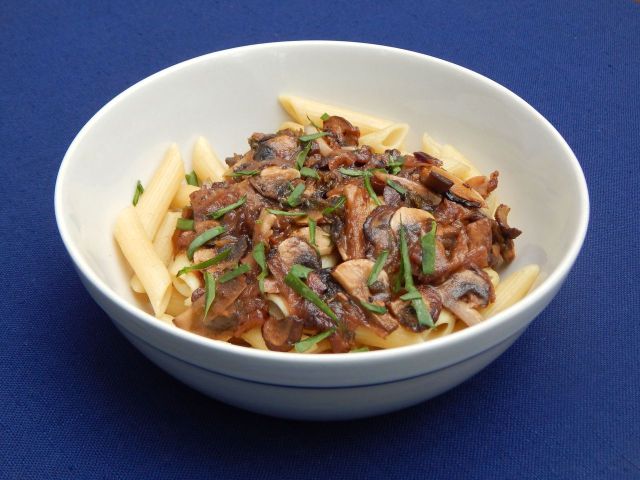
It made sense to me to test these techniques in nonstick pans, since I never create them using the standard base ingredient: browned meat. By cooking a quick sauce or glaze in the same pan as your main ingredient, you can soak up that concentrated flavor—whether you started with meat, shrimp, mushrooms, or root vegetables. It really is all about the flavor.
Learn to make flavorful reductions and Mushroom Pan Sauce

Cooking Grains

Most grains want a fun, flavorful addition, whether it’s stirred in or piled on top. Learn more at TwiceasTasty.com.
Eggs may be the ideal test food for skillets, but grains put saucepans through their paces. Starchy foods like rice, oats, pearly barley, and pasta always tend to get sticky, but everything from type of pot to temperature to water-to-grain ratio can also make them stick or even burn onto the cooking pot. This can leave you not just with a gummy meal but also with a gummy mess to clean up.

So as I’m testing cookware this month, I’m cooking lots of grains. All of them want a fun, flavorful addition, whether it’s stirred in or piled on top, like this week’s new recipe.
Learn about cooking grains and Curried Sweet Potato and Mango

Cooking Eggs

To put it simply: Testing cookware by cooking eggs is fun. Get cooked egg recipes at TwiceasTasty.com.
I have to admit that I’m one of those people who holds onto cookware way too long. After pots are scratched, warped, and showing their age by letting even the simplest foods adhere to their surface, I continue to use them. Replacing cookware, especially a high-quality set, is expensive. So I’ve been excited to set out on a quest for the perfect cookware.

Eggs in many forms are ideal test recipes. They can be delicate yet prone to burning or sticking. They cook quickly, so they’re speedy, easy meals. This time of year, the chickens are laying prolifically. Most egg dishes don’t require a recipe, and many styles can be created just by cracking a fresh egg into a hot pan. But some call for a bit of technique, including endless variations on omelets.
Learn to make A Three-Egg Omelet and other cooked eggs

Home-Smoked Cheese

Upgrade mass-market cheese with a simple trick: smoke it. Get smoking recipes at TwiceasTasty.com.
Did you make cheese with me this month? Maybe you couldn’t find the time or didn’t track down the supplies. Maybe you’re nervous about making that first batch without my personal help. Or maybe, like me, you eat way too much cheese to rely solely on a homemade supply. That last reason is why I began upgrading mass-market cheese with a simple trick: smoke it.

Home-smoked cheese can easily start with a store-bought block that’s affordable but one-dimensional in flavor. I typically buy store-brand cheese or even giant deli loaves for smoking. It takes just a couple of hours with minimal involvement to impress family and friends. I smoke many types of cheese (usually pairing them with pickles, of course) to serve at parties, gift at holidays, and keep in constant supply in the fridge.
Learn to make Cold-Smoked Cheese and other foods

Ricotta: Fresh and Aged

Enjoy ricotta fresh, or salt and age it to take the flavor to a new level. Get ricotta recipes at TwiceasTasty.com.
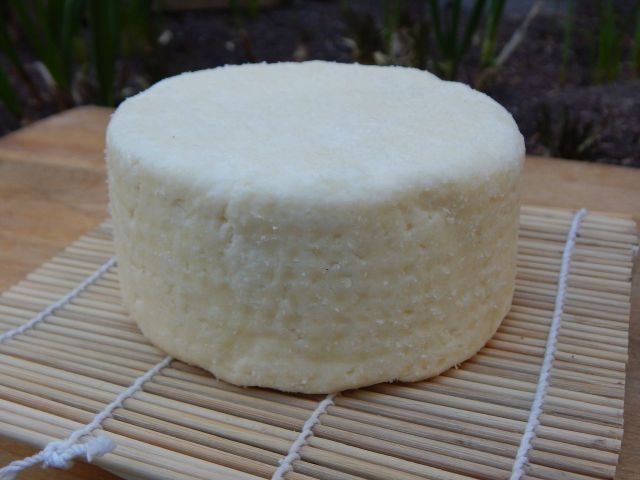
Ricotta didn’t interest me as a homemade cheese until I spotted an aged, salted version in Karen Solomon’s Jam It, Pickle It, Cure It. She described its texture and saltiness as resembling Romano but less complex. That, I thought, is a cheese I could love. Homemade Romano is a cultured cheese that is repeatedly molded, pressed, brined, and salted before it is aged 8–12 months. So a substitute that takes less than an hour of hands-on time and is ready in a week or so seemed perfect.

This aged cheese starts with ricotta made entirely from fresh milk. If you already make Lemon Cheese, the ricotta recipe will look familiar: it’s essentially the same cheese, although I tend to drain it for less time so that it’s soft and moist. Like the lemon version, it can be eaten fresh. I often make a double batch of ricotta, setting aside half to enjoy straightaway and aging the other half into the Romano replacement.

The only ingredient difference between Whole-Milk Ricotta and Lemon Cheese is the acid used to separate the curds from the whey. The ricotta recipe uses citric acid, a powder with a sour, neutral flavor rather than a lemony one. It’s usually easier to find than the cheese cultures in last week’s post; if you can’t buy it from a local natural-foods store, you can order it online from the sources I provided for cheese cultures.
Learn to make Whole-Milk Ricotta and Ricotta Salata