Quiche

Quiche is a bit more work than frittata, but it has its upsides too. Get quiche and frittata recipes at TwiceasTasty.com.
When I prepared to share this recipe, I was surprised to realize it would be my first quiche on the blog. It’s one of my favorite springtime dinners: the hens are back to a full laying schedule no matter how cold it was over winter, spring greens and herbs are ripe for the picking, and asparagus is growing by inches every day.

Quiche is a bit more work than frittata, because you have to make and roll out a crust. It also takes longer to cook, because you’re letting the eggs slowly set up in the oven. But it has its upsides too. Because the eggs cook slowly, they come out more like custard, whereas frittata has a tendency to set up more like hard-scrambled eggs and can burn on the bottom of you aren’t careful. The pastry helps to hold everything in place, which can make it easier to enjoy leftovers for a quick breakfast or pack them for lunch. And then there’s the pastry itself: if you’re making one crust, it’s the perfect excuse to double the recipe and bake a crumble-top pie. If you can’t justify a whole pie to yourself, the trimmed edges of the quiche crust can be rerolled into one of my favorite childhood snacks.
Learn to make Spring Vegetable Quiche and a bonus snack
In the Pantry

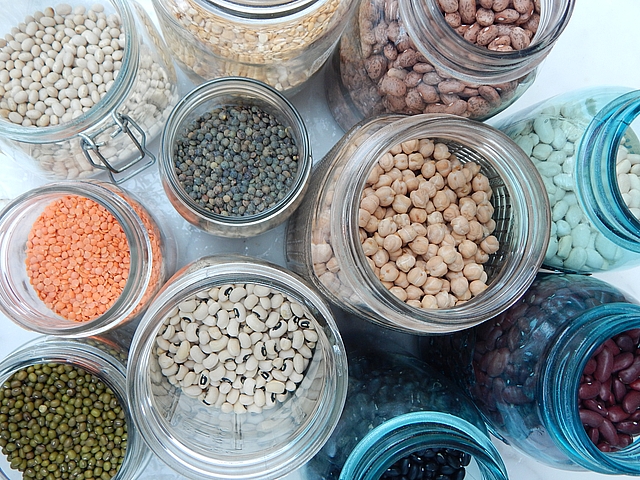
The secret to a well-stocked pantry is to keep small quantities of a large number of basic ingredients. Discover pantry essentials at TwiceasTasty.com.At 500 square feet, my house has a smaller kitchen and less food-storage space than most. Yet at any given moment, I can conjure a dozen of meals for a dozen people—I just need to find places for them to sit.
The secret to a well-stocked pantry is to keep small quantities of a large number of basic ingredients. Instead of buying prepackaged meals, sauces, and mixes, you can store fruits, vegetables, grains, dairy, proteins, and flavorings individually and mix them in endless variations. I dedicate at least half my pantry and most of my freezer and fridge space to such items. I fill the rest with homemade items that let me shortcut regularly used recipes, from stocks to pestos to condiments.

The advantages go beyond versatility. Stocking your pantry in this manner means your ingredients stay fresh, you can spend your money on quality items instead of large quantities that go stale before you finish them, and you’ll always open the fridge or cupboard and find something you want to eat.
Read more about improving your pantry

Fermented Cucumbers

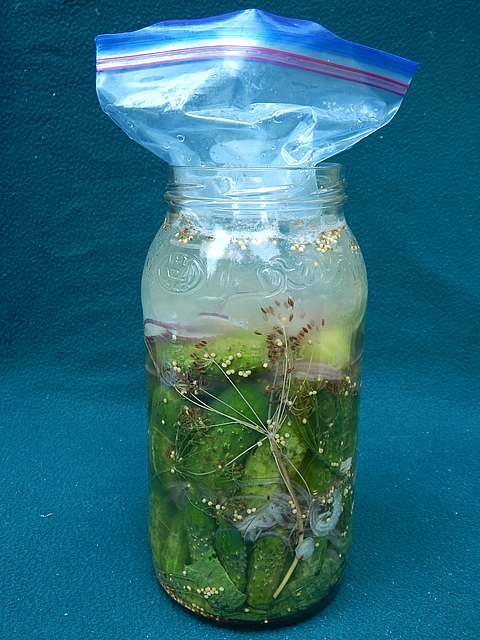
I’ve loved cucumber pickles since I was a kid. Fermentation takes them to a new level. Get fermented vegetable recipes at TwiceasTasty.com.
I’ve loved pickles since I was a kid. My mom put dozens of jars of dill and “sweet” (bread-and-butter) pickles through a water bath every year, and I’d sneak them like they were potato chips. But the longer the pickles sat, the less chip-like crunch they gave. Over the years, I’ve played with ingredients and canning techniques that have helped. Then I discovered fermentation.

Think about it: Cucumbers are best fresh and raw. Putting them in hot water is bound to affect their texture. Fermentation replaces heat with time and vinegar with salt. No wonder the result is crisper and fresher. And the flavoring possibilities—from dill to tea—are endless.

If you’ve never run a fermentation, I suggest you check out my introductory post from earlier this month. But here are the basics: Start with everything clean and fresh. Monitor the batch daily so that you can see the process. If you have doubts, give it the toss and start again.
Learn to make Fermented Dill Pickles and Fermented Tea Pickles

Quick Ferments

When vegetables are sliced or pureed before fermentation, it’s easy to use them straight from the jar. Get veggie ferment recipes at TwiceasTasty.com.
If you’re new to vegetable fermentation, you likely look at recipes and think, “Can it be that easy?” This instantly leads to the terrifying thought, “It can’t; surely I’ll get it wrong.” So to kick off this month’s recipes for vegetable ferments, I offer my most foolproof recipe for your first foray into fermentation. Here, the carrots actually aren’t fully fermented; they sit barely long enough to kick off the process. Still, they use a lot of the techniques that apply to full fermentation of other vegetables: salting, weighting to encourage the carrots to release even liquid, and a rest period to pull even more water and sugars from the produce. Because these carrots are prepared as thin ribbons, it’s easy to open the jar and slide a few onto a sandwich, into a sourdough pita, or straight into your mouth. The recipe is so simple that while you’re at it, you might as well prepare your own horseradish to go in the jar—especially if you’re growing it.
Learn to make Barely Fermented Carrots and Horseradish Paste

Grilled Tomatoes

I grill a lot of vegetables, from asparagus to tomatillos, but I probably spend the most time grilling tomatoes. Not only are they delicious on a skewer with other vegetables for dinner, but they’re also fabulous when pulled off the canning shelf or from the freezer. And the process for grilling large tomatoes is easy: slice them in half, sear them cut side down on a hot grill for a couple of minutes, and then flip and cook a few more minutes until soft.

Those of us with large gardens quickly come up with enough grilled tomato batches for canner loads of salsa, Bloody Mary mix, and pasta sauce. But in recent years, I’ve been running a small batch to freeze in cubes—the perfect size to drop into a soup, spread on a pizza crust, or simply dip into with mozzarella-stuffed breadsticks.
Learn to make Grilled Tomato Pizza Sauce and Stuffed and Grilled Breadsticks

Grill It, Roast It, Smoke It

And just like that, September is here. Long before I’m ready for summer to be over, the month that signals the start of fall rolls in. But even though a few of August’s garden-fresh favorites are finished for the season, September’s list of harvestable fruits and vegetables is the longest of year, with the last of the summer beans, berries, and corn bumping up against the first of the fall greens, plums, and winter squash.

If August is the month for enjoying fresh fruit and veg, September is the month for adding a bit of charred, caramelized, and smoky flavor to the produce on the table. We’ll be grilling, roasting, and smoking all month at Twice as Tasty—mostly thanks to some incredible response from recent Twice as Tasty workshops.

Although my September schedule is quickly filling up, it’s not too late to get in on the current lineup or featured workshops locally. And Twice as Tasty will be on the road again in late October! For more details, click here.
Read more about grilling, roasting, and smoking

Refrigerator Pickles

I don’t advocate small-batch canning, but I am a fan of quick and easy pickling that fills your refrigerator one jar at a time. If your only experience with pickling is opening a store-bought jar, then refrigerator vinegar pickles will convert you to homemade. Even if you grew up in a household that put up shelves of pickled vegetables every summer, like I did, refrigerator pickles have surprising benefits.

The disadvantage of refrigerator pickles—that they aren’t sealed in heated jars and thus shelf stable—can be an advantage in freshness and crispness. Small-space gardeners or CSA members can put up a jar at a time as produce ripens. Even expansive gardeners can use fridge pickles to test new flavor combinations. Cucumbers are ideal refrigerator pickles, because they soften so quickly when heated. You should still only use pickling cucumbers; the thick-skinned slicing cucumbers you find in grocery stores and even lemon cucumbers are really only useful as fresh pickles. After years of pasteurizing summer squash, I’ve switched from the canner to the fridge to keep the pickles’ crunch.
Learn to make Cucumber Refrigerator Pickles and Cumin-Spiced Zucchini Refrigerator Pickles

Pick a Pickle

Almost every vegetable garden explodes in July. My first July harvest included the last of the spring greens and asparagus, midcycle broccoli and garlic scapes, and the first snap peas, carrots, beets, and bulb onions. The harvest will go straight into our mouths, but as the yields grow jugs of vinegar and a box of salt will be front and center, ready for pickling.

All of my recently harvested vegetables can be pickled, along with snap beans, summer squash, tomatoes, peppers, eggplant, garlic, cabbage, and even fruit. That’s the beauty of pickling: it lets you preserve any low-acid vegetable safely. And like many of my favorite processing techniques, it’s endlessly variable. Various pickling techniques let you preserve everything from a single cucumber to a box of cukes. You can flavor them to fit any meal: American dills or bread-and-butters with burgers, Japanese kyuri asazuke with sushi, Indian kheer uragai with curry—and that’s just a few variations on cucumber pickles.
Read more about quick and easy pickling

Frittata

If you like quiche but hate to roll crust, or if you crave omelets but your homemade ones always turn into scrambled eggs, you really should be making frittata. This crustless quiche or open-face omelet is just as adaptable to the ingredients you have on hand as its more finicky cousins. You can eat it at any meal and serve it as a tapa or a main. What’s not to like?

My first memorable frittatas were made by a Spanish woman running a hostel in Greece, so in my mind a frittata must have potatoes and the best additional ingredients are homegrown tomatoes, onion, bell pepper, and basil and homemade feta. I include the potatoes in my base recipe, but you can easily drop them and highlight other ingredients—or just use whatever’s in your fridge. Before summer crops explode, I tend to fill my frittatas with baby chard or spinach and herbs.
Learn to make Basic Potato Frittata and Spinach and Herb Frittata

Yogurt Dips

Homemade cheese and yogurt are delicious not just on their own but also when featured or even a footnote in other recipes. Bring a tray of homemade dips, cheese, and sourdough bread to a potluck or party (or house concert), and guests immediately compliment your tasty contribution. Then when someone asks what’s in the dip, say, “homemade yogurt”; eyes brighten, jaws drop, and people dig back into the bowl. At least, that’s my experience.

I’ve long been a fan of tzatziki, and it’s among my favorite ways to showcase homemade yogurt. A tangy fresh batch makes the dip pop—so much so that I cut back on the lemon juice. Although traditionally made with sheep’s or goat’s milk, draining a cow’s milk yogurt until it’s thick works beautifully. Just a tablespoon or two of the same thickened yogurt gives a surprising creaminess to other dips, especially ones featuring beans.
Learn to make Tzatziki and Asian White Bean Dip