
Vegetarian Smoked-Beet Reuben

With smoked beets standing in for corned beef, this Reuben retains its classic layers of earthy rye bread, zesty dressing, puckery sauerkraut, and nutty cheese. Learn more at TwiceasTasty.com.
For most of my life, the Reuben was a sandwich I knew of but never ate, put off by the corned beef even when I was eating meat. That all changed when I was introduced to a vegetarian replacement for the core layer, as I explain this week in my Twice as Tasty column for the Flathead Beacon.

With smoked beets standing in for corned beef, this Reuben retains its classic layers of contrasting flavors: earthy rye bread, a creamy and zesty dressing, puckery sauerkraut, and nutty cheese. The beets impart their own rich smoky flavor when you make this sandwich with store-bought ingredients, but the layers taste even more delicious when you make some or all of them using recipes I’ve shared in my column and The Complete Guide to Pickling.

The Russian dressing is the easiest homemade upgrade. Despite its name, this sauce is an American invention that typically relies on ketchup and mayonnaise, spiked with horseradish. The recipe I developed—and share in this week’s column, along with other from-scratch fillings with long shelf lives—mixes the horseradish with yogurt or sour cream, vinegar, and Smoky Homemade Chili Paste for extra zing.
Learn to make Vegetarian Smoked-Beet Reuben

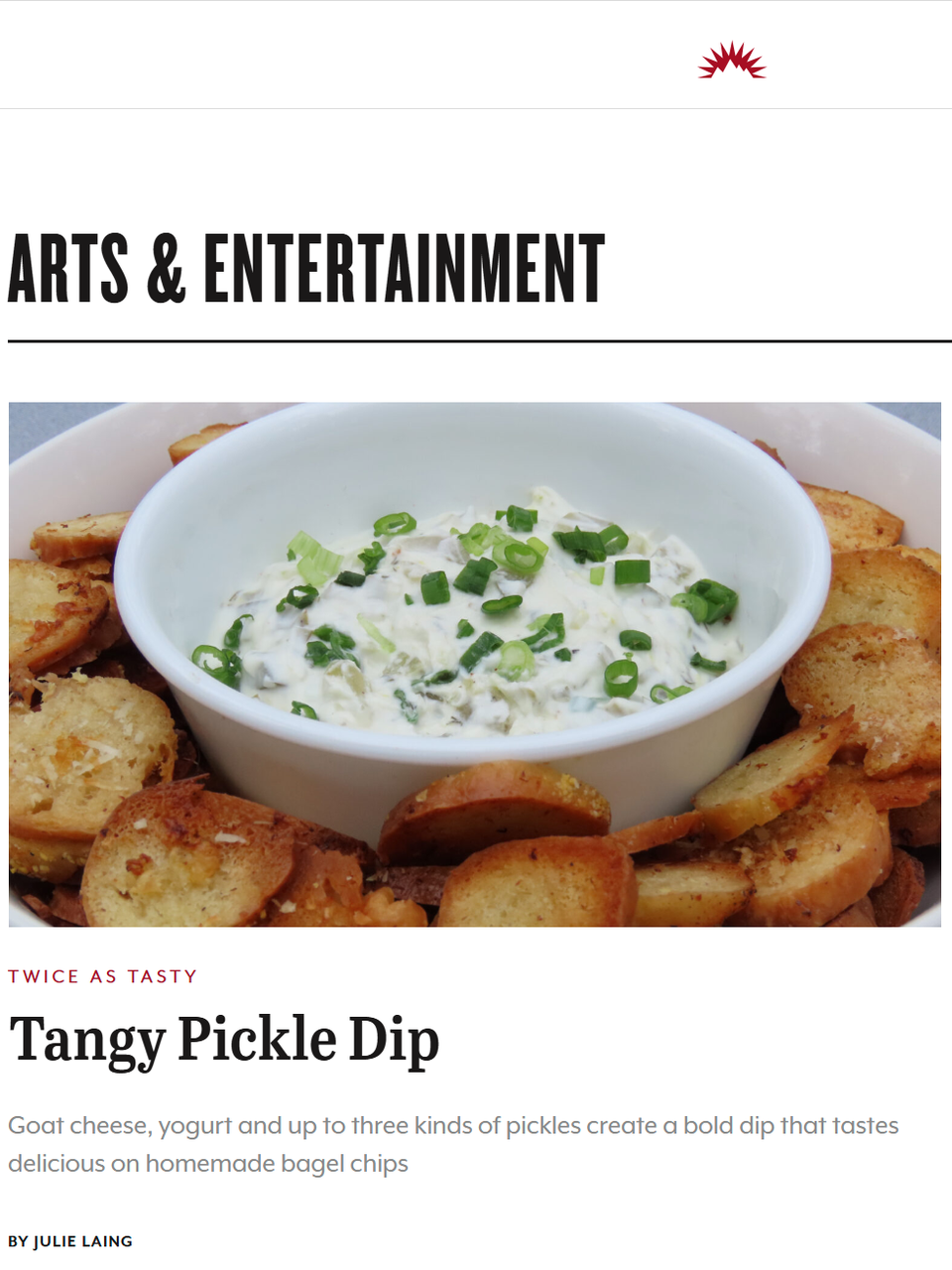
Tangy Pickle Dip

A dense creamy yet zesty dip and sourdough bagel chips promise to be a winning combination at your next party. Learn more at TwiceasTasty.com.
With an array of pickles and fermented foods in my refrigerator, I often find myself mixing and matching flavors. Fermented dairy and pickled vegetables pair particularly well, so I don’t think twice about combining yogurt and pickles with canned tuna for tuna salad sandwiches on homemade sourdough bread or piling pickled onions, fermented jalapenos, and sour cream on nachos. As I share this week in my Twice as Tasty column for the Flathead Beacon, pickles become even bolder when mixed with goat cheese as a dip or spread.

I prefer goat cheese to cream cheese or mayonnaise in Tangy Pickle Dip because I think it holds its own against sour fermented or vinegary fresh cucumber pickles, whereas cream cheese tends to hide in the background and mayonnaise tastes too much of egg. This is especially true when you use pickled garlic and chilies. And unlike mayonnaise, goat cheese has a density that helps it cling to my favorite pickle dip dippers: Parmesan Sourdough Bagel Chips.
Learn to make Tangy Pickle Dip

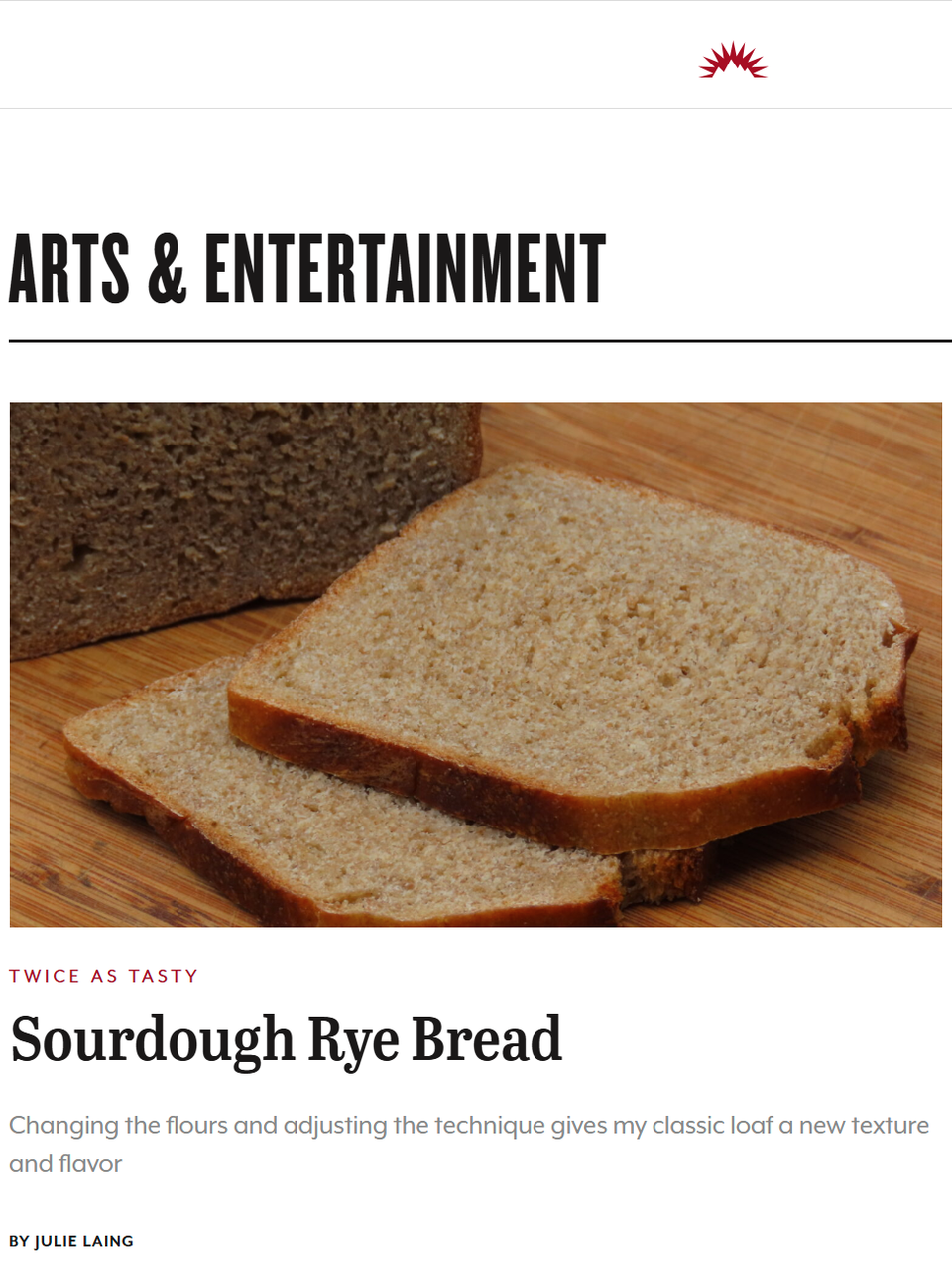
Sourdough Rye Bread

Rye flour and wild yeast provide all of the flavor in a dark, tangy bread you can bake freeform or in a loaf pan. Learn more at TwiceasTasty.com.
My time in Russia taught me to savor dark rye bread with a tangy flavor. The ratios and process used to create this bread were mysteries, because subsidies made the mass-produced loaves so affordable that I knew no one who baked the rye bread at home and had a recipe to share. It simply tasted of basic ingredients and some type of sourdough culture. When I returned to America and started baking with sourdough, I began my own experiments to create the loaf I share this week in my Twice as Tasty column for the Flathead Beacon.

I initially tried an all-rye loaf and baked several flat, hard bread discs before I settled on the most effective combination of flours: white, whole wheat, and rye. I feed my 100% hydration starter white wheat flour, and including a bit more in the dough gives it much needed elasticity. Instead of the extra ingredients often found in rye breads, like instant coffee, cocoa powder, caraway, and corn syrup, I let the rye flour and wild yeast provide all of the flavor. The loaf tastes distinctly different from my all-wheat Sourdough Cabin Bread, but the overall ratios, process, and timing remain nearly identical.
Learn to make Sourdough Rye Bread

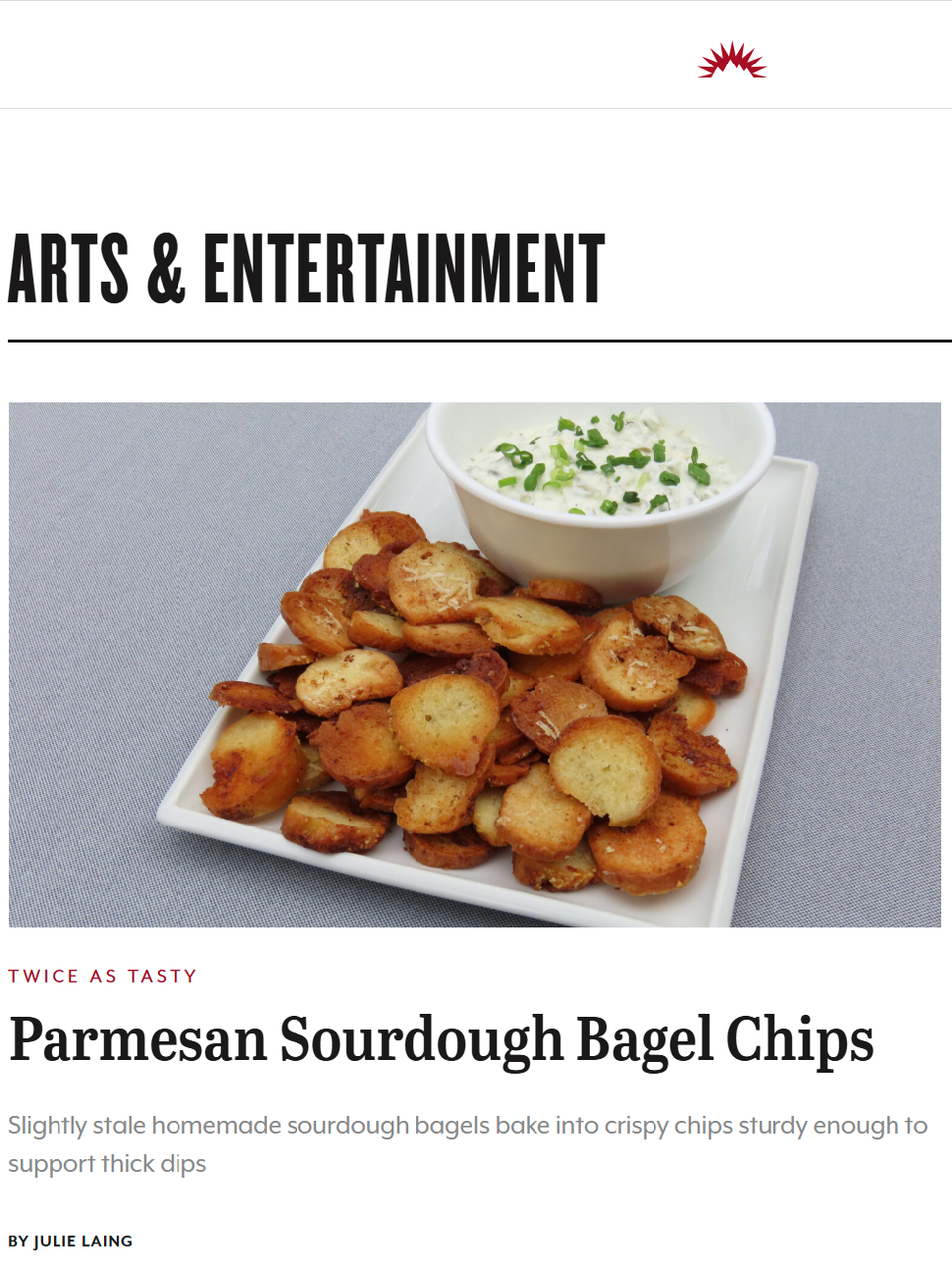
Parmesan Sourdough Bagel Chips

After a disappointing snack of store-bought bagel chips, I had to turn some of my next sourdough bagel batch into a homemade version. Learn more at TwiceasTasty.com.
I have to admit that bagels rarely go stale at my house. Even when I bake a full-dozen batch of Sourdough Bagels, we eat them before the week’s end as breakfast and lunch sandwiches. But after a disappointing snack of store-bought bagel chips, I had to turn some of my next sourdough bagel batch into a homemade version, which I share this week in my Twice as Tasty column for the Flathead Beacon. They are so delicious that I might have to start making double batches of bagels just so I can have the dense rolls and crispy chips on hand.

Sourdough bagel chips are just as easy to make as Twice-Baked Sourdough Pita Chips and just as irresistible as a crunchy snack. Along with the recipe in my column, I offer plenty of topping ideas, for both the original boiled bagels and the second baking into chips. Of course, I recommend making the bagels yourself with a sourdough starter, but you can bake store-bought bagels into chips in the same way.
Learn to make Parmesan Sourdough Bagel Chips

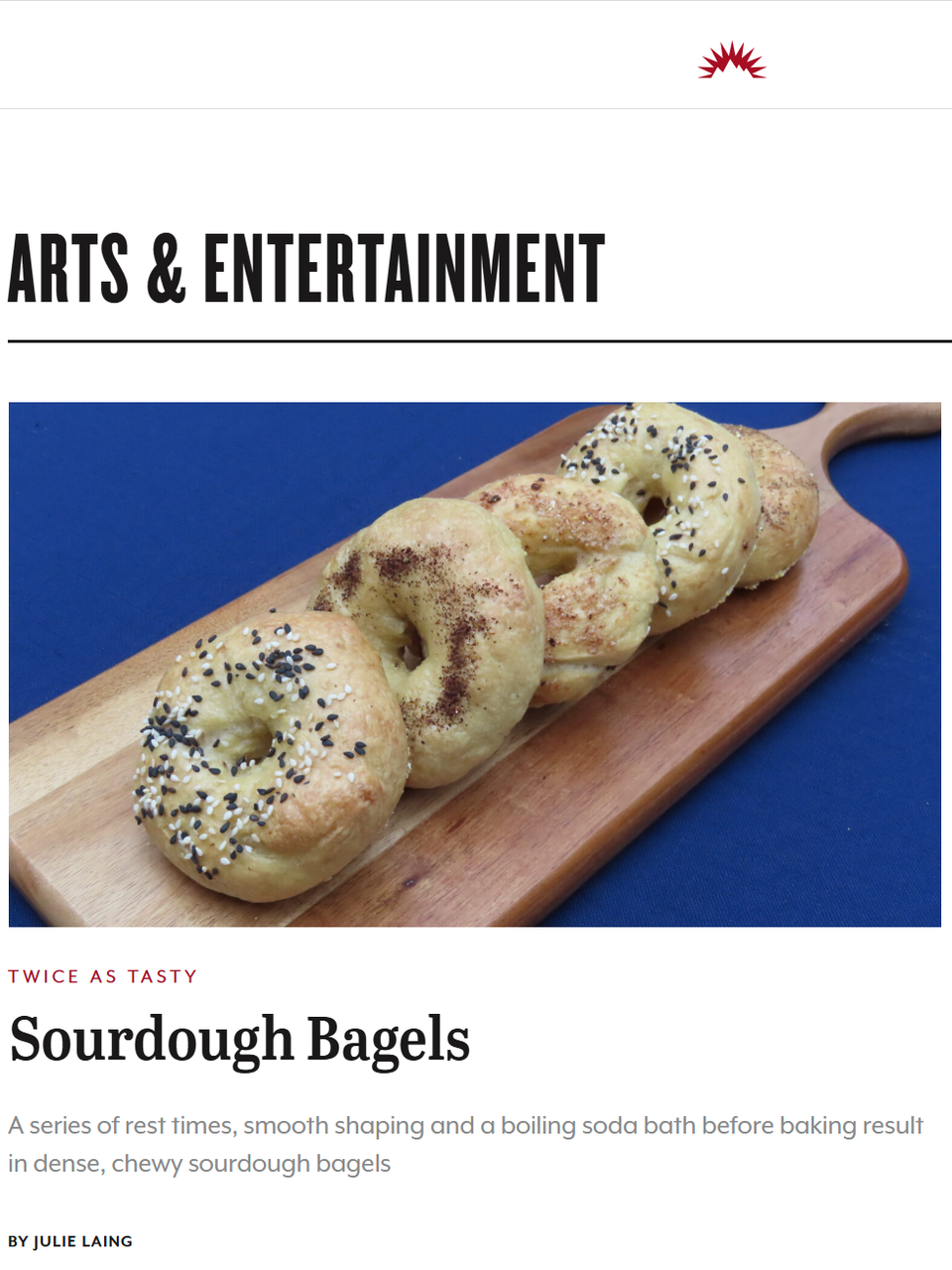
Sourdough Bagels

Over years of making sourdough bagels, I’ve adjusted my technique to minimize tools and active time and consistently created the classic bagel shape. Learn more at TwiceasTasty.com.
Sourdough bagels are a multistep process, as you can see in this week’s long recipe in my Twice as Tasty column for the Flathead Beacon. But that’s bagels in general, whether you make them with active dry or wild yeast. If you want dense, chewy bagels, you need to boil and then bake the dough.

I learned when I first started making sourdough bagels that many commercial bakeries steam rather than boiling, which creates soft, fluffy bagels that seem more like hamburger buns. Immersing the dough in boiling water causes its starches to gel and form a firm crust over a dense interior after baking. This step is particularly important with long-ferment sourdough, which becomes so stretchy and acidic that it wants to rise—and then potentially deflate—if it goes straight into the oven.

Over years of making sourdough bagels, I’ve adjusted my technique to minimize tools and active time and consistently created the classic bagel shape. So the recipe in this week’s column is really Sourdough Bagels 2.0.
Learn to make Sourdough Bagels

Low-Gluten Sourdough Naan

A traditional sourdough starter can be used to make bread that’s more easily digestible than mass-produced versions. Learn more at TwiceasTasty.com.
When I first started sharing my sourdough recipes and teaching sourdough workshops, I was often asked about gluten-free baking. I experimented with a gluten-free sourdough starter and discovered a completely different behavior and interactions of the wild yeast and flour. I had to make so many changes to the ratios and techniques that simply substituting a gluten-free starter for a traditional one was not possible.

Instead of becoming an expert in gluten-free sourdough, I learned more about how a traditional sourdough starter could be used to make bread that’s more easily digestible than mass-produced versions. As I explain this week in my Twice as Tasty column for the Flathead Beacon, mixing in low-gluten flours and extending the fermentation time encourages the wild yeast to break down the proteins that some people find challenging to digest.
Learn to make Low-Gluten Sourdough Naan

9th Annual Sourdough Month

Make sourdough baking fit your lifestyle without being overwhelmed by copious volumes of starter and endless loaves of bread. Learn more at TwiceasTasty.com.
Happy New Year! What better way to start it off than with the yeasty, tangy aroma of baking sourdough? Since 2017, I’ve dedicated January to the joys of keeping and baking with a sourdough starter. This year, in my Twice as Tasty column for the Flathead Beacon, I’ll share some of my favorite doughs that use different types of flour to make flavorful flatbread, loaves, and other baked goods.

My sourdough starter has been going strong since 2014. Through feedings after my own baking and sharing the starter with others—hundreds of new bakers around the world over the years—it has developed into a robust and lively wild culture. I explain in this week’s column how I’ve made sourdough baking fit my lifestyle without being overwhelmed by copious volumes of starter and endless loaves of bread, as well as how easily my starter wakes up when I leave it in the fridge for weeks at a time as I travel. I also share ways to get free sourdough starter so that you can make the recipes I’ll be providing this month.

Read more about requesting free sourdough starter and baking with it

Tom and Jerry Cocktail

As we approach the end of the year, I bring out special beverages that I won’t make again until next December. Learn more at TwiceasTasty.com.
As we approach the end of the year, I bring out special beverages that I won’t make again until next December. They include the warm cocktail I shared this week in my Twice as Tasty column for the Flathead Beacon, which hits the spot on any chilly winter night and is worthy of any gathering with friends and family.

I learned about the Tom and Jerry cocktail relatively recently, when I wanted to serve a warm version of my typical eggnog. It starts with a batter, which you can make in advance and refrigerate for days but really tastes and looks best when freshly whipped. You float it as a foamy top over a hot toddy made with water, milk, or another hot beverage and the drinker’s choice of alcohol. As you sip, the cooler foam and warm liquid mingle silkily on the tongue.
Learn to make a Tom and Jerry Cocktail

Cheese-Topped Baked Polenta

Homemade stock and dried herbs give polenta enough flavor to stand on its own yet remain neutral enough to take any of my favorite sauces. Learn more at TwiceasTasty.com.
My husband George will happily eat a bowl of noodles or a baked potato seasoned with just butter and cheese. Give me a simple, starchy base like pasta, rice, potatoes, or cornmeal, and I will bury it in a deeply flavored sauce every time. With the polenta recipe I share this week in my Twice as Tasty column for the Flathead Beacon, I can satisfy both of us.

Homemade stock and dried herbs give polenta just enough flavor to stand on its own, especially when baked or grilled and smothered in cheese. Yet it remains neutral enough to take any of my favorite sauces. I’ve served polenta as a bruschetta-like appetizer, a holiday side dish, and the base layer for a weeknight meal—and then snacked on the leftovers like cornbread. I often make a double batch of polenta and serve half straight off the stove in its soft, porridge-like form. I spread the rest in a baking pan and refrigerate it until the next day to bake and serve as an entirely different meal.
Learn to make Cheese-Topped Baked Polenta

Old-Fashioned Gingerbread Cookies

I share my recipe and tips for gingerbread and other holiday classics in my latest Flathead Beacon, Simply Recipes, and USA Today 10Best articles. Learn more at TwiceasTasty.com.
It’s hard to imagine celebrating the winter holidays without a little gingerbread in the mix. The combination of molasses, ginger, and other spices creates cookies and loaf cake that seem made for cozying up next to the woodstove and watching the snow come down.

The gingerbread cookie recipe I share this week in my Twice as Tasty column for the Flathead Beacon is an old one that I’ve made bolder with extra spices. When I want an even stronger ginger flavor—any time of year—I make Triple Gingersnaps or Triple Ginger Cake. But expanding just the ground spices gives traditional cookies a little kick yet keeps them smooth and ideal for decorating.
Learn to make Old-Fashioned Gingerbread Cookies