Pot Beans

Put the most flavor in your beans. Get Seasoned Pot Beans and Red Beans and Rice recipes at TwiceasTasty.com.I didn’t get hooked on dried legumes until I discovered pot beans. The preparation style evolved from frijoles de olla, traditionally cooked in earthenware pots in Mexico. Instead of cooking dried beans in 2 stages—once in pure water until soften and again with ingredients that give them flavor—everything is thrown into the pot with the soaked beans. As soon as they’re done, dinner is served.

Pot beans absorb broth and seasonings yet remain adaptable to almost any bean dish. Suddenly, cooking up a pound of dried beans seems worthwhile. Imagine: Before going to bed Sunday night, you spend 3 minutes setting the beans to soak. After work Monday, you give them a rinse and toss them back into the pot with some onion, carrot, garlic, herbs, and stock. About an hour later, you have your first meal: Seasoned Pot Beans. You also have the basis for many quick meals the rest of the week. Huevos rancheros. Beans on toast. Asian bean dip. Hummus. Quesadillas. Corn, Bean, and Pepper Salsa. Burritos. Myriad soups. Sourdough Empanadas. Louis Armstrong’s favorite Louisiana-style red beans, perfect for Fat Tuesday. The list goes on—and I’ll be adding to it all month.
Learn to make Seasoned Pot Beans and Red Beans and Rice
Digging into Dried Beans

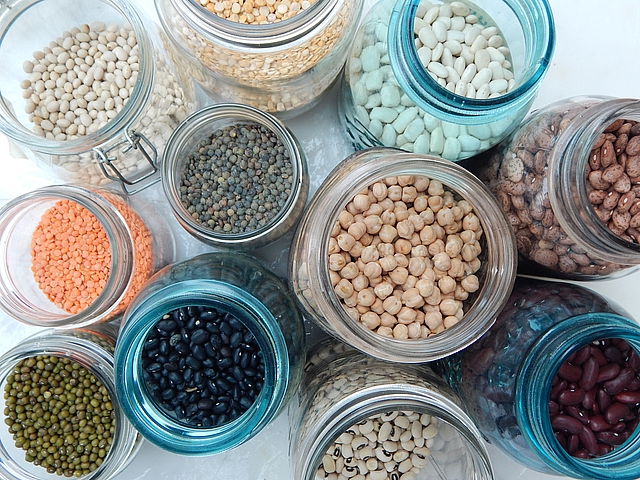
People seem to have a love it or leave it relationship with beans. If you love them, you’ve probably had them cooked right. Read more about cooking beans.People seem to have a love it or leave it relationship with beans. If you love them, you likely have an underlying reason: they’re cheap yet filling, you’ve cut other proteins from your diet, or you grew up in a household, community, or culture that saw beans as a staple. Madhur Jaffrey starts her 750-page World Vegetarian cookbook with a section on dried beans. Louis Armstrong loved his beans so much he closed letters with “Red Beans & Ricely Yours.”

But the primary reason people love beans is that they’ve had them cooked right. Well-cooked legumes don’t just pack a nutritional punch; they have delicious flavors and textures and can be adapted to any meal, from breakfast to dessert. Unfortunately, people who rarely eat beans often only do so by cracking open a can and being immediately disappointed by the texture and taste—and the aftereffects. “The more legumes you eat the more you can eat them,” Jaffrey writes in her chapter on dried beans. And the more you know about how to cook beans, the more likely you are to eat them.
Read more about cooking beans

The Sourdough Giveaway Successes

As the first Twice as Tasty Sourdough Giveaway Experiment comes to a close, there’s only one word to describe it: success. Read more about the experiences of new sourdough bakers. (Photo by Vicki Faulkner)As the first Twice as Tasty Sourdough Giveaway Experiment comes to a close, there’s only one word to describe it: success. When I announced that I would be sharing my sourdough starter for free, people immediately began sending me their SASEs and joining in the project. When I extended it a second month, even more envelopes requesting sourdough began to appear in my mailbox. Many of the new proud owners of a sourdough starter have been sharing their experiences and photos with me over the last month. I’m excited to share some of these with you and show you how easily new bakers took to their sourdough starter.
Read more about the experiences of new sourdough bakers

Sourdough Cinnamon Rolls

I love letting dough rise overnight to bake off for sweet breakfast buns. My creations haven’t always been successful—but this one is. Learn to make Sourdough Cinnamon Rolls with Buttermilk Glaze.Last week’s Sourdough Brioche post evolved out of a desire to make this week’s recipe: Sourdough Cinnamon Rolls. I’ve long loved letting dough rise overnight to bake off for sweet breakfast buns. But I’ve had some failures. I once overloaded a bundt pan with balls of frozen bread dough to make my mom’s favorite buttterscotch roll recipe—only to wake up and find the dough balls dangling rather obscenely outside the pan.

Initially, my cinnamon roll recipe was also unappealing—but for its flavor, not its looks. The plan was to use pizza dough. I’d read about such conversions on various blogs and websites, with titles like Easiest Cinnamon Rolls Ever and Shortcut Cinnamon Rolls. My attempt resulted in spiral-wound, cinnamon-tinged… pizza crust.

So although a handy ball of pizza dough seems like an easy shortcut, you’re better off learning to make last week’s delicious Sourdough Brioche Dough. It won’t just turn into the best hamburger buns you’ve ever tasted; it will turn into breakfast buns that taste and feel like cinnamon rolls.
Learn to make Sourdough Cinnamon Rolls with Buttermilk Glaze

Sourdough Brioche

Buttery, rich, and sourdough? It may not be traditional, but brioche doesn’t get much better than this. Learn to make Sourdough Brioche Dough and Sourdough Buns.One of the beauties of making your own bread is that once you’ve mastered a dough recipe, you can often use it in many ways. As you saw last week, a ball of Sourdough Pizza Dough can take many shapes: pizza pies, calzones, empanadas, and even breadsticks. Brioche is just as versatile and delicious.

Sourdough brioche may seem as much of an oxymoron as bread master Peter Reinhart’s whole-wheat brioche. But I see it as adding just another layer of flavor to an egg- and butter-rich dough. Once you’ve learned the basic recipe, you can use it to make any number of breads with various flours, sweetness levels, and shapes. I’ve just begun my brioche dough adventure, working it into buns and sweet rolls, but Reinhart recommends using it in everything from bread pudding to toast points to savory tarts. I see more Twice as Tasty brioche-style recipes on the horizon—starting with Sourdough Cinnamon Rolls next week.
Learn to make Sourdough Brioche Dough and Sourdough Buns

Beyond Pizza

I learned to appreciate calzones and empanadas by baking pizzas at home. If you love deep toppings and excessive cheese, you’ll want these recipes. Learn to make Sourdough Calzones and Empanadas.I didn’t appreciate calzones until I started baking beautiful pizzas at home. Before my homemade pizzas achieved elegance, they tended toward soggy masses on soft, undercooked dough or slightly burned toppings over a cracker-crisp crust. Both variations resulted from the same problem: too many toppings at too low of a temperature.
I’ve learned not to compare pizzas baked in a home oven with fully loaded, wood-fire pizzas—and especially with those I ate in Naples. Kenji, lord of Serious Eats, puts it bluntly: “You’re never going to be able to produce a perfect Neapolitan-style pie in a home oven.” The crew at Bon Appétit is a bit less forceful yet just as adamant: “For those hefty pies to work, they need an ultra-sturdy crust and a really, really, really, really hot oven. Leave it to the pros and go simple.”

So as I teach all my workshop participants, whether grilling or baking your pizza, keep your temperature high and your toppings light. But if you’re a fan of deep toppings and excessive cheese, turn your pizza dough into calzones or empanadas.
Learn to make Sourdough Calzones and Sourdough Empanadas

Sourdough Excuses

Whatever your excuse for not baking with sourdough, it likely doesn’t apply to the way I care for and use sourdough starter. Read more about why you can—and should—bake with sourdough.
After I started blogging about sourdough, people began telling me how they’ve always wanted to bake sourdough goodies—and why they can’t. The excuses started piling up in earnest when I launched the Sourdough Giveaway Experiment last month. Although I’ve been busy sharing my own starter for free, far more people have told me they won’t be joining the party.

Many excuses seem valid, but they don’t apply to the way I advocate caring for and using sourdough starter. So I’m kicking off this year’s Sourdough Month at Twice as Tasty by debunking a few of the most common myths about baking with sourdough. I’m also extending the offer of free sourdough starter through January. I’ll be sharing new sourdough recipes all month, so check out the current collection of sourdough recipes, drool over the latest treats, and get your free starter.
Read more about why you can—and should—bake with sourdough

Winding Down Year 2

As 2017 winds down, it’s time to look back at a second year of Twice as Tasty and share a few things to come. Read more about what to expect in 2018.
Like any toddler, it’s hard to believe how Twice as Tasty has grown in a year. As 2017 winds down, indulge me in looking back at a second year of Twice as Tasty—or skip down the page to read about the year to come.

Twice as Tasty grew with 55 posts this year. The blog now offers 135 recipes and 25 pages related to techniques for preparing, storing, and eating well year-round. The number of email subscribers and WordPress and Facebook followers more than tripled in the last year, and membership in the companion Facebook group almost doubled. All I can say is “wow and thank you” for being so supportive.

Offline, I taught the first Twice as Tasty workshop in March and have followed it with a steady flow of classes. One of the most popular topics was beautifully featured in the local newspaper. The current roster boasts 16 workshops, including several seasonal ones, and I’m preparing to launch more options next month. With your participation, I hope to teach even more workshops in 2018.
Read more about what to expect in 2018

Holiday Spice

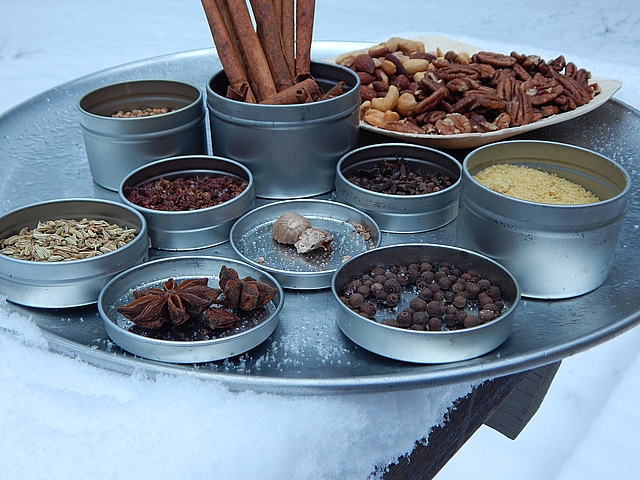
Sweets top the list of foods given at the holidays, so some of my favorite “small” homemade gifts are short on sugar yet big on taste. Learn to make Sweet Spice Mix and Sweet and Spicy Nuts.
I like giving homemade food gifts. They’re appreciated by everyone: the child with a sweet tooth, the apartment dweller without room to garden, the new mom too busy to can, the grandparent who simply doesn’t need more stuff. But food gifts are also perfect for people you want to thank with something thoughtful that won’t break your year-end budget: your hairdresser or favorite coworker, your child’s soccer coach or piano teacher, the neighbor who feeds your cat or helped jump your car. Chances are none of these people need more candles, bath soaps, fridge magnets, or Christmas ornaments. But they all need to eat.

The first food gifts that come to mind during the holidays are cookies, and it’s certainly easy to stretch a batch as you prepare treats for the family or an exchange. But if your giftee has dozens of clients or students, the sugar load can add up fast. Some of my favorite “small” gifts are short on sugar yet big on taste.
Learn to make Sweet Spice Mix and Sweet and Spicy Nuts

All-Occasion Cookies

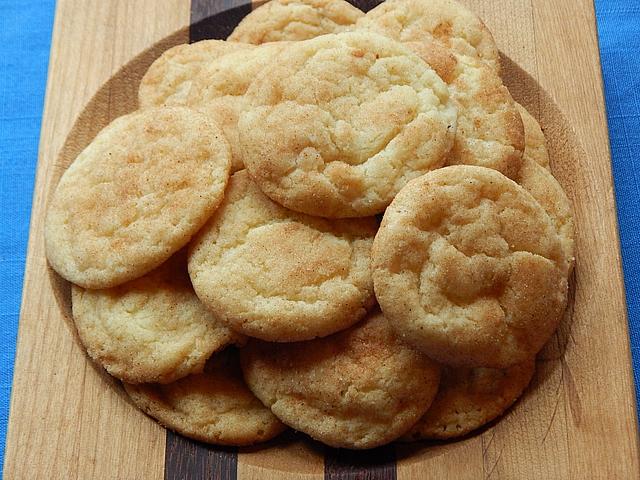
Holiday cookies can take work, and sometimes you want simple yet delicious sweets worthy of the tray. That’s where this week’s recipes come in. Learn to make Triple Gingersnaps and Snickerdoodles.
It’s hard to imagine the winter holidays without cookies. But what is a Christmas cookie? Ask three people to name one, and you’ll likely get three answers. Still, the answers likely have things in common. They probably require special tools or rich ingredients. They likely involve loads of time messing with cookie cutters, icings, and extra decorations. Most of all, they—and all the other cookies on the holiday tray—are likely only made once a year.

Despite the effort that goes into Christmas cookies, I’m often overwhelmed by layers and sugar and, after the third pass of the tray, want something just a little sweet and a little simple. That’s where this week’s cookies come in. They’re simple enough you can make them any time of the year. They’re also easy to make ahead, freeze, and pull out freshly baked just before serving. And they’re still so delicious they can hold their own among fancier creations.
Learn to make Triple Gingersnaps and Snickerdoodles