Fruits of Summer

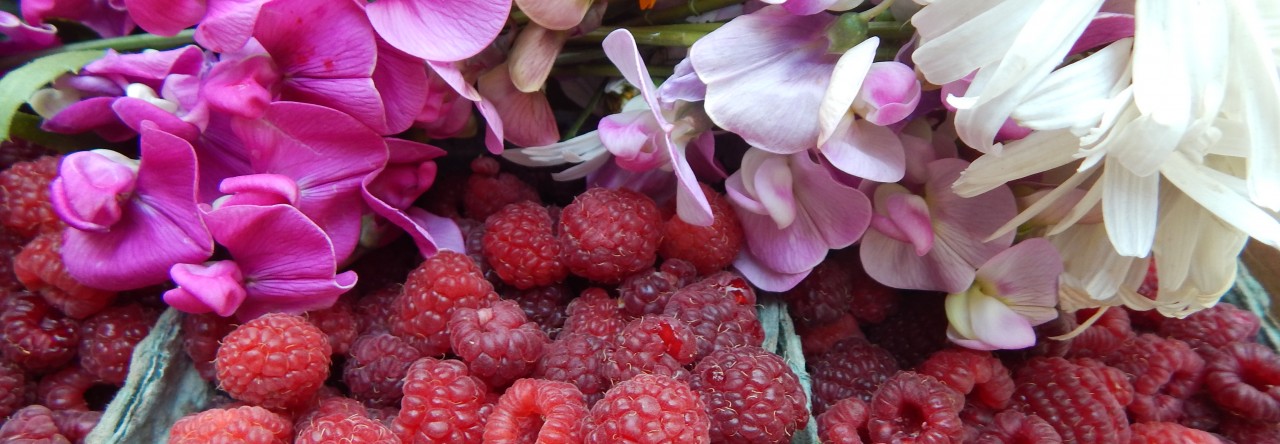
June has me craving garden sweets. Rhubarb has been gracing my table for weeks; now strawberries are reddening to join it. In warmer areas, you’re probably anticipating blackberries, blueberries, and tart cherries before the month is out. As we roll into July, raspberries, apricots, and early plums will all start to appear. It’s hard to resist summer’s sweet bounty.

It’s also hard to overcome the desire for fruit out of season. Although American grocery stores stock nearly every vegetable imaginable all year, some fruits can be harder to come by outside their harvest window. Those that do appear year-round, or close to it, lack that fresh summer flavor that makes them so appealing. How they are grown is also of concern; more than half of the Dirty Dozen list (foods with the worst pesticide residue based on USDA and FDA data) is fruit. These are all good reasons to grow—and save—fruit yourself.
Read more about preserving the fruits of summer

Frittata

If you like quiche but hate to roll crust, or if you crave omelets but your homemade ones always turn into scrambled eggs, you really should be making frittata. This crustless quiche or open-face omelet is just as adaptable to the ingredients you have on hand as its more finicky cousins. You can eat it at any meal and serve it as a tapa or a main. What’s not to like?

My first memorable frittatas were made by a Spanish woman running a hostel in Greece, so in my mind a frittata must have potatoes and the best additional ingredients are homegrown tomatoes, onion, bell pepper, and basil and homemade feta. I include the potatoes in my base recipe, but you can easily drop them and highlight other ingredients—or just use whatever’s in your fridge. Before summer crops explode, I tend to fill my frittatas with baby chard or spinach and herbs.
Learn to make Basic Potato Frittata and Spinach and Herb Frittata

Herb Infusions

Salt and sugar get a bad rap for their effects on our bodies when consumed in large quantities, but their ability to act as a preservative is often underappreciated. Salt and sugar prevent spoilage and make it difficult or impossible for undesirable bacteria to grow. The rule of thumb for salt curing is that 20% salt keeps most undesirable bacteria at bay.

Although dehydrating and freezing are the most common ways to preserve herbs, the rising popularity of artesian salts and infusions has brought attention to herbs preserved in salt or sugar. The preservative pulls moisture from the herbs while keeping their flavor intact. Leaves plucked from the jar can be used as though they were fresh. The remaining herbed salt works best as the finishing touch, but infused sugar can also work within a recipe. A little of the flavored salt or sugar goes a long way, and the herbs keep a long time.
Learn to make Salt-Preserved Herbs and Herb-Infused Sugar

Freezing Herbs

If I could have only one garden, it would teem with herbs. Many of these easy-to-grow plants survive any climate or soil and are among the first shoots to appear each spring. Most are either perennials that return without fail or annuals that self-seed so readily one seed packet produces a perpetual crop. Herbs thrive on usage; the more you snip and pluck, the happier they become. Although the plants are rarely showy, a garden that contains herbs and edible flowers such as nasturtium, calendula, and viola is as delicious to look at as it is to harvest from.

Although fresh is best, herbs are easily saved for meals year-round. A little goes a long way, so even a couple of balcony pots will likely produce enough for use throughout the season. Many herb savers dehydrate their harvest, but some herbs, like chives, taste better when frozen.
Learn how to freeze chives and make Herb Butter

Asparagus

In our garden, asparagus kicks off the edibles’ season. Only herbs like chives and mint beat it to the mark. With these perennials, there’s minimal work involved once the plants are established. Simply wait for them to start popping out of the ground, and you know it’s time to get to work in the rest of your beds.

Hands down, my favorite way to eat asparagus is grilled. It’s so easy to prepare and is a fabulous accompaniment to anything else you would throw on the grill. It also works beautifully on pasta, in risotto, or over salad greens. We often gobble it all up fresh, saving only a little for refrigerator-pickled asparagus, but sometimes we can’t keep up and the spears get tough. It’s a perfect excuse to turn those spears into a puree that can be used to flavor sauces, soups, and rice dishes after the plants have stopped producing.
Learn to grill asparagus and make Asparagus Puree

Breakfast at Tiffany’s (aka the Garden)

It’s early May, and the growing season looks so promising: You’ve weeded beds, added compost, and attached hoses. You’re buying starts and scattering seeds. Your garden looks neat and orderly, the rain’s handling your watering, and after winter’s gray you’re thrilled by the first daff blossoms and garlic shoots.

Fast-forward to late July, and it’s a different story. Your garden has exploded, or perhaps imploded. Weeds threaten to outpace desirables in every corner. Early plants have gone bitterly to seed, and late ones are suffering heatstroke. One day your basil gets a sunburn; to compensate, you overwater and drown your tomatoes. You’ve got 6 activities crammed into every weekend, and your planned garden-fresh dinner is supplanted by takeout. You look out the window, afraid to go deeper into your neglected garden. Why did you do this again? Here’s my secret to enjoying this personal jungle.
Read more about my secret to enjoying this personal jungle

Yogurt Dips

Homemade cheese and yogurt are delicious not just on their own but also when featured or even a footnote in other recipes. Bring a tray of homemade dips, cheese, and sourdough bread to a potluck or party (or house concert), and guests immediately compliment your tasty contribution. Then when someone asks what’s in the dip, say, “homemade yogurt”; eyes brighten, jaws drop, and people dig back into the bowl. At least, that’s my experience.

I’ve long been a fan of tzatziki, and it’s among my favorite ways to showcase homemade yogurt. A tangy fresh batch makes the dip pop—so much so that I cut back on the lemon juice. Although traditionally made with sheep’s or goat’s milk, draining a cow’s milk yogurt until it’s thick works beautifully. Just a tablespoon or two of the same thickened yogurt gives a surprising creaminess to other dips, especially ones featuring beans.
Learn to make Tzatziki and Asian White Bean Dip

Curds and Whey

Once you start making cheese, you’ll quickly realize you’re left with a large quantity of whey—so much you’ll be loath to just pour the yellowish liquid down the drain. Fortunately, whey has many uses. You probably already consume more whey than you realize: it’s popular in protein powders, weight-loss beverages, and even infant formula. Cheese makers have long known the value of this by-product and use it to make more cheese, like ricotta and my favorite gjetost.

Whey is considered sweet or acidic. Hard cheese and Fresh Yogurt give you sweet whey; Lemon Cheese gives you acid whey. Some sources prefer sweet whey for baking, but I love tangy flavors. I use the whey from Lemon Cheese in baked goods, as a cooking liquid for rice, a stock substitute in soups, and a cheese sauce replacement for soups and pasta.
Learn to make Whey Sauce and the Cheesiest Mac and Cheese

Cheese and Yogurt

Queso blanco, paneer, whole-milk ricotta, farm cheese, lemon cheese—they’re the same cheese by different names. Even where recipes for them may vary, they share two features: all form curd through the addition of an acid, and all coagulate because they are heated above 176°F, the temperature at which the milk protein casein “sets.” This makes Lemon Cheese, my preferred name because I like to use lemon juice to form the curd, surprisingly simple and easy to make. This recipe is also a great first cheese because you need few special tools or ingredients: just cheesecloth, a thermometer, and ideally cheese salt. You can make about 2 pounds of cheese from a gallon of milk, but I prefer to use some of that gallon to make yogurt.
Learn to make Lemon Cheese and Fresh Yogurt

Fresh Homemade Dairy

My first experience with making dairy products at home was yogurt. Long before Greek yogurt was popular in the United States, my travel bug had given me an insatiable craving for the thick, creamy fermentation. A hostel owner turned me on to a local maker of sheep’s milk yogurt, which I then ate mixed with honey and topped with fruit almost every morning I was in Greece.

American yogurts paled by comparison, so back home, I searched for an alternative way to get my Greek yogurt fix. I could strain almost any yogurt to approximate the consistency, but only expensive ones got me in the right flavor neighborhood. Then I learned all I needed was a little bit of good yogurt and a gallon of milk: Even with cow’s milk, homemade tasted better and was more affordable than anything I could buy. Which of course led to the question, Could cheese be this easy?
Read more about homemade cheese and yogurt