Bean Snacks

Homemade bean snacks shine as both party treats and everyday munchies. Get healthy snack recipes at TwiceasTasty.com.
We often think of beans in two stages: rock-hard dried beans and soft cooked or canned legumes. But there’s a third stage that will have you reaching for beans instead of potato chips or cheese puffs: the crunchy stage. If you’re a fan of healthy snack substitutes, you’ve probably bought bags of chips, crisps, crackers, or other snacks made from legumes. But there are plenty of advantages to making your own.

Commercial brands likely have more salt, sugar, and other additives than you expect, and some versions rely on deep-frying for crispness. By making your own, you control all of those factors; and let’s face it—if you’re eating a snack because you think it’s healthier, it really should be healthier. Even the healthiest commercial bean snacks tend to come in single-use packaging that’s unhealthy for our planet. You’ll pay a pretty penny for them too.

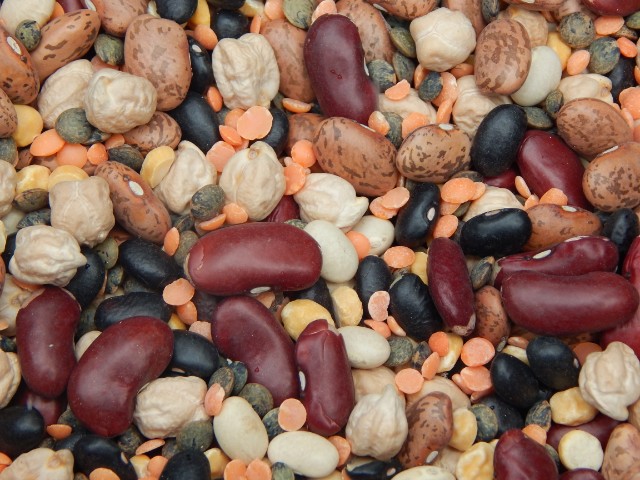
I started experimenting with homemade bean snacks for Twice as Tasty Live events, and they’ve become favorite everyday munchies. Larger beans, like chickpeas, we eat out of hand, but smaller ones, like lentils, are best spooned onto other dishes.
Learn to make Baked Chickpea Snacks and Crunchy Baked Lentils

Bean Soups

Soups fill our winter evenings, and the most filling ones start with beans. Get bean soup recipes at TwiceasTasty.com.
Soups fill our winter evenings, and the most filling ones start with beans. I love cooking with dried beans and tend to store many types in quart jars—which means I often have jars with just a scoop of beans left that I want to use up before I restock. Fresh Mixed-Bean Soup is the perfect option. You can use just about any bean in it, including lentils and split peas; the more variety, the more color and texture in the final soup. I often start by emptying as many jars as I can and then adding whatever beans I have in larger quantities, 1/2 cup at a time. Sometimes I even toss in leftover pearl barley.

In many ways, a soup with many types of beans resembles the bean soup mixes you can buy prebagged and tied with a pretty ribbon. But you’ll spend a lot less money if you buy the beans separately in bulk. You’ll also save money and have more control over the salt content and other additives if you started with dried instead of canned beans. And once you start cooking with dried beans, you’ll discover plenty of other uses for them, including—on this blog—pinto or kidney beans in Red Beans and Rice, black beans in veggie burgers, and chickpeas in falafel and this week’s other recipe, a Moroccan bean soup.

Learn to make Fresh Mixed-Bean Soup and Harira

Chili Paste

Harissa is so simple to make that you never need to be without a jar. Get spicy recipes at TwiceasTasty.com.

Many of my travel memories revolve around food, and what I ate during a month in Morocco lingers years later. My diet then was as it is today (mostly vegetarian with some fish thrown in), meaning I spent most of my time in country disappointing well-intentioned Moroccan women who wanted to celebrate my presence at their table with the rare treat of meat. Once they were convinced no one was being rude, we could all enjoy their everyday, mostly meatless meals. These simple dishes let the spices shine, and I soon learned to look for my favorite flavors at market stalls while I traveled from city to desert and back. One of my favorite snacks became a bag of olives heavily coated in a chili-and-spice blend known as harissa.

I discovered harissa in Morocco, but Tunisia often claims origination rights. Regardless, this spicy North African paste is served on everything from couscous to soup to toast, for the daring. I’ve tossed it with vegetables before roasting or, instead of Chermoula, with shrimp before skewering them for the grill. Harissa resembles sambal oelek, an Indonesian chili paste, but it can be harder to find in American stores. Fortunately, it’s so simple to make that you’ll stop seeking it out in specialty markets. You can make it any time of year, using fresh peppers in season and dried or even smoked ones the rest of the year—which is also fortunate, because you’ll never want to be without a jar.

Traditionally, harissa is preserved by an olive oil “seal” that is replaced each time you dip into the paste. I still store such sealed harissa in an airtight jar in the fridge to ensure it doesn’t spoil. It will keep that way for a couple of months, so I make it regularly in small batches.

Learn to make Homemade Harissa and Moroccan Shaved and Roasted Carrots

Sourdough Rye Bread

I craved tangy rye bread long before I started working with sourdough—or discovered a meatless Reuben. Get sourdough and vegetarian recipes at TwiceasTasty.com.
I was on a mission to make a tangy rye bread long before I started working with sourdough. It all began when I arrived in St. Petersburg, Russia, on one of the coldest days on record. I’d just come from Norway, where I’d fallen in love with gjetost, a whey-based goat cheese that’s the color of caramel, has the richness of fudge, and melts on your tongue. Before leaving the country, I splurged on a log so large you can’t find it in the States. It was usually served with dry crispbread in Norway. Once I was settled in Russia, I discovered my favorite pairing for the cheese: Russian black bread.

The rye bread I ate in Russian bore little resemblance to what’s typically labeled “Russian rye” in America: no instant coffee, no cocoa powder, no caraway, no corn syrup. It was simply flour, water, and salt, all leavened with a sponge or starter. In other words, a sourdough bread. The problem was getting a recipe. Bread was subsidized when I was in Russia; a rye loaf cost 33p (about $1), and no one I met in the city was making it at home. The bakers where I bought my bread clearly thought I was a crazy American when I asked for the recipe: they started spouting ratios I could barely understand that seemed to start with about 50 pounds of flour.
Learn to make Sourdough Rye Bread and Gorgeous Grilled Cheese

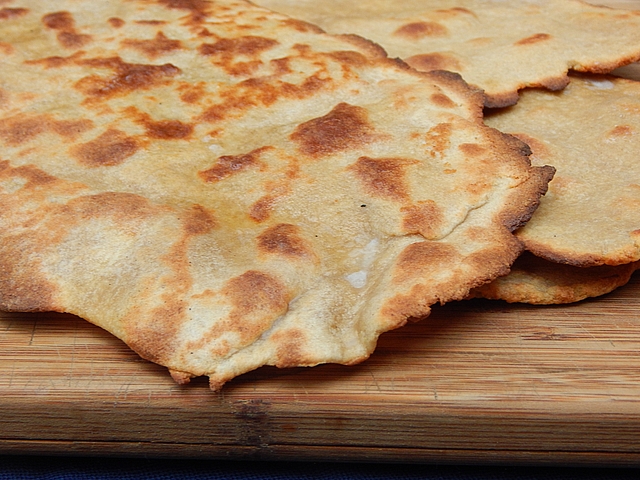
Sourdough Naan

I bake sourdough because it’s delicious. But many people find its tangy flavor because they have problems digesting other breads. Get sourdough recipes at TwiceasTasty.com.
I bake sourdough because it’s delicious. But many people discover its tangy flavor because they have problems digesting other breads. Studies have found that sourdough—particularly homemade, long-ferment sourdough—is not only easier to digest but may have bonus health benefits. It makes sense if you think about it: You feed your sourdough starter flour. It eats it, turning it into more wild yeast and healthy bacteria. When you use it to make a bread, the longer the dough sits, the more it predigests the flour for you. As it does this, the sourdough bacteria release micronutrients, neutralize phytic acid, and stabilize blood sugar levels. And this all makes the bread twice as tasty.

The upshot is that if you have a gluten sensitivity but have not been diagnosed with full-blown celiac disease, you may be able to eat homemade sourdough breads. I’m not a doctor or nutritionist, so you should discuss this with yours, but there’s disagreement on whether gluten-free products, particularly commercially processed ones, are better than their homemade, wheat-based counterparts if you don’t have immune reactions to gluten.
Learn to make Low-Gluten Sourdough Naan and Spiced Red Lentil Dip

Sourdough English Muffins

English muffins can combine tradition with the best aspects of sourdough and hollandaise. Get sourdough recipes at TwiceasTasty.com.
If you’ve been following along on Facebook or Instagram, you know I’ve spent weeks perfecting this Sourdough English Muffin recipe. Once I started researching recipes, I discovered people’s images of English muffins—including which ingredients to use and how they should be cooked—vary widely. I tested everything from extremely wet batters to baked muffins to rolls folded like Sourdough Brioche. After many practice batches, I developed the recipe I’m sharing here. It’s as close as I can get to the traditional English muffin process in my home kitchen while maintaining my favorite aspects of baking with sourdough: long ferment times, little handling, and smashing flavor and texture.

Despite its name, the English muffin’s closest kin is the crumpet; that’s probably why some English muffin recipes call for doughs so wet that they need to be cooked within a ring. The original creators baked the muffins on an open griddle; many modern recipes rely entirely on or finish in the oven to ensure the dough cooks through. I’m not sure who decided English muffins would be the perfect base for eggs Benedict, but we can all agree they pair beautifully with hollandaise.
Learn to make Sourdough English Muffins and Small-Batch Hollandaise

Peanut Butter

You’ll fall for these peanut butter cookies that can be enjoyed year-round and dressed up for special occasions. Get cookie recipes at TwiceasTasty.com.
Call it tradition, call it an excuse to eat sweets, but December calls most of us to bake cookies. My family’s cookie routine starts just after Thanksgiving, when we prepare Vanilla Bean Cookies and Chocolate Rum Balls so that they can “ripen” in time for Christmas. Many other cookies follow, with old favorites and new flavors filling the holiday platter when the family finally gathers.

Many holiday cookies only appear once a year, but I always add some all-occasion cookies to the plate. I tackled peanut butter cookies this year. These cookies have been around for close to a century, with most sources attributing the classic crosshatched pattern to a 1930s Pillsbury cookbook. But many recipes specifically avoid natural peanut butters and instead pile extra sweeteners onto commercial peanut butters already heavy on the sugar and hydrogenated oils. Recipes I’ve tried that call for freshly ground peanut butter turn out more peanut slab than cookie. By testing and tweaking basic cookie ratios, I came up with a version that can be enjoyed year-round and dressed up for special occasions.
Learn to make Freshly Ground Peanut Butter Cookies and Peanut–Ganache Thumbprint Cookies

Eggs

Custards and puddings let fresh ingredients shine even as they use leftovers. Get simple pantry dessert recipes at TwiceasTasty.com.
For this month’s recipes on cooking from the pantry, I use the word “pantry” loosely: it encompasses foods you keep on hand in your cupboards, your freezer, your refrigerator, and perhaps even boxes under your bed. With these basic ingredients, you can pull together dishes with little notice or effort, whether for breakfast, dinner—or now dessert.

Baked custard is a childhood favorite. My grandmother made it as an afterschool snack for me and my sister—and apparently for my mom, because I have it on an old recipe card in her first cursive writing. Custard needs such simple ingredients that even though you can make it from the cheapest milk and eggs on the shelf, local farm-fresh ingredients will take it to another level—one you can taste and see, thanks to a golden yolk. Rice pudding, a more filling variation on the custard theme, has the added benefit of using up leftovers.
Learn to make Golden Baked Custard and Baked Rice Pudding

Red Onion

Once you master how to grow and keep onions, onion marmalade and relish take a little effort but store well. Get savory spread recipes at TwiceasTasty.com.

Onions have been an unexpected challenge to grow and to keep. They appear easy: just pop them in the ground, watch them grow, pull them out, let them dry a bit, and shove them in a box. But appearances can be deceiving. Onion growth is linked not just to temperature but also to daylength—two factors that run to extremes in northwest Montana. I spent years buying ubiquitous onion sets and harvesting tiny bulbs that bolted easily before realizing that they would never reach full size before days grew too short, temperatures became too cool, and the growing season ended. The solution? Buy transplants.

Suddenly, the onion crop was huge. But this presented another problem: how to store them. Onions are traditional dry-storage vegetables and can handle a range of temps, from just above freezing to 50°F. The main issue is humidity: unless they’re in a dry space with only 60%–70% humidity, they’ll quickly soften and rot. My little cabin with its unheated mudroom has few such spaces. I grill and freeze many of my onions, but on big years I’m still left with many pounds to try to keep through winter. Savory spreads, such as marmalade and relish, take a little more effort but store well.

Apple–Red Onion Marmalade

  • Servings: 7 half-pint jars
  • Difficulty: 3
  • Print
1-1/2 pounds red onions, including papery skins
1-1/2 lemons
6 pounds underripe or tart apples
3 1-inch cinnamon sticks
4-1/2 cups water
3-3/4 cups apple cider vinegar (5% acidity)
4-1/2 cups granulated sugar

Pull the papery skins from the onions, setting them aside; remove and compost the root ends. Using a mandoline or sharp knife, thinly slice the onions, setting aside enough of the thinnest to equal 1 cup. Zest the lemon, adding the zest to the pile of sliced onions. Chop the remaining onions, onion peels, lemon, and apples, retaining the apple peels, cores, and seeds, and add them into a wide, 6-quart or larger pot. Drop in the cinnamon sticks, pour in the water and vinegar, and bring the mixture to a boil over high heat. Lower the heat to medium high, and cover loosely. Cook for about 30 minutes, until the apples break down and their peels separate from the pulp. Stir as needed to prevent burning.

Strain the juice as you would for Sweet Pepper Jelly: Set a fine-mesh or cheesecloth-lined colander over a large bowl, pour in the hot mixture, and let the juice drain for at least 30 minutes; stir occasionally, but don’t press down on the pulp. Set the colander on a plate and measure out the juice; you should have about 6 cups. If you come up short, return the colander to the bowl, stir in some hot water, and let the solids drain until you have the desired amount of liquid.

Clean the pot and add the juice and sugar; stir in the onion slices and lemon zest. Bring to a boil over high heat and cook, stirring often, for about 15 minutes, or until the marmalade sets when you test it.

Ladle into hot half-pint jars, leaving 1/4-inch headspace. Process in a boiling water bath for 5 minutes, plus your altitude adjustment. Makes about 7 half-pint jars.

Tips & Tricks
  • Although you could use other onions, red ones produce the most colorful marmalade. The onion skins give even more color, so use as many as you can—including those from red onions you might be peeling for another recipe (see below).
  • A zester that cuts citrus peel into long, thin strips matches the shape of thinly sliced onions. You can use a grater-style zester instead, but expect to see and taste flecks of peel.
  • If you’re growing apples, pick the ones you need for this and other jamming recipes, like Tomato–Apple–Basil Jam, before the first frost sweetens them; they’ll release more pectin into the mix. If you’re buying apples, choose tart ones, like Granny Smiths.
  • Unlike dense marmalades such as Fall Marmalade and Rhubarb–Orange–Ginger Marmalade, this recipe produces a jelly-clear marmalade with suspended solids. To ensure it sets, bring the mixture to 8°F above the boiling point of water at your altitude.

Once you master how to grow and keep onions, onion marmalade and relish take a little effort but store well. Get savory spread recipes at TwiceasTasty.com.

Twice as Tasty

Relish seems synonymous with hotdogs, hamburgers, and other meats, so it may surprise you to find it in my pantry. But this versatile spread is a cousin to chutney and often includes enough sugar to make it a distant relative of savory jams. If you’re trying to foster a love of pickles in family members, relishes can be a good place to start. Those who argue they don’t like relish have probably only ever eaten sugary cucumber relish and have no idea of the other flavors the condiment can hold.

Relish truly is a condiment, unlike pickles that can be laid on sandwiches or popped unadorned into your mouth. But that just expands its uses. Of course, it’s delicious spread on sandwiches or Black Bean Veggie Burgers and served on a party platter with freshly made cheeses and pita. But it’s also tasty alongside Sourdough Empanadas, mixed with Fresh Yogurt as a dip, and pureed and thinned with a little water to use as a glaze or dipping sauce for skewers of Pan-Fried Tofu or as a salad dressing for Basic Potato Salad.

Grilled Red Onion Relish

  • Servings: 7 half-pint jars
  • Difficulty: 2
  • Print
6 pounds red onions
2 red bell peppers
5 cups apple cider vinegar (5% acidity)
6 tablespoons granulated sugar
3 tablespoons molasses
2 tablespoons pickling or kosher salt
2 teaspoons turmeric
2 teaspoons smoked paprika
2 tablespoons yellow mustard seed
4 teaspoons coriander seed, crushed
2–3 dried chilies, minced
4 whole peppercorns, crushed

Peel the onions, reserving the skins for Apple–Red Onion Marmalade. Cut off the onion root ends and deseed the peppers, and then grill the onions and peppers. Let the vegetables cool enough to handle, and then dice; set aside. Combine all remaining ingredients in a large pot, and bring to a boil. Add the onion and pepper, return to a boil, and simmer for 30–40 minutes, until the onions are translucent but still have a firm texture. Remove from the heat.

Ladle into hot half-pint jars, leaving 1/4-inch headspace and trying to distribute the solids and any liquid evenly among the jars. Process in a boiling water bath for 10 minutes, plus your altitude adjustment. Makes about 7 half-pint jars.

Tips & Tricks
  • You can simply dice raw onion and pepper for this recipe, but grilling before preserving adds such a flavor boost it’s worth the time.
  • You can also skip the boiling water bath for this or any other savory spread designed for canning and simply store the jars in the fridge. If you’re giving them as refrigerated gifts, be sure write a note or add a gift tag that lets your lucky recipients know the jar is not shelf stable.
  • Lightly crushing the whole spices makes them easier to eat while maximizing flavor, and whole mustard seeds will soften yet pop in your mouth after the jars sit a couple of weeks. For a smoother relish with a lighter flavor, gather all of the whole spices into a spice bag and remove the bag from the relish just before processing.


Like what you’ve learned? To learn more in a Twice as Tasty workshop—in your own kitchen, among friends, and with my personal help—click here. If you’re not yet a Twice as Tasty subscriber, get this newsletter and weekly post notifications delivered straight to your inbox by clicking here.

Tried & True

These tools and supplies may help you make the recipes in this post:

  • This zester makes thin strips that hold their shape well through the canning process. They also look pretty in cocktails.
  • A digital thermometer that registers a high maximum temperature easily checks that your hot, gooey marmalade will set when cool. A dial thermometer can also work; just be sure it tops out somewhere above 212°F.
  • Your marmalade will splatter as it cooks down. Stirring often is the most helpful, but if you have to step away for a moment or find the stirring can’t keep pace with the popping bubbles, slap on a splatter shield like this one.

This post may contain affiliate links that help support this site. For more information, see the disclosure policy. Thank you for supporting Twice as Tasty.

Savory Spreads: Peppers and Plums

People have been making spreads with peppers and plums for a long time. Get jelly and chutney recipes at TwiceasTasty.com.
People have been making pepper jellies for a long time. Some claim they’re Southern in origin, with roots in Texas and an official Pepper Jelly Festival in Alabama. They vary widely in color (from green to golden to red), spiciness (from sweet to jalapeno to habanero), and texture (from smooth jelly to marmalade-like spreads flecked with pepper pieces). But to ensure they store well on the shelf and in the fridge, all contain a lot of vinegar and sugar.

Although many recipes focus on the heat of chilies, I prefer a sweet bell pepper base with just a bit of heat mixed in. Many pepper jelly recipes also use commercial pectin and distilled vinegar, both of which are neutral in flavor. I prefer the depth added by fruit pectins and vinegars, so as with other savory spreads, I turn to tart apples to help the jelly set. Fresh lemon adds even more flavor and pectin.
Learn to make Sweet Pepper Jelly and Italian Plum–Apple Chutney