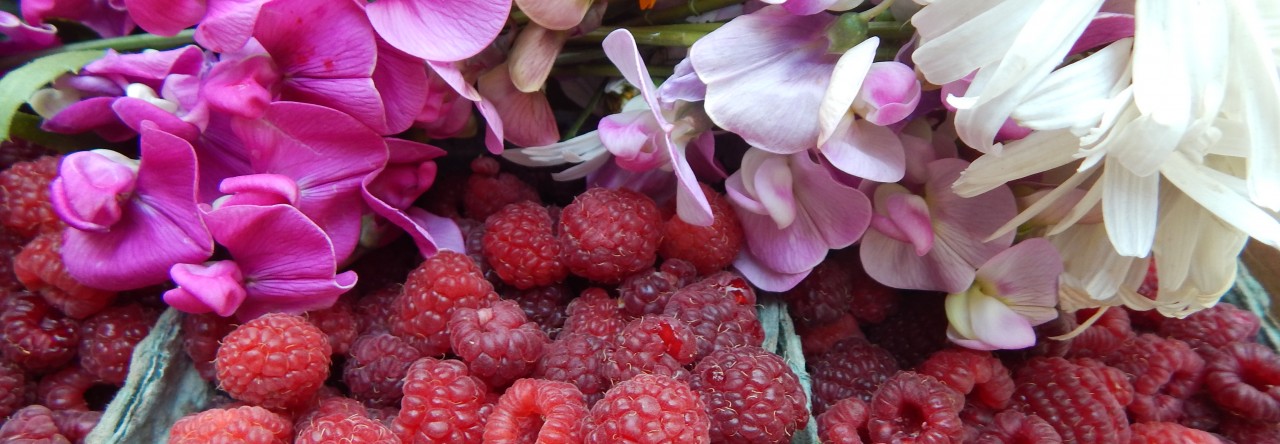
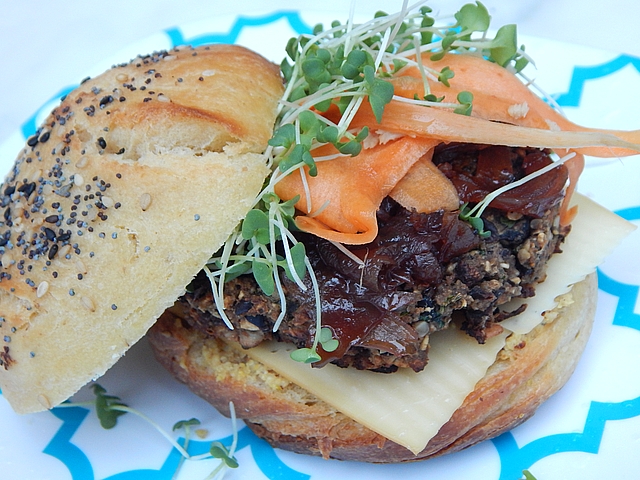
What do Bloody Mary mix, carrot-top salsa, yogurt whey muffins, and roasted raspberry jam have in common? All these delicious recipes rely on ingredients that typically head straight for the compost or sink drain. In the Twice as Tasty workshop at last weekend’s Free the Seeds fair, I shared ways to eat from top to root. Here I share my notes from the workshop, which include ways to give trimmings a second life, ban “discard” from your kitchen, and ultimately look at what heads for your plate versus your compost bin in a new way.
Read more about eating from top to root
Category: Refrigerating
Holiday Cheers

Every year, when nights start to crackle with cold and I’m cozying up to the woodstove, my alcohol tastes shift. Instead of a gin and tonic, I order an old-fashioned. We buy more bottles of whiskey and fewer bottles of tequila. And I even find space for the occasional rich milk-and-egg drinks like eggnog and its warm cousin, tom and jerry.
I’ve made many variations on eggnog over the years before settling on a quick recipe that makes a pair of drinks at a time, perfect for an evening in. You’ll note it uses raw egg. I always recommend fresh eggs from a well-kept flock, but I became even more confident in the recipe when I learned that a scientist at Rockefeller University found bacteria can’t stand up to a mixture of raw eggs and 20 percent alcohol.
Learn to make Homemade Eggnog and Homemade Tom & Jerry
Gifting Food

With the holiday season on your doorstep, you’re likely planning meals and buying and making gifts. If you’re like me, you’re preparing to give the gift of food. It may not sound as sexy as an Apple AirPod or gravity blanket, but when you’ve taken the time to make it, package it, and set it aside with a specific person in mind, it carries far more love.
Still, giving and receiving food has its challenges. I’m not talking about the effort you put into preparing it, which you’ve likely already planned into your schedule and budget. I’m talking about ensuring your hard work will truly be appreciated by the receiver—and about how you, when you’re the receiver, can value what’s been created for you. With a little thought, you can make your food gifts the highlight of someone’s holiday season—and of yours.
Read more about gifting food
Classic Zucchini

As I was growing up, my mom tried every way she could think of to feed us zucchini. My dad always planted several hills, plus a couple extra in case one failed, and Mom found endless ways to sneak it into dishes once the crop started coming in. Chocolate zucchini cake was her favorite way to disguise the squash: the texture gave it away, but that didn’t stop us from reaching for a slice. She also processed it as pickles, relish, and even salsa.
My favorite way to save zucchini today is grated and frozen for pancakes and quick bread. But if you’re short on freezer space, pickled zucchini becomes far more attractive. The year before I was born, my great-aunt Verle gave my mom a classic zucchini relish recipe that Mom made for decades. She claims we liked it even better than Cucumber Relish. Zuke relish doesn’t stand out in my memories, but I loved relish as a kid, so I must have been eating a lot of these jars. It’s stood the test of time; my great-aunt’s original recipe required only minor tweaks to match today’s safe-canning standards.
Learn to make Zucchini Relish and Bread-and-Butter Zucchini Refrigerator Pickles
Chive Blossoms

We recently had a friend over for dinner and somehow ended up talking about vinegar. Well, not just talking—I was soon pulling an array of vinegars from a shelf in my tiny kitchen and explaining why I have so many, how this is just the daily stash, where I store gallon jugs for pickling and canning, and how we had unexpectedly found a mother in one jug that I was using to start my own vinegar. I may have been a little excited.
You could say that the tang of vinegar is my jam. My pantry collection typically numbers 7 bottles, which I put into everything from drinks to mac and cheese to pie crust. But because I like to mix and match flavors and keep many herbs and spices on hand, I only saw the point of infusing vinegars after I discovered a chive blossom infusion in Harry Rosenblum’s Vinegar Revival. It’s so easy to make that my recipe varies little from his instructions, but my first attempt, and probably favorite flavor, used garlic chives. The resulting flavored vinegar beautifully dresses a salad featuring fresh spring herbs.
Learn to make Chive Blossom Vinegar and Herbed Bean Salad with Fresh Mozzarella
Pickled Asparagus
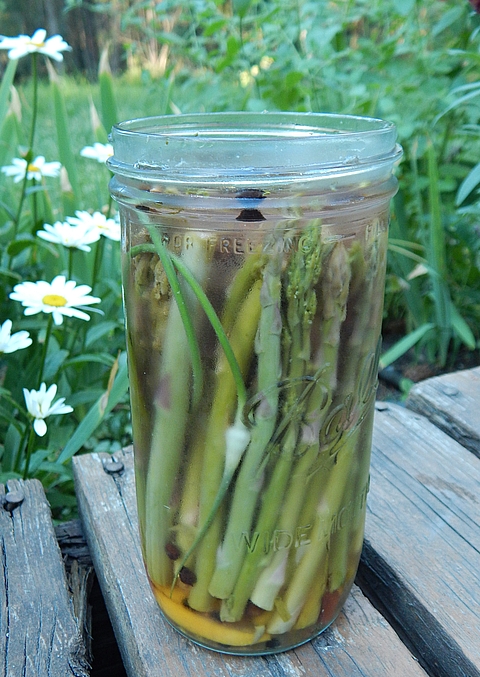
Whether you grow it or buy it, asparagus will be among your first spring vegetables. These green, purple, and even white spears can star on your table meal after meal until other produce ripens. I start with Grilled Asparagus as a standalone side dish with some lemon and herbs. I also serve it over arugula or with pasta in a salad. It’s delicious served under hollandaise or on pizza, stirred into risotto, baked into a frittata, or tossed in a stir-fry.
At some point, even I run out of ways to eat fresh asparagus. Whether you grow your own patch or buy bundles in season, you too probably end up with more asparagus in your kitchen than you can eat in one meal. But you don’t want to ignore it: the asparagus season ends as quickly as it arrives. That’s when I fill a jar or two with a brine. Although you can process pickled asparagus in a boiling water bath, it keeps its flavor and texture better when it heads straight to the table or rests in the fridge.
Learn to make Asparagus Refrigerator Pickles and Quick-Pickled Asparagus
Cakes and Curd
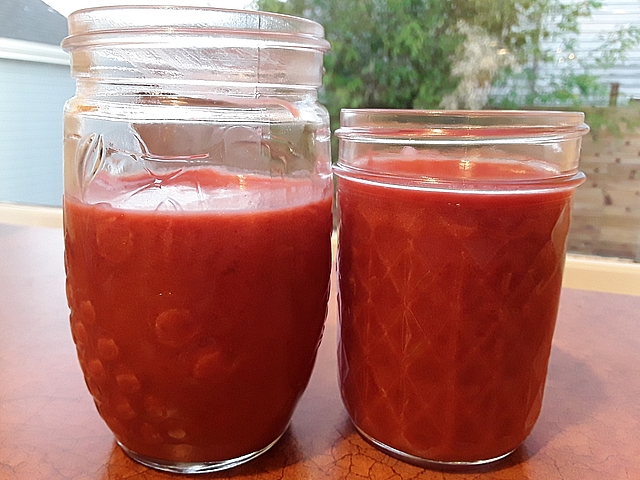
If you’ve only ever poured maple syrup on buttermilk pancakes, this week’s recipe pairing will blow your mind. Fruit curds are the tarter yet richer siblings of fruit syrups, jams, butters, and even sauces. Unlike these high-heat, bubbly creations, fruit curds cook low and slow, until their blend of juice, sugar, eggs, and butter becomes silky smooth. One bite of a fruit curd and you’ll want to use it as a spread on baked goods, a filling for shortcakes or layered cakes, a dipper for fresh fruit, a swirl of flavor in Fresh Yogurt, or even a sneaky spoonful eaten straight from the jar.
Just to up the ante, I like to pair luscious, jewel-toned berry curd with pancakes darkened by molasses and spices. Most gingerbreads are made as desserts and rich in butter, refined sugar, and egg, but the fruit curd topping covers all of those bases. For breakfast, all of those elements can be cut or scaled back to focus on warming spices and bittersweet molasses.
Learn to make Berry Curd and Gingerbread Pancakes
Chili Paste

Many of my travel memories revolve around food, and what I ate during a month in Morocco lingers years later. My diet then was as it is today (mostly vegetarian with some fish thrown in), meaning I spent most of my time in country disappointing well-intentioned Moroccan women who wanted to celebrate my presence at their table with the rare treat of meat. Once they were convinced no one was being rude, we could all enjoy their everyday, mostly meatless meals. These simple dishes let the spices shine, and I soon learned to look for my favorite flavors at market stalls while I traveled from city to desert and back. One of my favorite snacks became a bag of olives heavily coated in a chili-and-spice blend known as harissa.
I discovered harissa in Morocco, but Tunisia often claims origination rights. Regardless, this spicy North African paste is served on everything from couscous to soup to toast, for the daring. I’ve tossed it with vegetables before roasting or, instead of Chermoula, with shrimp before skewering them for the grill. Harissa resembles sambal oelek, an Indonesian chili paste, but it can be harder to find in American stores. Fortunately, it’s so simple to make that you’ll stop seeking it out in specialty markets. You can make it any time of year, using fresh peppers in season and dried or even smoked ones the rest of the year—which is also fortunate, because you’ll never want to be without a jar.
Traditionally, harissa is preserved by an olive oil “seal” that is replaced each time you dip into the paste. I still store such sealed harissa in an airtight jar in the fridge to ensure it doesn’t spoil. It will keep that way for a couple of months, so I make it regularly in small batches.
Learn to make Homemade Harissa and Moroccan Shaved and Roasted Carrots
Winter Warmers

It may sound odd to have childhood memories of hot cocktails, but the scents of warm spiced rum and wine mingle with those of a freshly cut tree in my mind. My dad in particular is a fan of hot buttered rum, and for years my mom’s homemade mix was a holiday staple. Mulled wine was another family tradition, but I associate it with New Year’s Day, when my sister and I would go with my mom to a puzzle party. Several tables of complicated jigsaw puzzles would fill the living room, but the boxes showing the finished picture were always hidden away. We would spend hours linking together pieces, often the only kids amid a roomful of adults. The scent of warm spices hit you the moment the hostess opened the front door.
Now that I’m old enough to enjoy not just the smell but also the taste of winter warmers, I’ve adapted the family recipes to suit my tastes: less sugar and more spice. Don’t hesitate to adapt these recipes yet again until you decide they’re filled with everything nice. Learn to make Hot Buttered Rum and Gløgg
Quick Ferments

If you’re new to vegetable fermentation, you likely look at recipes and think, “Can it be that easy?” This instantly leads to the terrifying thought, “It can’t; surely I’ll get it wrong.” So to kick off this month’s recipes for vegetable ferments, I offer my most foolproof recipe for your first foray into fermentation. Here, the carrots actually aren’t fully fermented; they sit barely long enough to kick off the process. Still, they use a lot of the techniques that apply to full fermentation of other vegetables: salting, weighting to encourage the carrots to release even liquid, and a rest period to pull even more water and sugars from the produce. Because these carrots are prepared as thin ribbons, it’s easy to open the jar and slide a few onto a sandwich, into a sourdough pita, or straight into your mouth. The recipe is so simple that while you’re at it, you might as well prepare your own horseradish to go in the jar—especially if you’re growing it.
Learn to make Barely Fermented Carrots and Horseradish Paste
