Watermelon

The nose-to-tail approach to cooking meats could be called tip to top for vegetables and fruits. Get whole watermelon recipes at TwiceasTasty.com.
Amid summer’s bounty, as I haul bags and boxes of produce from garden to kitchen, I always want more. I clean and trim and slice and wonder whether each root tip and leafy top that lands in my compost bucket could find its way into a dish or jar instead. The nose-to-tail approach to cooking meats could be called tip to top for vegetables and fruits, and that remains my goal throughout the growing season. It’s a goal that aligns nicely with this week’s challenge for the Montana Local Food Challenge.

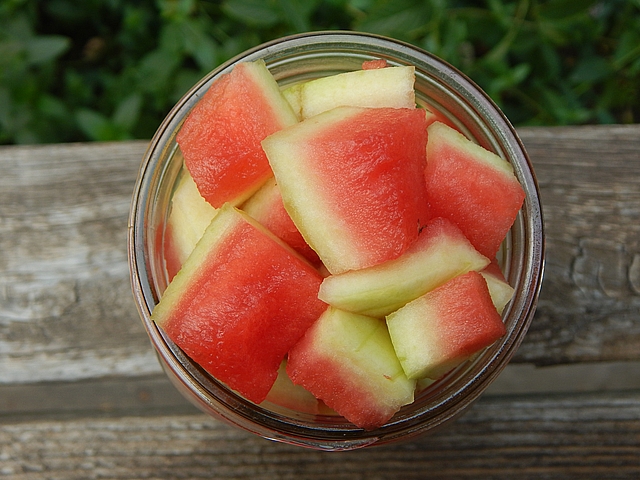
Some of your harvest lends itself easily to the idea: people eat beet greens as readily as beet roots. Others seem obvious when you think about it. Like peas? The shoots carry a similar flavor and can be turned into pesto or simply mixed into salads. Grow storage onions? The green tops can be used like scallions and even lightly trimmed while the bulbs are still growing. And the classic processed watermelon rind pickle can be ready to eat alongside the juicy pink melon.
Learn to make Quick-Pickled Watermelon Rind and Watermelon–Feta Salad

Quick-Pickled Beets

For any meal, refreshing, easy pickles take minutes to make and are gobbled up in as little time. Learn to make Get quick-pickle recipes at TwiceasTasty.com.
I spend much of my summer pickling produce; it’s my favorite way to preserve vegetables. As the harvest grows and I haul pounds of cucumbers, snap beans, summer squash, and more from the garden to the kitchen, my canning shelves fill with vinegar-preserved pickles and every other available surface holds fermenting ones. There they wait for weeks, if not months.

So for any given meal, you can also find me making pickles—refreshing, easy ones that take mere minutes to prepare and are gobbled up in as little time. Quick pickles are defined by their name. They won’t satisfy your pickle craving through winter or preserve the bulk of your garden, but they will extend shelf life a bit and give a new flavor spin when you tire of eating a particular fresh vegetable, like beets.
Learn to make Quick-Pickled Beet Snacks and Orange-Sweetened Marinated Beets

Raw Shrubs

When you offer to pour a shrub, clearly you’re not referring to the leafy bush. But what is a shrub? Get shrub and cocktail recipes at TwiceasTasty.com.
Offering to pour someone a shrub usually requires an explanation. Clearly the noun is not referring to the leafy bush. But just what is a shrub? Why would you want to drink one?

The answer to the first question has a surprisingly long history. Mixologist Warren Bobrow calls drinking shrubs “the original energy drinks” and dates them back to the 1800s. The combination of vinegar, water, and sweetener gave farmworkers a refreshing boost while in the field. Then farmers discovered they could expand the range of flavors using their harvest and the preserving properties of vinegar and sugar. Add carbonated water, and the first soft drinks were born. But these aren’t our contemporary, corn syrupy sodas: shrubs, aka drinking vinegars, capture the bright flavors of fresh fruits and vegetables at the peak of their season.

Raw shrubs take little time to prepare but need a bit of foresight. The wait for cold processing means you don’t need to heat the shrub and lose some of its flavorful pop, a particular advantage with delicately flavored fruits like citrus and kiwi. They usually need 1–3 days to get to their final form but often taste best when left for at least a week. But shrubs last a long time too—I’m told up to a year, but I’ve never been able to keep one around that long.

This shrub recipe is a concentrate; you’ll want to dilute it to enjoy it. The simplest method is to pour 1/2 ounce of shrub into an 8-ounce or larger glass, top it with sparkling water or seltzer, and then add more shrub until you get a balance you like. Or upgrade your bar by using the shrub as the base for a cocktail.
Learn to make Raw-Fruit Shrub and Basic Shrub Cocktail

Mint

It’s Twice as Tasty’s birthday month, and what better way to celebrate than with cocktails? Get simple syrup and mojito recipes at TwiceasTasty.com.
I tend to be on seasonal quests for unbeatable mixed drinks, looking for, say, the bar that makes its own tonic for G&Ts or the bartender who concocts the perfect old-fashioned. Several years ago, it was mojitos, and a local bartender mixed my hands-down favorite: heavy on the mint, light on the sweet, with the perfect touch of lime. Mint grows like a weed in my garden, but my homemade mojitos didn’t show it. So I had to ask: What was her secret? She gave a simple answer: simple syrup.

I didn’t know it, but I’d been making simple syrup for years—to feed hummingbirds. The first time I dropped some mint leaves into the batch, I found a new kitchen staple. Simple syrups are as easy as they sound, and they can sweeten everything from beverages, with or without alcohol, to desserts. And since it’s Twice as Tasty’s birthday month, and what better way to celebrate than with cocktails?
Learn to make Mint Simple Syrup and Mega-Mint Mojitos

Herb Marinades

Some of my favorite food memories linger from travels, with dishes I repeat at home. Get Moroccan recipes at TwiceasTasty.com.
Some of my favorite travel memories linger from my time in Morocco. I had the good fortune to have Peace Corps connections that introduced me to volunteers in both tiny towns and large cities. I stayed in their houses, visited their host families and haunts, and ate dinner in the homes of their Moroccan friends. I could never repeat or improve on the experience.

But the food: some of that I can and do repeat, even though it’s never quite the same. For example, every time I ate chermoula in Morocco, the flavor was unique. The basic version is essentially a pesto featuring cilantro and parsley, but my favorite versions included a little fresh ginger and extra spices, and I replicate it as well as I can. I mostly ate it in a tagine while in Morocco, but I’ve since learn to love it as a grilling marinade, accompanied, of course, by couscous.
Learn to make Grilled Shrimp with Chermoula and Cinnamon Couscous

Hot Cereals

I never was a cornflake girl, and as a kid I wasn’t a hot cereal girl. Then I went to Russia. Get hot cereal recipes at TwiceasTasty.com.
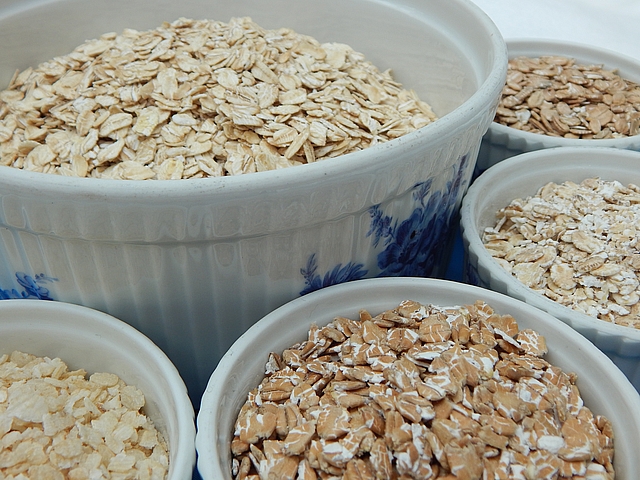
I never was a cornflake girl, and as a kid I wasn’t a hot cereal girl. I blame my dad: To this day, he calls his porridge “mush.” (If you want to get little girls excited about eating hot breakfast cereal, I highly suggest a different name.) Beyond the name, I disliked the taste and texture—or rather, the lack of both. Dad’s porridge was always bland oats or wheat, ground finely enough or cooked long enough that “mush” was an appropriate title.

It wasn’t until I lived in St. Petersburg, Russia, that hot breakfast cereals became comfort food. Part of it was stepping off the train in early January into –23°F—weather that will make anyone eat anything hot. But mostly it was because Russians know how to make simple porridge taste good. It starts with a mix of grains, improving both flavor and texture. Adding butter to the saucepan before the grains lets them toast slightly. I then take the un-Russian step of adding spices.
Learn to make Russian Kasha and Pearl Barley Cereal with Honeyed Nuts

Favorite Books: The Science of Food

If you looked at my book purchases over the last couple of years, you might think I started Twice as Tasty as an excuse to expand my food library. I’d be hard-pressed to dispute it. As my partner and I increasingly returned to basic ingredients and making what we eat from scratch, one of my greatest joys has been learning from people with far more experience, training, and knowledge about food. Although there is a wealth of helpful information online, many of my favorite sources sit on a shelf, ready to be pulled open when I’m looking for answers or ideas.

Earlier this year, I shared some of my go-to books on canning. They’re the inspiration for many recipes on this blog, and my favorites tell me not just how to best can something but also why the process works. When I want to write about other kitchen processes, I often have a different stack on my desk: books on the science of food.
Read more about my favorite resources on the science of food

Processed Green Tomatoes

When I asked members of the Twice as Tasty Facebook group for recipes they’d like to see on the blog, green tomato requests poured in. I try to ripen my late-season tomatoes and eat the stubborn ones fresh, so my green tomato repertoire was limited. Perfecting long-term storage of green tomatoes called for experimentation, practice—and some unannounced taste testing at Twice as Tasty-catered events.

After sampling a range of pickled and fermented green tomatoes and salsa, sauce, relish, and chutney recipes, a few trends appeared. Pickled greenies are best stored in the refrigerator, where they never feel the heat of a boiling water bath and retain their shape and texture. Salsas could go either way. If you can’t create Grilled Tomatillo Salsa, you can process a green tomato salsa—but I prefer it fresh. In contrast, processing is ideal for a thick, rich chutney.
Learn to make Curried and Pickled Green Tomatoes and Green Tomato Chutney

Season Wrap-up

After a scorching-hot summer in Montana—literally, with more than 1 million acres burned—fall has come on fast and furious, with a chance of snow at my house this morning. The quick downshift from summer to practically winter instantly affected the garden. Overnight, cucumbers and snap beans stopped growing, apples began falling, and large leaves of self-seeded spinach reappeared in my overgrown and ignored spring cold frame.

Within the hoop house, plants are weathering the weather better, but it won’t be long before I’m forced to admit the final round of peppers and tomatillos won’t grow larger and the remaining tomatoes won’t turn red on the vine. Fortunately, unripened produce can still land in the kitchen instead of the compost. With the right timing, you can enjoy every last late-season vegetable.
Read more about wrapping up the garden

Chilies

You could call this week’s main recipe a food fail. A couple of years ago, I set out to make homemade sriracha. I had grocery bags full of hot peppers that season, and I thought some were destined to become chipotles for Grilled Tomato Chipotle Salsa and others would be fermented to replicate the flavor of the classic Thai chili sauce and paste.

Then we started smoking chilies and attempting to find the perfect balance of smoke and heat. Suddenly I had grocery bags of smoked chilies—which would not ferment. Even at the low temperatures used for smoking, the heat was high enough to kill off the natural bacteria in the peppers that are essential for fermentation. But I was too stubborn not to try. And although my chili paste never fermented, it was delicious.

So now I make Home-Smoked Chili Paste every year and have yet to miss that bottle sriracha on my shelf. I’ve since learned that adding a culture could allow me to smoke and then ferment, so expect more experimentation down the road. But for now, what could be called a food fail has turned into a favorite kitchen staple.
Learn to smoke chilies and make Home-Smoked Chili Paste