Digging into Dried Beans

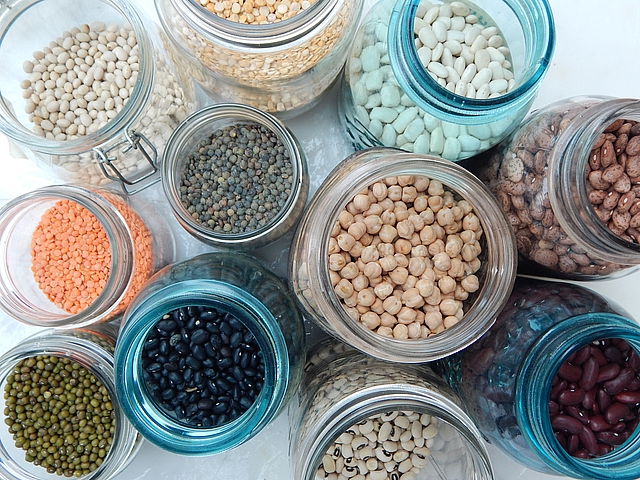
People seem to have a love it or leave it relationship with beans. If you love them, you’ve probably had them cooked right. Read more about cooking beans.People seem to have a love it or leave it relationship with beans. If you love them, you likely have an underlying reason: they’re cheap yet filling, you’ve cut other proteins from your diet, or you grew up in a household, community, or culture that saw beans as a staple. Madhur Jaffrey starts her 750-page World Vegetarian cookbook with a section on dried beans. Louis Armstrong loved his beans so much he closed letters with “Red Beans & Ricely Yours.”

But the primary reason people love beans is that they’ve had them cooked right. Well-cooked legumes don’t just pack a nutritional punch; they have delicious flavors and textures and can be adapted to any meal, from breakfast to dessert. Unfortunately, people who rarely eat beans often only do so by cracking open a can and being immediately disappointed by the texture and taste—and the aftereffects. “The more legumes you eat the more you can eat them,” Jaffrey writes in her chapter on dried beans. And the more you know about how to cook beans, the more likely you are to eat them.
Read more about cooking beans

Beyond Pizza

I learned to appreciate calzones and empanadas by baking pizzas at home. If you love deep toppings and excessive cheese, you’ll want these recipes. Learn to make Sourdough Calzones and Empanadas.I didn’t appreciate calzones until I started baking beautiful pizzas at home. Before my homemade pizzas achieved elegance, they tended toward soggy masses on soft, undercooked dough or slightly burned toppings over a cracker-crisp crust. Both variations resulted from the same problem: too many toppings at too low of a temperature.
I’ve learned not to compare pizzas baked in a home oven with fully loaded, wood-fire pizzas—and especially with those I ate in Naples. Kenji, lord of Serious Eats, puts it bluntly: “You’re never going to be able to produce a perfect Neapolitan-style pie in a home oven.” The crew at Bon Appétit is a bit less forceful yet just as adamant: “For those hefty pies to work, they need an ultra-sturdy crust and a really, really, really, really hot oven. Leave it to the pros and go simple.”

So as I teach all my workshop participants, whether grilling or baking your pizza, keep your temperature high and your toppings light. But if you’re a fan of deep toppings and excessive cheese, turn your pizza dough into calzones or empanadas.
Learn to make Sourdough Calzones and Sourdough Empanadas

Holiday Spice

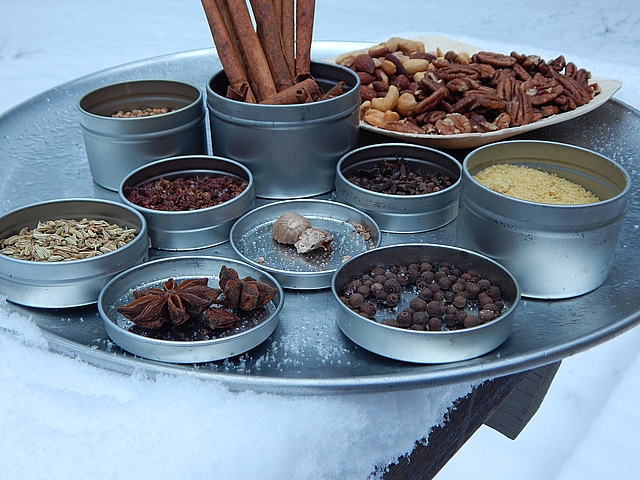
Sweets top the list of foods given at the holidays, so some of my favorite “small” homemade gifts are short on sugar yet big on taste. Learn to make Sweet Spice Mix and Sweet and Spicy Nuts.
I like giving homemade food gifts. They’re appreciated by everyone: the child with a sweet tooth, the apartment dweller without room to garden, the new mom too busy to can, the grandparent who simply doesn’t need more stuff. But food gifts are also perfect for people you want to thank with something thoughtful that won’t break your year-end budget: your hairdresser or favorite coworker, your child’s soccer coach or piano teacher, the neighbor who feeds your cat or helped jump your car. Chances are none of these people need more candles, bath soaps, fridge magnets, or Christmas ornaments. But they all need to eat.

The first food gifts that come to mind during the holidays are cookies, and it’s certainly easy to stretch a batch as you prepare treats for the family or an exchange. But if your giftee has dozens of clients or students, the sugar load can add up fast. Some of my favorite “small” gifts are short on sugar yet big on taste.
Learn to make Sweet Spice Mix and Sweet and Spicy Nuts

All-Occasion Cookies

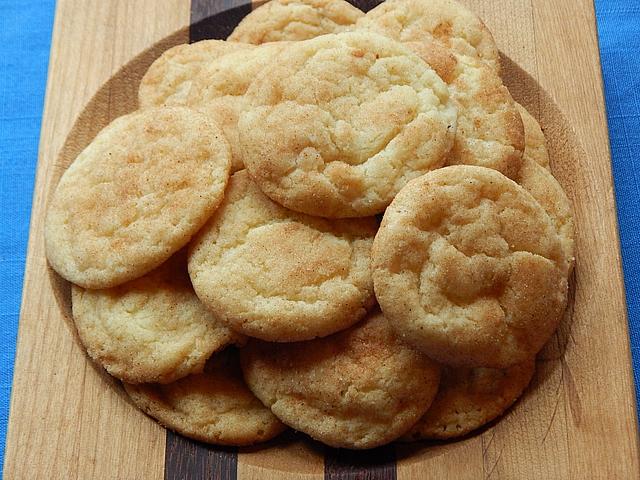
Holiday cookies can take work, and sometimes you want simple yet delicious sweets worthy of the tray. That’s where this week’s recipes come in. Learn to make Triple Gingersnaps and Snickerdoodles.
It’s hard to imagine the winter holidays without cookies. But what is a Christmas cookie? Ask three people to name one, and you’ll likely get three answers. Still, the answers likely have things in common. They probably require special tools or rich ingredients. They likely involve loads of time messing with cookie cutters, icings, and extra decorations. Most of all, they—and all the other cookies on the holiday tray—are likely only made once a year.

Despite the effort that goes into Christmas cookies, I’m often overwhelmed by layers and sugar and, after the third pass of the tray, want something just a little sweet and a little simple. That’s where this week’s cookies come in. They’re simple enough you can make them any time of the year. They’re also easy to make ahead, freeze, and pull out freshly baked just before serving. And they’re still so delicious they can hold their own among fancier creations.
Learn to make Triple Gingersnaps and Snickerdoodles

Slow Cooker Fruit Butters

The garden I play in came with an established orchard—primarily apple trees. With little effort on our part, we always seem to end the growing season with far more boxes of apples than we need. After we’ve eaten our fill, I always store a box or two of whole, unblemished apples for eating out of hand. Then I make as much applesauce as my canning shelves can hold. By November, I’m salvaging the fruit in the remaining boxes to create apple butter.

Fruit butters capture all of the flavor of your chosen fruit. Often seen as finicky, they’re traditionally prone to burning and need endless stirring during their lengthy cooking time. I avoided them for years but then discovered a slow cooker variation. I fell for the hands-off, burnproof technique that let me dump a bunch of fruit into my Crock-Pot, leave it to cook for hours, and return to find a perfect blend ready for the canning kettle.
Learn to make Any-Fruit Butter and Slow Cooker Apple Butter

Preparing for Holidays

All last month, I was undecided about which recipes and ideas to share in November. I was traveling in several regions and climates, wearing everything from four layers of long johns and raingear to tank tops and summer dresses. And meals featured the fresh strawberries I associate with spring, the Dungeness crab of fall and winter, and everything between.

Shortly after I returned home to Montana, Mother Nature decided the blog’s November theme for me. After just a couple of days in my own kitchen, snow began to fall and winter was suddenly upon us. Instead of digging the final carrots and potatoes and cleaning up garden beds, I was curled up by the woodstove, reading food books and thinking about the coming holiday season. For me, that means planning to gather with friends and family, making lists of gifts to create, and of course, deciding what we’ll eat.
Read more about preparing for holiday gatherings and meals

Favorite Books: The Science of Food

If you looked at my book purchases over the last couple of years, you might think I started Twice as Tasty as an excuse to expand my food library. I’d be hard-pressed to dispute it. As my partner and I increasingly returned to basic ingredients and making what we eat from scratch, one of my greatest joys has been learning from people with far more experience, training, and knowledge about food. Although there is a wealth of helpful information online, many of my favorite sources sit on a shelf, ready to be pulled open when I’m looking for answers or ideas.

Earlier this year, I shared some of my go-to books on canning. They’re the inspiration for many recipes on this blog, and my favorites tell me not just how to best can something but also why the process works. When I want to write about other kitchen processes, I often have a different stack on my desk: books on the science of food.
Read more about my favorite resources on the science of food

Season Wrap-up

After a scorching-hot summer in Montana—literally, with more than 1 million acres burned—fall has come on fast and furious, with a chance of snow at my house this morning. The quick downshift from summer to practically winter instantly affected the garden. Overnight, cucumbers and snap beans stopped growing, apples began falling, and large leaves of self-seeded spinach reappeared in my overgrown and ignored spring cold frame.

Within the hoop house, plants are weathering the weather better, but it won’t be long before I’m forced to admit the final round of peppers and tomatillos won’t grow larger and the remaining tomatoes won’t turn red on the vine. Fortunately, unripened produce can still land in the kitchen instead of the compost. With the right timing, you can enjoy every last late-season vegetable.
Read more about wrapping up the garden

Grill It, Roast It, Smoke It

And just like that, September is here. Long before I’m ready for summer to be over, the month that signals the start of fall rolls in. But even though a few of August’s garden-fresh favorites are finished for the season, September’s list of harvestable fruits and vegetables is the longest of year, with the last of the summer beans, berries, and corn bumping up against the first of the fall greens, plums, and winter squash.

If August is the month for enjoying fresh fruit and veg, September is the month for adding a bit of charred, caramelized, and smoky flavor to the produce on the table. We’ll be grilling, roasting, and smoking all month at Twice as Tasty—mostly thanks to some incredible response from recent Twice as Tasty workshops.

Although my September schedule is quickly filling up, it’s not too late to get in on the current lineup or featured workshops locally. And Twice as Tasty will be on the road again in late October! For more details, click here.
Read more about grilling, roasting, and smoking

Fresh Fillings

If you grow a giant garden, each day’s harvest fills multiple boxes and baskets and then every spare corner of your refrigerator. But if you grow a more reasonably sized garden, your harvest likely comes in dibs and dabs: a couple of cucumbers and tomatoes, perhaps a pepper, a small mound of greens, a handful of herbs. Combining these garden-fresh favorites into a meal that showcases your effort often means coming up short for a standard recipe.

This is why I love fillings and stuffings; the ingredients are endlessly variable, a little goes a long way, and the result is a sparkling-fresh meal that highlights produce just off the vine. Whether you’re filling summer rolls, stuffing squash blossoms, or even building Grilled Fish Tacos, the key is to use less filling than you think you’ll need. A gentle hand while wrapping delicate rice paper or petals around that filling is also essential for success.
Learn to make Summer Rolls and Stuffed Squash Blossoms