Bean Soups

Soups fill our winter evenings, and the most filling ones start with beans. Get bean soup recipes at TwiceasTasty.com.
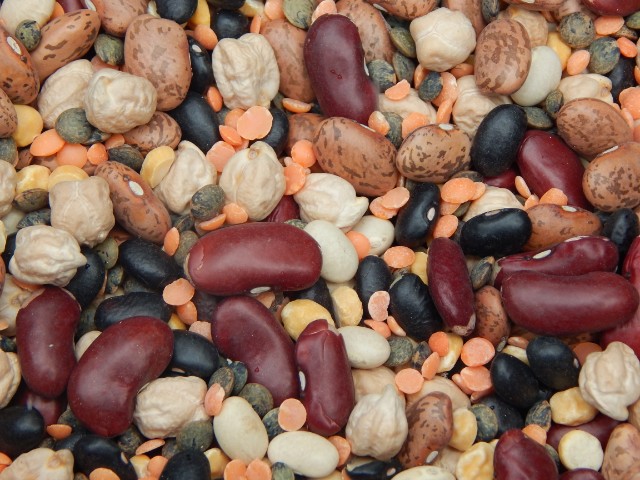
Soups fill our winter evenings, and the most filling ones start with beans. I love cooking with dried beans and tend to store many types in quart jars—which means I often have jars with just a scoop of beans left that I want to use up before I restock. Fresh Mixed-Bean Soup is the perfect option. You can use just about any bean in it, including lentils and split peas; the more variety, the more color and texture in the final soup. I often start by emptying as many jars as I can and then adding whatever beans I have in larger quantities, 1/2 cup at a time. Sometimes I even toss in leftover pearl barley.

In many ways, a soup with many types of beans resembles the bean soup mixes you can buy prebagged and tied with a pretty ribbon. But you’ll spend a lot less money if you buy the beans separately in bulk. You’ll also save money and have more control over the salt content and other additives if you started with dried instead of canned beans. And once you start cooking with dried beans, you’ll discover plenty of other uses for them, including—on this blog—pinto or kidney beans in Red Beans and Rice, black beans in veggie burgers, and chickpeas in falafel and this week’s other recipe, a Moroccan bean soup.

Learn to make Fresh Mixed-Bean Soup and Harira

Savory Spreads: Peppers and Plums

People have been making spreads with peppers and plums for a long time. Get jelly and chutney recipes at TwiceasTasty.com.
People have been making pepper jellies for a long time. Some claim they’re Southern in origin, with roots in Texas and an official Pepper Jelly Festival in Alabama. They vary widely in color (from green to golden to red), spiciness (from sweet to jalapeno to habanero), and texture (from smooth jelly to marmalade-like spreads flecked with pepper pieces). But to ensure they store well on the shelf and in the fridge, all contain a lot of vinegar and sugar.

Although many recipes focus on the heat of chilies, I prefer a sweet bell pepper base with just a bit of heat mixed in. Many pepper jelly recipes also use commercial pectin and distilled vinegar, both of which are neutral in flavor. I prefer the depth added by fruit pectins and vinegars, so as with other savory spreads, I turn to tart apples to help the jelly set. Fresh lemon adds even more flavor and pectin.
Learn to make Sweet Pepper Jelly and Italian Plum–Apple Chutney

Cabbage

I’ve been writing about enjoying and preserving green tomatoes this month, but they aren’t the only vegetables pulled from the garden as the season winds down. From the hoop house, I’m harvesting the last of the peppers. From the main garden, I’m snagging sweet carrots, a late seeding of cilantro, and the last cabbage.

After years of losing brassica crops to moths, I recently started growing cabbage again. The key is a small hoop frame straddling the bed, with ultrafine mesh netting clipped in place over the hoops and enclosed ends. Light and water can get in, but the plants stay cool and free of cabbage worms. It also means I’ve returned to making cabbage salad. The recipe I remember needed upgrades, primarily because it relied on instant noodles for crunch. I can’t recall what my mom served with the salad, but these days I’m hooked on a shrimp pairing.
Learn to make Asian Cabbage Salad and Wasabi-Marinated Shrimp

Processed Green Tomatoes

When I asked members of the Twice as Tasty Facebook group for recipes they’d like to see on the blog, green tomato requests poured in. I try to ripen my late-season tomatoes and eat the stubborn ones fresh, so my green tomato repertoire was limited. Perfecting long-term storage of green tomatoes called for experimentation, practice—and some unannounced taste testing at Twice as Tasty-catered events.

After sampling a range of pickled and fermented green tomatoes and salsa, sauce, relish, and chutney recipes, a few trends appeared. Pickled greenies are best stored in the refrigerator, where they never feel the heat of a boiling water bath and retain their shape and texture. Salsas could go either way. If you can’t create Grilled Tomatillo Salsa, you can process a green tomato salsa—but I prefer it fresh. In contrast, processing is ideal for a thick, rich chutney.
Learn to make Curried and Pickled Green Tomatoes and Green Tomato Chutney

Fresh Green Tomatoes

As the growing season slows, the primary complaint I hear is “but my tomatoes are still hard and green!” The lament is loudest in northwest Montana, where our growing season is about 90 days. Tomatoes need 50–100 days to mature, so it’s easy to see why so many green fruits remain on our vines as the first frost approaches. My solution, as I explained last week, is to let most remaining tomatoes ripen indoors. But I always set some green tomatoes aside to eat fresh.

What comes to mind when you think of eating a green tomato? For many, it’s a plate of breaded and fried slices. Although Fried Green Tomatoes aren’t as Southern as you might think, they are delicious, easy to make, and suitable just about any time of day. Your mind may also turn to a Mexican salsa verde. The traditional recipes—and to my palate, the tastiest versions—are made with tomatillos, but green tomatoes are suitable stand-ins.
Learn to make Fried Green Tomatoes and Fresh Green Tomato Salsa

Refrigerator Pickles

I don’t advocate small-batch canning, but I am a fan of quick and easy pickling that fills your refrigerator one jar at a time. If your only experience with pickling is opening a store-bought jar, then refrigerator vinegar pickles will convert you to homemade. Even if you grew up in a household that put up shelves of pickled vegetables every summer, like I did, refrigerator pickles have surprising benefits.

The disadvantage of refrigerator pickles—that they aren’t sealed in heated jars and thus shelf stable—can be an advantage in freshness and crispness. Small-space gardeners or CSA members can put up a jar at a time as produce ripens. Even expansive gardeners can use fridge pickles to test new flavor combinations. Cucumbers are ideal refrigerator pickles, because they soften so quickly when heated. You should still only use pickling cucumbers; the thick-skinned slicing cucumbers you find in grocery stores and even lemon cucumbers are really only useful as fresh pickles. After years of pasteurizing summer squash, I’ve switched from the canner to the fridge to keep the pickles’ crunch.
Learn to make Cucumber Refrigerator Pickles and Cumin-Spiced Zucchini Refrigerator Pickles

Yogurt Dips

Homemade cheese and yogurt are delicious not just on their own but also when featured or even a footnote in other recipes. Bring a tray of homemade dips, cheese, and sourdough bread to a potluck or party (or house concert), and guests immediately compliment your tasty contribution. Then when someone asks what’s in the dip, say, “homemade yogurt”; eyes brighten, jaws drop, and people dig back into the bowl. At least, that’s my experience.

I’ve long been a fan of tzatziki, and it’s among my favorite ways to showcase homemade yogurt. A tangy fresh batch makes the dip pop—so much so that I cut back on the lemon juice. Although traditionally made with sheep’s or goat’s milk, draining a cow’s milk yogurt until it’s thick works beautifully. Just a tablespoon or two of the same thickened yogurt gives a surprising creaminess to other dips, especially ones featuring beans.
Learn to make Tzatziki and Asian White Bean Dip

Freezer and Storage Soups

One of my off-season joys is making an easy meal that tastes as though it took time and effort to create. Soup is among the easiest—and I’m not talking poured out of a can.

Sure, there can be a lot of time-consuming dicing and mincing for freshly made soup. By planning ahead, I eliminate nearly all of that effort at mealtime. I also ensure the produce carries all the flavor my garden can generate; with a little extra effort at harvest time, there’s no need to buy a mealy tomato or flavorless broccoli.

This week, I offer you two soup recipes that I can make on a moment’s notice because their ingredients are staples in my house in winter. They’re staples because during harvest, I dry-store potatoes, dry-store or freeze onions and garlic, dehydrate smoked chilies and herbs, and freeze cherry tomatoes, broccoli, and Vegetable Stock. Hopefully this list of links and the recipes that follow will inspire you to take similar steps as you grow or buy local food in the next few months.
Learn to make Spanish Potato–Garlic Soup and Italian Broccoli–Pasta Soup

Tomatillos

If you’re a gardener, you likely end your season with a rack of green tomatoes and a quest to find a way to use them. Sorry, but this is not that recipe. I gave up on green tomato salsas several years ago—the vinegar required to make the salsa shelf stable when water-bath canning has always seemed overpowering.

Instead, I fell for the lovely green lanterns that grow into tomatillos, the traditional base for salsa verde. These little husked fruits clock in at pH 3.83, according to the U.S. Food and Drug Administration, well below the safe level for water-bath canning. The added acid covers the secondary low-acid vegetables and boosts the flavor. Even so, grilling and draining vegetables hasn’t been lab tested by National Center for Home Food Preservation, so I heavily researched and meticulously calculated the acidity for safe canning; to double-check my calculations, I test the recipes with a ThermoWorks high-accuracy pH meter. More details are in the Tips & Tricks for the recipe.

Tomatillos are as easy to grow as tomatoes; just be sure to buy two plants so that they cross-pollinate. Not surprisingly, I prefer them grilled like tomatoes—and have found yet another beverage use for their juice. Learn to make Grilled Tomatillo Salsa and Grilled Tomatillo Margaritas

Tomatoes

Hopefully you were swayed by my argument for grilling vegetables last month. In this week’s recipes, the grilled flavor shines. The salsa has evolved over the years from fresh to roasted and finally to grilled. We get more compliments for it than for anything else we process, and no matter how much we put up each year, our stash barely lasts to the next canning season.

The grilling creates intense flavor, but it also lets you stretch out the process to suit both your harvest and your schedule. We harvest and grill the ingredients as they come ripe, separating the tomato juice and solids. Then we stash everything in the freezer until we have enough for at least one full canner batch of salsa. It’s also a fabulous recipe for a canning party, particularly when paired with a tasty beverage to celebrate your hard work.
Learn to make Grilled Tomato Chipotle Salsa and Grilled Tomato Bloody Mary Mix