Learning to Eat Well

Want to get a jump-start on the summer season? Take a Twice as Tasty workshop. Learn more at TwiceasTasty.com.
It’s time: Uncover beds, clean up the garden, thin the berry patches, pull the season’s first weeds, and plant seeds and starts. Gardening season has begun.

Although your mind might be reeling with the to-do lists that will get your garden up and running, give a little thought to where its bounty is going: table, fridge, freezer, pantry, and more. I’ve already loaded the blog with lots of information to help you enjoy what you’ve grown—now and later. But you’ll get an even bigger jump-start on the season with a Twice as Tasty Live workshop. You’ll learn more, faster, among friends, and with my personal help. This week’s post highlights some of the best workshops to get on your calendar this summer. As days grow longer, my schedule gets tighter, so pick your topics and contact me soon to set up your personalized workshop for the summer season.
Read more about learning to eat well

Garden-Fresh Favorites

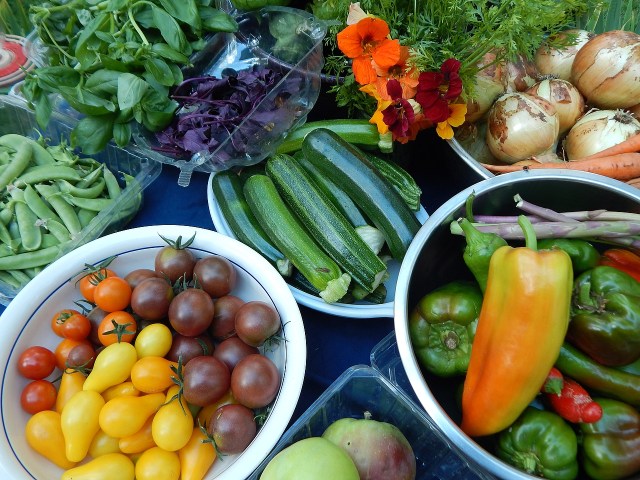
When summer hits and the garden is in full swing, I spend a lot of time processing its bounty to enjoy later. But the greatest joy of growing your own garden is immediately eating the sun-warmed peppers, crisp snap beans, and brilliant orange carrots you’ve produced. No matter how well you preserve a fruit or vegetable, it’s still a substitute for fresh-from-the-plant flavor.

Twice as Tasty made the front page of The Daily Inter Lake’s Montana Life section this week. The delicious photos and story by Brenda Ahearn focus on a recent workshop on Indian spices.

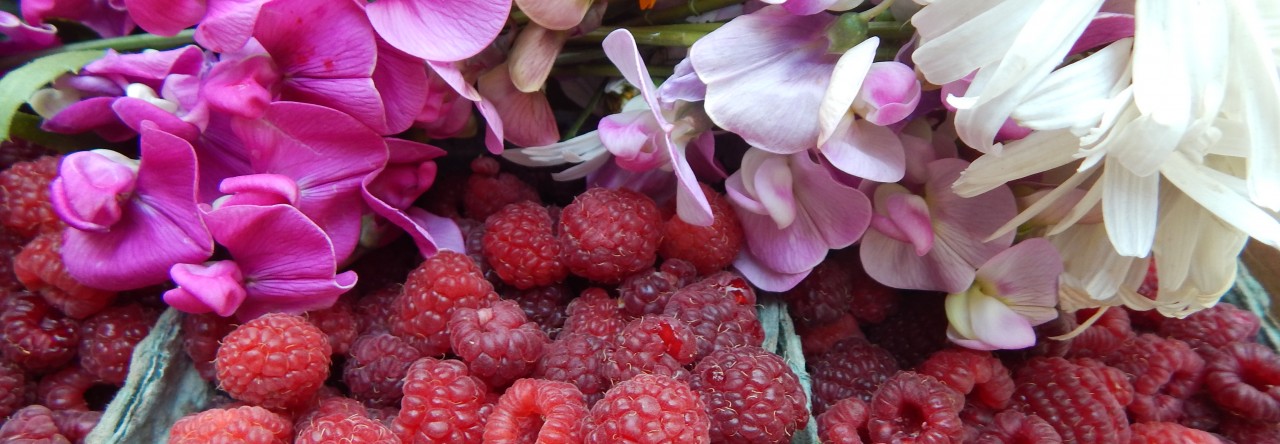
Fortunately, eating freshly harvested produce is easy. A walk through the garden has you snapping off a peapod here, grabbing a cherry tomato there, and collecting a handful of raspberries that you pop straight into your mouth. But grazing is just the beginning. This blog already offers some of my favorite fresh recipes for asparagus, corn, and zucchini and tomatoes. The key to making these fresh-tasting dishes is knowing when and how to pluck the choicest edibles.
Read more about enjoying garden-fresh favorites

Pizza

People may forever debate whether pizza is Italian, but there can be no doubt that it is American. One poll last year reported that “For Americans, pizza lands in the number one spot as the ultimate comfort food.” But if you were to ask, “What is pizza?” you’d get as many answers as respondents.

This, to my mind, is a good thing. It’s what makes pizza so popular. It’s also what makes pizza so easy and affordable to create from scratch at home. You don’t need a specific recipe with exact ingredients. You don’t even need a ratio with proportions of various toppings. All you need is some dough, a couple handfuls of garnishes, and a way to cook it. If you have a sourdough starter, the dough is in the bag—or should I say, jar.
Learn to make Sourdough Pizza Dough and Thin-Crust Pizza

Chowders

I’m a fan of thick, hearty soups. Although I make miso or hot and sour soup when I’m down with a bug, I gravitate toward soups that you know are filling just by looking in the pot.

Last week, I mentioned a range of thickeners that can be added to the pot. My favorites are flour-and-butter roux, as in 30-Minute Cherry Tomato Soup. and potatoes. Potatoes have the advantage of acting as both main ingredient and thickener and can be the prominent—or even the primary—ingredient; they can be added to the pot precooked or raw. Like tomatoes, potatoes are mostly water, but the portion that is solid is almost entirely starch. As you heat potatoes, the starch softens, expands, and gels, making the soup more viscous. Keep this in mind when you’re preparing a potato-thickened soup: Potato starch gels at a lower temperature than flour. The result is a far thicker soup. Learn to make Hearty Corn Chowder and Boozy Potato Chowder

30-Minute Soups

Soup. That short word has endless variations. A walk down the canned soup aisle, a price check of a gourmet carton, or a search for a soup recipe is enough to convince anyone that making a steaming, scrumptious pot from scratch is a complex, challenging process. But soup is as simple as the word. This dish is an excellent place to take the leap from following a recipe to improvising a meal.

At its most basic, soup is four components: a base, a thickener, a liquid, and a main ingredient. The liquid and main ingredient can be thought of as the essence: add 3 parts liquid to 2 parts main ingredient, and it’s soup. Add a base to boost the flavor and a thickener to improve the texture, and you’re competing with that gourmet carton. But it’s likely you’ve never seen a recipe that puts it this way—until now. Learn to make Fresh Improv Soup and 30-Minute Cherry Tomato Soup

Sweet Peppers

My love for grilled flavor in frozen and canned vegetables grew from a love of freshly grilled garden goodies. Long before the technique became essential for frozen eggplant puree and jars of pasta sauce and tomatillo salsa, we were grilling vegetables and immediately stuffing them into our mouths.

Although the grilled food I encountered as a kid was mainly meat, one summer treat at the family home consisted of sticks of shish kebabs. Unlike the traditional Middle Eastern meat sticks, these were mainly veg. Perhaps it was just a ploy to get little girls to eat vegetables: let them choose food to thread on sticks and spin on the grill grate until charred. I’m pretty sure my early choices were black olives, potato, and pineapple, but I eventually developed a taste for anything cooked over coals. I still rely on a version of my mom’s marinade—and grill an extra bell pepper for the next day’s munchies. Learn to make Shish Kebabs with Garlic–Soy Marinade and Corn, Bean, and Pepper Salsa

Corn

If fresh corn on the cob captures the flavor of summer, grilled corn makes that flavor explode in your mouth. Corn steams beautifully within its own husks and develops a taste and smell that can’t be matched by boiled or steamed ears. It also means you don’t need to heat a giant kettle of water on a hot summer evening and could even skip the kitchen altogether by grilling your entire meal.

I first started grilling corn when I was gifted Williams-Sonoma’s fabulous and comprehensive Complete Grilling Book, now out of print but still possible to track down. We used to just gobble up the grilled corn fresh, but then I realized it would freeze just as well and I could enjoy that grilled flavor all winter. As a bonus, the cobs can be frozen separately and turned into stock. Learn to grill and freeze corn and make Corncob Stock

Grilling for the Future

Braised, basted, glazed, smoked, roasted, grilled—you may associate these words with large slabs of sizzling meat, but I visualize mounds of breakfast potatoes and eggs, cherry-filled scones, beets, garlic, and practically any other fruit or vegetable you can imagine. I also use these techniques when preserving food; they are the essence of making that bag of frozen corn or jar of raspberry syrup Twice as Tasty.

Grilling is one of the best techniques in my preserving repertoire. It’s easy, it’s low tech, and it takes you outdoors on a sweltering summer day or even a snow-bound midwinter one. Although grilling means extra effort initially, it can save minutes to hours on canning day or when throwing together a busy work night dinner—in other words, it saves time when it matters most. Read more about grilling vegetables and fruits