Quick Saves

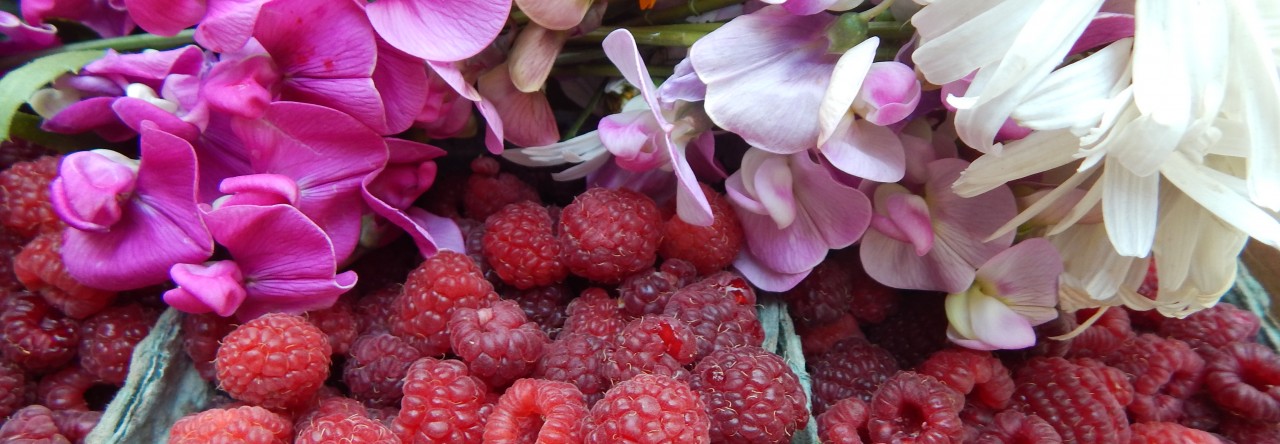
This primer brings together ways I quickly save the last rounds of in-season veg. Read more about quick-save vegetables. Learn more at TwiceasTasty.com.
As the growing season winds down, I get plenty of questions about what to do with the last weeks of homegrown harvests and the last crops from farmer’s markets. By now, you’ve likely eaten your fill of your favorite fresh dishes and processed your favorite canned and frozen goods. If you’re like me, you’re torn between wanting to be done with the labor of weeding and harvesting and wanting to capture those last few tomatoes, those last few broccoli stalks, to enjoy after snowfall.

I’ve already shared many of my favorite ways to save excess and end-of-season produce. This month, I’ll continue to share some of my favorite fall canning recipes. But this week, I wanted to bring together in one post some of the ways I quickly save the last rounds of in-season veg.
Read more about quickly saving vegetables
Fermented Cucumbers

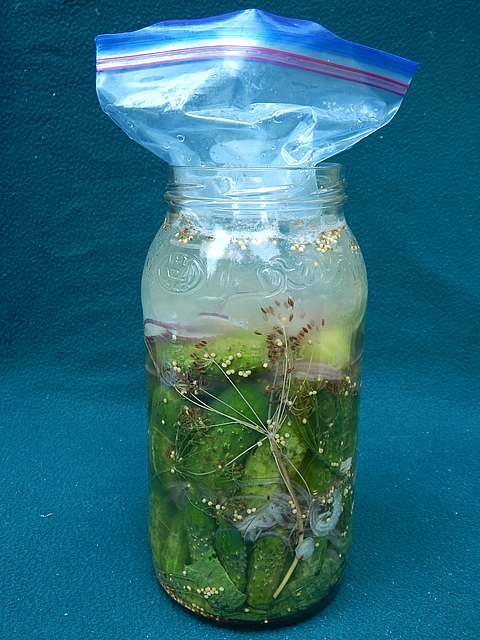
I’ve loved cucumber pickles since I was a kid. Fermentation takes them to a new level. Get fermented vegetable recipes at TwiceasTasty.com.
I’ve loved pickles since I was a kid. My mom put dozens of jars of dill and “sweet” (bread-and-butter) pickles through a water bath every year, and I’d sneak them like they were potato chips. But the longer the pickles sat, the less chip-like crunch they gave. Over the years, I’ve played with ingredients and canning techniques that have helped. Then I discovered fermentation.

Think about it: Cucumbers are best fresh and raw. Putting them in hot water is bound to affect their texture. Fermentation replaces heat with time and vinegar with salt. No wonder the result is crisper and fresher. And the flavoring possibilities—from dill to tea—are endless.

If you’ve never run a fermentation, I suggest you check out my introductory post from earlier this month. But here are the basics: Start with everything clean and fresh. Monitor the batch daily so that you can see the process. If you have doubts, give it the toss and start again.
Learn to make Fermented Dill Pickles and Fermented Tea Pickles

Fresh Tomatoes

Tomatoes top the list of my favorite fresh summertime, homegrown vegetables. (Yes, scientifically, they’re fruit. But to a cook, they’re vegetables.) These are fresh summertime favorites because their sweet, juicy flesh is at its peak, tasting completely different from tomatoes that have been grilled, roasted, or otherwise cooked or preserved. They’re homegrown favorites because despite the few tomato varieties available in grocery stores, hundreds of varieties are available as seed.

We planted 26 tomato starts in late May and have been harvesting 14 varieties this month. Some are tiny, bright red cherry tomatoes; some are dark purple giants. My childhood loves are sweet Yellow Pears I eat like candy from the vine, but some of my recent favorites are heirloom Black Cherry tomatoes, with large (for the “cherry” class), dusky fruit, and dense, heart-shaped Oxheart tomatoes. Each adds a distinct flavor and texture to fresh appetizers and salads.
Learn to make Herbed-Tomato Dip and Panzanella (Tomato and Bread Salad)

Fresh Fillings

If you grow a giant garden, each day’s harvest fills multiple boxes and baskets and then every spare corner of your refrigerator. But if you grow a more reasonably sized garden, your harvest likely comes in dibs and dabs: a couple of cucumbers and tomatoes, perhaps a pepper, a small mound of greens, a handful of herbs. Combining these garden-fresh favorites into a meal that showcases your effort often means coming up short for a standard recipe.

This is why I love fillings and stuffings; the ingredients are endlessly variable, a little goes a long way, and the result is a sparkling-fresh meal that highlights produce just off the vine. Whether you’re filling summer rolls, stuffing squash blossoms, or even building Grilled Fish Tacos, the key is to use less filling than you think you’ll need. A gentle hand while wrapping delicate rice paper or petals around that filling is also essential for success.
Learn to make Summer Rolls and Stuffed Squash Blossoms

Garden-Fresh Favorites

When summer hits and the garden is in full swing, I spend a lot of time processing its bounty to enjoy later. But the greatest joy of growing your own garden is immediately eating the sun-warmed peppers, crisp snap beans, and brilliant orange carrots you’ve produced. No matter how well you preserve a fruit or vegetable, it’s still a substitute for fresh-from-the-plant flavor.

Twice as Tasty made the front page of The Daily Inter Lake’s Montana Life section this week. The delicious photos and story by Brenda Ahearn focus on a recent workshop on Indian spices.

Fortunately, eating freshly harvested produce is easy. A walk through the garden has you snapping off a peapod here, grabbing a cherry tomato there, and collecting a handful of raspberries that you pop straight into your mouth. But grazing is just the beginning. This blog already offers some of my favorite fresh recipes for asparagus, corn, and zucchini and tomatoes. The key to making these fresh-tasting dishes is knowing when and how to pluck the choicest edibles.
Read more about enjoying garden-fresh favorites

Refrigerator Pickles

I don’t advocate small-batch canning, but I am a fan of quick and easy pickling that fills your refrigerator one jar at a time. If your only experience with pickling is opening a store-bought jar, then refrigerator vinegar pickles will convert you to homemade. Even if you grew up in a household that put up shelves of pickled vegetables every summer, like I did, refrigerator pickles have surprising benefits.

The disadvantage of refrigerator pickles—that they aren’t sealed in heated jars and thus shelf stable—can be an advantage in freshness and crispness. Small-space gardeners or CSA members can put up a jar at a time as produce ripens. Even expansive gardeners can use fridge pickles to test new flavor combinations. Cucumbers are ideal refrigerator pickles, because they soften so quickly when heated. You should still only use pickling cucumbers; the thick-skinned slicing cucumbers you find in grocery stores and even lemon cucumbers are really only useful as fresh pickles. After years of pasteurizing summer squash, I’ve switched from the canner to the fridge to keep the pickles’ crunch.
Learn to make Cucumber Refrigerator Pickles and Cumin-Spiced Zucchini Refrigerator Pickles

Fresh Pickles

When I think of fresh pickles, I immediately envision a platter of sushi, accompanied by pickled ginger (gari) and preceded by a quickly pickled cucumber salad (kyuri asazuke). The Japanese know a thing or two about pickling. They find a range of uses for pickled foods, including condiment, relish, garnish, palate cleanser, and digestive aid. Small portions of these foods can appear at any meal, even breakfast. Traditional Japanese pickles feature ingredients ranging from vegetables to eggs to fish to even cherry blossoms.

In America, the primary exposure to Japanese pickles comes as an appetizer before a meal and as a palate cleanser during it. A favorite local sushi restaurant serves sunomono, small portions of freshly pickled cucumber salad, before every meal—so of course I needed to come up with a version for our home-rolled, and more importantly boat-rolled, sushi nights. This salad is best made fresh when cucumbers are in season. Learn to make Quick-Pickled Cucumber Salad and Pickled Ginger

Yogurt Dips

Homemade cheese and yogurt are delicious not just on their own but also when featured or even a footnote in other recipes. Bring a tray of homemade dips, cheese, and sourdough bread to a potluck or party (or house concert), and guests immediately compliment your tasty contribution. Then when someone asks what’s in the dip, say, “homemade yogurt”; eyes brighten, jaws drop, and people dig back into the bowl. At least, that’s my experience.

I’ve long been a fan of tzatziki, and it’s among my favorite ways to showcase homemade yogurt. A tangy fresh batch makes the dip pop—so much so that I cut back on the lemon juice. Although traditionally made with sheep’s or goat’s milk, draining a cow’s milk yogurt until it’s thick works beautifully. Just a tablespoon or two of the same thickened yogurt gives a surprising creaminess to other dips, especially ones featuring beans.
Learn to make Tzatziki and Asian White Bean Dip

Planning the Season

Seed catalogs have been arriving for weeks, making me think about planning the garden despite the 5 feet of new snow that buried our local mountains in the last few days. This past weekend only enhanced the spring fever: I led a workshop at the 2nd annual Free the Seeds event and was impressed by not just the four-digit turnout but also the number of booths, workshops, and talks. The local Farm Hands organization lists more than 110 farms, ranches, community gardens, farmers markets, and restaurants and grocers that emphasize local food for a county with a population of under 100,000; nationally, the U.S. Department of Agriculture’s most recent survey found that 167,000 U.S. farms locally produced and sold food through farmers markets, on-farm sales, and other direct farmer-to-eater sales.

This means that no matter where you live, it should be possible to grow or purchase locally grown food and use it in Twice as Tasty recipes. Now’s the time to start thinking about what you want to grow in your new garden, add to your existing plot, or ensure will be delivered by your community-supported agriculture (CSA) farmer.
Read more about planning the season

Potatoes

Potato salads are a summer staple, whether I’m making them from jawbreaker-size potatoes stolen from row edges while checking the potato plants’ progress or full-grown spuds cut down to size. They go beautifully with summer’s green beans, cherry tomatoes, and sugar snaps. But we grow so many storage potatoes that it seems a shame to give up the salads just because the other fresh produce is long gone. This version uses stored veggies, making it a late-season or even midwinter go-to. The salad itself is quite basic, and a few unconventional techniques make it a snap. Inspired by traditional salads I ate regularly as I traveled in Russia and France—salad Olivier and salade niçoise, respectively—I’ve created two dressings that bring distinctly different flavors to the forefront; I sometimes alternate between the two salad dressings for several weeknight meals.
Learn to make Potato Salad with Russian and French Dressings