Homemade Sour Cream

Spoon rich, tangy homemade sour cream over sourdough empanadas and mix it into blini filling. Give cookies loft, lighten scones, and make onion dip irresistible. Learn more at TwiceasTasty.com.
I rounded out a collection of homemade dairy products this week in my Twice as Tasty column for the Flathead Beacon with sour cream. I love the tangy richness of sour cream and spoon it over everything from nachos to baked potatoes to Sourdough Empanadas. It’s an essential flavor on and in Mushroom-Filled Blini and makes Onion Lover’s Dip irresistible.

I bake with sour cream as often as buttermilk, because it provides loft in recipes like Chocolate–Sour Cream Cookies and lightens scones, including Savory Herb and Sour Cream Scones. But homemade sour cream, cultured buttermilk, and fresh yogurt are just the starting point. Once you become comfortable with the techniques and ingredients for soft creations, your first homemade cheese is just a recipe away.
Learn to make Homemade Sour Cream

Cultured Buttermilk

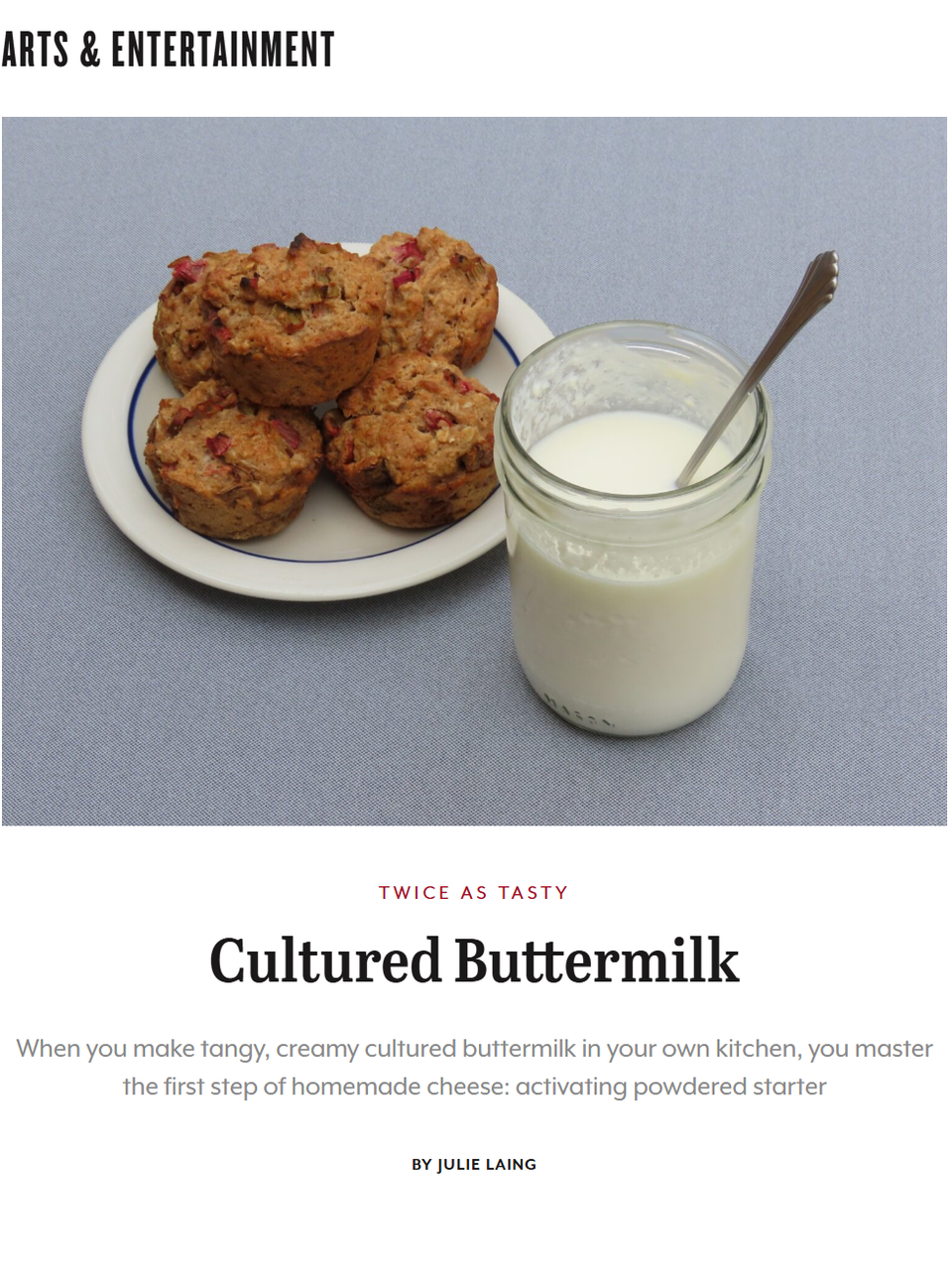
In icings and salad dressings, and even baked goods and savory dishes, it’s worth splurging for cultured buttermilk—or making your own. Learn more at TwiceasTasty.com.
There’s a distinct difference between the baking shortcut of using vinegar or lemon juice to sour milk and the creamy, tang taste of cultured buttermilk. As I explain this week in my Twice as Tasty column for the Flathead Beacon, the former has its uses. For example, in Loaf-Pan Lemon Cake, the double dose of lemon boosts the citrusy flavor. But in icings and salad dressings, and even baked goods and savory dishes, it’s worth splurging for cultured buttermilk—or making your own.

Homemade buttermilk takes less effort than homemade small-batch yogurt, but it does require a powdered starter culture. That shouldn’t be a deal breaker; buttermilk is an easy way to see just how powdered starters work. Once you try it, you’ll be far more comfortable making your first batch of Dry-Salted Feta or Homemade Fromage Blanc.
Learn to make Cultured Buttermilk

Chocolate–Sour Cream Cookies

The solution to runny homemade sour cream? Use homogenized cream and a thermos. Learn more at TwiceasTasty.com.
Some years, I’ve spent April focused on recipes for making your own cheese and other homemade dairy products here on the blog. Now that I’m writing the Twice as Tasty column for the Flathead Beacon, I’m rewriting some of those recipes with the tweaks and upgrades I’ve made to them over the years. I’ll be sharing those new-and-improved recipes here this month.

My Flathead Beacon column will feature recipes that use these fresh dairy products and hopefully inspire you to try making them yourself. I couldn’t resist writing in March about a few of those recipes, including Savory Herb and Sour Cream Scones, Sourdough–Yogurt Pancakes, and this week’s Chocolate–Sour Cream Cookies. So check out the recipes in the column, and then come back here to the blog for the homemade dairy instructions.
Learn to make Homemade Sour Cream and Chocolate–Sour Cream Cookies

Soft Cheeses

Learn to make soft cheeses, and you have so many choices. Get soft cheese recipes at TwiceasTasty.com.
I’ve always loved the tang of goat cheese, or chèvre. Unfortunately, goat milk is hard to find in my area. Local stores tend to carry one ultrapasteurized brand or a powdered version—neither of which works for cheese. Regulations for selling milk directly to individuals are so strict, convoluted, and enforced that it feels like a black market. I occasionally trade with friends who are milking goats (and have momma and babies willing to share), but mostly I gave up on making soft cheese.

That changed when I took a chance on fromage blanc. I’d written off this cow’s milk cheese as too mild for my tastes. But it has a surprising amount of tang and flavor. Best of all, the technique for soft cheeses really does work across milk types—cow or goat, reduced fat or whole milk or cream. It can be soft and spreadable or drained until it crumbles. It can be shaped or molded, and it absorbs flavors like herbs, zests, and spices. Learn to make soft cheeses, and you have so many choices. You can do it!
Learn to make Homemade Fromage Blanc and other soft cheeses

Cheese: You Can Do It!

The first thing to know about cheese making is that you can do it! Learn more at TwiceasTasty.com.
Spring is working its way into Montana. This means 4 weather cycles in a day, plenty of mud, the first harvest of walking onions, and baby animals in the barn. At the farm where I garden, two baby cows have arrived, with a third on the way. Although the mommas will keep their milk for their newborns, it always seems like the perfect time to explore home-fermented dairy and cheese.

I’ve spent little time making cheese over the past year. A year ago, I skipped my planned cheese posts to extend the sourdough giveaway and share ways to eat well when stuck at home. Then I co-opted my “cheese cave” (aka mini dorm fridge) for pickles while I was launching my new book.

But last month, while filling pierogi with potatoes and Lemon Cheese, I was reminded just how easy it is to make cheese and other dairy products. Here’s your reminder too.
Read more about making cheese

Weighing in on Whey

Explore the small-scale, easy, and tasty alternatives to pouring cheese and yogurt whey down the drain. Learn more at TwiceasTasty.com.
When you regularly make cheese and other dairy products at home, you’ll be impressed by two things: the amazing creations you can make from a few ingredients and the amount of whey you generate. When you turn milk into cheese or yogurt, you separate the solids, or curds, by cooking and draining off the liquid, or whey. Commercial manufacturers of Greek yogurt generate so much whey it’s created environmental problems. If you make your own cheese and yogurt, you likely want to be at least as conscientious as the big brands. Corporations are testing large-scale solutions, but at home you have many small, easy, and tasty alternatives to pouring that whey down the drain.
Read more about using whey

Sour Cream

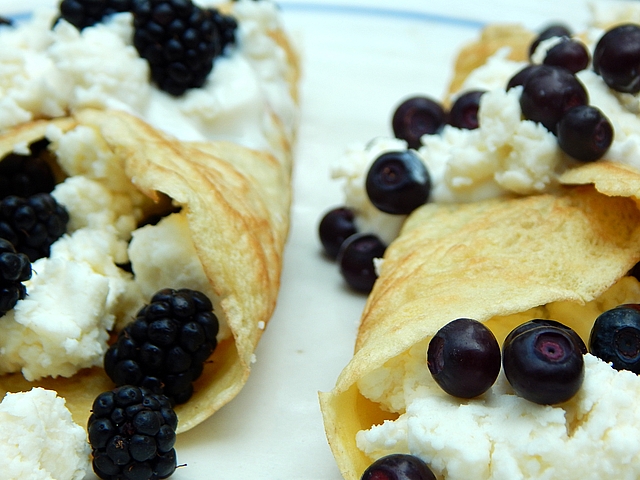
You easily get the best flavor from the fewest ingredients by making sour cream at home. Get homemade sour cream and cookie recipes at TwiceasTasty.com.Sour cream is one of my guilty food pleasures. I eat it regularly, sometimes daily. I eat it at breakfast with crepes and baked into Sour Cream Scones with Tart Cherries. It goes in creamy dressings for potato and other salads. It’s the base for dips and midday snacks. I put sour cream on baked potatoes, tacos, and empanadas. And I use it in desserts, including cookies.

I call sour cream a “guilty pleasure” because it can be high in calories and fat. Most commercial reduced-fat and nonfat versions are primarily whey, modified food/corn starch, salts, stabilizers, and artificial gums—not a good alternative. So if I’m buying sour cream, I read the labels closely and buy full-fat versions that only list “cultured cream” or something similar as the ingredient. But you can easily get the best flavor from the fewest ingredients by making sour cream at home.
Learn to make Fresh Sour Cream and Salted Chocolate Chip Cookies

Buttermilk

Cultured dairy is an easy, no-fuss first step to cheesemaking. Get buttermilk recipes at TwiceasTasty.com.
When I started sharing cheese and homemade dairy recipes and teaching workshops on making cheese last year, you learned how to use a simple starter to make yogurt and an acidic kitchen staple to make cheese. But to expand the range of dairy products and cheeses you make in your kitchen, you’ll need to become familiar with powdered starter.

These magical little packets of bacterial cultures do the same thing as yogurt and lemon juice: they acidify, or ripen, warm milk, letting the good bacteria grow. But the beauty of them is in their specificity. Each starter culture has particular strains of bacteria that create different flavors and textures from the same milk. The range of available cultures is impressive, and I recommend reading about them in Mary Karlin’s and Gianaclis Caldwell’s books to really understand how they work. Here, I’ll give a quick intro that will let you make and use cultured buttermilk.
Learn to make Cultured Buttermilk and Honey–Chili Buttermilk Biscuits