
Broccoli, Tomato, and Pasta Soup

Instead of going to the store, “shop” in your freezer and cupboards for easy end-of-year meals. Learn more at TwiceasTasty.com.
I’m all about easy meals as the year winds down. It’s one of many reasons to freeze, can, dehydrate, and dry-store homegrown or locally sourced vegetables when the garden produces more than you can eat fresh. Instead of needing to go to the store, you can “shop” in your freezer and cupboards, as I explain this week in my Twice as Tasty column for the Flathead Beacon.

The soup recipe I share uses frozen vegetables that you can put directly in the pot, without thawing them first. I do thaw the Homemade Vegetable Stock that provides a flavor base, because then the soup is ready faster and has a more consistent texture. Some of my favorite flavor upgrades include dehydrated Home-Smoked Chili Peppers in place of the paprika and Cold-Smoked Cheese for the finishing touch. If you’re just learning how to store in-season produce, make this soup with fresh ingredients now and you’ll have plenty of inspiration to preserve in-season produce when the garden and farmers’ markets are in full swing.
Learn to make Broccoli, Tomato, and Pasta Soup

Mixed Vegetable Stir-Fry

This stir-fry recipe runs through the essential dos and don’ts and includes a quick, flavor-packed homemade sauce. Learn more at TwiceasTasty.com.
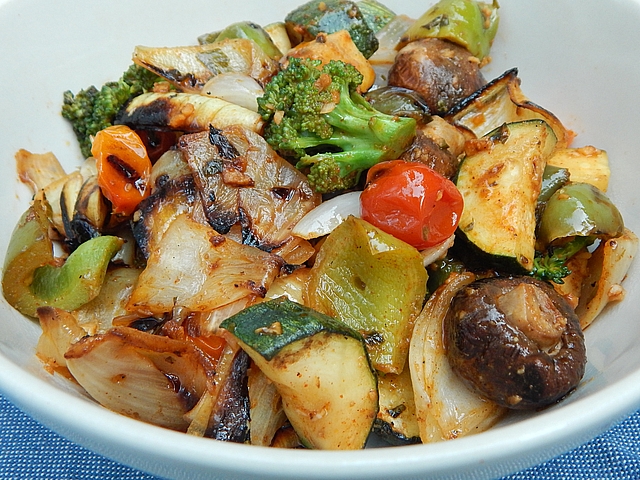
Stir-fry, the technique and the dish, seems so straightforward and adaptable to so many ingredients that you don’t need a recipe. But a quick Web search pulls up endless recipes and varied methods for making them. Some geek out with tools like a wok burner, blow torch, or outdoor grill to mimic the ultrafast, high-heat smokiness achieved by a commercial range. Others vie for the title of easiest stir-fry by tossing sautéed vegetables with store-bought teriyaki sauce.
Whether you trend toward geeky or easy on the stir-fry scale, the recipe I share this week in my Twice as Tasty column for the Flathead Beacon fits into your regular meal rotation. It runs through the essential dos and don’ts and includes a quick, flavor-packed homemade sauce. The fresh vegetables you use make each one-dish meal unique.
Learn to make Mixed Vegetable Stir-Fry

Chickpea and Vegetable Couscous Salad

Instant couscous has become one of my staple grains not just at home but for lakeside picnics and onboard dinners. Learn more at TwiceasTasty.com.
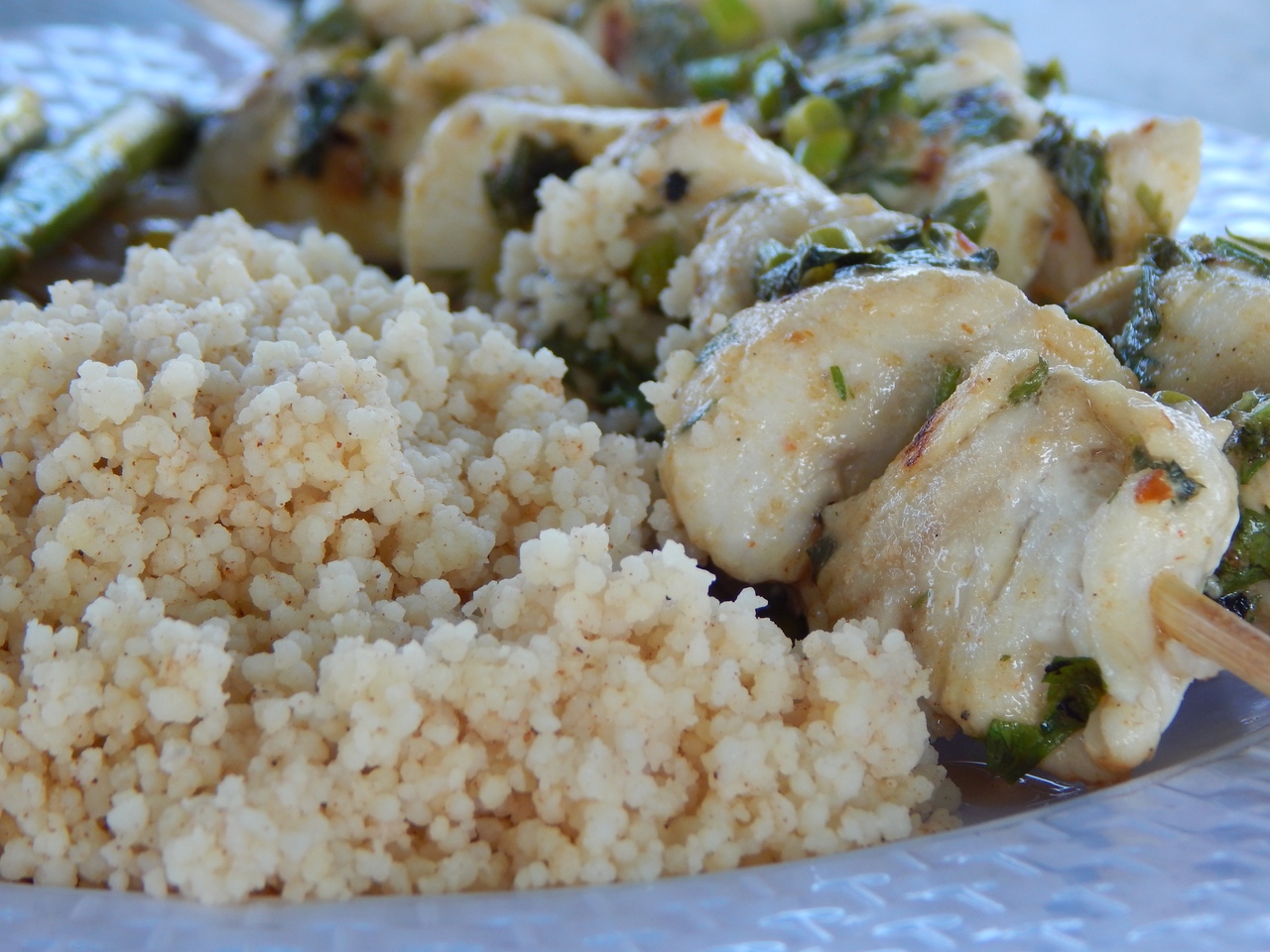
Once I accepted that I was never going to justify housing a giant couscoussière in my tiny Montana kitchen and using its vastness, sized for the average Moroccan family, to feed my household of two, instant couscous became a staple grain not just at home but for lakeside picnics and onboard dinners. We recently wrapped up a two-week sailing adventure aboard The Blue Mule in the San Juan and Gulf Islands, and the couscous recipes I’ve been sharing in my Twice as Tasty column for the Flathead Beacon were part of our cruising menu.

The little grains cook so well in just-boiled water that I keep a collapsible silicone container with a tightly sealing lid in my galley box. I pour the couscous into it, add a pat of butter and sprinkling of cinnamon and salt, and then pour JetBoil-heated water on top and seal the container. For dinner before an evening sail on Flathead Lake, I use the same technique but boil the water on my kitchen stove and take it to the lake in a thermos.
Learn to make Chickpea and Vegetable Couscous Salad with Pour-Over Cinnamon Couscous

Tomato, Potato, and Garlic Soup

Whether you grow your own food or seek out in-season produce, it’s worth freezing it for out-of-season use. Learn more at TwiceasTasty.com.

When I’m harvesting tomatoes and other sun-ripened vegetables in summer, I look forward to enjoying them not just fresh that same day but also from the freezer midwinter in soups and other recipes. As I explain this week in my Twice as Tasty column for the Flathead Beacon, having year-round access to the flavor of produce picked at the peak of its growth is the main reason I preserve food by freezing, canning, and more. Out-of-season produce shipped thousands of miles just can’t compete.

Even if you don’t grow your own food, it’s worth seeking out in-season produce and freezing it for out-of-season use. You still capture some of that fresh flavor, and you then have a freezer full of options for soups that can be made at a moment’s notice without a trip to the store. The tomatoes in this soup are among the easiest vegetables to freeze; potatoes, onions, and garlic can be stored even more simply in a dry, dark, cool place.

Learn to make Tomato, Potato, and Garlic Soup

Roasted Winter Vegetable “Grain” Bowls

I make roasted-veg bowls to use up long-held homegrown vegetables, but the ingredients are easily attainable and affordable in grocery stores. Learn more at TwiceasTasty.com.
In my area, snow and ice continue to cling to shady places and most growing spaces have yet to transition past mud to diggable soil. Spring cleanup outdoors will happen slowly for now, but indoors is a different story, as I explain this week in my Twice as Tasty column for the Flathead Beacon. I’m focused on emptying my food storage spaces before the next round of growing and harvesting kicks in.

In my house, I’m making room in my freezer and on my canning shelves, both of which I filled to overflowing last year. But the main effort is to eat up dry-stored produce that has been keeping well in boxes but won’t continue to do so for long. The recipe in this week’s column uses some of these long-held homegrown vegetables, but they’re also ones that are easily attainable and affordable in grocery stores this time of year.
Learn to make Roasted Winter Vegetable “Grain” Bowls

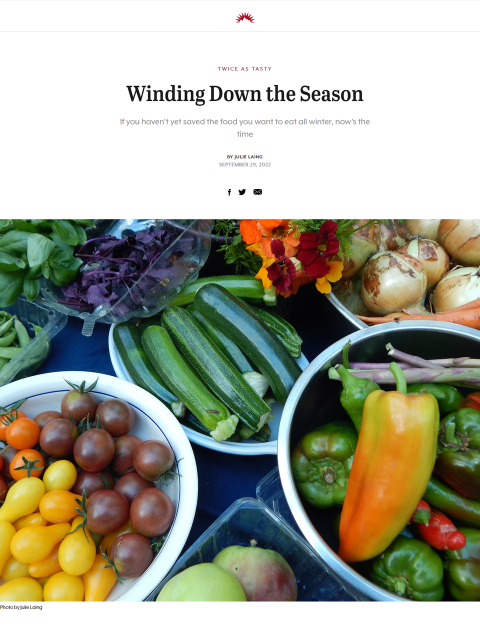
Winding Down the Season

Techniques that rely on freezing, dry storing, and dehydrating let you quickly save the garden’s last fruit and vegetables. Learn more at TwiceasTasty.com.
This September, we’ve been lucky to have fairly warm days and nights in Montana, with just a couple of hints at a killing frost that we were able to protect against temporarily. But the garden is still winding down. In the main garden, I’m finding fewer cucumbers and snap beans, with vines starting to dry and lose leaves. In the greenhouse, tomatoes and tomatillos are putting all of their energy into ripening existing fruit. It’s time to grab the last of the garden’s treats and stash it all away for winter.

This week, in my Twice as Tasty column for the Flathead Beacon, I share some of my favorite storage techniques for a range of vegetables. The article focuses on easy ways to save individual vegetables without needing to can or ferment them or changing their base flavor into a pickle or sauce. The techniques rely on freezing, dry storing, and dehydrating and can be done quickly with minimal prep.
Learn about winding down the season

Veggie Shish Kebabs with Garlicy Marinade

Almost any vegetable can be speared on a skewer and grilled. Learn more at TwiceasTasty.com.
We give the grill a workout every summer, often with small items that want to fall through the grate no matter how carefully they’re arranged on the open surface. I have two grill trays that work well when smoking cherries or cheese or charring large batches of thin asparagus spears. I also have a pair of copper grill mats ideal for sourdough pizza and other soft ingredients—we even grilled scrambled eggs and potatoes on one when I forgot to put a skillet on the sailboat. But for grilled meals with more emphasis on variety than quantity, I reach for skewers.

As I share this week in my Twice as Tasty column for the Flathead Beacon, you can spear so many foods on a stick and cook them over an open flame. A simple marinade can tie the ingredients together, playing well with flavors that range from sweet tomatillos, to mild potatoes, to spicy peppers. Skewers are also ideal for grilling shrimp, scallops, meaty fish, and cubed meats.
Learn to make Veggie Shish Kebabs with Garlicy Marinade

Stir-Fry

 Stir-fries are quick, go-to meals that show off well-cooked tofu. Get stir-fry and tofu recipes at TwiceasTasty.com.
When the garden is in full swing and sailing season is on, one of my go-to meals is a stir-fry. In the time it takes to cook a pot of rice, the rest of the meal can be chopped, cooked, and ready to serve from one pan as a single-dish meal. In spring, asparagus, early onions, young garlic, snap peas, spinach, and herbs dominate the stir-fry; at the height of summer, freshly harvested onions, peppers, carrots, zucchini, and cherry tomatoes take over. By late summer, corn, eggplant, and fall broccoli and peas are ready to mix in.

When you’re rich in a particular vegetable, you can let it solo in a stir-fry, backed by aromatics such as garlic, ginger, and chilies. But my favorite stir-fries are created with dibs and dabs of many vegetables and a protein such as tofu. To guarantee success, fry quickly, at high heat, in an order that lets the ingredients brown evenly, with plenty of movement. It’s in the name: stir and fry.
Learn to make Fresh Improv Stir-Fry and Pan-Fried Tofu