
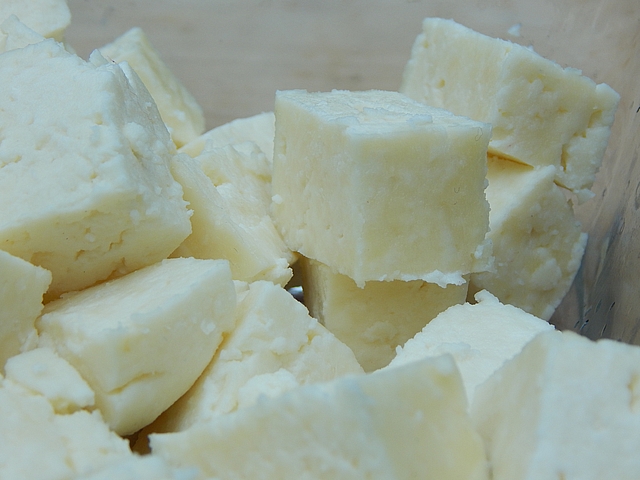
Paneer

My freezer holds all sorts of vegetables ready to mix with homemade paneer for Paneer Tikka Masala. Learn to make cheese at TwiceasTasty.com.
Every April, I’m focused on two things: what I’m going to grow in my garden this year, and how I’m going to eat up everything I saved from last year’s harvest. Last week’s post used up not just the whey leftover from making yogurt but also the potatoes starting to sprout in my storage bins. This week, I dug deeply into my freezer and found all sorts of vegetables for an Indian dinner: cherry tomatoes, onions, peppers, garlic, and cilantro pesto. Flavor them with my dwindling supply of home-smoked chilies and homemade curry powder, toss in some freshly made paneer, and the flavors explode.

There are several other fabulous things about this week’s recipes. If you already make Lemon Cheese, you don’t need to learn to make paneer: you just need to learn how to press your cheese. If you don’t yet make this cheese, which also goes by queso blanco, whole-milk ricotta, and farm cheese, you have another reason to learn how.
Learn to make Fresh Paneer and Paneer Tikka Masala

Weighing in on Whey

Explore the small-scale, easy, and tasty alternatives to pouring cheese and yogurt whey down the drain. Learn more at TwiceasTasty.com.
When you regularly make cheese and other dairy products at home, you’ll be impressed by two things: the amazing creations you can make from a few ingredients and the amount of whey you generate. When you turn milk into cheese or yogurt, you separate the solids, or curds, by cooking and draining off the liquid, or whey. Commercial manufacturers of Greek yogurt generate so much whey it’s created environmental problems. If you make your own cheese and yogurt, you likely want to be at least as conscientious as the big brands. Corporations are testing large-scale solutions, but at home you have many small, easy, and tasty alternatives to pouring that whey down the drain.
Read more about using whey

Favorite Books: Fermenting

Does fermenting at home scare you? It’s understandable but easy to overcome. Learn more at TwiceasTasty.com.
I’m still getting lots of questions about last month’s posts on fermenting vegetables at home. If you’re afraid to ferment your own produce, it’s likely because the technique is unfamiliar. I understand the hesitation: Fermentation involves so few ingredients and tools but so much time that you worry about messing it up.

Fortunately, fermenting has a long history, and it’s modern popularity is on the rise. This translates to lots of fabulous resources to help you become comfortable with fermenting fruits and vegetables. Here are some of my favorite sources for fermentation recipes and advice.
Read more about home fermentation

Fresh Feta

I have a long list of reasons for making feta, starting with delicious and easy. Get homemade feta and salad recipes at TwiceasTasty.com.
I can give you a long list of reasons for making feta. It’s delicious. It’s relatively easy. It lets you become comfortable with many ingredients, tools, and techniques that are important in more finicky cheeses, including slow heating, powdered starter, held temperatures, curd cutting and stirring, hang draining, molding, and salting. It will impress all of your friends, if you decide to share. And did I mention how tasty it is?

In Greece and other Mediterranean countries, feta is as common as cheddar is in the United States. During my travels, I ate feta made from backyard goats and sheep, feta flavored with herbs just snipped in the garden, and feta in lots of salads. Feta is traditionally made from sheep or goat milk; if you can get your hands on either, you’ll get the best flavor. But even homemade cow’s milk feta tastes better than many of the most readily available commercial types.
Learn to make Dry-Salted Feta and Warm Quinoa and Feta Salad

Making Better Yogurt and Cheese

Making new styles of cheese has taught me a few tricks that apply to my homemade standards. Learn about making better yogurt and cheese at TwiceasTasty.com.
Each April, the recipes on Twice as Tasty focus on making cheese and other dairy products at home. Between the information on the blog and the workshops I’ve been teaching to everyone from adults to kids, the pool of home cheesemakers has been growing steadily all year.

As I wrote last year, yogurt was my first homemade dairy product. It’s still the milk-based product I make most often, partly because it’s so easy and partly because it’s so versatile that I eat it all the time. This also means I’m constantly finding new ways to improve my yogurt-making skills.

I’ve also been playing with variations on acid-based cheeses and delving into new cheese styles and dairy products. Some of these will be the focus of blog posts in the coming month. But these styles have also taught me a few tricks that apply to my homemade standards. So before I offer you new recipes, here are some things I’ve learned in the past year about making yogurt and cheese.
Read more about making better yogurt and cheese